A coat picks up hair, scarf fluff, dust and street lint faster than most garments because it is worn repeatedly between washes. Choosing a clothes brush or lint roller for a coat is less about which tool looks tidier in a cupboard and more about fabric surface, debris type and how often you refresh the coat.
What to know first
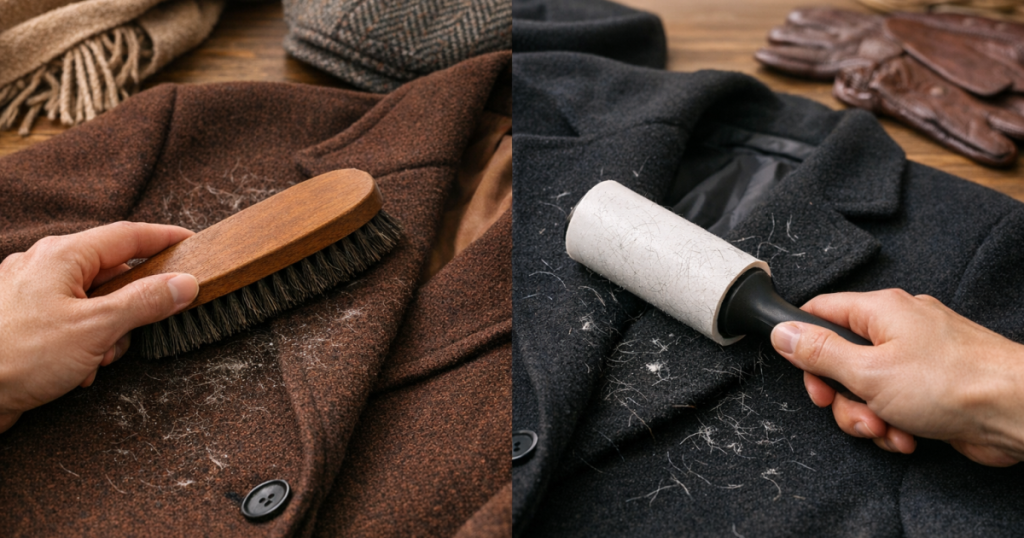
Use a clothes brush for most structured wool, wool-blend, cashmere-blend and tailored coats when you want to lift dust, revive the nap and reduce surface lint without adding adhesive to the fabric. Use a lint roller when the main problem is loose pet hair, pale fluff on dark fabric, or a quick clean before leaving the house.
The important distinction is pressure. A good brush works with short, controlled strokes and relies on bristles or a directional fabric surface. A roller relies on tack. That tack is convenient, but it can be too grabby for delicate raised textures, loosely woven coatings, faux fur trims or anything with a fragile finish.
Neither tool replaces washing, stain treatment or proper airing. They are maintenance tools: useful between cleans, after commuting, before work, or when a coat has been stored and looks tired rather than dirty.
How each tool behaves on coat fabrics
Clothes brush
A clothes brush is usually the better long-term tool for natural-fibre coats because it can remove surface dust while helping the pile sit neatly. On wool and wool-blend coats, brushing in one direction can make the fabric look cleaner and more even without abrading the surface. It is also useful around collars, cuffs and pocket edges, where dust and skin oils make lint more visible.
The trade-off is technique. Scrubbing back and forth can roughen the surface, push fibres into clumps or make a brushed wool coat look patchy. The best approach is light pressure, working from shoulder to hem, then repeating only where needed.
Lint roller
A lint roller is fast, portable and simple. It excels at lifting loose hair and fluff that sits on top of the fabric. It is particularly handy for black, navy and charcoal coats worn with pale knitwear, or for households with cats and dogs.
The drawback is that sticky sheets can leave residue if the adhesive is poor quality, old, or pressed heavily into textured cloth. A roller also removes only what it can touch. It will not groom the nap, remove pilling, or revive a flattened wool surface.
Match the tool to your coat type
The safest choice depends on the coat’s outer fabric. Always check the care label first, then test the tool on an inside hem or another discreet area before using it across the front panels.
- Wool and wool-blend overcoats: start with a clothes brush. Use downward strokes and avoid heavy pressure on elbows and front edges, where wear already shows.
- Cashmere or soft luxury blends: choose a very soft garment brush and work gently. A sticky roller can pull at fine surface fibres, so reserve it for loose fluff only.
- Peacoats and dense melton-style coats: either tool can work, but a brush gives a better finish if the fabric looks dull or dusty.
- Puffer coats and smooth synthetics: a lint roller is usually more useful for hair and lint. Brushing can be less effective on slick surfaces unless the brush has a fabric lint pad rather than bristles.
- Water-resistant or waxed outerwear: avoid sticky products unless the care label suggests they are safe. Use a clean cloth or suitable garment brush with minimal pressure.
- Suede, nubuck and suede-look finishes: do not treat them like wool. A standard lint roller can mark the nap or pull unevenly; for safer refreshing steps, follow a dedicated guide to refreshing a suede jacket without damaging the nap.
- Faux fur trims and fluffy collars: avoid sticky rollers that can tug the fibres into clumps. Use fingers, a wide-tooth comb intended for garments, or the method recommended on the care label.
Choose by the problem you are solving
For pet hair
A lint roller is the quickest answer when hair is sitting loosely on the coat. Use short lifts rather than long, forceful drags, and change the sheet as soon as it stops picking up cleanly. If hair is embedded in a woolly surface, brush first to loosen it, then use the roller very lightly.
For dust and everyday dullness
A clothes brush is usually better. Dust can make a good coat look grey, tired or slightly shiny around the shoulders. Brushing helps lift that surface layer and re-align the fibre direction. Hang the coat on a sturdy hanger, close the buttons, then brush from top to bottom so the garment keeps its shape.
For scarf fluff and knitwear transfer
Both tools may be useful. Start with a brush if the coat is wool or a soft blend. Follow with a roller only on the worst areas, such as lapels and upper sleeves. This avoids repeatedly pressing adhesive across the whole garment.
For bobbles and pilling
Neither a bristle brush nor a sticky roller is designed to remove true pilling. A roller may pick up loose fuzz, but it will not cut away attached bobbles. If your coat has pilled areas, particularly under the arms or where a bag strap rubs, read the steps for using a fabric shaver without snagging clothes before taking anything sharp or motorised to the surface.
What to check before buying
A coat-care tool does not need to be complicated, but small details affect whether you actually use it and whether it treats fabric kindly.
- Bristle softness: firm bristles can suit robust wool, while softer bristles are safer for cashmere blends and finer coatings. If the brush feels scratchy on the inside of your wrist, be cautious with delicate cloth.
- Handle control: a brush that sits comfortably in your hand is easier to use with light pressure. Oversized brushes can be awkward around lapels and collars.
- Brush direction: some fabric lint brushes work best in one direction. Check the arrows or surface feel before using them on a coat.
- Roller adhesive strength: very tacky sheets may grab delicate fibres. For tailored coats, a moderate adhesive used lightly is safer than pressing hard with a heavy-duty roller.
- Sheet quality: poor sheets tear badly, peel unevenly or leave sticky edges exposed. That makes quick coat care more irritating than it needs to be.
- Refills and waste: disposable rollers are convenient, but they create ongoing waste. If you use one daily, a reusable lint brush may be worth considering alongside a traditional clothes brush.
- Storage: keep brushes clean and dry. Store lint rollers with the cover on so they do not collect grit, which can scratch or mark fabrics.
For reference, a traditional option such as the Kent CP6 Clothes Brush is the kind of bristle brush to compare for wool coat maintenance, while a familiar sticky roll such as the Scotch-Brite Lint Roller shows what to look for when speed and hair removal matter more than fabric grooming. Compare the tool type, comfort and fabric suitability rather than assuming one product will suit every coat in the hall cupboard.
A simple coat-refresh routine
Use this routine when a coat looks dusty, linty or slightly tired but does not need cleaning.
- Step 1: Hang the coat properly. Use a broad hanger if you have one. Fasten the front so the panels sit evenly and you are not pulling the coat out of shape.
- Step 2: Check the fabric surface. Look for loose hair, dry mud, stains, pilling and worn shiny areas. Do not brush wet mud into the fibres; let it dry fully and lift it gently.
- Step 3: Brush first on wool and tailored fabrics. Work from the shoulders down. Use short, light strokes and follow the nap if the coat has a visible direction.
- Step 4: Roll only where needed. Use a lint roller on visible hair and fluff, not as a substitute for brushing the whole coat. Replace the sheet before it becomes clogged.
- Step 5: Air before storing. Let the coat hang in a ventilated space before putting it back in the wardrobe. This helps reduce trapped odours and moisture from commuting or damp weather.
If you are comparing brushing with other ways to refresh clothing at home, the broader comparison of a clothing brush versus a heat pump tumble dryer is useful for understanding when surface care is enough and when a different approach is needed.
Common mistakes that damage the finish
- Using a roller on a damp coat: adhesive can behave unpredictably on moisture and may drag dirt across the surface.
- Scrubbing with a clothes brush: pressure does not equal better cleaning. It can raise fibres and make a coat look older.
- Rolling over loose threads: adhesive can catch and pull them. Snip loose threads only if they are clearly detached and safe to remove.
- Ignoring trims and panels: leather-look piping, faux fur, embroidery, buttons and decorative panels may need a different touch from the main coat fabric.
- Using the same dirty brush repeatedly: clean hair and lint out of the brush after use so you are not transferring debris back onto the next coat.
Things readers ask
Is a clothes brush or lint roller better for a black wool coat?
Start with a clothes brush to lift dust and neaten the nap, then use a lint roller lightly on visible pale fluff or pet hair. Avoid pressing adhesive hard into the wool.
Can a lint roller damage a coat?
It can, particularly on delicate, raised, loosely woven or suede-like surfaces. The risk comes from sticky adhesive pulling at fibres or leaving residue, so test first and use minimal pressure.
How often should I brush a wool coat?
For regular winter wear, a light brush every few wears is enough. Brush sooner if the coat looks dusty after commuting, sitting in a car, or being stored beside knitwear.
What is best for dog hair on a coat?
A lint roller is usually fastest for loose dog hair. For textured wool, loosen embedded hair with a gentle brush first, then roll only the affected areas.
Should I use tape instead of a lint roller?
Household tape is a poor substitute on good coats because the adhesive can be too harsh or uneven. A garment lint roller or reusable lint brush gives better control.
Key takeaways
For most wool, wool-blend and tailored coats, a clothes brush is the better everyday maintenance tool because it lifts dust and improves the fabric surface. For pet hair, pale fluff and last-minute touch-ups, a lint roller is quicker and easier. Many households benefit from owning both, but using each tool selectively matters more than buying the most aggressive option.
The safest habit is simple: brush gently, roll sparingly, test on an unseen area, and treat suede-style, fluffy or delicate finishes as special cases. That way your coat looks cleaner without losing the texture, nap or structure that made it worth caring for in the first place.