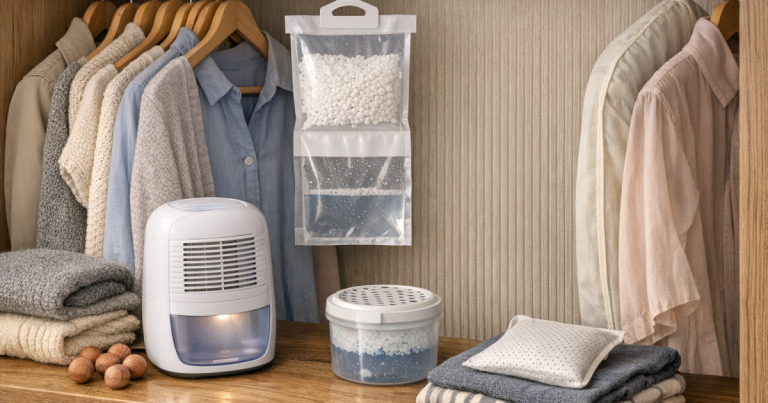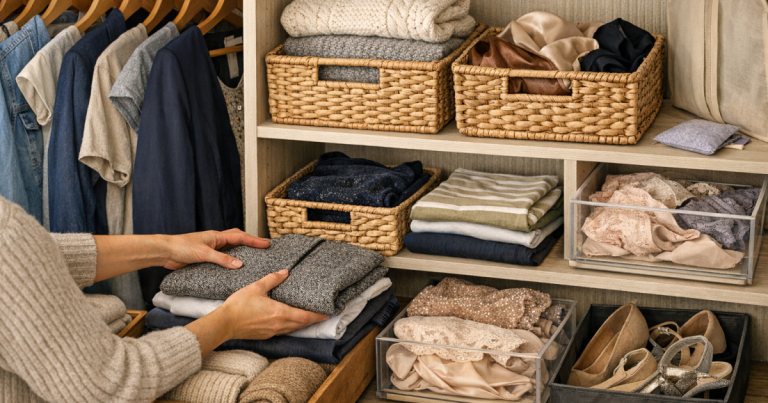
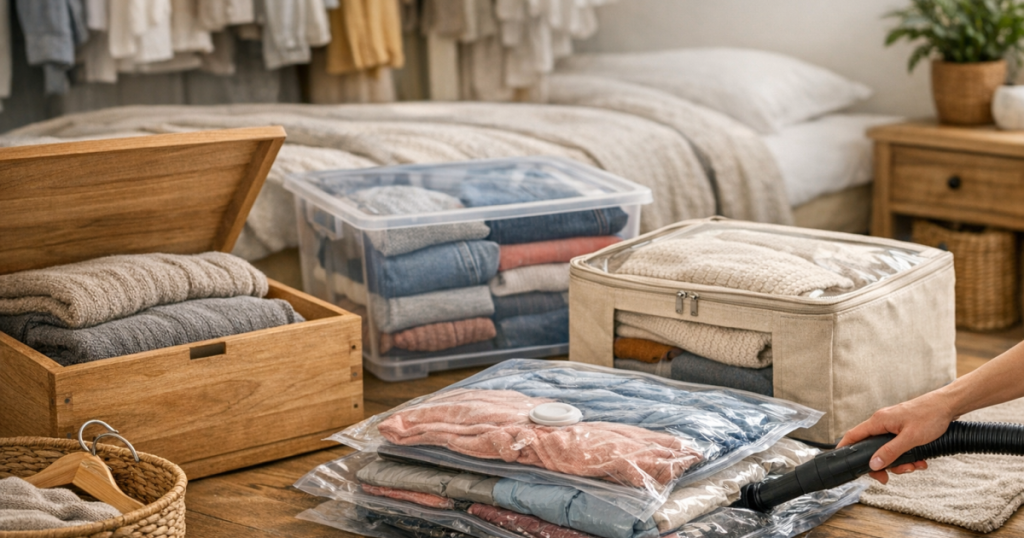
A crowded wardrobe does more than make mornings slower: it changes how garments hold shape, breathe and resist creasing. Choosing clothes storage materials well helps you avoid musty smells, shoulder bumps, crushed knitwear and mystery marks that appear after a season packed away.
The best storage choice depends on three things: the fabric, the length of storage and where the item will live. A cotton shirt in a spare-room wardrobe has different needs from a wool coat in a loft, a school blazer in a hallway cupboard or jumpers stored under the bed through summer.
The short version
- Wood is useful for everyday wardrobes and drawers, but raw or rough timber should not sit directly against delicate fabrics.
- Rigid plastic boxes protect against dust and pests, but they can trap moisture if clothes are not completely dry before packing.
- Canvas and breathable cotton covers suit natural fibres that need airflow, especially wool coats, suits and occasionwear.
- Vacuum bags save space, but they are best for short-term storage of resilient fabrics rather than structured, delicate or lofty garments.
- Whatever the container, clean and fully dry clothes first. Stored body oils, deodorant marks and faint food stains can darken over time.
Why storage material matters to fabric care
Storage is not just about fitting more into a cupboard. Fabric reacts to pressure, humidity, light and contact with other surfaces. Wool can attract moths if stored with traces of wear. Viscose and silk can crease heavily under compression. Leather and suede can suffer in sealed spaces. Cotton and polyester are generally more forgiving, but they still pick up stale odours if stored damp.
In many UK homes, the biggest storage risks are not dramatic; they are slow and ordinary. A slightly damp sweatshirt in a plastic tub, a wool jumper squashed under heavy jeans, or a dress left in a dry-cleaning cover can all come out looking worse months later. Good clothes storage materials reduce those risks by balancing protection with airflow.
Location matters too. A bedroom wardrobe is usually kinder to clothes than a loft, garage or cupboard on an outside wall. Temperature swings and condensation are harder on textiles than stable indoor conditions. If you need to store clothes somewhere cooler or less ventilated, the material choice becomes more important, not less.
Wood: sturdy, attractive, but not always fabric-neutral
Wooden wardrobes, drawers and chests are popular because they look good, feel substantial and let garments live in a familiar everyday system. For hanging clothes, a well-planned wooden wardrobe can keep shirts, trousers, dresses and jackets accessible without squeezing them into sealed containers. If your issue is layout rather than material, the wardrobe layout guide is a useful next step for deciding what belongs on rails, shelves and drawers.
The main caution with wood is direct contact. Unfinished timber, rough drawer interiors and older chests can transfer colour, resin, odour or surface abrasion. This is more of a concern with pale silk, satin, fine cotton, cashmere and occasionwear than with dark denim or sturdy casualwear.
Where wood works well
- Everyday shirts, trousers, dresses and jackets on hangers in a ventilated wardrobe.
- Folded cotton T-shirts, denim and casualwear in smooth, lined drawers.
- Short to medium-term storage in a stable bedroom rather than a damp outbuilding.
- Garments that benefit from being visible and easy to rotate, rather than forgotten in sealed boxes.
Where to be cautious
- Very delicate fabrics placed directly against unfinished wood.
- White or pale garments stored in older drawers with unknown stains or residues.
- Knitwear piled high on shelves, where weight can flatten fibres and create deep folds.
- Cedar-lined spaces used without checking whether the scent or oils might affect sensitive fabrics.
A simple fabric liner, clean cotton sheet or acid-free tissue can create a buffer in drawers. For hanging storage, the hanger often matters as much as the wardrobe. Narrow wire hangers can distort shoulders, while shaped or padded hangers spread weight more gently. For garment shape, see the advice on hangers that help prevent shoulder bumps and creases.
Plastic boxes: protective, practical and easy to over-seal
Rigid plastic storage boxes are convenient for under-bed spaces, spare-room cupboards and seasonal clothing. They keep dust off, stack neatly and protect folded garments from being crushed by other household items. Clear boxes also make it easier to find school uniform spares, gym kit, summer dresses or winter layers without opening everything.
The trade-off is breathability. Plastic does not absorb moisture or allow much airflow, so anything packed away even slightly damp can develop stale odours or mildew. This is especially relevant after winter drying indoors, when clothes may feel dry on the surface but still hold moisture in seams, waistbands, cuffs and thick hems.
Plastic is a sensible choice for
- Clean, fully dry cotton, polyester, sportswear and everyday childrenswear.
- Seasonal clothing that needs dust protection for a few months.
- Under-bed storage where fabric bags would gather dust or get misshapen.
- Garments that are folded loosely rather than forced flat under pressure.
Use plastic less readily for
- Wool, cashmere or silk stored for long periods without any airflow.
- Leather, suede or fur-trimmed items, which generally need breathable storage.
- Freshly ironed clothes that are still warm or slightly steamy.
- Anything with a known stain, perfume residue or deodorant build-up.
Before using plastic boxes, let laundry dry thoroughly and cool completely. If you dry indoors, space garments well on the airer so seams and waistbands dry properly; the guide to spacing clothes on an airer for faster drying explains how to reduce damp patches before storage.
Choose boxes with smooth interiors and lids that close securely without crushing the contents. Avoid overfilling: garments should sit in soft folds, not be compressed into hard layers. Label boxes by season or garment type so you do not keep opening multiple containers and disturbing neatly packed clothing.
Canvas and breathable cotton: gentle airflow for natural fibres
Canvas storage bags and breathable cotton garment covers are often the most fabric-friendly option for garments that need protection without being sealed in. They keep off dust while allowing air movement, which is helpful for wool coats, suits, blazers, formal dresses and garments made from natural fibres.
Breathable covers are particularly useful for items that hang for long periods. A wool coat in a cotton garment bag has room to release residual moisture from wear, while staying protected from dust and wardrobe friction. This is usually preferable to a thin plastic dry-cleaning cover, which can trap moisture and cling to fabric.
Canvas and cotton suit
- Wool coats, suit jackets, blazers and tailored trousers.
- Occasionwear that needs dust protection but should not be compressed.
- Natural fibres such as wool, linen, silk blends and cotton.
- Wardrobes where clothes are stored in the main living space rather than a damp loft.
Limitations to keep in mind
- Canvas does not protect well against serious damp, leaks or condensation.
- Soft bags can collapse if stacked badly, causing creases.
- Light-coloured fabric covers can pick up marks from dusty cupboards or floors.
- They are less space-saving than vacuum bags or rigid under-bed boxes.
Use canvas for breathing room, not for hiding laundry. Garments should still be clean, dry and aired before they go inside. For wool and cashmere, fold knitwear rather than hanging it, then store it in a breathable bag or lined drawer with enough room to avoid flattening the pile. If pilling has already appeared before storage, remove it gently rather than packing the garment away with loose fibres and lint attached.
Vacuum bags: space-saving, but not a universal answer
Vacuum bags can be useful in small flats, shared wardrobes and homes with limited airing cupboard or under-bed space. They compress bulky textiles, which is why many people use them for off-season clothes, spare bedding and occasional-use items.
For garments, the key word is caution. Compression can create deep creases, flatten insulation, distort padding and stress seams. Some fabrics bounce back well after a short period; others do not. The longer an item stays compressed, the more likely it is to need steaming, reshaping or careful airing afterwards.
Better candidates for vacuum storage
- Basic cotton T-shirts, casual tops and simple jersey garments.
- Sturdy synthetic layers that are not structured or padded.
- Clothes being moved house or stored briefly between seasons.
- Items you are prepared to rewash, air or steam before wearing again.
Avoid vacuum packing
- Tailored jackets, coats, blazers and pleated garments.
- Wool, cashmere and delicate knitwear that can flatten or crease deeply.
- Down-filled or lofty insulated clothing where compression affects loft.
- Leather, suede, beaded, sequinned or embellished garments.
- Anything even faintly damp, stained or recently worn.
If you use vacuum bags, do not treat them as permanent storage. Open and inspect them periodically, especially if they are kept under a bed, in a loft or near an outside wall. When clothes come out, give them time to relax before judging creases. Some items recover after airing; others may need a steamer or careful pressing through a cloth, depending on the fibre.
Matching material to garment type
There is no single best storage material for every wardrobe. The right choice is usually a combination: wood for daily access, canvas for breathable hanging protection, plastic for practical seasonal boxing and vacuum bags only where space pressure justifies compression.
- Work shirts and school shirts: Hang in a wardrobe if worn regularly. For spare shirts, fold loosely in a smooth plastic box once fully dry.
- Wool coats and blazers: Use shaped hangers and breathable garment covers. Avoid vacuum bags and flimsy plastic covers.
- Jumpers and cardigans: Fold rather than hang. Use lined drawers, breathable bags or loosely packed boxes, leaving space so fibres are not flattened.
- Denim and heavy cotton: These tolerate plastic boxes and wooden drawers well, provided they are clean and dry.
- Silk, viscose and occasionwear: Prioritise breathable covers, smooth linings and low pressure. Avoid cramped storage and rough timber contact.
- Gym kit and synthetics: Wash thoroughly before storage, as odour can linger. Use plastic only when the fabric is completely dry.
- Baby clothes and keepsakes: Use clean, dry, acid-free tissue where possible and avoid storing sentimental garments in damp loft conditions.
Common storage mistakes that damage clothes
The material often gets blamed when the real problem is preparation. A good box cannot rescue clothes that were packed away damp, stained or under too much pressure. Before seasonal storage, check collars, cuffs, underarms and waistbands. These are the places where invisible residues often become yellowing, odour or fabric weakness later.
- Packing straight after ironing: Warm, steamy fabric can carry moisture into a sealed container. Let garments cool first.
- Using dry-cleaning covers as long-term storage: Thin plastic covers can trap humidity and cling to fabric. Replace them with breathable covers for longer storage.
- Over-stacking knitwear: Heavy piles can leave hard creases and flatten soft fibres.
- Storing clothes in lofts without checking conditions: Heat, cold and condensation can all affect fabric, even inside boxes.
- Mixing worn and clean clothes: Moths and odours are more likely when garments carry skin oils or food traces.
- Forgetting labels: Unlabelled boxes get opened repeatedly, which disturbs folded items and makes wardrobe maintenance harder.
A simple storage routine before packing away
A short routine is more effective than buying more containers. Wash or clean garments according to the care label, dry them thoroughly, repair loose buttons or pulled seams, then decide whether each item should hang, fold or compress. This is where clothes storage materials should support the garment rather than force it into the smallest available gap.
For folded storage, place heavier items at the bottom and lighter items on top. For hanging storage, leave a little air between garments so fabrics are not constantly pressed together. For boxes, aim for a gentle fill rather than a tight pack. For vacuum bags, use them selectively and set a reminder to open them before the next season, not years later.
It also helps to separate storage by use: daily wear, next-season clothing, rarely worn formalwear and sentimental keepsakes. Clothes you need weekly should stay visible and easy to reach. Long-term items deserve more careful protection because small problems have longer to develop.
Things readers ask
Are plastic boxes bad for clothes?
No, not when used sensibly. Plastic boxes are fine for clean, fully dry, resilient garments, but they are less suitable for long-term storage of wool, silk, leather or anything that needs airflow.
Should wool be stored in wood or canvas?
Folded wool jumpers usually do well in a lined drawer or breathable storage bag. Wool coats and suits are better hung on supportive hangers inside breathable cotton or canvas covers.
Can I store clothes in vacuum bags for a year?
It is possible for sturdy casualwear, but it is not ideal for structured, delicate, wool, down-filled or embellished garments. Inspect compressed clothing periodically and expect to air or refresh it before wearing.
Is a loft suitable for clothes storage in the UK?
A loft is often less fabric-friendly than a bedroom cupboard because temperatures and humidity can fluctuate. If you must use one, choose clean, dry garments, protective containers and check them regularly.
Do clothes need to be washed before storage if they look clean?
Yes for seasonal or long-term storage. Body oils, deodorant and light food marks may not be obvious at first, but they can oxidise, smell or attract pests over time.
Final thoughts
Good storage is a fabric-care decision, not just an organisation task. Wood gives structure and everyday access, plastic gives dustproof practicality, canvas gives breathable protection and vacuum bags give temporary space relief. The best wardrobe setups use each material for the garments it genuinely suits.
If you remember one rule, make it this: clean, dry and low-pressure storage protects clothes better than any single container. Give delicate fibres air, give structured garments support, and reserve heavy compression for items that can tolerate it.