Dark trousers can look freshly pressed one week and oddly glossy the next, usually because heat, pressure and friction have flattened the surface fibres. A thin barrier between the iron and the cloth helps explain why pressing cloths prevent shine on dark trousers: it softens the contact, spreads moisture more evenly and reduces the risk of a hot soleplate polishing the fabric.
The result is not magic, and it will not undo every shiny patch once the fibres have been permanently compressed. Used properly, though, a pressing cloth is one of the simplest fabric care tools for keeping black, navy, charcoal and dark brown trousers looking smart without giving them that over-ironed sheen.
The short answer
Yes, a pressing cloth can help prevent shine on dark trousers, provided it is clean, smooth and used with sensible heat and pressure. It works best as a prevention tool rather than a repair tool.
- Use it whenever pressing dark wool, wool-blend, polyester-viscose, school uniform or suit trousers.
- Choose a plain white or undyed cloth so no colour transfers to the garment.
- Press by lifting and lowering the iron rather than dragging it along the fabric.
- Use moderate heat and steam according to the trouser care label, not the highest setting by habit.
- Let the fabric cool and dry before wearing, folding or putting the trousers away.
The cloth is only one part of the method. Shine is also influenced by the iron temperature, how long the iron is held in one place, whether the fabric is damp, and how firmly you press. If all of those are too aggressive, a cloth reduces risk but does not remove it completely.
Why dark trousers go shiny under an iron
Shine is most obvious on dark trousers because smooth, flattened fibres reflect light more strongly. The colour has not necessarily changed; the surface has become glossier. On black or navy trousers, even a small reflective patch can stand out around the thighs, knees, pocket edges or centre crease.
The usual causes are direct heat from the iron, pressure against a hard board, and repeated friction from sliding the soleplate over the same area. Wool can become shiny when its surface fibres are compressed. Polyester and poly-viscose trousers can also develop a polished look if the heat is too high or the iron is moved heavily over the cloth. Cotton chinos and work trousers are more forgiving, but dark colours can still show press marks along seams and pockets.
That is why pressing cloths prevent shine most reliably when they are used before the fabric starts to look glossy. They reduce direct contact between the soleplate and the trouser surface, but they cannot always raise fibres that have been flattened repeatedly over time.
What a pressing cloth actually does
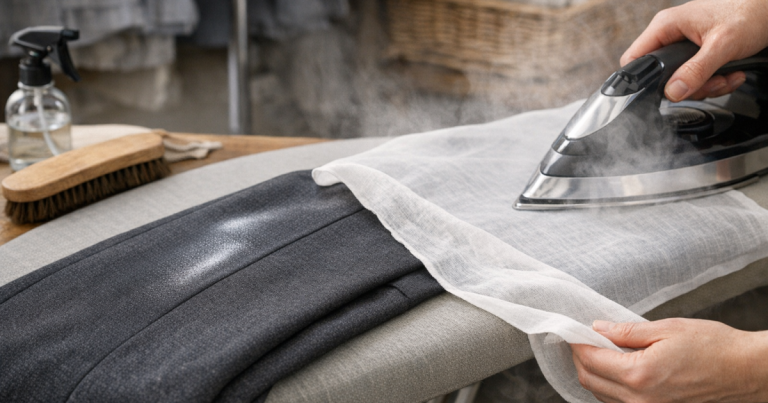
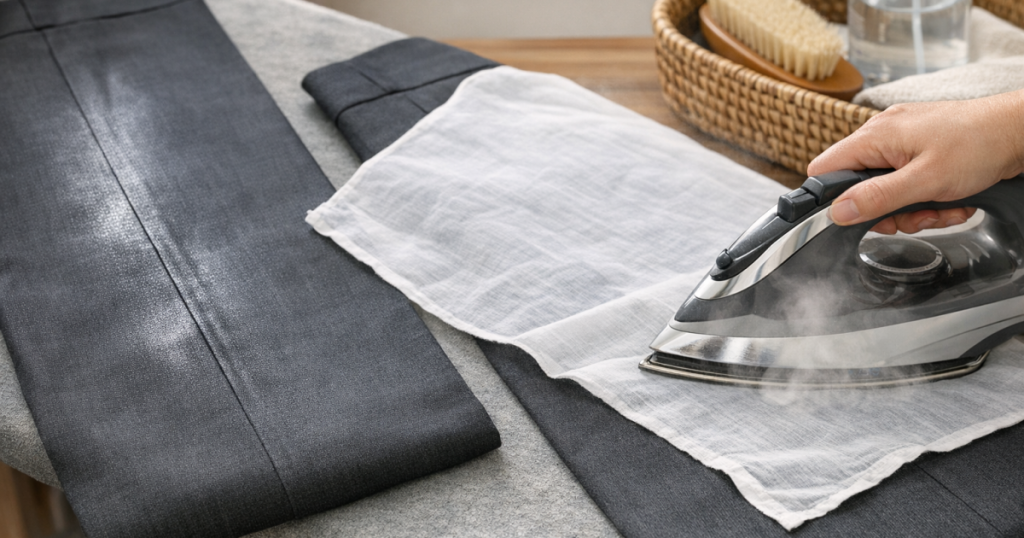
A pressing cloth gives you a controlled barrier. Instead of the iron soleplate touching the trouser fabric directly, the heat and steam pass through another layer first. This makes the process gentler and gives you a little more margin for error, especially on tailoring and uniform fabrics that are pressed often.
It helps in four main ways:
- It reduces direct friction. The iron glides over the cloth rather than rubbing the trouser surface.
- It diffuses heat. The temperature reaching the garment is less abrupt than direct contact with the soleplate.
- It spreads moisture. A slightly damp cloth can help steam relax creases without wetting one small patch too heavily.
- It protects raised areas. Pocket edges, seams and pleats are less likely to be imprinted sharply onto the outside fabric.
Think of it as a control tool, not a licence to press harder. If the trouser fabric is delicate, synthetic or already shiny, reduce heat and contact time rather than relying on the cloth alone.
Which cloth should you use?
The best pressing cloth is plain, clean, lint-free and light enough for heat and steam to pass through. It does not need to be expensive or specialist, but it does need to be safe for the fabric underneath.
Plain cotton
A smooth white cotton handkerchief, piece of cotton sheeting or thin tea towel is the easiest option for most homes. Cotton tolerates heat well and gives enough protection for many wool-blend, cotton and uniform trousers. Avoid thick towelling because it can hold too much moisture and make it harder to see where you are pressing.
Muslin
Muslin is useful for lighter trousers and blended fabrics because it is thin, breathable and easy to dampen evenly. It is a good everyday choice when you want protection without adding much bulk between the iron and garment.
Silk organza
Silk organza is popular in dressmaking because it is sheer, so you can see the crease or seam underneath. It is particularly useful for precise work around trouser creases, darts and pleats. It should still be clean, undyed and used with appropriate heat for the garment.
What to avoid
- Coloured tea towels, as dye transfer is possible when heat and steam are involved.
- Printed cloths, because ink or raised print can mark the garment.
- Fluffy cloths that shed lint onto dark fabric.
- Dirty cloths, as old starch, detergent residue or grime can be transferred under heat.
- Synthetic cloths that could scorch, melt or become shiny themselves under a hot iron.
How to press dark trousers without creating shine
A careful routine matters more than force. The aim is to relax creases, refresh the shape and preserve the surface of the fabric.
1. Check the care label and fabric type
Start with the trouser care label. Wool, wool blends, polyester blends and cotton all respond differently to heat and moisture. If the label allows ironing, use the lowest effective setting first. For dark synthetic blends, be especially cautious because overheating can leave a lasting glossy mark.
2. Set up the board properly
A stable ironing surface helps you use less pressure. If the board is wobbly or the cover is thin, you are more likely to press down hard and catch seams. A padded cover also reduces the chance of seam edges showing through on the outside of the leg. For a better home workflow, it is worth reviewing how you set up an ironing and steaming station that works in a real home, especially if you press workwear or school trousers several times a week.
3. Turn the trousers inside out where possible
Pressing from the reverse side is one of the safest ways to reduce shine. It is useful for waistbands, pocket bags, hems and the back of the knees. For a sharp front crease, you may still need to work from the outside, but use the cloth and avoid heavy pressure.
4. Place the pressing cloth flat
Lay the cloth smoothly over the area you want to press. Any wrinkle in the cloth can transfer a line onto the trousers, so take a moment to flatten it. If you use a damp cloth, it should be lightly damp, not wet enough to leave droplets or water marks.
5. Press, do not scrub
Lower the iron onto the cloth, hold briefly, then lift it away. Move to the next section and repeat. Avoid sliding the iron backwards and forwards over dark fabric, even with a cloth in place. Sliding creates friction, and friction is one of the main reasons dark trousers develop polished patches.
6. Use a tailor’s approach around seams
Seams, pocket edges and hems are raised areas. If you press them hard against the board, they can leave shiny ridges on the outer fabric. Use lighter pressure, work from the inside when possible, and reposition the cloth as you go. For stubborn seam impressions, a small folded towel underneath the area can soften the pressure, but keep it smooth.
7. Let the fabric cool before moving it
Freshly pressed fibres are more vulnerable while warm and damp. Leave the trousers on the board for a short time, or hang them by the waistband so the legs can fall naturally. Putting them on straight away can set new wrinkles at the knees and hips.
Fabric-by-fabric checks
Different trouser fabrics need slightly different handling. These checks help you adjust the same basic method.
Dark wool and wool-blend trousers
Use steam carefully, a pressing cloth, and a lift-and-lower motion. Wool responds well to moisture and gentle shaping, but it can become shiny if crushed. Do not chase every tiny crease with extra pressure. Often, steam, a cloth and time to cool are enough.
Polyester-viscose school or work trousers
These are common in UK uniforms because they are durable and easy to wash, but they can show shine when ironed too hot. Keep the temperature moderate, use the cloth every time, and avoid pressing the knees and seat more than necessary. Those high-wear areas already have compressed fibres from sitting and movement.
Cotton chinos and dark casual trousers
Cotton usually tolerates more heat, but dark cotton can show seam shine and pale pressure marks. A slightly damp cotton cloth can help remove creases without polishing the surface. Press from the inside for pockets and hems, then use a cloth on the outside only where you need a clean finish.
Tailored suit trousers
Suit trousers benefit from restraint. Keep the crease aligned, use the cloth, and press in sections rather than ironing the whole leg like a shirt. If the trousers are part of a suit, avoid over-pressing them more often than the jacket is maintained, or the fabric finish can start to look uneven.
When steaming is better than pressing
Not every crease needs an iron. If the trousers are only lightly rumpled, steam can relax the fabric with less pressure. This is useful for dark trousers that have already started to look slightly glossy, or for garments worn regularly for work where you want a quick refresh rather than a sharp re-press.
A handheld steamer will not usually create the crisp crease of an iron, but it can reduce surface creasing without compressing the fibres as much. If that suits your routine, our guide to handheld clothes steamers for work shirts and uniforms explains where steamers fit into everyday garment care.
For tailored trousers, you can combine the two methods: steam the general fabric lightly, then use an iron and pressing cloth only on the crease or hem where structure is needed.
Can you fix shine once it has appeared?
Sometimes you can soften mild shine, but severe shine is often permanent. The reason matters. If the fabric is simply flattened from recent pressing, gentle steam and brushing may lift the surface slightly. If synthetic fibres have been heat-damaged, or wool fibres have been repeatedly crushed, the glossy patch may not fully recover.
Try this cautious approach:
- Stop direct ironing on the shiny area.
- Turn the trousers inside out.
- Apply light steam from the reverse side without pressing hard.
- Let the area cool and dry fully.
- Brush gently with a clean clothes brush in the direction of the fabric grain.
Do not scrub the patch, soak it with strong household mixtures or use abrasive tools. On dark trousers, aggressive repair attempts can create a larger area of damage than the original shine.
Common mistakes that still cause shine
A pressing cloth helps, but these habits can undo its benefit:
- Using the iron too hot. A cloth reduces direct heat, but it does not make a high setting safe for every fabric.
- Pressing for too long. Holding the iron in one place can flatten fibres even through a barrier.
- Dragging the iron. Movement creates friction, especially on wool blends and synthetics.
- Using a wet cloth. Too much water can leave marks or make you press longer to dry the area.
- Working over bulky seams. Raised edges can be imprinted onto the trouser front.
- Putting trousers away while warm. Warm fibres can reset into new creases or shiny pressure lines.
Storage also affects how much pressing you need
The less often you have to force creases out, the lower the risk of shine. Hang tailored trousers from the hem or waistband, give them enough space, and avoid crushing dark fabrics tightly between heavier garments. If trousers come out of the wardrobe deeply creased every morning, the storage setup is making the iron do too much work.
For a more protective arrangement, see our wardrobe layout guide, which covers rails, shelves and drawers from a clothes-care point of view.
Helpful questions
Should the pressing cloth be dry or damp?
Either can work. A dry cloth is best when the fabric only needs light protection. A lightly damp cloth can help with stubborn creases, particularly on wool and cotton, but it should not be dripping wet. Too much moisture can cause water marks or make you press for longer than necessary.
Can I use baking paper instead?
It is better to use fabric. A proper cloth allows steam to pass through and moulds more naturally around seams and creases. Paper can slip, trap moisture unevenly or make it harder to judge what is happening underneath.
Do I need a pressing cloth for light-coloured trousers?
It can still be useful, especially on wool, linen blends or delicate fabrics. Shine is simply more visible on dark colours, so the habit matters most with black, navy, charcoal and deep brown trousers.
Will a pressing cloth remove existing shine?
Not usually. It may help you avoid making the shine worse while you use gentle steam from the reverse side, but it is mainly preventive. Existing shine needs cautious treatment, and some heat or pressure damage cannot be fully reversed.
In brief
A pressing cloth is one of the most useful low-cost tools for keeping dark trousers smart without polishing the fabric. It works by reducing direct heat, friction and pressure, but it must be combined with the right temperature, a lift-and-press motion and enough cooling time.
For everyday garment care, the safest rule is simple: use a clean plain cloth, press lightly, avoid dragging the iron, and only apply as much heat and steam as the fabric genuinely needs. That approach protects the finish of dark trousers far better than trying to rescue shine after it appears.