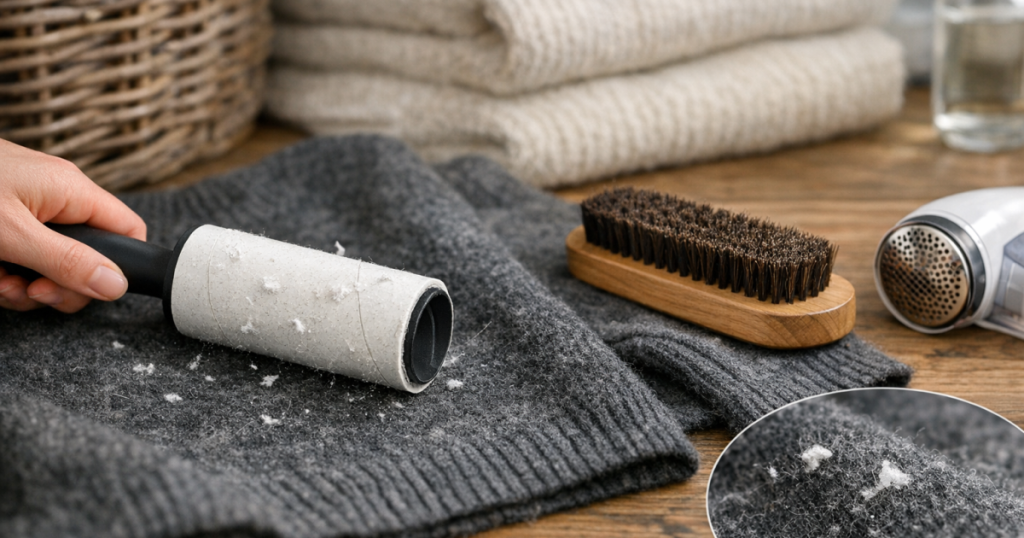
Wool is excellent at trapping warmth, but the same textured surface also catches fluff, pet hair and dust. That makes sticky lint rollers tempting when a dark wool coat or jumper looks tired just before you leave the house. The concern is fair: adhesive sheets can leave residue on wool in the wrong conditions, and the damage is not always visible straight away.
The short answer
Yes, adhesive lint rollers can leave a tacky trace on wool clothes, but it is not inevitable. A clean, good-quality sheet used lightly on a smooth wool coat is usually low risk. Problems are more likely when the roller is pressed hard, dragged over raised fibres, used on damp fabric, or applied repeatedly to delicate knitwear.
The main issue is not always obvious glue sitting on the surface. A tiny amount of residue can attract more dust, flatten the wool’s natural nap, or make a patch look slightly darker or shinier. On brushed wool, cashmere, mohair, angora and loosely spun knits, the roller can also pull fibres forward and make pilling worse.
Why wool is more vulnerable than cotton or synthetics
Wool fibres have a natural scaly surface. That structure helps the fabric insulate, recover from creasing and hold shape, but it also means loose particles cling more readily than they would to a smooth shirt fabric. Many wool garments are also finished with a nap, brushed texture or soft halo. These finishes make the surface feel luxurious, yet they give adhesive sheets more fibre to grip.
On a tightly woven wool suit jacket, the roller mainly touches the surface. On a lambswool jumper or brushed coat, the adhesive can reach into the raised fibres. If you roll too firmly, you are not just removing lint; you may be disturbing the fabric finish. This is why the same roller that seems harmless on a pair of school trousers can feel too grabby on a soft scarf.
When sticky lint rollers are usually safe enough
There are situations where a roller is a convenient tool and unlikely to cause trouble. Use one sparingly on durable, smooth wool fabrics when the garment is dry and clean. A tailored wool coat, blazer or work skirt can usually tolerate a few gentle passes, provided the adhesive sheet is fresh and not overly aggressive.
A good rule is to let the roller do the lifting rather than the pressure of your hand. Hold the fabric steady, roll in one direction, and stop once the visible lint has gone. If the roller drags, squeaks, catches loops or lifts fibres, switch to a gentler tool.
When to avoid an adhesive roller
Some wool garments are better left unrolled. Avoid adhesive sheets on cashmere, angora, mohair, alpaca blends with a visible halo, chunky hand-knits, bouclé, loosely knitted cardigans and vintage wool where the fibres already look fragile. These fabrics can lose surface softness, develop fuzz, or show uneven patches after repeated adhesive contact.
Also avoid rolling wool when it is damp. Moisture can soften finishes and make fibres more vulnerable to pulling. If a coat has been rained on, hang it on a broad hanger and let it dry naturally before removing lint. Do not use a roller on stained areas either, as residue and pressure can spread grime deeper into the fibre.
How to test a lint roller on wool
Before using any adhesive tool across a visible panel, do a small check:
- Choose an inconspicuous area, such as the inside hem, underarm edge or back of a collar.
- Press the sheet lightly once rather than rubbing back and forth.
- Look for fibres stuck to the sheet, not just loose lint.
- Check the fabric in natural light for shine, darkening or a flattened patch.
- Feel the area with clean fingers. If it feels tacky, stop and use a brush instead.
If the test area looks unchanged, use the roller only where needed. Wool does not benefit from being rolled as a routine habit; it is better treated as a quick tidy-up tool.
A better method for removing lint from wool
For regular wool care, a garment brush is often the safer choice. A clothes brush with natural or soft synthetic bristles lifts dust, lint and surface debris without adhesive. Brush with the grain of the fabric rather than scrubbing in circles. On coats, start at the collar and shoulders, then work downwards in short strokes.
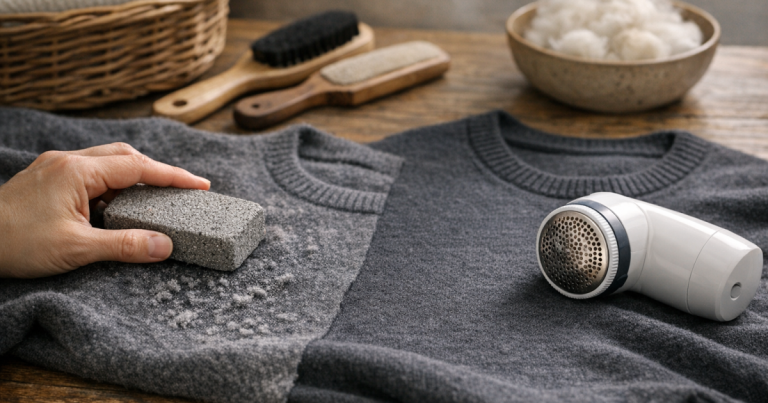
For knitwear, use your hands first. Shake the garment gently, lay it flat, and pick off larger fluff by hand. A dedicated knitwear comb can help with small pills on some jumpers, but it should be used carefully and only on fabrics suited to combing. Do not use a razor blade on wool unless you are prepared for the risk of nicks, thinning or uneven texture.
What about tape?
Household tape is usually a worse option than a roller. It can have stronger adhesive, uneven pressure and sharp edges that catch fibres. Packing tape is particularly unsuitable for wool. If you are away from home and need an emergency fix, a very light touch with a clean piece of low-tack tape on a robust woven coat may help, but it should not become part of normal wool care.
How to remove residue if it has already happened
If wool feels slightly sticky after rolling, do not rub it with water or detergent straight away. First, let the garment rest in a cool, dry place. Sometimes a tacky feel is simply pressure on the nap rather than residue. Once dry and settled, brush the area gently with a clothes brush.
If you can still feel residue, dab the area with a clean, dry, lint-free cloth to lift surface tack. Avoid soaking the fabric. Wool can distort, felt or develop water marks if treated aggressively. For a valuable coat, tailored garment or delicate knit, a reputable dry cleaner is a safer next step than experimenting with solvents at home.
After any residue problem, look at how the garment is stored. Wool that sits uncovered next to fleecy blankets, shedding scarves or dusty shelves will need more lint removal than wool stored properly. For seasonal storage, breathable covers and fabric-appropriate protection are covered in our guide to wardrobe storage bags for wool, knitwear and delicates.
Preventing lint build-up in the first place
The gentlest lint removal is the one you do not need to do often. Wool picks up fluff in wardrobes, on airers, in laundry baskets and from contact with high-shedding fabrics. Store wool away from towels, fleece dressing gowns and fluffy blankets. Keep dark wool coats away from pale scarves that shed. Give garments breathing space so fibres are not constantly rubbing together.
Before putting wool away, brush it and make sure it is completely dry. Damp storage encourages odour and can make dust cling more stubbornly. If you are reorganising clothes by season, fabric and wear frequency, the method in how to organise a wardrobe by fabric, wear and season helps reduce friction and cross-contamination between garments.
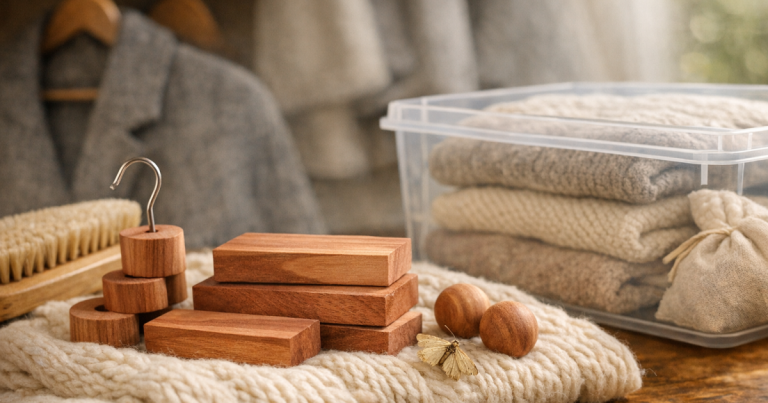
Moth prevention also matters because damaged wool attracts more snagging and surface roughness. Cedar accessories can be part of a broader storage routine, although they are not a complete solution on their own. For a realistic view of what cedar can and cannot do, see whether cedar balls actually protect wool clothes from moths.
Which tool should you use instead?
Choose the tool according to the fabric surface, not just the amount of lint:
- Smooth woven wool coats and suits: a soft clothes brush for routine care; a light adhesive roll only for visible lint before wearing.
- Cashmere and fine merino jumpers: hand-pick fluff, use a very gentle knitwear comb only where suitable, and avoid adhesive wherever possible.
- Mohair, angora and brushed wool: avoid rollers and combs that pull the halo; shake gently and use a very soft brush with minimal pressure.
- School blazers and everyday wool blends: a roller can be practical for quick tidying, but brush regularly to reduce reliance on adhesive sheets.
- Pet hair on wool: use a clothes brush first. If hair remains on robust woven wool, follow with one light pass of an adhesive sheet.
If you use a roller, peel away sheets as soon as they lose their clean surface. A dirty sheet is more likely to smear dust and residue than remove it. Store the roller covered or in a drawer so the adhesive does not collect grit, crumbs or household dust before it touches your clothes.
Common wool-lint questions
Can one use ruin a wool jumper?
One gentle use is unlikely to ruin a robust wool garment, but one firm pass on a delicate, fluffy or loosely knitted jumper can pull fibres and change the surface. The risk depends more on the fabric and pressure than the roller itself.
Why does the rolled area look shiny?
Shine can come from flattened nap, pressure marks or residue attracting fine dust. Brush the area gently in the direction of the fabric. If the shine remains on a tailored garment, stop treating it at home and ask a dry cleaner to assess it.
Are reusable gel lint rollers better for wool?
Not necessarily. Some washable gel rollers feel tackier than paper sheets and can drag on soft fibres. If you use one, test it first and keep it scrupulously clean. A contaminated gel surface can transfer grime onto wool.
In brief
Adhesive rollers can leave residue on wool clothes, particularly on soft, raised or delicate surfaces. They are best treated as an occasional quick fix for smooth woven wool, not a daily care method for knitwear. For most wool garments, a clothes brush, careful storage and light handling will keep fabric looking cleaner with less risk to the fibre finish.