A waterproof work jacket can come out of the wash looking cleaner but still soak up rain on the surface. The safest way to reproof a waterproof work jacket is to clean it properly, choose the right reproofing type, then activate or air-cure it exactly as the care label and product instructions allow.
Reproofing restores the outer water-repellent finish, often called DWR, so rain beads and rolls away instead of spreading across the face fabric. It will not repair a torn membrane, cracked coating, failed seam tape or a jacket that has been damaged by heat, oils or heavy abrasion.
Reproofing certified PPE work jackets, including high-visibility, flame-resistant or chemical-resistant garments, should be specified or approved by the garment manufacturer or a competent PPE professional to maintain compliance with relevant UK workplace safety standards.
In brief
- Reproof only after the jacket has been washed and rinsed thoroughly.
- Use a spray-on reproofer for lined, insulated, logoed or mixed-fabric jackets where the inside should not be treated.
- Use a wash-in reproofer only when the care label and reproofer instructions say it is suitable.
- Avoid fabric conditioner, heavy biological detergent residue and high heat, as these can reduce performance or damage trims.
- Test with water droplets before and after treatment, then repeat only where wetting out remains.
Check the jacket before you add any treatment
Start by deciding whether the jacket is simply wetting out or whether it is genuinely failing. Wetting out means rain spreads into the outer fabric but does not necessarily pass through to your base layer. True leakage usually shows as dampness inside, often along seams, shoulders, elbows or pockets.
Look closely at the care label, waterproofing wording and any workplace markings. Many work jackets use a waterproof membrane, PU coating, taped seams or a softshell face with a water-repellent finish. Reproofing helps the outer surface shed water, but it cannot rebuild a peeling coating or reseal lifting seam tape.
If the jacket has reflective tape, keep treatment away from anything the manufacturer says should not be coated or heat-treated. For washing steps before reproofing, the same gentle approach used to wash hi-vis workwear without damaging reflective strips is a useful reference, especially for site jackets and roadwork layers.
Wash and rinse it properly first
Reproofing over detergent residue, mud, oil or old fabric conditioner gives poor results. Wash the jacket according to its care label before applying any reproofer. Close zips, fasten hook-and-loop tabs, empty pockets and loosen drawcords so they are not bunched in the drum.
Use a technical garment cleaner if the label allows it, or a mild detergent in the smallest effective amount. Avoid fabric conditioner because it can coat fibres and interfere with water beading. For heavily soiled workwear, pre-rinse mud and grit by hand so abrasive particles are not dragged across the fabric during the wash.
Run an extra rinse if the jacket still feels slippery, foamy or strongly scented. Reproofing works best on a clean, residue-free surface. If the garment has embroidered logos, stitched name panels or company branding, avoid aggressive scrubbing around the threads; our guide to how to wash embroidered workwear without loosening logos covers the safer handling principles.
Choose spray-on or wash-in reproofing
There are two common home methods: spray-on and wash-in. Both can work, but they suit different jacket constructions.
Spray-on reproofer
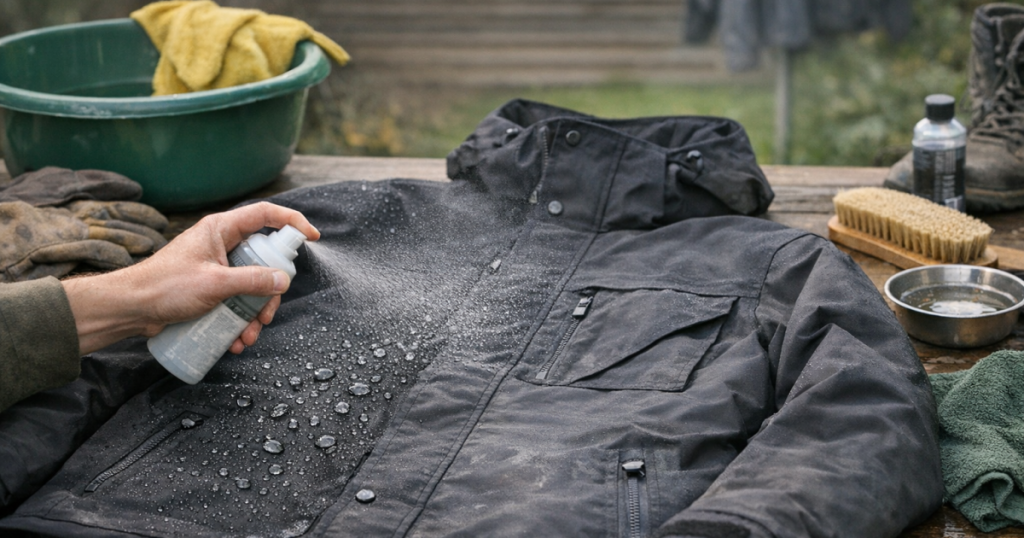
A spray-on treatment is usually the more controlled choice for work jackets. It lets you treat the outer fabric without coating the lining, insulation, wicking panels, logos or inner pockets. It is also easier to target high-wear areas such as shoulders, cuffs, storm flaps and the upper back.
Products such as Nikwax TX.Direct Spray-On and Grangers Performance Repel Plus are familiar examples of spray-on waterproofing treatments, but always check the label against your jacket fabric and workplace requirements rather than assuming universal suitability.
Wash-in reproofer
A wash-in treatment is convenient for simple unlined waterproof shells where the whole garment can be treated evenly. It is less suitable for many work jackets because it can also coat linings and internal fabric areas that are designed to absorb moisture or feel comfortable against clothing.
If you use a wash-in product such as Nikwax TX.Direct Wash-In, clean the detergent drawer first, follow the dose on the bottle and avoid mixing it with detergent. Do not add it to a wash load with ordinary clothing, fleeces or absorbent layers.
Step-by-step: reproof after washing
1. Start with a damp, clean jacket
Most reproofing treatments are applied to a clean damp garment, though instructions vary. Remove the jacket from the machine promptly after the wash and shake it out. Lay it flat or hang it on a broad hanger over a washable surface.
2. Protect trims and work details
Check reflective strips, printed panels, rubberised badges, embroidery, ID windows and hook-and-loop tabs. Wipe away any overspray from these areas unless the treatment instructions clearly allow full coverage. For spray-on use, concentrate on the fabric panels rather than saturating plastic trims.
3. Apply evenly to the outside
Hold the bottle at the distance recommended by the reproofer and apply a light, even coat. Pay attention to shoulders, sleeves, hood peaks, pocket flaps and front plackets because these areas take the most rain. Avoid soaking one patch so heavily that liquid pools or runs.
4. Remove excess before drying
After a few minutes, wipe away visible excess with a clean damp cloth. This reduces streaks, sticky patches and residue around seams. Do not wring the jacket, as twisting can stress seam tape and linings.
5. Dry as the labels allow
Some treatments need gentle tumble drying or warm air to bond properly; others cure by air drying. Follow both the garment care label and the reproofer label. If they conflict, take the more cautious option. Avoid high heat, radiator drying and direct contact with heated rails, especially on taped seams, reflective trim and PU-coated fabrics.
How to check whether the finish has worked
When the jacket is fully dry, place a few small drops of clean water on the shoulders and sleeves. If the finish is working, droplets should bead and sit on the surface for a short time. If they flatten instantly and darken the fabric, the area may need a second light application.
Do not judge the jacket only by one high-wear patch. Cuffs and elbows often wet out first because of abrasion, while the back panel may still repel water well. Spot-treating worn areas can be better than repeatedly treating the whole garment.
If the inside becomes damp during a rain test, inspect seam tape, zips, storm flaps and fabric damage. Reproofing the face fabric will not fix water entering through a broken zip garage, a cracked coating or a seam that has lifted.
Common mistakes that shorten the result
- Using fabric conditioner: it can leave a softening film that fights against water repellency.
- Skipping the rinse: leftover detergent can make the surface wet out quickly again.
- Overheating the jacket: excessive heat can damage coatings, trims and reflective details.
- Treating dirty fabric: mud, grease and workshop residue stop the reproofer bonding evenly.
- Using wash-in treatment on the wrong jacket: lined and insulated work jackets often need more targeted application.
- Expecting reproofing to repair wear: surface treatment is not a substitute for seam repair or replacement when the waterproof layer has failed.
When not to reproof at home
Do not home-treat a jacket that carries specialist protective claims unless the manufacturer’s instructions support that treatment. This matters for flame-resistant, arc-rated, chemical-resistant and certified high-visibility workwear, where an unsuitable coating could affect performance or inspection status.
Also pause if the jacket smells strongly of fuel, solvent, oil or chemicals after washing. Domestic washing and reproofing may not remove hazardous contamination reliably, and coating over residue can trap odour or reduce fabric performance.
For ordinary waterproof work jackets used for commuting, yard work, delivery rounds or general outdoor shifts, careful home reproofing is usually a sensible maintenance step. For employer-issued PPE, follow your workplace laundering and replacement process.
Keep the finish working for longer
Brush off dry mud before washing, clean the jacket only when needed and store it fully dry. Hanging is usually better than crushing it under heavy kit, because deep creases can stress coatings and seam tape over time.
Between washes, wipe local dirt with a damp cloth rather than putting the whole jacket through a full cycle. If you maintain a complete uniform, small habits across the set matter too; for example, avoiding shine when pressing trousers helps workwear stay presentable, as explained in our guide to stopping work trousers going shiny when ironing.
Helpful questions
How often should I reproof a waterproof work jacket?
Reproof when water stops beading after proper washing and rinsing. Do not treat on a fixed schedule unless your employer or garment manufacturer specifies one.
Can I use a normal waterproofing spray meant for shoes?
Only use it if the spray clearly states it is suitable for the jacket’s fabric and protective finish. Footwear sprays may be too harsh, too stiff or unsuitable for breathable garments.
Should the jacket be wet or dry before reproofing?
Many clothing reproofers are applied to damp fabric, but not all. Follow the reproofer instructions exactly, as application method affects coverage and curing.
Why is my jacket still leaking after reproofing?
The problem may be seam tape, zip failure, fabric damage or a worn waterproof membrane. Reproofing restores surface water beading; it does not repair structural waterproofing faults.
Can I tumble dry it to activate the treatment?
Only tumble dry if both the jacket label and the reproofing product allow it. Use the lowest suitable setting and avoid heat on reflective strips or delicate trims.
Why it matters
A well-maintained waterproof work jacket keeps rain on the outside surface, dries faster between shifts and looks more professional for longer. The key is not to add more treatment than necessary, but to clean thoroughly, choose the right method and protect the details that make workwear functional.