Pleats can survive washing if you protect the fold lines before water, spin and heat get involved. The safest way to wash a pleated skirt is to secure the pleats, use cool water, minimise agitation and let the skirt dry in its original shape.
What ruins pleats is usually not water alone. It is a combination of rubbing, twisting, heavy spin cycles, tumble-drying heat, careless hanging and ironing across the folds. The fabric also matters: polyester pleats are often more resilient than wool, silk, satin or mixed-fibre pleats, but every skirt should be treated according to its care label first.
What to know first
- Check the care label before deciding between hand washing, machine washing or dry cleaning.
- Secure the pleats before washing so they do not open out and dry in the wrong position.
- Use cool water and a gentle detergent; avoid heavy scrubbing and fabric softener unless the care label permits it.
- Dry the skirt by supporting its shape, not by stretching it from the waistband while soaking wet.
- Press pleats from the top down with a pressing cloth, never by dragging the iron sideways across the folds.
Step 1: Identify the pleat type and fabric
Before washing, look closely at the pleats. Some are heat-set into synthetic fibres, some are stitched down for part of their length, and some are simply pressed into a natural fibre. A heat-set polyester school or work skirt will usually hold its shape better than a loosely pressed wool or silk skirt, but it can still lose definition if washed roughly.
Check whether the skirt is knife-pleated, box-pleated, accordion-pleated or sunray-pleated. Narrow accordion and sunray pleats need the most care because there are more fold lines to distort. Box pleats can open out if the skirt is twisted, while stitched pleats can pull if the fabric is dragged when wet.
Also check the lining, trims and waistband. A skirt may have washable outer fabric but a delicate lining, decorative tape, faux leather trim or interlining that reacts badly to soaking. If the label says dry clean only, washing at home can change the handle, shrink the lining or weaken the pleat structure.
Step 2: Prepare the skirt before it touches water
Preparation is what keeps the folds disciplined. Lay the skirt flat on a clean towel or bed and smooth each pleat back into position. Work around the skirt slowly rather than grabbing a handful of folds at once.
For sharply pleated skirts, use loose basting stitches, colourfast thread loops or small fabric-safe clips to hold groups of pleats in place. Do not pull thread tightly through the fabric; it should guide the pleats, not pucker them. If you use clips, place them where they will not mark the fabric and remove them before pressing.
Fasten zips, hooks and buttons, and turn the skirt inside out if the outer fabric is prone to friction marks. Put very fine, snag-prone or lined skirts in a mesh bag so the folds are not battered against the drum. For choosing the right size and weave, see our guide to mesh laundry bags for delicates.
Step 3: Choose hand washing for fragile pleats
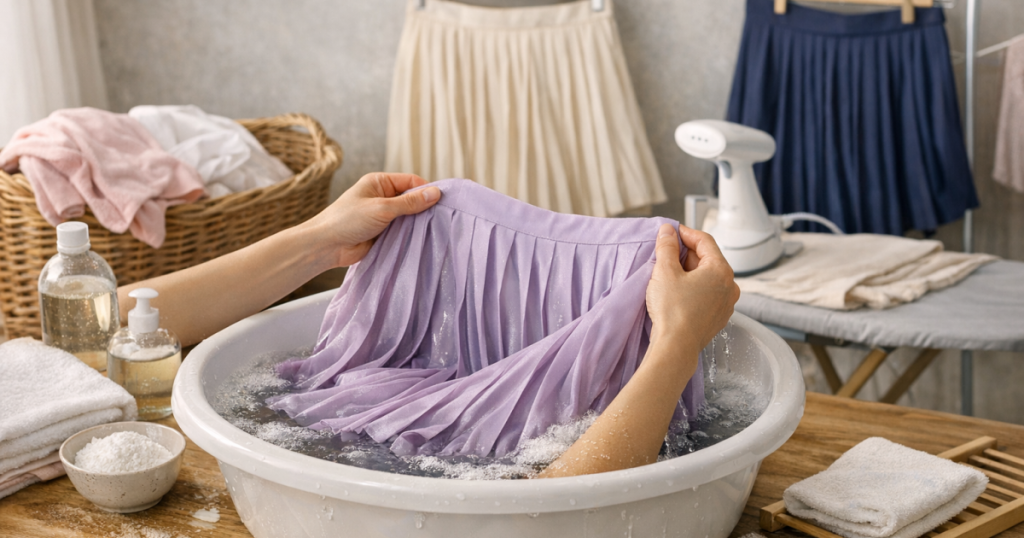
Hand washing gives you the most control, especially for lightweight polyester, satin blends, viscose, silk-look fabrics and older skirts where the pleats are no longer very crisp. Fill a clean basin with cool water. Add a small amount of gentle liquid detergent and mix it fully before adding the skirt, so detergent is not sitting directly on one area.
Lower the skirt into the water folded in its natural pleat direction. Press it down gently with your hands. Do not rub pleat against pleat, scrub the hem or wring the waistband. For normal wear, a short soak followed by light pressing through the water is usually enough.
Rinse in cool water until the water runs clear and the fabric no longer feels slippery. Lift the skirt with both hands to support its weight. Wet fabric is heavier than it looks, and letting it hang unsupported from one point can pull the pleats out of line.
Step 4: Machine wash only when the label allows it
If the care label permits machine washing, choose the gentlest cycle available, cool water and a low spin. Keep the skirt in a mesh bag and avoid washing it with jeans, towels, hoodies or anything with rough zips. A small, light load gives the pleats more room and reduces friction.
Use a measured amount of detergent rather than adding extra for safety. Too much detergent can leave residue in fold lines and make the skirt feel stiff or dull. Skip stain removers and brightening additives unless the care label and fabric type clearly allow them.
Remove the skirt as soon as the cycle ends. Leaving a pleated skirt crumpled in the drum allows creases to set across the pleats, which are much harder to remove than ordinary wrinkles.
Step 5: Dry it in the pleated shape
Never wring a pleated skirt. Place it on a clean towel, roll the towel around it, and press gently to remove excess water. Unroll it straight away and reshape the pleats with your fingers.
For many skirts, the best drying method is flat drying on a towel or drying over a wide rail with the pleats arranged neatly. If you hang it, use a skirt hanger with gentle clips at the waistband and make sure the weight is even. Do not peg the hem, as this can pull the pleats long and leave marks.
Avoid tumble drying unless the care label specifically allows it. Heat can relax pleats, shrink linings, distort waistbands and create shine on synthetic or delicate fabrics. Direct heat from radiators can be just as risky, particularly on pleated school skirts, satin-look occasion skirts and lightweight linings.
Step 6: Restore definition while the skirt is slightly damp
Pleats are easier to guide back into line before the skirt is bone dry. When it is damp rather than wet, lay it flat and align each fold from waistband to hem. Use your fingers, not your nails, to sharpen the fold.
If the skirt has stubborn cross-creases, steam may help, but keep the heat controlled. Hold a garment steamer a short distance away and let the moisture relax the crease without soaking the fabric. For satin or satin-look pleated skirts, the same shine-control principles apply as when you remove creases from satin.
Let the skirt finish drying completely before wearing or storing it. A pleated skirt put away even slightly damp can dry into soft, uneven folds or develop a musty smell in a crowded wardrobe.
Step 7: Press pleats without flattening the wrong areas
Ironing can sharpen pleats, but it can also flatten the skirt if done carelessly. Start with the lowest suitable temperature for the fibre and increase only if the label permits it. Use a clean pressing cloth between the iron and the fabric, especially on dark, synthetic, wool-blend or satin-finish skirts.
Press each pleat in its natural direction. Lift and lower the iron rather than sliding it sideways. The movement should be a firm press, not a sweeping motion. Work from the top of the skirt downwards and keep checking that the fold underneath has not shifted.
If the fabric is prone to shine, press from the wrong side where possible and use steam sparingly. Shine marks are not limited to trousers; they can appear on pleated skirts too, particularly on dark uniform fabrics and smooth synthetics. The technique is similar to the one used to stop work trousers going shiny when ironing.
Common mistakes that flatten pleats
- Wringing the skirt: twisting forces the folds in different directions and can stretch the hem.
- Using a hot wash: heat can relax pleat setting and shrink linings.
- Overloading the machine: pressure from heavier garments crushes pleats and creates random creases.
- Tumble drying for speed: heat and tumbling can soften fold lines before the skirt is back in shape.
- Ironing across the pleats: sideways movement flattens the raised fold and may create shine.
- Storing it tightly packed: compression in the wardrobe can undo careful washing and pressing.
Fabric-specific notes
Polyester school and uniform skirts
These are often the easiest pleated skirts to maintain because many polyester pleats are relatively stable. Still, use cool washing, a gentle cycle and prompt drying. Uniform skirts worn several times a week benefit from airing between washes so they are not cleaned more often than necessary.
Wool and wool-blend pleated skirts
Wool can shrink, felt or lose its smooth finish if agitated. Many wool pleated skirts are better refreshed by airing, brushing and careful steaming between professional cleans. If the label allows hand washing, keep the water cool and handle the skirt with very little movement.
Satin, silk and occasion skirts
Satin and silk need extra caution because water marks, shine and texture changes can be difficult to reverse. Test an inconspicuous area if the label allows washing, and avoid heavy pressing. Use a pressing cloth and keep steam controlled so droplets do not mark the surface.
Questions people ask
Can I wash a pleated skirt in the washing machine?
Yes, but only if the care label allows it. Use a mesh bag, cool water, a gentle cycle, low spin and a light load. Remove it immediately and reshape the pleats before drying.
How do I keep pleats sharp after washing?
Secure the pleats before washing, dry the skirt in its natural shape, then press each fold with a pressing cloth using an up-and-down motion. Avoid dragging the iron across the fabric.
Should I use fabric softener on pleated skirts?
Usually, it is safer to avoid it unless the label recommends it. Softener can leave residue in fold lines and may change the handle of delicate or synthetic fabrics.
What if the pleats have already gone flat?
Lightly dampen the fabric if suitable, realign each pleat and press with a cloth. If a heat-set pleat has fully relaxed or a delicate skirt is misshapen, professional re-pleating or cleaning may be needed.
Is dry cleaning better for pleated skirts?
For wool, silk, structured designer skirts or labels marked dry clean only, it is usually the safer route. For washable polyester or everyday uniform skirts, careful home washing can work well.
Why it matters
A pleated skirt is not difficult to care for, but it does need a slower routine than a plain skirt. Protecting the fold lines before washing, keeping water cool, reducing agitation and drying in shape will do more for the pleats than trying to fix them afterwards with a hot iron.
When in doubt, treat the skirt as a delicate garment rather than an everyday wash item. That small shift in handling helps the pleats stay crisp, the fabric stay smooth and the skirt remain wearable for longer.