Viscose dresses can look beautifully fluid on the hanger, then come out of the wash longer, twisted or slightly misshapen if they are handled like cotton. The safest way to wash viscose dresses is to keep them cool, supported and barely agitated, then dry them flat back into their original outline.
The main risk is not simply shrinkage. Viscose fibres can weaken when wet, so pulling, wringing, heavy spin cycles and hanger drying can all distort the garment before it has had a chance to recover.
At a glance
- Check the care label first; some viscose dresses are dry-clean only because of lining, trims, dye or construction.
- Use cool water, ideally around 20–30°C, and a mild detergent.
- Hand wash where possible, or use a very gentle machine cycle in a mesh bag if the label allows.
- Do not wring, twist or hang the dress while it is dripping wet.
- Dry flat on a towel, reshaping the shoulders, waist, hem and seams while damp.
- Steam or press only when nearly dry or fully dry, using low heat and a pressing cloth.
Why viscose loses shape so easily
Viscose is made from regenerated cellulose fibres. It is loved for its soft drape, light handle and almost silky movement, which is why it is common in wrap dresses, shirt dresses, tea dresses and summer occasionwear. The same drape that makes it flattering also means it has less natural bounce-back than many cotton or synthetic fabrics.
When viscose is wet, the fibres can become more vulnerable to stretching. A full-length dress holds a surprising amount of water, and that extra weight pulls down through the shoulders, waist seam and hem. If the dress is lifted by one strap, twisted to remove water, or hung on a hanger straight from the wash, the fabric may dry into a longer or uneven shape.
The construction matters too. Bias-cut panels, gathered waists, elasticated backs, button plackets and lined skirts all respond differently to water. A plain viscose shift dress is usually easier to manage than a tiered maxi dress with lots of seams, or a viscose blend with delicate embroidery.
Before washing: check the dress, not just the fabric name
Start with the care label, but also inspect the garment. Viscose dresses vary widely: one may be machine washable, while another needs professional cleaning because the dye is unstable or the lining may shrink at a different rate from the outer fabric.
- Look for the fibre mix. Viscose blended with elastane, polyester or linen may behave differently from 100% viscose.
- Check for trims, covered buttons, beading, embroidery, pleats, shoulder pads or structured waistbands.
- Test colour fastness on an inside seam with a damp white cloth before soaking.
- Measure the dress if fit is critical, especially the length from shoulder to hem and the waist width.
- Fasten buttons, ties and zips so the garment does not pull out of shape.
If the dress has stitched branding, embroidery or workwear-style detailing, treat those areas as fragile rather than scrubbing across them. The same logic used for washing embroidered workwear without loosening logos applies here: support the fabric, avoid friction, and clean around raised stitching carefully.
The safest hand-wash method
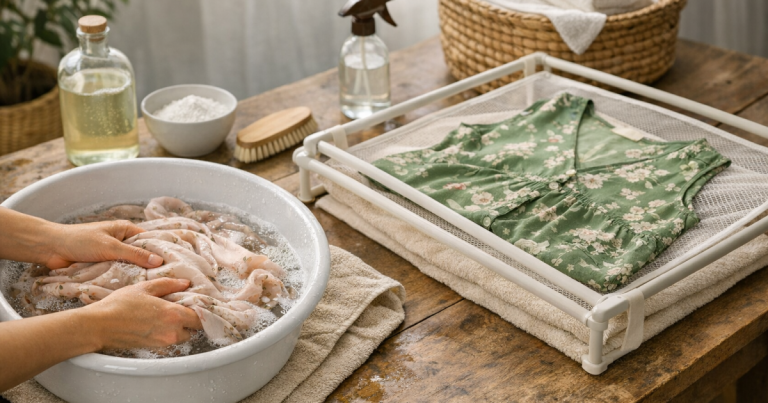
Hand washing gives you the most control over movement and weight. It is usually the best approach for viscose dresses that are washable but feel light, fluid, crinkled or loosely constructed.
Step 1: Fill a basin with cool water
Use cool water rather than warm. Around 20–30°C is usually enough for everyday freshness without stressing the fibres. Avoid sudden temperature changes, as moving from warm washing to cold rinsing can encourage distortion in some garments.
Step 2: Add a small amount of mild detergent
Use less detergent than you would for a full machine load. Too much detergent makes rinsing harder, and repeated handling during rinsing is one of the ways viscose gets stretched. A mild non-bio liquid is often a sensible choice for delicate dresses; Fairy Non-Bio Laundry Detergent is one familiar UK example, but the key point is to use a gentle detergent sparingly and follow the garment label.
Step 3: Submerge and press, do not rub
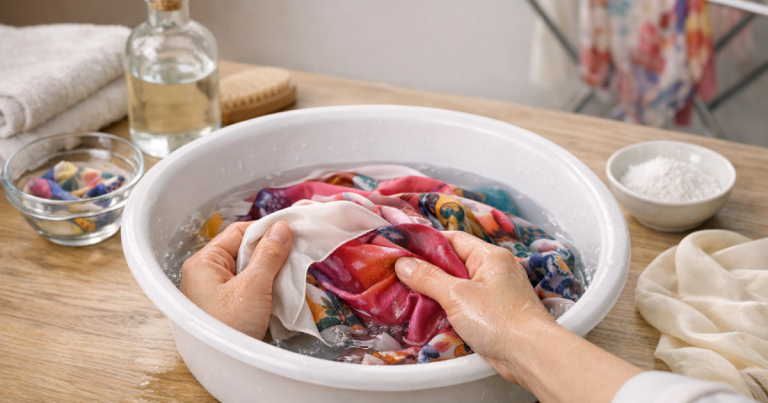
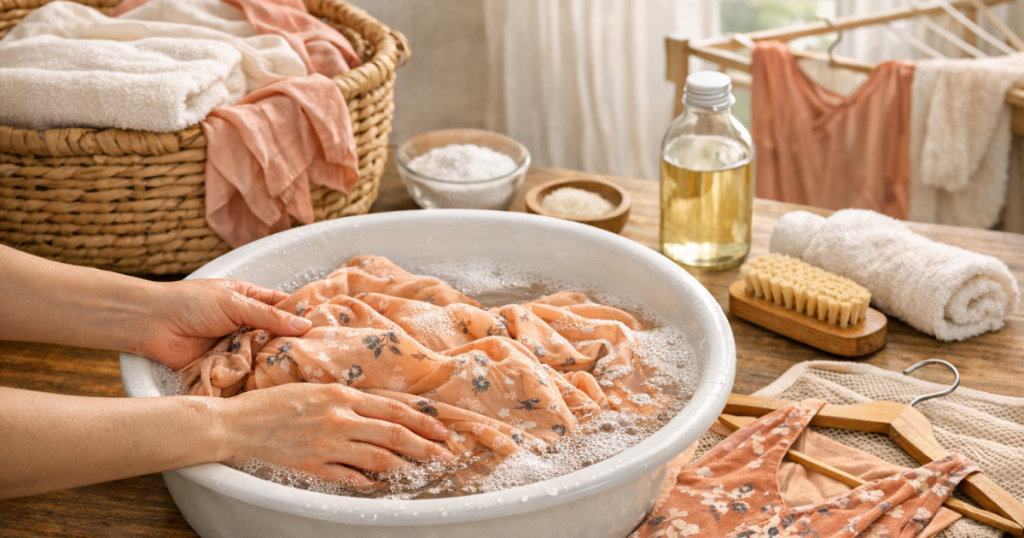
Lower the dress into the water fully supported in both hands. Press it down gently so the water moves through the fabric. Do not scrub underarms, twist the skirt, or rub fabric against fabric. For light perspiration marks, gently squeeze the area under the water rather than treating it like a stain on a cotton T-shirt.
Step 4: Keep soaking short
Five to ten minutes is usually enough for a lightly worn viscose dress. Longer soaking can increase dye bleeding and fibre swelling, particularly on darker prints. If the water changes colour quickly, drain it and rinse rather than leaving the dress to sit.
Step 5: Rinse with the same gentle handling
Drain the basin while supporting the garment. Refill with cool clean water and press the dress gently to release detergent. Repeat if needed. Avoid holding the dress up while it is saturated; gather it in both hands or keep it supported in the basin.
If the label allows machine washing
Machine washing is not automatically wrong, but it gives you less control. Only use it when the care label permits it and the dress construction looks robust enough. A mesh laundry bag helps reduce snagging and twisting, especially with wrap ties, belt loops or fine shoulder straps.
- Choose a delicates, hand-wash or wool-style cycle with low agitation.
- Use cool water, not a hot cottons programme.
- Select the lowest spin that will remove some water without pulling the fabric hard.
- Wash the dress with light, smooth items only; avoid jeans, towels and heavy sweatshirts.
- Turn printed or dark dresses inside out to reduce surface wear.
If you use a modern front-loading machine, the exact cycle names and spin settings vary by model. For a more detailed look at setting up gentle programmes, see our guide to using a Bosch Serie 4 for delicates; the same principles of cool water, low movement and garment support apply to viscose.
Removing water without stretching the dress
This stage is where many viscose dresses lose shape. Do not wring the garment, even if it feels heavy. Instead, lift it as a bundle, supporting the full length, and lay it on a clean towel.
Roll the towel with the dress inside, then press down with your hands to absorb water. Unroll, move the dress to a second dry towel if needed, and smooth it gently into shape. This reduces drying time without putting tension through the seams.
Check the neckline, shoulder seams, side seams, waist seam and hem while the fabric is still damp. If the dress has grown slightly, ease it back into shape with flat hands rather than pulling from the ends. For a wrap dress, align the front edges and ties so they dry evenly.
Drying flat: the shape-saving step
Dry viscose flat whenever space allows. A clothes airer with a towel over the bars can work, provided the dress is fully supported and not drooping through the gaps. Keep it away from direct heat, radiators and strong sunlight, which can cause uneven drying or fading.
- Lay the dress flat on a towel in its natural outline.
- Align seams so they are not spiralling around the body.
- Smooth the skirt from waist to hem without stretching it longer.
- Turn the dress over once the top side feels less damp.
- Wait until it is almost dry before moving it to a hanger, if hanging is needed at all.
For longer dresses, support the skirt as well as the bodice. Hanging a wet viscose maxi dress by the shoulders can add noticeable length. If you must use a hanger for the final stage, choose a broad padded hanger and place the dress on it only when it is barely damp.
Dealing with creases after washing
Viscose often creases during washing, but aggressive ironing can create shine, seam marks or stretched edges. Let the dress dry until it is just slightly damp, then use steam carefully or press on a low setting with a clean pressing cloth.
Work with the grain of the fabric rather than dragging the iron diagonally. Lift and place the iron instead of pushing it hard across the surface. On gathered waists, sleeves and bias-cut panels, use short presses and let the fabric cool before moving it.
If the dress has a satin-like finish or a water-mark-prone surface, be cautious with steam droplets. The technique is similar to steaming satin dresses without water marks: test an inside area first, keep the steamer head moving, and avoid spitting water onto the face of the fabric.
Special cases: pleats, linings and printed viscose
Pleated viscose needs extra care because water and handling can soften the fold memory. If the care label allows washing, keep the pleats aligned while wet and dry the garment flat without spreading the folds open. For sharper pleated garments, the safer route may be professional cleaning, especially if the pleats are heat-set or the dress is lined.
Our advice on washing a pleated skirt without flattening the pleats is useful for viscose dresses with pleated panels, because the same risk applies: too much agitation can relax the structure before the fabric dries.
Lined viscose dresses can be awkward because the outer fabric and lining may shrink or stretch at different rates. If the lining starts to hang below the hem after washing, do not trim it. Let the dress dry completely, steam lightly, and reassess. Some temporary unevenness settles as the fibres relax.
Printed viscose should be washed inside out and kept out of harsh sunlight while drying. Dark floral prints and bold colours can show rubbing at seams if washed with rougher fabrics, so give them space in the basin or machine.
What to avoid
- Do not wash in hot water unless the care label specifically allows it.
- Do not wring, twist or pull the dress to remove water.
- Do not hang a saturated viscose dress from the shoulders.
- Do not tumble dry unless the care label clearly says it is allowed.
- Do not scrub stains across the grain of the fabric.
- Do not overload the machine, as crowding increases creasing and distortion.
If a mark needs treating, handle it before the full wash and keep the treatment local. Blot rather than rub, and avoid strong stain removers unless the label and dye test support it. Viscose can look permanently abraded if a stain is scrubbed too firmly.
Common questions
Can viscose shrink every time it is washed?
It can shrink or change shape if washed too warm, agitated heavily or dried under tension. Careful cool washing and flat drying reduce the risk, but some dresses are labelled dry-clean only for good reason.
Can I stretch a viscose dress back after it shrinks?
Sometimes you can ease a damp dress gently back towards its original measurements, but it is not guaranteed. Work slowly while the fabric is damp, support the garment flat, and avoid pulling seams out of line.
Is viscose the same as rayon?
Viscose is a type of rayon. UK garment labels often use the word viscose, while some international labels may use rayon. The washing concern is similar: the fabric can become weaker and more distortion-prone when wet.
Should I iron viscose inside out?
Yes, for most dresses it is safer to iron inside out with a pressing cloth. Use low heat, gentle steam if suitable, and avoid pressing hard over seams, buttons or textured areas.
How often should I wash viscose dresses?
Wash only when needed. Airing after wear, spot cleaning small marks and using a steamer carefully can reduce full washes, helping the dress keep its drape and colour for longer.
What to remember
Viscose dress care is mostly about support. Keep the water cool, movement gentle and drying flat. The dress should never be left to hang under its own wet weight, and it should be reshaped while damp rather than corrected after it has dried badly.
Once you understand that wet viscose behaves differently from cotton, the process becomes straightforward: wash briefly, handle with both hands, remove water with towels, dry flat and finish with low heat. That routine gives your dress the best chance of keeping its original drape, length and fit.