The usual cause of clothes smelling damp on an airer is slow drying, not simply the airer itself. When laundry sits wet for too long, trapped moisture gives odour-causing bacteria and mildew more time to develop, especially in cool British homes with limited winter ventilation. The fix is to make clothes leave the machine cleaner, drier and better spaced, then help moisture move away from the fabric quickly.
A fresher airer routine does not require harsh products or constant rewashing. Most problems come down to overloaded washes, low spin speeds, bunched fabric, poor room choice or leaving items half-dry for too long.
At a glance
- Use the highest safe spin speed for the fabric before hanging laundry.
- Do not overfill the washing machine; detergent and rinse water need space to move.
- Hang heavier items over two bars or on hangers so air reaches both sides.
- Dry in a room with airflow, not a closed, cold corner.
- Remove fully dry items promptly and avoid mixing damp and dry clothes in one pile.
Start with the wash: damp odour often begins before the airer
If clothes already smell faintly stale when they come out of the drum, the airer will not rescue them. The first check is the wash itself. A machine packed tightly with towels, hoodies, bedding or uniforms may wet everything, but it may not clean or rinse evenly. Soil, body oils and detergent residue can remain in the fibres, then turn musty as the garment dries slowly.
Load the drum so items can tumble rather than sit as one solid mass. As a rough check, you should be able to place a hand at the top of the loaded drum without forcing space. For bulky loads, split washing into smaller batches and give heavier fabrics room to move.
Use a detergent amount that suits your load size, soil level and local water hardness. Too little can leave odour behind; too much can leave residue that holds moisture and makes fabrics feel clammy. If you use fabric conditioner, keep it modest, particularly on towels and sportswear, because build-up can reduce absorbency and slow drying.
Spin more water out before the clothes reach the airer
The wetter the load is when it comes out of the machine, the longer it sits on the airer. That extra drying time is where musty smells usually develop. For cotton T-shirts, jeans, bedding and many everyday garments, choose the highest spin speed the care label and machine programme allow. For wool, silk, viscose or embellished garments, follow the care label and use gentler handling.
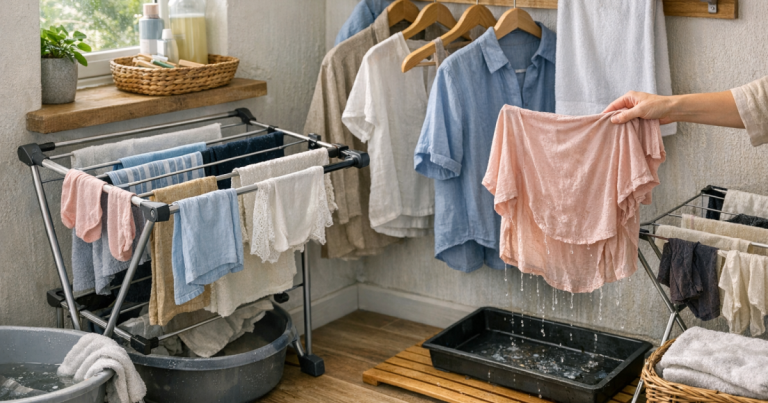
If a load still feels heavy and dripping after the cycle, run an extra spin where suitable. This is often more fabric-friendly than leaving items wet for many extra hours. For delicate pieces that cannot tolerate a fast spin, gently press out water in a clean towel before hanging rather than wringing, which can distort seams and fibres.
For more detail on matching drying choices to fibre type, see our guide to choosing the right drying method for each fabric.
Shake, separate and reshape before hanging
Clothes that go straight from a twisted pile onto the airer dry unevenly. Shake each item open before hanging it. Separate sleeves, unroll waistbands, flatten collars and open pockets. Small steps like this reduce thick, damp areas where odour can linger.
Pay particular attention to:
- Hoodies: open the hood and cuffs, and avoid folding thick seams over a single bar.
- Jeans: pull out pockets and hang from the waistband or over two bars.
- Towels: give each towel as much surface area as possible; do not layer several on top of each other.
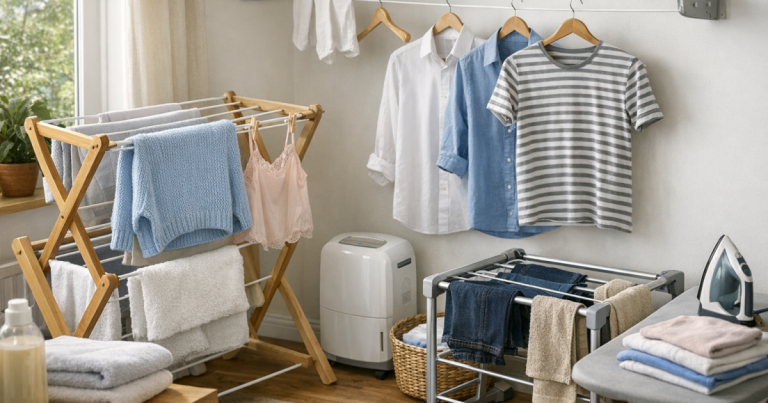
- School shirts and work shirts: hang on hangers if space allows, with buttons undone for airflow.
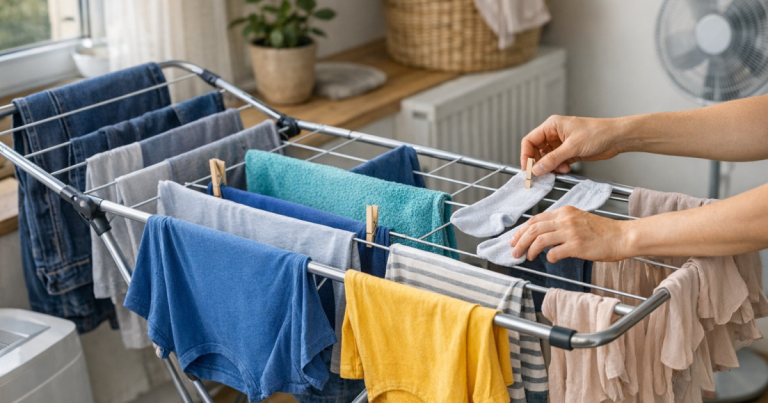
- Socks: separate pairs fully and avoid bunching them in the middle of the airer.
Do not overcrowd the airer
An airer works by giving moisture a path out of the fabric. When clothes are crammed together, they create a damp pocket of still air. Items may feel dry at the edges but remain wet at seams, waistbands and under folded sections.
Leave gaps between garments wherever possible. If you have a full household load, use a second airer, a few hangers on a rail, or dry the load in stages. It is usually better to dry half a load properly than to pack a whole wash so tightly that everything smells stale by the next day.
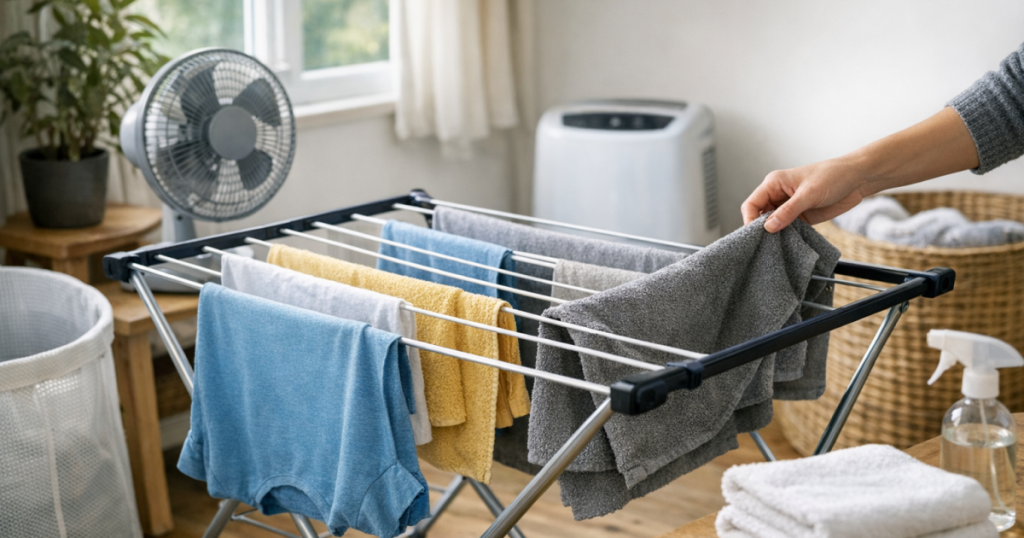
Hang large items over two bars instead of folding them thickly over one. Put heavier pieces on the outer rails where air circulates more freely, and place lighter items such as underwear, thin tops and cloths towards the centre. Rotate bulky garments after a few hours if one side is drying much faster than the other.
Choose the right room, not just the nearest space
A closed spare room, cold hallway or unventilated utility corner can trap moisture around wet laundry. The best room for an airer is one where moisture can escape without making the whole space feel damp. In many UK homes, that means a room with a small amount of background heat and controlled ventilation.
Avoid drying laundry directly against external walls, inside wardrobes, behind doors or right next to soft furnishings. These areas restrict air movement and can hold condensation. If you dry in a bedroom or living area, keep the airer away from walls and leave a clear gap around it.
Open a window briefly when practical, use an extractor fan if drying near a bathroom or utility area, or run a dehumidifier if your home is prone to condensation. You do not need a draught blasting directly at delicate fabrics; you need steady air exchange so moisture leaves the room instead of settling back onto laundry.
For a deeper look at room choice, condensation and fabric-safe airflow, read how to dry clothes indoors without damaging fabrics.
Use heat carefully
Warmth helps drying, but direct heat can cause problems for some fabrics. Placing clothes too close to a radiator can make fibres dry unevenly, stiffen certain finishes, or encourage condensation on nearby windows and walls. It can also create very dry outer layers while seams and folded sections remain damp.
If you use a heated airer, still leave space between garments and avoid piling clothes under a cover for too long without checking progress. Covers can speed drying in some setups, but if the load is too dense they may also trap moisture around the middle items. Open or adjust the cover periodically so damp air can escape.
For woollens, viscose, silk blends and delicate knits, avoid aggressive heat. Reshape them while damp and dry flat where the care label recommends it. A stale smell is not worth stretching, shrinking or glazing a fabric finish.
Check timing: the first few hours matter
Laundry should not sit wet in the washing machine after the cycle ends. Even a clean load can start to smell if left warm and damp in the drum for hours. Move it to the airer as soon as you reasonably can, shake it out, and give the thickest items the best drying positions.
If you wash late in the evening, make sure the room will have enough ventilation overnight. In a cold, closed room, a load may remain wet until morning and develop that familiar musty note. If overnight drying is unavoidable, spin well, space the items generously and avoid washing large towel or bedding loads unless you have enough drying space.
Once clothes are dry, take them off the airer rather than leaving them to absorb household moisture. Check cuffs, underarms, waistbands and pocket areas before folding. If any part feels cool and damp, leave the garment out longer.
When the smell is already there
If a garment smells musty after drying, do not hide it with sprays or put it straight in a drawer. The odour can transfer to other clothes and make storage spaces smell stale. Rewash the affected items, using an appropriate cycle for the fabric and avoiding an overloaded drum.
For washable cottons, towels and gym kit, a warmer wash may help if the care label permits it. For delicate fabrics, stay within the label instructions and focus on thorough rinsing, careful spinning and fast drying. If the item smells only slightly stale, airing it outside on a dry, breezy day can help, but a strong damp smell usually needs washing again.
Clean the washing machine if repeated loads smell off. Wipe the door seal, leave the door and detergent drawer open after use, and run the machine’s maintenance cycle according to the manufacturer’s instructions. A dirty drum or mouldy seal can seed odour into every wash.
Build a fresher airer routine step by step
Step 1: Sort by drying speed
Group heavy and light items where possible. Towels, jeans and sweatshirts need more space and time than shirts or underwear. Sorting by drying speed makes it easier to give bulky pieces the best airer positions.
Step 2: Wash a load your airer can handle
Think about drying space before pressing start. If your airer cannot hold the load with gaps between items, wash less at once or plan a second drying area. This is one of the simplest ways to avoid stale-smelling laundry in smaller homes and flats.
Step 3: Spin appropriately
Use a strong spin for robust everyday fabrics and a gentler approach for delicate garments. The aim is to remove excess water without damaging fibres, seams or surface texture.
Step 4: Hang for airflow
Shake items open, use hangers for shirts where helpful, and avoid layering wet fabric. Turn or reposition thick garments partway through drying.
Step 5: Control the room environment
Choose a ventilated space, manage condensation and keep the airer away from walls. A good laundry area does not have to be large, but it does need a clear drying route for moisture. Our guide to setting up a laundry area that protects clothes covers layout ideas for making washing, drying and sorting work more smoothly.
Fabric-aware fixes for common problem items
- Towels: Wash without overloading, avoid excessive conditioner, spin well and give each towel its own space. Thick towels are among the quickest items to turn musty when folded over themselves.
- Sportswear: Wash soon after wearing, use a suitable detergent dose and avoid leaving it damp in a gym bag. Synthetic fibres can hold odour if body oils are not removed properly.
- Uniforms: Dry shirts and trousers on hangers where possible so seams and waistbands get airflow. Check they are fully dry before storing for the week.
- Knitwear: Do not chase freshness with high heat. Press water out gently, reshape and dry flat if the care label requires it.
- Bedding: Do not fold large sheets into thick layers on one airer. Spread them over doors or rails only where surfaces are clean, dry and suitable, and keep airflow moving through the room.
Questions people ask
Why do clothes smell damp even when they feel dry?
Thick areas such as cuffs, pockets and waistbands can stay slightly damp after the main fabric feels dry. Odour can also remain if the wash did not remove body oils or detergent residue properly.
Can I stop clothes smelling damp by using more detergent?
Usually no. Too much detergent can leave residue that traps moisture and odour. Use the correct dose for the load size, soil level and water hardness, then focus on rinsing, spinning and airflow.
Is it better to dry clothes near a radiator?
A warm room can help, but clothes should not be packed tightly against direct heat. Keep space around the airer, avoid blocking radiators, and make sure moisture can leave the room.
How long is too long for clothes to sit on an airer?
There is no fixed number because fabric weight, room temperature and ventilation vary. As a practical rule, if items are still noticeably damp the next day, improve spin, spacing or airflow for the next load.
Do I need to rewash clothes smelling damp after airer drying?
If the smell is clear and musty, rewash them. Storing them will usually make the odour linger and may transfer it to drawers, wardrobes and nearby garments.
Why it matters
Stopping damp smells is not just about nicer laundry. Slow drying can leave fabrics feeling rough, make wardrobes smell stale and encourage repeated washing that wears clothes out sooner. A better airer routine protects everyday clothing, school and work uniforms, towels and delicates by reducing the time they spend wet.
The most reliable approach is simple: wash loads your machine and airer can handle, remove as much water as the fabric safely allows, hang everything with space around it, and keep air moving through the room. Once those basics are consistent, clothes are far less likely to smell damp after drying indoors.