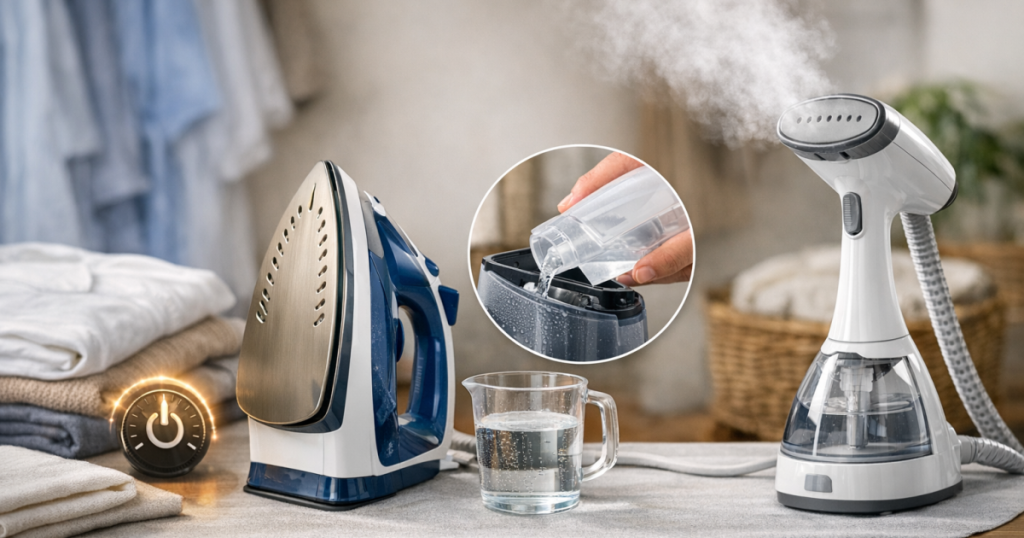
The most confusing iron and steamer features are often the ones that make the biggest difference at home: wattage, steam output and water tank size. They influence how quickly the appliance heats, how well it relaxes creases, how often you refill it and how gentle it feels on everyday clothing, workwear and delicate fabrics.
These numbers are useful, but they do not tell the whole story. A high figure on a product page is only helpful if the appliance controls steam well, feels comfortable to use and suits the fabrics you actually wear.
The short version
- Higher wattage usually means faster heat-up and stronger recovery between garments, but it does not automatically mean better fabric care.
- Steam output matters more than wattage for stubborn creases, especially on cotton shirts, linen, uniforms and thicker fabrics.
- A bigger tank gives longer steaming or ironing sessions, but can add weight and make the appliance less comfortable.
- Continuous steam is useful for general crease removal; steam bursts help with targeted areas such as collars, cuffs and seams.
- Fabric type should guide your settings more than headline power figures. Wool, viscose, silk blends and embellished garments need extra caution.
Why wattage gets so much attention
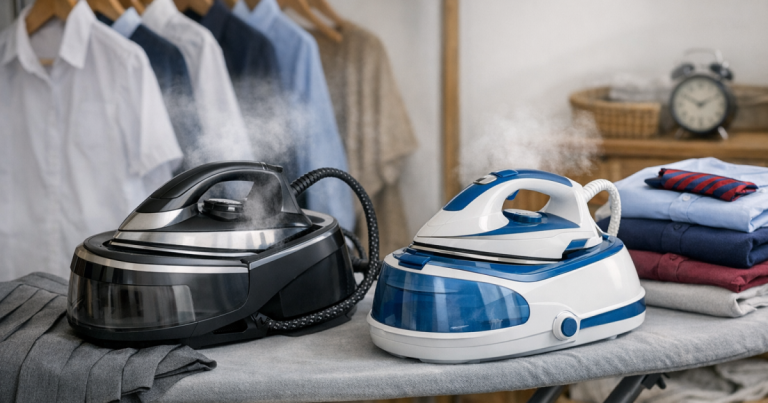
Wattage tells you how much electrical power an iron or steamer is designed to draw. In practical terms, it often affects heat-up speed and how quickly the appliance can recover temperature after steam is released. A higher-wattage steam iron may feel more responsive during a basket of shirts because the soleplate can maintain heat more consistently.
For a traditional steam iron, this can matter when pressing cotton bedding, school shirts or work trousers. If the soleplate cools too much during use, steam can weaken and creases may need repeated passes. For a garment steamer, wattage is more about how quickly water is converted into usable steam and how stable the steam feels once you start moving down the garment.
That said, wattage is not a quality score. Two appliances with similar wattage can perform differently because of soleplate design, steam chamber layout, controls and how evenly steam is distributed. A well-designed mid-powered appliance can be easier on fabrics than a powerful model that spits water, feels heavy or has poor temperature control.
Steam output: the figure that affects crease removal most
Steam output is usually given in grams per minute. It describes how much steam the appliance can produce during use. More steam can help fibres relax faster, which is why it is helpful on cotton, linen and heavier woven garments. It is also useful when refreshing clothes that have been packed tightly or dried slightly stiff.
There are usually two steam figures to understand. Continuous steam is the steady flow used while ironing or steaming. Steam shot, steam boost or burst steam is a short, stronger release for difficult areas. On an iron, a burst can help with shirt plackets, trouser creases and seams. On a steamer, a stronger flow can help loosen packing creases, although it will not create the same crisp pressed finish as an iron.
Steam output also has a fabric-safety angle. More steam is not always better for delicate garments. Viscose can distort when over-wetted, silk can mark if treated carelessly, and structured garments can lose shape if steamed too aggressively. Always start lower, test discreetly where possible and use distance rather than pressure on fabrics that are prone to shine, stretching or water marks.
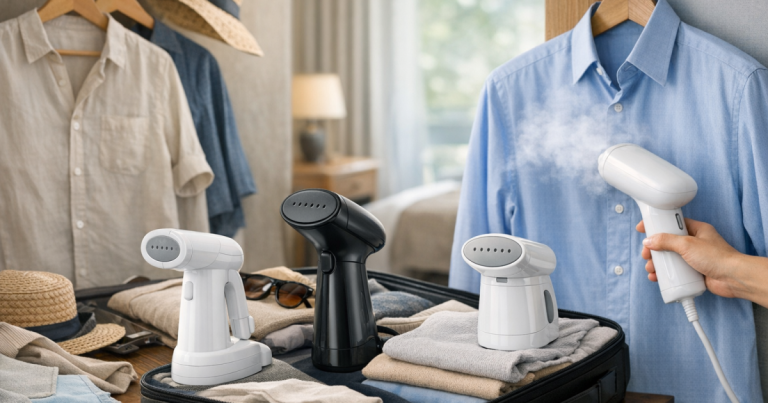
If you regularly deal with creased clothes after travel, steam output is only part of the decision. Portability, tank capacity and garment access matter too, which is why our guide to travel steamers for creased clothes after packing looks at the practical compromises in more detail.
Tank size: convenience versus comfort
Water tank size affects how long you can work before refilling. A compact handheld steamer may be convenient for one outfit but frustrating for several garments in a row. A larger steam iron tank can get through more laundry, but the extra water adds weight in the hand.
The right tank size depends on your routine. If you mainly refresh one dress, blouse or shirt before leaving the house, a smaller tank may be enough. If you iron a weekly batch of uniforms or bedding, a larger tank or a steam generator-style setup may reduce interruptions. The trade-off is storage space, handling and, in some cases, a longer cool-down period before putting the appliance away.
Tank design matters as much as capacity. A wide filling opening, visible water level and secure cap can make the appliance less annoying to use. Removable tanks can be easier to fill at the sink, while fixed tanks may feel more robust depending on the design. Check whether the manufacturer recommends tap water, filtered water or a specific descaling routine, especially in hard-water areas of the UK.
How these features behave on real fabrics
Cotton shirts and uniforms
Cotton usually benefits from good heat and generous steam. A steam iron with reliable continuous steam can make quicker work of collars, cuffs and button plackets. For a crisp finish, ironing is still more effective than steaming because the soleplate applies heat and pressure as well as moisture.
Linen and linen blends
Linen responds well to steam, but it can crease again quickly. A strong steam burst can help stubborn fold lines, while ironing slightly damp linen often gives a better finish than trying to rescue it when bone dry. Avoid dragging too aggressively, as this can distort seams or lightweight blends.
Wool, knitwear and textured garments
Steam can relax wool fibres, but direct pressure can flatten texture or create shine. Hold a steamer slightly away from the garment, or use an iron’s steam function without pressing hard. For storage-related creasing in wool and knitwear, handling and folding habits matter too; our guide to hanging versus folding clothes explains how to avoid shape damage between wears.
Silk, viscose and delicate blends
Delicates need the most restraint. Use lower heat, avoid saturating the fabric and keep the appliance moving. Some garments are best steamed from the reverse side or through a clean pressing cloth. If the care label says dry clean only, do not assume home steam is safe simply because it feels gentler than ironing.
Feature claims that need a closer look
Product descriptions can make steam appliances sound more straightforward than they are. When you see a high wattage claim, ask whether the controls are precise enough for delicate fabrics. When steam output looks impressive, check whether it is continuous steam or only a short boost figure. When the tank is large, think about the filled weight and whether you will comfortably hold it at shoulder height.
Some steam irons, such as the Philips Azur Elite Steam Iron, are often discussed in relation to stronger steam performance and modern soleplate design, but the right choice still depends on your laundry habits, fabric mix and tolerance for weight. Do not judge any iron or steamer by a single headline number.
It is also worth thinking about the surface underneath the garment. A stable board, good cover and safe working height can improve the result as much as the appliance itself. If your ironing setup feels awkward, the Brabantia Airs 600 Deluxe ironing board review is a useful example of the kind of board features that affect everyday use.
Steamers and irons do different jobs
A garment steamer is excellent for softening creases, refreshing lightly worn clothes and dealing with garments that are awkward to place flat. It is particularly useful for dresses, pleated items, light jackets and travel creases. It is not the best tool for sharp trouser creases, crisp shirt collars or formal cotton finishes.
A steam iron gives more structure because it combines heat, steam and pressure. It is better for shirts, bedding, table linen and anything that needs a clean pressed edge. The trade-off is that it requires a board or pressing surface, more care with temperature and more attention to shine-prone fabrics.
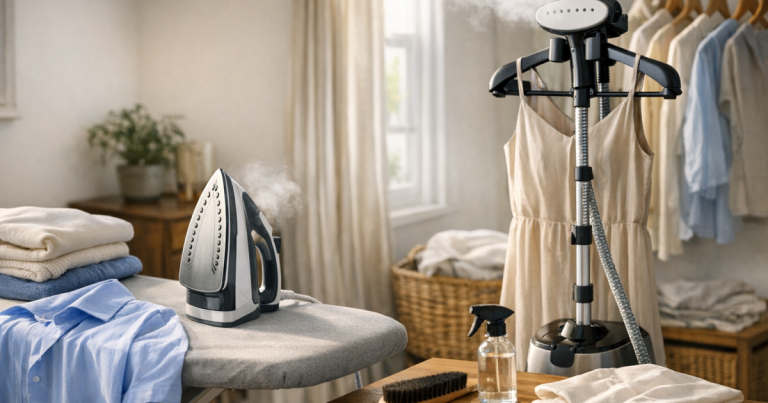
Many homes benefit from both approaches: an iron for proper pressing and a steamer for quick refreshes. If you only want one appliance, base the decision on the clothes you wear most often, not on the most powerful specification. A wardrobe full of cotton shirts points towards a good steam iron; dresses, relaxed tailoring and delicate tops may justify a steamer.
Small details that make features more useful
- Steam control: Adjustable steam gives more flexibility than a single fixed setting.
- Anti-drip design: Helpful at lower temperatures, where water spotting can be an issue.
- Descaling access: Important in hard-water areas, especially if the appliance is used weekly.
- Soleplate glide: A smooth soleplate reduces tugging on seams, pockets and lightweight fabrics.
- Cord length and storage: More important than it sounds if your plug socket is not close to your board.
- Weight when full: Check the handling weight, not just the empty appliance weight.
For a broader look at matching tools to garment care routines, see our ironing and steaming equipment guide.
Questions people ask
Is higher wattage always better for a steam iron?
No. Higher wattage can improve heat-up and recovery, but soleplate quality, steam control, weight and fabric settings are just as important for everyday results.
What steam output is best for shirts?
For cotton shirts, steady continuous steam and a useful burst function are more important than the highest number on the box. Collars and cuffs usually need targeted steam plus pressure.
Does a bigger water tank mean a better steamer?
Not automatically. A bigger tank gives longer use between refills, but it can make a handheld steamer heavier and less comfortable to hold upright.
Can steam damage clothes?
Yes, if the fabric is heat-sensitive, over-wetted or not suitable for home steaming. Delicate fibres, embellished garments and structured tailoring need careful handling and a care-label check.
Should I buy an iron or a steamer for work clothes?
If your work clothes are mainly shirts, trousers and uniforms, an iron usually gives a sharper finish. If they are dresses, soft blouses or relaxed separates, a steamer can be more convenient.
What stands out
Wattage, steam output and tank size are helpful clues, not guarantees. Wattage affects speed and heat recovery, steam output affects how efficiently creases relax, and tank size affects how long and comfortably you can work. The best results come from matching those features to your fabrics: firm steam and pressure for cotton, controlled steam for wool and knitwear, and a lighter touch for delicate blends.
Rather than chasing the biggest numbers, look for an appliance that fits your real laundry routine, is comfortable when full and gives you enough control to protect the clothes you want to keep looking good.