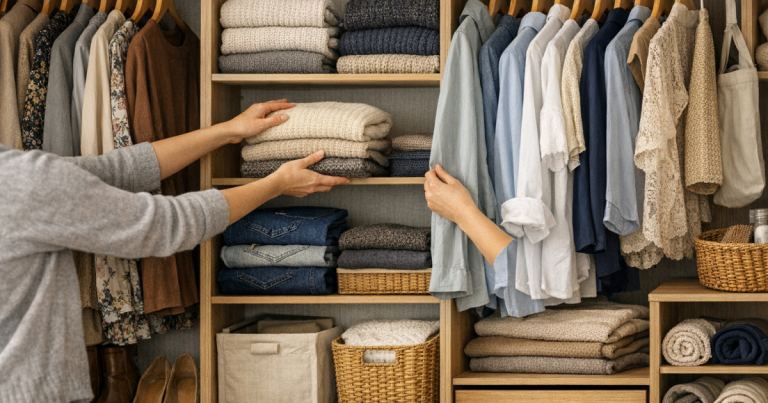
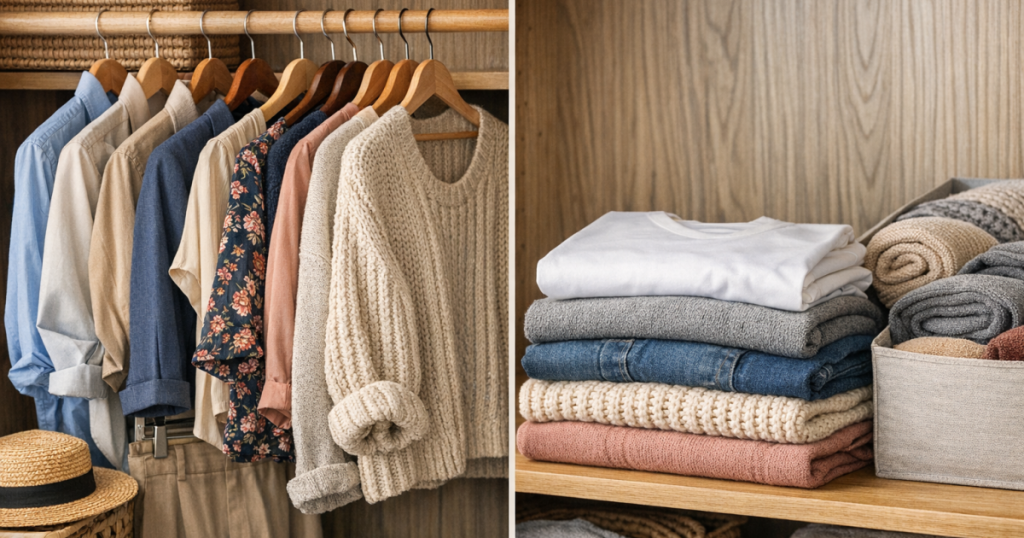
A tidy wardrobe is not automatically a fabric-safe one. The real decision is hanging vs folding clothes in a way that supports weight, shape, fibre and daily use. Hang the pieces that need airflow or crease control; fold the pieces that stretch, sag or mark easily. The aim is less about making the rail look neat and more about stopping shoulder bumps, deep creases, compression shine and misshapen knitwear.
What to know first
Most storage mistakes come from treating all clothes as if they behave the same. A wool jumper and a cotton shirt can be similar in size, but they react very differently to gravity. Heavy knits lengthen on hangers. Structured jackets need support at the shoulders. Viscose dresses may crease badly when folded but can also stretch if hung from narrow straps. Good storage is a balance between fabric behaviour, garment construction and how long the item will sit untouched.
As a quick rule: hang tailored, structured, crease-prone and frequently worn garments; fold stretchy, heavy, embellished, delicate or long-term seasonal pieces. If a garment looks pulled out of shape after a day on the hanger, folding is safer. If it emerges from a drawer with stubborn creases that require heavy steaming, hanging may be kinder.
For a broader system that covers rails, drawers, garment bags and wardrobe layout, the wardrobe storage guide is a useful next step once you have sorted the hang-or-fold decision.
Clothes that are usually better hung
Hanging works best when the garment benefits from gravity, airflow or shape support. It is not simply about saving drawer space. The hanger should hold the garment in the places where the body would: shoulders, waistband or full trouser length, depending on the item.
- Tailored jackets and blazers: use a broad, shaped hanger that supports the shoulders rather than a thin wire hanger that creates dents.
- Coats: hang on sturdy hangers with enough room around them so the cloth is not crushed. Wool coats need air, not tight compression.
- Woven shirts and blouses: hanging helps control creasing, particularly for cotton, linen blends and work shirts.
- Dresses: hang most woven or structured dresses, but be careful with heavy jersey, beading or narrow shoulder straps.
- Trousers: hang tailored trousers either from the waistband with padded clips or folded over a trouser bar, depending on the fabric and crease line.
- Skirts: hang structured skirts from the waistband, using clips that do not bite sharply into the cloth.
Spacing matters. If garments are packed tightly, hanging stops being fabric-safe. Crushed sleeves, flattened lapels and trapped moisture can all cause problems. A few centimetres of breathing room between bulky items is often more useful than adding another storage accessory.
Clothes that are usually better folded
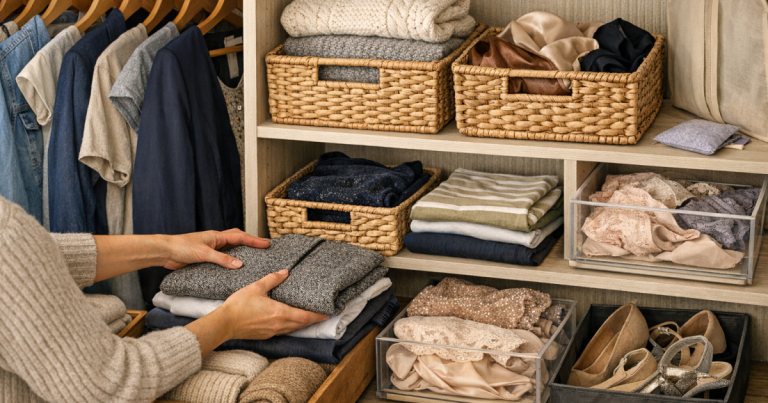
Folding protects garments that stretch under their own weight. This is especially important for knitwear, jersey, heavily embellished clothes and delicate pieces that can distort at the shoulders. Folding also helps when a garment is not going to be worn for several weeks, provided it is clean, dry and not squashed under too much weight.
- Wool, cashmere and lambswool jumpers: fold flat to prevent shoulder peaks and body stretching.
- Heavy cardigans: fold rather than hang, even if they have buttons, because the weight can pull the front panels down.
- T-shirts and casual jersey tops: fold to preserve rail space and avoid hanger marks.
- Jeans and casual trousers: fold unless you need them crease-free and have enough rail space.
- Embellished or sequinned garments: fold with tissue between layers where needed, because hanging can strain the stitching.
- Sportswear and base layers: fold loosely so elasticated fibres are not stretched on hangers.
Knitwear is the category where storage choices show most visibly. A jumper that has been hanging for months may develop stretched shoulders, a longer body and misshapen sleeves. If bobbling is already part of the issue, storage will not remove it, but it can slow further friction. For care after wear, see the guide to cashmere combs and fabric shavers.
The awkward middle ground: garments that can go either way
Some clothes sit between the two rules. A linen shirt creases in a drawer, so hanging is usually better. A heavy linen dress, however, may pull at the shoulders if the fabric is weighty or damp from poor drying. A silk blouse often hangs well, but very fine silk can mark on rough hangers or stretch from narrow loops. Viscose can crease easily when folded, yet some viscose jersey dresses lengthen if left hanging for a season.
When a garment could reasonably be hung or folded, test it after 24 hours. Hang it on the best hanger you have for its shape, then check the shoulders, neckline and hem. If the hem looks lower, the shoulder area has peaked, or the neckline is pulling, fold it. If folding creates sharp creases that do not drop out naturally, hang it with better spacing.
Fabric-safe folding habits
Folding is not automatically gentle. Deep, repeated folds in the same place can create creases, shine on some dark fabrics and pressure marks on pile fabrics such as velvet. Fold with the garment’s structure rather than forcing it into a tiny rectangle.
- Keep heavy items at the bottom of a stack and lighter items on top.
- Avoid very tall piles, which compress the lower garments and make daily access messy.
- Use smooth shelf dividers or boxes if stacks collapse, but avoid rough wicker directly against delicate fabric.
- Refold seasonal pieces occasionally so the same crease line is not held for months.
- Let freshly ironed or steamed clothes cool fully before folding, otherwise creases can set in as residual moisture leaves the fabric.
For drawers, vertical filing can work well for T-shirts, gym tops and casual trousers because it reduces rummaging. For wool and cashmere, flatter stacking is usually safer than tight vertical rolls, because it reduces strain and friction.
Hanger choice matters more than most people think
The wrong hanger can damage an otherwise well-stored garment. Thin wire hangers are the common culprit: they concentrate pressure into a narrow line, causing shoulder bumps and distortion. Slippery plastic hangers can let garments slide to one side, stretching necklines or pulling seams unevenly. Very grippy flocked hangers save space, but they can be awkward for delicate fabrics if you drag garments on and off.
Broad wooden or moulded hangers suit coats, jackets and blazers because they distribute weight. Slim hangers can be useful for shirts where space is tight, but they should still match the shoulder width reasonably well. Clip hangers are useful for skirts and trousers, but the clips should hold the waistband securely without leaving hard dents. For delicate fabrics, placing a small piece of clean cotton between clip and garment can reduce marking.
Seasonal storage changes the answer
The longer a garment is stored, the more conservative you should be. A dress that hangs perfectly for a week may not behave the same way over a damp British winter in an overfilled wardrobe. Before storing clothes for a season, make sure they are clean and completely dry. Body oils, deodorant residue and food marks can attract moths or become harder to remove over time.
Fold heavy knitwear, occasionalwear with embellishment, and anything that might stretch. Use breathable cotton garment bags for coats, suits and special items that need to hang. Avoid sealing natural fibres in airtight plastic for long periods unless the manufacturer says it is suitable, as trapped moisture and lack of airflow can become a problem. Vacuum storage can be useful for space, but it is not ideal for every fabric; the HIBAG Premium Vacuum Storage Bags review explains the fabric-care caveats in more detail.
Different wardrobes, different priorities
A small flat, shared wardrobe or busy family hallway may force compromises. The fabric-safe answer is not always the neatest answer, and the neatest answer is not always realistic. Prioritise the garments most likely to suffer damage: wool coats, knitwear, tailored workwear, uniforms, school blazers, occasion dresses and delicate fabrics.
If rail space is limited, hang the clothes that genuinely need it and fold the rest. If drawer space is limited, avoid solving the problem by hanging every jumper; use shallow boxes, breathable under-bed storage or a seasonal rotation instead. If you wear uniforms or work shirts daily, keep those on hangers at the front of the rail so they are not repeatedly crushed by heavier items.
A simple decision checklist
Use this quick checklist whenever you are unsure where a garment belongs:
- Will it stretch under its own weight? Fold it.
- Does it have structured shoulders, lapels or tailoring? Hang it on a supportive hanger.
- Does it crease badly and need to be ready to wear? Hang it if the fabric will not stretch.
- Is it heavy, knitted or elasticated? Fold it loosely.
- Is it beaded, sequinned or heavily decorated? Fold it with protection between layers.
- Will it be stored for months rather than days? Choose the method that avoids strain, compression and trapped moisture.
The best approach to hanging vs folding clothes is not a fixed rule for every wardrobe. It is a fabric-first habit: support structure where it exists, avoid stretching where weight matters, and leave enough space for garments to recover between wears.
FAQ
Should jumpers ever be hung?
Most jumpers are safer folded, especially wool, cashmere and heavy cotton knits. Very lightweight fine-gauge knits can sometimes be hung short term on a broad, padded hanger, but check for shoulder marks and stretching after a day.
Is it better to hang or fold jeans?
Jeans can usually be folded without harm. Hanging is useful if you want to reduce creases or keep outfits visible, but denim is generally sturdy enough for drawer or shelf storage.
How do I stop hanger bumps on shoulders?
Use hangers that match the garment’s shoulder width and avoid thin wire hangers. For soft tops and delicate blouses, choose smooth, rounded or padded hangers and do not leave stretchy fabrics hanging long term.
Can I fold dresses for storage?
Yes, if the dress is heavy, embellished or likely to stretch on a hanger. Fold it gently, avoid sharp pressure points and place tissue between decorated areas if trims could catch or press into the fabric.
Do clothes need to breathe in a wardrobe?
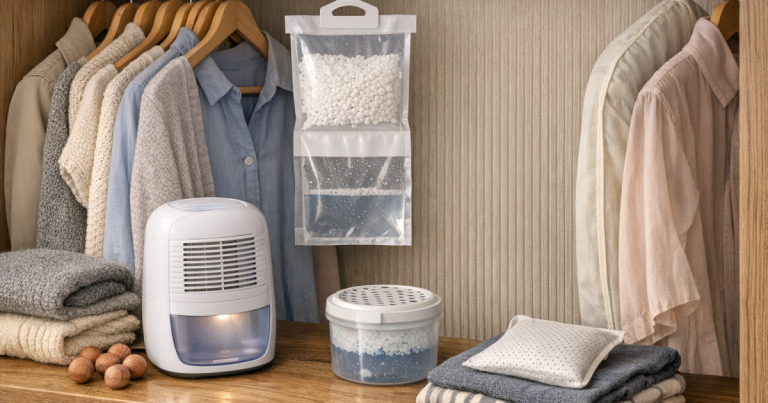
Yes. Airflow helps reduce mustiness and moisture build-up. Do not pack rails so tightly that garments stay compressed, and make sure clothes are fully dry before they go back into enclosed storage.
Why it matters
Good storage quietly extends the life of clothes you already own. It reduces unnecessary washing, ironing, steaming and repair, while keeping daily dressing simpler. Once each garment has the right place to rest, the wardrobe works with the fabric rather than against it.