Wool jumpers pill because fibres rub together during wear, washing and storage, not because the garment is automatically ruined. The question is whether sweater stones remove those bobbles cleanly or take too much good fibre with them.
The short answer: they can be useful on some robust wool knits, but they are too aggressive for many fine, soft or loosely spun jumpers unless used with extreme care.
The short version
- A pumice-style knitwear stone works by abrasion, so it removes pills by scraping them away.
- It is better suited to firm, tightly knitted wool than to cashmere, merino, lambswool blends or delicate brushed finishes.
- Always test on a hidden area, use very light pressure and stop as soon as the pilling lifts.
- For finer wool, a cashmere comb, clothes brush or careful hand-picking is usually gentler.
- If a jumper is already thinning, fuzzy or stretched, do not use an abrasive stone on it.
Why wool pills in the first place
Pilling happens when loose fibres work their way to the surface and tangle into small bobbles. It is most common where there is friction: under the arms, across the stomach, at cuffs, along seatbelt lines and where a coat rubs against the jumper.
Soft wool is particularly prone to visible pilling because the fibres are often finer and more flexible. That softness is part of why the garment feels comfortable, but it also means the surface can change with wear. A pill-removal tool should deal with the bobble without roughening the surrounding knit more than necessary.
That is the important trade-off. A jumper stone may make a garment look cleaner quickly, but it does so by rubbing the fabric surface. Used lightly on the right knit, that can be acceptable. Used heavily or on the wrong jumper, it can flatten texture, lift more fibres, create a dusty residue and make future pilling worse.
How a jumper stone actually works
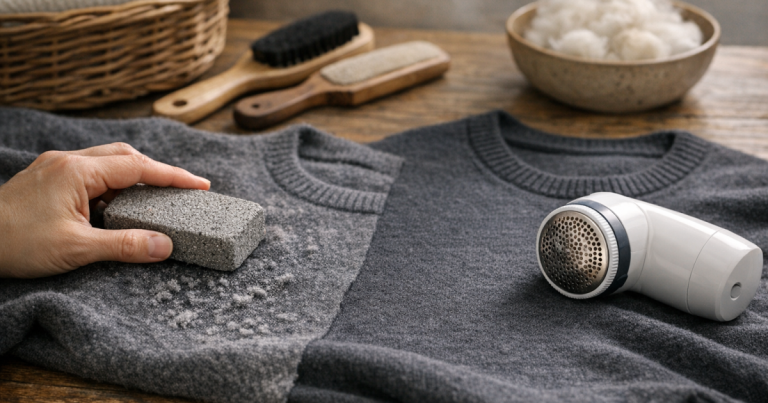
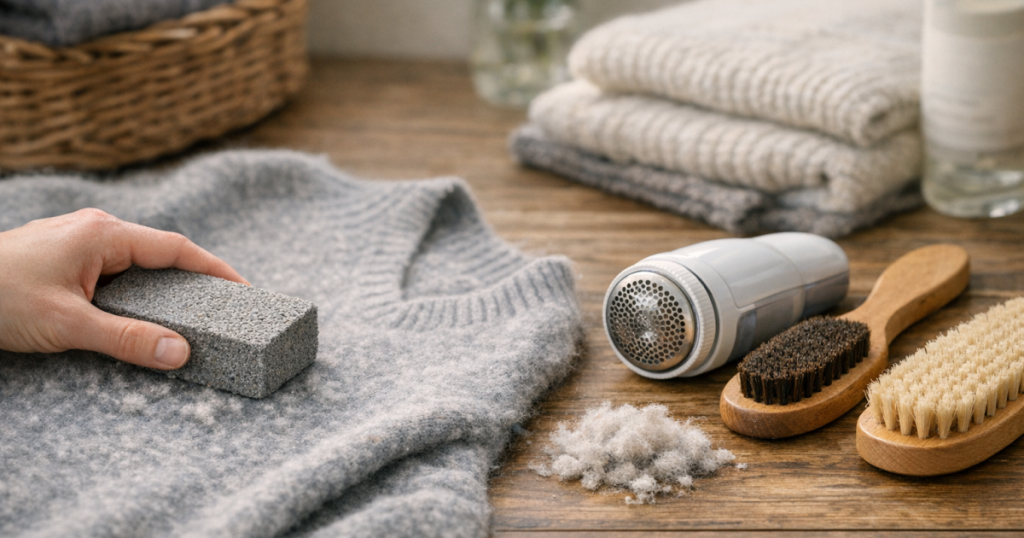
Most sweater stones are small abrasive blocks, often made from a pumice-like material. As you draw the block over the knit, the rough surface catches raised pills and breaks them away. It does not shave with a blade; it abrades the surface.
That makes technique matter. A stone used like a scrubbing brush is far more likely to damage wool. The safest method is closer to gentle skimming: support the fabric, work in one direction, use short strokes and remove loosened debris as you go.
Some stones also shed grit or fine dust during use. That residue should be brushed away outdoors or over a towel, rather than rubbed back into the jumper. A soft clothes brush can help clear the surface afterwards without adding more friction.
When a stone is likely to be too harsh
A stone is not the right tool for every wool garment. Avoid it on jumpers that are fine, expensive, sentimental, loosely knitted, fluffy, thinning or already showing wear. The softer and more open the fabric, the easier it is to disturb the fibres around the pill.
Be especially cautious with these fabrics
- Cashmere: the fibres are very fine, and heavy abrasion can spoil the soft surface.
- Fine merino: smooth merino can show scuffing or surface roughness if rubbed too firmly.
- Lambswool: often airy and soft, so pills may sit within a fuzzy surface rather than on top of it.
- Mohair or alpaca blends: fluffy fibres can catch, pull and lose their intended halo.
- Loose chunky knits: the tool can snag raised loops or distort the stitch pattern.
- Decorative knits: cables, ribs, embroidery and textured stitches are harder to skim evenly.
If the jumper looks fuzzy all over rather than having distinct bobbles, a stone is usually the wrong answer. Fuzz is surface fibre, not a neat pill ready to lift. Abrading it may make the jumper look duller and thinner.
When it can work reasonably well
A jumper stone can be helpful on sturdier everyday wool where the pills are sitting clearly on the surface. Think firm wool cardigans, dense Shetland-style knits, workwear-style wool layers or older jumpers where appearance matters but the garment is not especially delicate.
The best candidates have a stable knit structure, visible bobbles and enough surface resilience to tolerate a little abrasion. Even then, the aim is improvement, not making the jumper look brand new. Removing every last pill is often what leads to overworking the fabric.
This is where sweater stones can earn their place in a fabric care kit: occasional, targeted use on suitable knits. They should not be used as a weekly refresh tool for all wool.
How to test before using one
Do not start on the front of the jumper. A quick test tells you whether the fabric will tolerate the tool and whether the result is worth continuing.
- Choose a hidden area: use an inside hem, side seam area or underside of a cuff.
- Lay the jumper flat: place it on a clean towel so the knit is supported and not stretched.
- Use two or three light strokes: move in one direction rather than rubbing back and forth.
- Brush away residue: check whether the surface looks cleaner or more roughed up.
- Look in daylight: indoor lighting can hide scuffing, thinning and colour change.
- Wait before doing more: if the area looks fuzzy after a few minutes of handling, stop.
If the test patch looks flatter, greyer, fuzzier or thinner, choose a gentler method. The point of testing is not to prove the tool can remove pills; it is to check what else it removes at the same time.
A safer step-by-step method
If the jumper passes the test, work slowly. It is better to improve one small area than to rush across the whole garment and damage high-friction zones.
- Wash or air the jumper first if needed: dirt and body oils can make fibres cling together. Let the garment dry fully before de-pilling.
- Place it flat: never use an abrasive stone while the jumper is hanging, as the weight can stretch the knit.
- Hold the fabric steady: keep the area smooth but not pulled tight.
- Skim, do not scrub: use light, short strokes in the direction of the knit.
- Work only on pilled patches: do not run the stone over areas that do not need attention.
- Clear debris often: lift loosened fibres away with your fingers or a soft brush.
- Stop early: a slightly imperfect jumper with healthy fibres is better than a perfectly smooth but weakened one.
After de-pilling, let the wool rest flat for a while before wearing or storing it. If the jumper has just been washed, drying it correctly matters just as much as removing bobbles; this guide on how to dry jumpers flat without stretching them explains the safer approach for knitwear.
Gentler alternatives for wool jumpers
For many wool garments, a less abrasive tool is the better first step. A fine cashmere comb can lift surface pills with more control, although it still needs a light hand. A soft garment brush can remove lint, hair and loose fluff without cutting or scraping the knit. For a small number of bobbles, hand-picking is slow but often safest.
Sticky lint rollers can be useful on coats and some synthetic fabrics, but they are not always ideal for wool. Adhesive sheets may pull at surface fibres, and residue is a valid concern on textured or delicate garments. If you are deciding between adhesive tools and brushing, it is worth reading whether sticky lint rollers leave residue on wool clothes before using them on a favourite jumper.
Electric fabric shavers are another option, but they are not automatically safer. They can give an even finish on some garments, yet they can also nick raised stitches or shave too close if used carelessly. On wool, the safest tool is usually the one you can control most precisely.
How to reduce pilling so you need fewer tools
De-pilling deals with the symptom. Reducing friction deals with the cause. You will not prevent all pilling on wool, but you can slow it down noticeably with better habits.
- Rotate your jumpers: give wool time to recover between wears rather than wearing the same knit repeatedly.
- Wear smooth layers underneath: rough T-shirts, bag straps and coat linings can all increase rubbing.
- Wash less often: air wool between wears and wash only when it genuinely needs it, following the care label.
- Use a gentle cycle or hand wash: agitation encourages fibres to loosen and tangle.
- Avoid overloading the machine: crowded washing increases abrasion between garments.
- Store folded, not hung: hanging can stretch shoulders and distort heavier knits.
- Keep wool away from rough fastenings: zips, hook-and-loop fasteners and textured bags can catch fibres.
Good storage also makes a difference, particularly in damp UK homes where wool may be put away for months at a time. For a more organised system, use fabric type and season as your starting point; this guide to organising a wardrobe by fabric, wear and season gives a useful framework.
Common questions
Can a stone make wool pill more?
Yes, if it roughens the surface or loosens extra fibres. Over-abrasion can create more fuzzy fibre ends, which then tangle into new pills during wear. That is why light pressure and stopping early are so important.
Is a stone safe on cashmere?
It is usually too harsh for cashmere, especially fine or expensive cashmere. A dedicated cashmere comb, very gentle brushing or careful hand removal is a safer starting point. If the cashmere is badly pilled, test any tool on a hidden area first.
Should wool be wet or dry before de-pilling?
Wool should be dry. Wet wool is more vulnerable to stretching and distortion, and pills can be harder to remove cleanly. Dry the jumper flat first, then assess whether de-pilling is still needed.
How often should you remove pills from a jumper?
Only when the bobbles are visible enough to bother you. Frequent de-pilling removes fibre over time, whichever tool you use. A few careful sessions across a season are usually better than constant touch-ups.
Why it matters
Sweater stones are not automatically bad for wool jumpers, but they are blunt tools rather than delicate ones. They suit firm, robust knits with obvious surface pills; they are risky on soft, fine and fluffy wool where the surface finish is part of the garment’s quality.
The safest rule is simple: start with the gentlest option that will do the job. Test first, support the fabric, use minimal pressure and accept that a little natural pilling is often preferable to removing healthy wool fibre. Good wool care is less about chasing a perfectly smooth finish and more about keeping the jumper wearable, comfortable and structurally sound for longer.