A good wardrobe layout guide starts with the clothes you actually own, not with a glossy fitted-wardrobe photo. Rails, shelves and drawers each protect different garments in different ways. The right mix can reduce creasing, stop knitwear stretching, keep damp-prone clothes aired, and make everyday dressing less frustrating.
For most UK homes, the best layout is usually a balanced one: enough rail space for garments that need to hang, adjustable shelves for folded pieces and seasonal layers, and drawers or baskets for small items that become messy when stacked in open piles.
At a glance
- Use rails for: coats, jackets, shirts, blouses, dresses, tailored trousers and anything that creases badly when folded.
- Use shelves for: jumpers, sweatshirts, jeans, bags, boxed accessories and off-season clothing.
- Use drawers for: underwear, socks, base layers, T-shirts, sportswear, nightwear and smaller folded pieces.
- Leave breathing room: tightly packed clothing holds creases, traps stale air and makes damp problems harder to spot.
- Store by fabric and wear frequency: everyday items should be easiest to reach; delicate or seasonal pieces can sit higher or lower.
Start with garment behaviour, not storage capacity
A wardrobe that simply holds the maximum number of items is not always kind to clothes. Fabric needs space, support and the right storage position. A wool coat behaves differently from a cotton T-shirt; a silk blouse needs a different setup from a chunky jumper.
Before changing rails or buying drawer inserts, group clothing into broad care categories. Put hanging garments together, foldable garments together, and small items together. Then split each group by how often you wear it. This prevents the common problem of giving prime rail space to rarely worn occasionwear while everyday work shirts get crushed into a corner.
If your wardrobe is already full, it helps to think in zones rather than in single items. A clear system for organising clothes by fabric, wear and season makes the layout easier to maintain because every garment has a reason to live where it does.
Rails: best for shape, drape and crease control
Rails are the most important part of the layout for clothes that need to keep their shape. They allow fabric to hang under its own weight, which helps shirts, blouses, jackets and dresses stay smoother between wears. They also make it easier to spot marks, check collars and rotate garments rather than wearing the same few pieces until they look tired.
The problem is that rail space is often used badly. Too many hangers on one rail compress fabric, create shoulder dents and make it hard for air to move. If you have to force hangers apart to remove one garment, the rail is too full for good clothes care.
Single rail or double rail?
A single full-height rail suits long coats, dresses, longer skirts, jumpsuits and formalwear. It is also useful if you wear longer uniforms or outerwear regularly. The trade-off is that it leaves a lot of unused space under shorter garments.
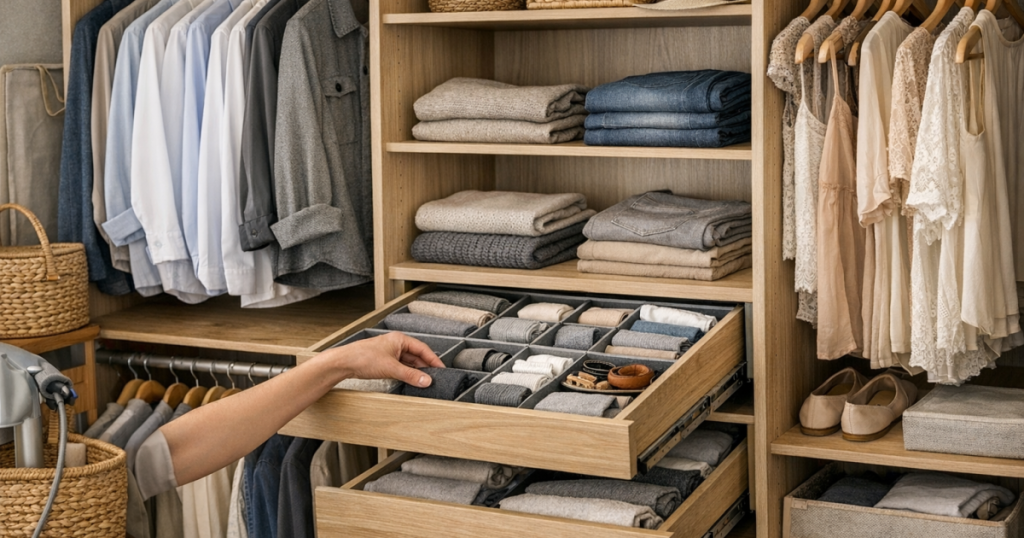
A double-rail layout makes better use of height for shirts, blouses, shorter jackets, folded-over trousers and children’s clothing. In many bedrooms, one full-height section plus one double-hang section is more useful than one long rail running across the whole wardrobe.
How much rail space to leave
You do not need to measure every hanger, but you do need visible gaps. Clothes should slide along the rail without dragging neighbouring garments with them. As a simple check, if a shirt comes out with both sleeves crushed flat against the body, the rail is overcrowded.
Use stronger, shaped hangers for heavier coats and jackets, and thinner hangers only where they suit the garment. Very heavy knits should not live on hangers for long periods because the weight can pull the shoulders and length out of shape.
Shelves: the safest home for knitwear and bulky layers
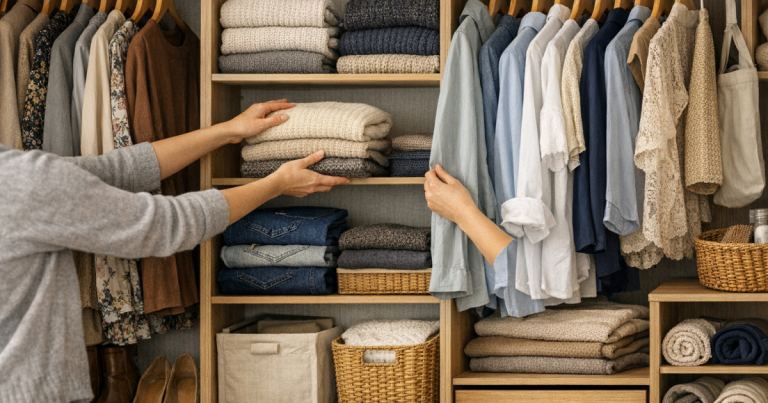
Shelves work best for garments that become misshapen when hung. Jumpers, cardigans, sweatshirts and heavier jersey pieces usually last better when folded. Shelves also help with bulky clothing because you can see the item without rummaging through a deep drawer.
The main shelf mistake is stacking too high. A tall pile presses the lower garments flat, encourages creases and makes it annoying to remove anything from the middle. Lower, wider stacks are kinder to fabric and easier to maintain.
How to set shelf heights
Adjustable shelves are useful because clothing volume changes with the seasons. For everyday folded tops, a modest gap is enough. For chunky wool, fleece or thick sweatshirts, allow more space so the pile is not compressed. If your shelves are fixed and deep, use shallow fabric boxes or shelf dividers to stop folded clothes sliding into a heap at the back.
Jumpers deserve particular care. Fold them along natural seams, avoid hanging them by the shoulders, and do not put them away damp after washing. If drying is the issue, follow a flat-drying routine before storage; this guide to drying jumpers flat without stretching them is a useful next step before they go back on the shelf.
What belongs on high shelves?
High shelves are best for light, low-use items: spare scarves, out-of-season hats, beachwear, occasion bags or boxed accessories. Avoid storing heavy stacks above shoulder height, as they are awkward to lift down and easy to disturb. If you store off-season garments high up, keep them clean, fully dry and loosely packed rather than sealed away with any lingering moisture.
Drawers: best for small items and daily basics
Drawers are good for garments that can be folded compactly without losing shape. They keep small items contained and stop open shelves becoming cluttered. They also make it easier to separate clean clothing from “worn once but still wearable” pieces, provided you give each category its own space.
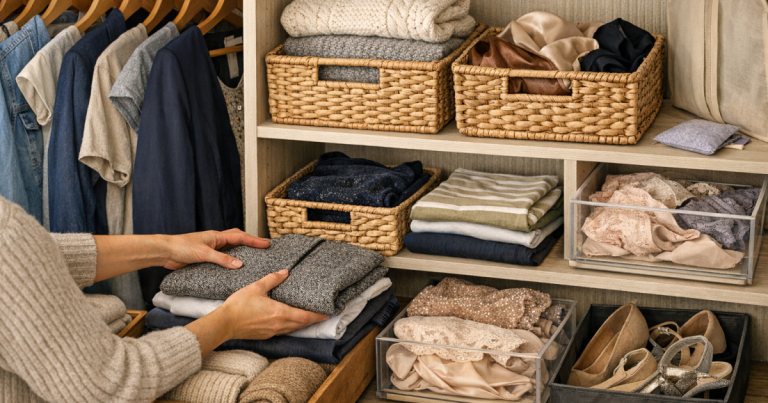
Use shallow drawers for socks, underwear, ties, belts and small accessories. Deeper drawers suit pyjamas, gym kit, T-shirts and casual base layers. Very deep drawers can become messy unless you use dividers, boxes or file-folding so items stand in rows rather than sinking into layers.
When drawers are not ideal
Drawers are less suitable for crisp shirts, linen pieces you want to keep smooth, embellished garments, pleated skirts or anything that creases sharply under pressure. They are also poor for clothes that are not fully dry. A closed drawer can trap moisture and stale smells far more quickly than an open shelf or rail.
A balanced layout for different wardrobes
The right balance depends on your clothing habits. A workwear-heavy wardrobe needs more hanging space. A casual wardrobe with lots of knitwear and sportswear needs more shelves and drawers. A shared wardrobe may need stronger separation so one person’s folded items do not creep into the other’s rail space.
For a small wardrobe
- Keep one short rail for the garments that genuinely need hanging.
- Add one or two shelves above the rail for folded knitwear or seasonal layers.
- Use slim drawer boxes or baskets at the base for socks, underwear and accessories.
- Store off-season coats elsewhere if they consume the only useful rail space.
For a fitted wardrobe
- Include at least one full-height hanging section for coats, dresses or longer garments.
- Use double hanging in another section for shirts, blouses and shorter jackets.
- Build shelves for knitwear at a comfortable height rather than placing all folded clothes at floor level.
- Choose drawers for small daily items, but avoid making every lower section a deep drawer.
For a wardrobe in a damp bedroom
- Leave gaps between clothing and the back panel where possible.
- Avoid packing clothes hard against cold external walls.
- Keep shoes, wet coats and laundry waiting to be put away out of the wardrobe.
- Check corners, hems and leather accessories regularly for musty smells or spotting.
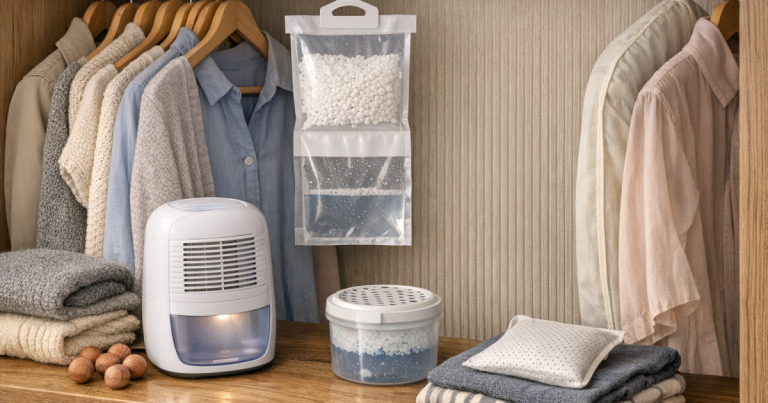
Moisture control matters because fabric storage is not only about tidiness. Wardrobes in older houses, north-facing rooms and bedrooms with limited ventilation can hold stale air. If this sounds familiar, our guide to the best wardrobe dehumidifiers for damp clothes and mould prevention explains when a small moisture absorber helps and when the room itself needs better ventilation.
Layout checks before you rearrange everything
Use these checks before committing to a new setup. They are simple, but they prevent most wardrobe layouts from becoming difficult to use after the first week.
- Can you see your most-worn clothes? Everyday garments should not be hidden behind occasionwear or high storage boxes.
- Are heavy items supported? Coats need suitable hangers; heavy knitwear usually needs shelves.
- Is there air movement? A small gap is better than a perfectly packed wardrobe that traps odour and moisture.
- Are delicate fabrics protected? Silk, lace, beading and fine wool need space away from rough zips, hooks and Velcro-style fastenings.
- Can you put laundry away quickly? If a system is too fiddly, clean clothes will end up on a chair instead of in the wardrobe.
- Is there a place for repeat wears? A hook, valet rail or separate basket can stop lightly worn clothes mixing with freshly laundered items.
Fabric-aware storage habits that make the layout work
A good layout can still fail if the habits around it are rough on fabric. Put clothes away only when they are clean enough, dry enough and aired enough for storage. This is especially important for wool, cashmere, sportswear, uniforms and anything worn close to the skin.
Do up zips before storing garments near delicate fabrics, as exposed metal teeth can snag sleeves or linings. Empty pockets before hanging jackets and coats, because keys, coins and phones can distort fabric over time. Let recently worn clothes air before closing them into a tight wardrobe, particularly after commuting, cooking or sitting in a warm office all day.
Do not use wardrobe doors as the only ventilation strategy. If a bedroom is prone to condensation, open the doors occasionally, keep clothing slightly spaced and avoid pushing storage boxes tight against the back wall. Clothes care is often improved by a few centimetres of breathing room rather than by adding more storage accessories.
Questions people ask
Is it better to hang or fold T-shirts?
Most T-shirts are fine folded in a drawer or on a shelf. Hanging can save drawer space, but thin jersey may develop shoulder marks if left on narrow hangers for long periods.
Should jeans go on shelves, drawers or hangers?
Jeans are usually easiest on shelves or in deeper drawers because denim tolerates folding well. Hanging is useful if you want to reduce crease lines or keep pairs visible.
How do I stop shelves becoming messy?
Keep stacks low, group similar items together and use shelf dividers or fabric boxes for deep shelves. If you cannot remove one garment without disturbing the pile, the stack is too high.
Can I store shoes in the same wardrobe as clothes?
Yes, but keep shoes dry, clean and separate from hems and delicate fabrics. Avoid putting wet footwear into a closed wardrobe, as moisture and odour can transfer to clothing.
How often should I review my wardrobe layout?
Review it at the start of each main season and whenever your routine changes. New workwear, gym kit, uniforms or school clothing can quickly make an old layout impractical.
What stands out
The best wardrobe layout is not the one with the most compartments. It is the one that supports the way your fabrics need to rest between wears. Rails protect shape and reduce creasing, shelves support weight without stretching, and drawers control small garments that would otherwise disappear into clutter.
If clothes are crushed, musty, stretched or hard to find, the issue is often not the size of the wardrobe but the balance of storage inside it. Give hanging garments room to breathe, fold heavy pieces properly, keep daily basics easy to reach, and build the layout around real use rather than idealised storage photos.