A hanger can look harmless until it leaves raised points in a jumper, dents in a blouse or a sharp crease across a shoulder seam. Choosing clothes hangers for shoulder bumps is about spreading weight gently, not simply buying the fattest option. The right hanger supports the garment where the body would, lets fabric rest naturally, and fits your wardrobe without crushing clothes together.
The short version
- Use wide, rounded hangers for jackets, coats and heavier overshirts.
- Use slim, smooth hangers for shirts and blouses, but avoid sharp ends.
- Fold most wool, cashmere and heavy cotton knitwear instead of hanging it.
- Choose trouser bars, clips or folded storage according to the fabric and crease line.
- Leave enough rail space so garments are not forced into permanent creases.
The best hanger is the one that matches the garment’s weight, shoulder construction and fabric recovery. A structured blazer can cope with a shaped hanger. A soft merino jumper usually cannot. A crisp work shirt needs a smooth shoulder line and enough space to dry or settle after ironing, rather than being squeezed between coats.
Why shoulder bumps and hanger creases happen
Shoulder bumps form when the end of a hanger takes too much of the garment’s weight in one small area. This is common with narrow plastic hangers, wire hangers from dry cleaners and hangers with abrupt corners. The fabric stretches around the pressure point, then dries or settles into that shape.
Creases happen for a different reason. They usually come from compression, twisting, damp storage or folding a garment over a thin bar. A clean shirt hung neatly on the wrong hanger can still crease if the wardrobe rail is packed so tightly that sleeves are crushed. If your storage feels crowded, the hanger choice will only solve part of the problem. For a more complete setup, the wardrobe layout guide for rails, shelves and drawers explains how storage zones affect everyday fabric care.
Step 1: match the hanger to the garment
Shirts and everyday blouses
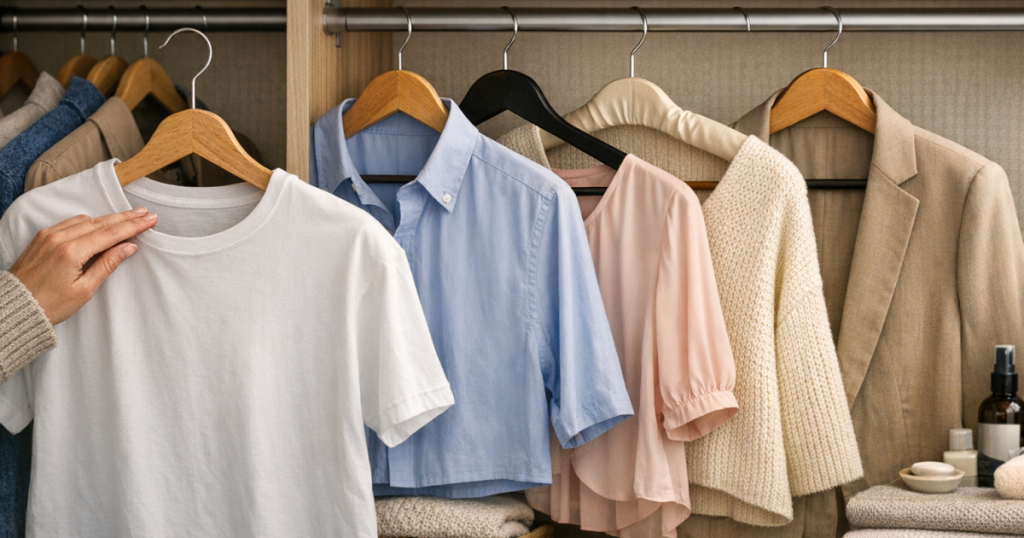
For cotton shirts, school shirts, office blouses and lightweight uniform tops, look for a smooth hanger with gently rounded ends. It does not need to be bulky. In fact, oversized hangers can push into the sleeve head and distort the garment. The shoulder tips should sit just before the sleeve seam, not beyond it.
Velvet-style hangers can be useful for slippery fabrics because they reduce sliding, but they should still have a soft shoulder shape. Very grippy hangers can make it awkward to remove delicate blouses, so lift the garment off rather than yanking it sideways. SONGMICS Velvet Hangers are a familiar example of the slim velvet type, but the important checks are the width, smoothness and end shape rather than the brand alone.
Blazers, jackets and coats
Structured garments need more support. A suit jacket, wool coat or heavier shacket benefits from a contoured hanger that fills the shoulder area and prevents the garment collapsing at the top. Thin hangers are the usual cause of dents in tailored shoulders, particularly if the jacket is left hanging for weeks.
For jackets, choose a hanger that is wide enough to support the shoulder but not so wide that it pushes into the sleeve. Wood and moulded plastic can both work well if the profile is broad and rounded. A classic wooden hanger such as IKEA BUMERANG is a recognisable example of a simple shaped hanger, though heavier coats often need a more substantial shoulder profile than a basic shirt hanger.
Knitwear and soft sweatshirts
Most jumpers should be folded, not hung. Wool, cashmere, alpaca, heavy cotton and ribbed knits can stretch under their own weight, especially after washing or steaming. Hanging can leave shoulder peaks and lengthen the body or sleeves.
If you must hang a lightweight knit for a short time, fold it over the hanger rather than hanging it from the shoulders. Lay the jumper face down, fold it vertically, place the hanger hook at the underarm, then fold the body and sleeves over the hanger bar. This spreads the weight and avoids pressure at the shoulder points. After washing knitwear, drying method matters just as much as storage; see the guide on drying jumpers flat without stretching them before putting them away.
Trousers, skirts and dresses
Trousers can be hung over a rounded bar, from clips, or folded on a shelf. The safest choice depends on the fabric. Smooth wool trousers often benefit from a rounded trouser bar that does not create a hard fold line. Linen trousers may crease wherever they are stored, so the goal is to avoid deep compressed lines. Skirts usually hang better from clips, but protect delicate waistbands by clipping at the seam or using soft clip pads.
Dresses vary too much for one rule. A structured dress can hang from the shoulders if the hanger follows the garment shape. A beaded, heavy or bias-cut dress may stretch and is better stored flat or supported by internal hanging loops where provided by the maker.
Step 2: check the hanger shape before using it
A hanger that looks tidy on the rail is not automatically kind to fabric. Run through these checks before moving a favourite garment onto it:
- Shoulder width: the hanger should end slightly inside the shoulder seam. If it sticks out into the sleeve, it is too wide.
- End shape: avoid sharp points, ridges and squared-off tips on soft fabrics.
- Surface: rough wood, damaged plastic or exposed metal can snag fibres.
- Thickness: heavier garments need more depth; lightweight shirts usually need smoothness more than bulk.
- Grip: velvet or flocked surfaces help slippery clothes, but can cling too much to fragile fabrics.
- Bar design: trouser bars should be rounded or padded enough to avoid a hard crease.
Specialist curved hangers such as MAWA Bodyform show the type of rounded shoulder profile that can help with tops prone to hanger marks. As with any hanger, check that the size suits your garments rather than assuming one shape works for the whole wardrobe.
Step 3: stop storage creases after laundering
Many hanger marks are set before the item reaches the wardrobe. If a shirt is hung while still damp on a narrow hanger, the weight of the wet fabric can pull at the shoulders. If a blouse is crammed onto the rail straight after ironing, the heat and residual moisture can make new creases set quickly.
Let freshly ironed or steamed clothing cool and dry before closing the wardrobe door. Button the top button on shirts to keep the neckline aligned. Smooth collars, cuffs and plackets by hand, then leave a small gap around the garment so air can move. For dark tailored trousers, careful finishing matters too; the article on using pressing cloths to prevent shine on dark trousers is a useful next step if your storage creases often need touching up.
Step 4: avoid the common hanger mistakes
- Using dry-cleaner wire hangers long term: they are fine for transport, not for supporting clothes in a wardrobe.
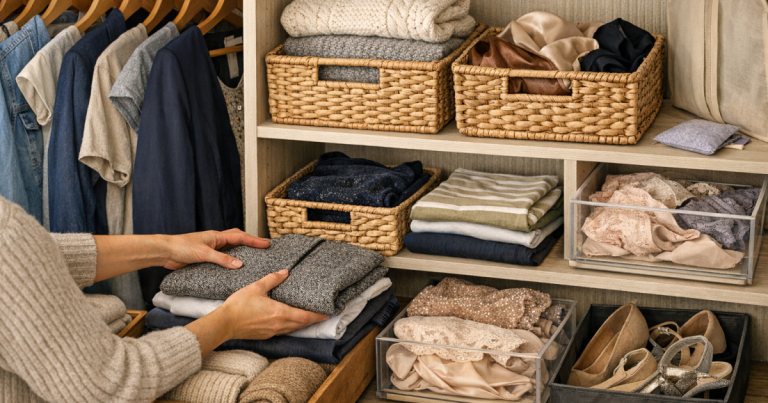
- Hanging everything: soft knitwear, heavy embellished pieces and stretchy garments often last better folded.
- Buying one hanger style for all clothes: shirts, coats, skirts and trousers need different support.
- Overfilling the rail: pressure from neighbouring clothes causes creases even when each hanger is suitable.
- Ignoring damp: putting away slightly damp garments can encourage creasing, odour and mould in enclosed wardrobes.
A mixed wardrobe usually needs a mixed hanger setup: slim rounded hangers for shirts, broader contoured hangers for outerwear, clip hangers for skirts, and shelf space for knitwear. Uniforms and work shirts benefit from consistency, because repeated wear and washing make small hanger dents more noticeable.
Best hanger types by fabric
Cotton poplin and Oxford shirts
Use a smooth, medium-width hanger with rounded tips. Button the top button and align the shoulder seams. Avoid hangers that are wider than the shirt’s shoulders, as they can push out the sleeve head.
Silk, satin and viscose
Use a smooth non-slip hanger, ideally with soft curves and no rough joins. Avoid clips unless the garment has strong seams or proper hanging loops. These fabrics can mark easily under pressure.
Wool coats and tailored jackets
Use a broad contoured hanger that supports the shoulder area. Leave breathing space either side. Heavy garments should not be packed tightly against lighter shirts, which can crush collars and sleeves.
Wool, cashmere and heavy knits
Fold on a shelf or in a drawer. If space is limited, stack lightly rather than building a tall pile that compresses lower garments. Cedar blocks or lavender sachets can be used for freshness, but they do not replace clean, dry storage.
Linen and linen blends
Expect some creasing; it is part of the fabric’s character. Use a smooth hanger and keep the garment uncrowded. For trousers, a wider rounded bar is kinder than a thin rail.
Things readers ask
Are wooden hangers always better than plastic?
No. A well-shaped plastic hanger can be kinder than a narrow wooden one with sharp ends. Shape, width and surface matter more than material alone.
Can hanger bumps be removed?
Often, yes. Lightly mist the area or use steam from a safe distance, then reshape the shoulder with your fingers and let it dry flat or on a better hanger. Always check the care label first.
Should T-shirts be hung or folded?
Fold most T-shirts if you have drawer space. Lightweight cotton T-shirts can hang on smooth rounded hangers, but stretchy or heavy jersey is more likely to develop shoulder points.
How much space should I leave between hangers?
Leave enough room for each garment to hang without being flattened. As a simple check, you should be able to move one hanger without dragging several others with it.
Do padded hangers prevent creases?
They can help delicate fabrics, but bulky padded hangers may be too wide for small garments. Use them for fragile blouses, occasionwear and pieces that need a softer shoulder line.
What stands out
The best clothes hangers are not a single style. They are a small system: shaped support for tailoring, smooth slim hangers for shirts, clip or bar storage for bottoms, and folded storage for knitwear. If shoulder bumps keep appearing, check the hanger ends first, then the garment weight, then how tightly the wardrobe is packed.
For most UK wardrobes, the biggest improvement comes from replacing sharp narrow hangers, folding vulnerable knits, and giving freshly laundered clothes time to cool and dry before storage. Choose clothes hangers for shoulder bumps with the same care you give to washing and ironing, and everyday garments will keep their shape for longer.