A shirt can look clean but still feel unfinished if the creases have set hard into the fibres. Understanding how steam heat and pressure work helps you smooth clothes more safely, rather than simply turning the iron up and hoping for the best. The aim is to relax the fibres, reshape them, then let them cool and dry in that smoother position.
Most everyday ironing and steaming mistakes come from using too much heat for the fabric, too little moisture for the crease, or too much pressure on a surface that marks easily. The safest results usually come from matching the method to the garment: firm pressure for sturdy cotton, lighter handling for wool, and cautious low heat for heat-sensitive synthetics.
What to know first
- Steam adds moisture, which helps many fibres relax so creases release more easily.
- Heat speeds up that relaxation, but too much can scorch, melt, shine or distort fabric.
- Pressure flattens fibres into position, which is useful on shirts and trousers but risky on pile, wool and textured cloth.
- Cooling and drying matter: fabric can re-crease if it is worn, folded or hung badly while still warm and damp.
- The care label is the starting point, not an afterthought. It tells you whether the garment can take steam, ironing or only very gentle treatment.
The fabric science in plain English
Creases form when fibres bend and stay bent. In cotton, linen and viscose, water plays a big part because these fibres absorb moisture readily. Steam softens the internal bonds enough for the iron or steamer to persuade the fabric back into a flatter shape. Once the fabric cools and dries, the smoother shape holds better.
Wool behaves differently. Wool fibres have a natural crimp and surface scales, so they respond well to steam but can be flattened or made shiny by heavy direct pressure. That is why tailoring often uses steam, gentle shaping and a cloth barrier rather than hard pressing straight onto the fabric.
Synthetic fibres such as polyester and nylon are less absorbent and more heat-sensitive. Steam may help with light wrinkles, but excessive heat can distort the fibres or create shiny pressure marks. Mixed fabrics need extra caution because the most sensitive fibre in the blend usually sets the safe limit.
Why steam heat and pressure work differently by fabric
The same iron setting can be helpful on one garment and damaging on another. A crisp cotton school shirt, a wool-blend trouser leg and a polyester work blouse may all look creased, but they do not need the same treatment.
Cotton and linen
Cotton and linen usually tolerate more heat and moisture than many other fabrics, which is why they respond well to steam ironing. For deep creases, a slightly damp fabric surface often gives better results than trying to force the crease out dry. Use steady movement, avoid lingering in one place, and let the item cool before hanging or folding.
Wool and wool blends
Wool often needs steam more than force. Hovering steam just above the surface, then patting or shaping the garment, can refresh it without crushing the texture. If you do press wool trousers, use a protective cloth and light pressure. For more detail on avoiding glossy marks, see how pressing cloths help prevent shine on dark trousers.
Silk, satin and delicate finishes
Silk can water-mark, scorch or lose surface lustre if treated roughly. Some silk garments are best steamed from a distance, inside out, or not steamed at all if the care label warns against it. Satin weaves, whether silk or synthetic, can also show pressure marks quickly, so test cautiously on an inconspicuous area.
Polyester, nylon and elastane blends
Synthetics often need lower heat and less pressure. A steamer can be useful for mild wrinkles, but do not assume steam is harmless: hot moisture can still affect coatings, prints, trims and stretch fibres. Keep the garment supported, avoid pulling hard while steaming, and allow it to dry fully before wearing.
How to use each element safely
Use steam to relax, not soak
Steam should soften the crease, not leave the garment wet. Too much moisture can cause water spots, slow drying, seam puckering or odour if clothes are put away damp. With a steam iron, use short bursts rather than constant saturation. With a handheld steamer, work in small sections and keep the nozzle moving.
Use heat as a fabric setting, not a shortcut
Heat is tempting because it gives quick visible results, but it is also the part most likely to cause irreversible damage. Start lower when you are uncertain, especially on blends, dark colours, printed designs and garments with stretch. Increase only if the fabric label and test area suggest it is safe.
Use pressure where structure matters
Pressure is useful when you want a flat placket, crisp cuff, neat hem or defined trouser crease. It is less suitable for raised textures, embroidery, velvet, corduroy, chunky knits and soft tailoring. Pressing should be a controlled lift-and-place action for sharper areas, not aggressive rubbing across the cloth.
Ironing, steaming and pressing are not the same
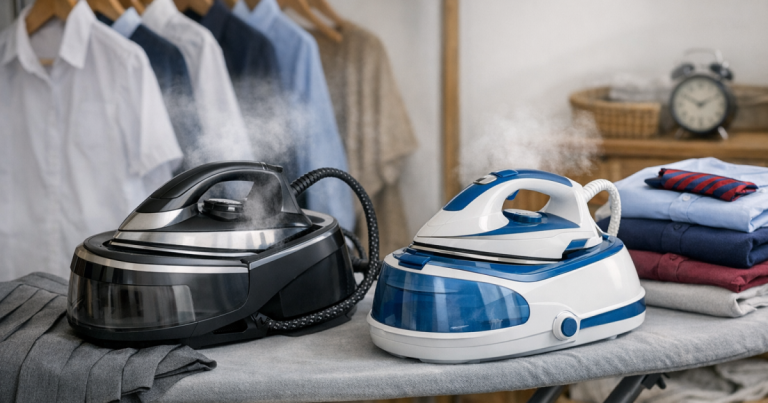
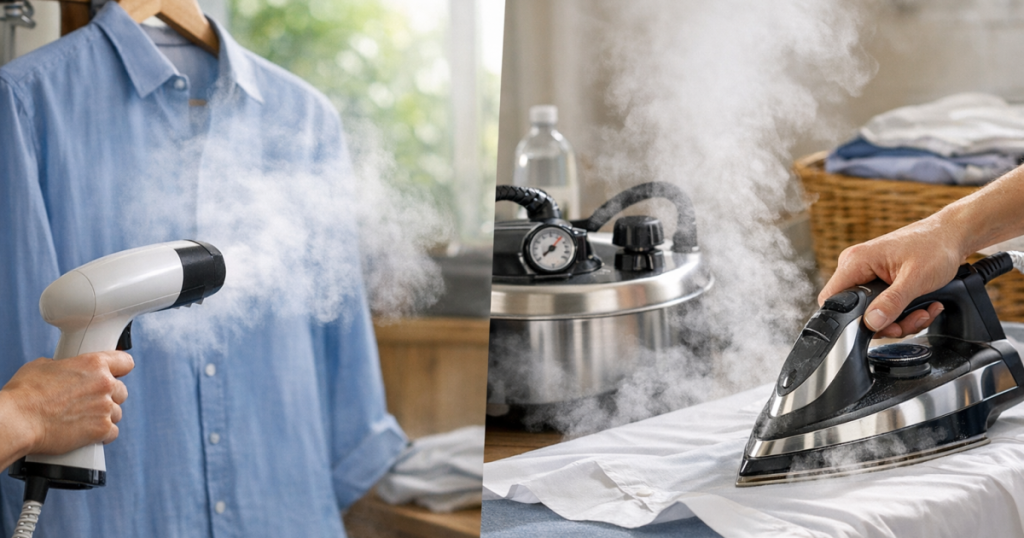
Ironing usually means moving a heated soleplate across fabric. It suits flat areas such as shirt fronts, cotton dresses and tea towels. Steaming relies more on vapour and gentle tension, so it is useful for hanging garments, uniforms, linings and fabrics that do not like hard contact. Pressing uses heat, moisture and pressure in a deliberate way, often by lowering the iron, holding briefly, then lifting it away.
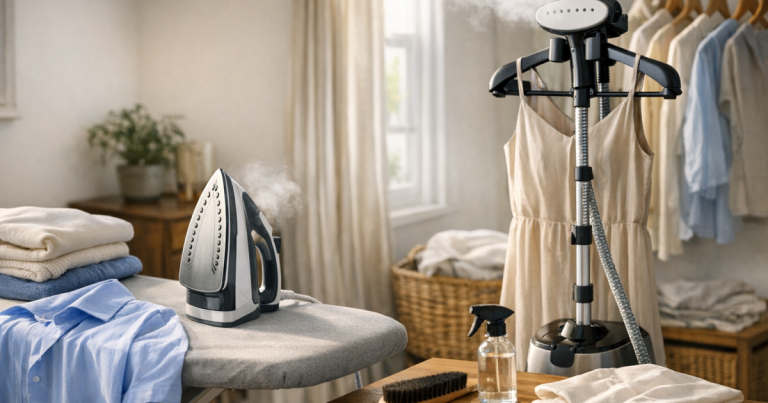
A good home setup helps you choose the right method without turning the job into a chore. Stable ironing boards, clear garment space and somewhere safe to hang finished items all matter; the guide to setting up an ironing and steaming station covers practical layout ideas for real UK homes.
Common damage signs and what they mean
- Shine on dark fabric: usually caused by too much direct pressure, heat, or friction on the surface fibres.
- Flattened pile: common on velvet, corduroy and textured wool when pressed directly.
- Scorching or yellowing: a sign that heat was too high or the iron stayed too long in one place.
- Rippling seams: can happen when moisture and heat affect different layers or fibres unevenly.
- Sticky residue: may come from melted synthetic fibres, transferred print, spray starch build-up or a dirty soleplate.
If you notice any of these signs, stop and let the fabric cool. Do not keep applying steam or pressure to “fix” the mark, as that can make it permanent.
A safer routine for everyday garments
- Check the care label before choosing steam, heat or direct contact.
- Sort garments by fabric type so you are not constantly switching from high to low heat.
- Start with lower-temperature items, then move to cottons and linens once the iron is hotter.
- Iron or steam inside out where shine, prints or dark colours are a concern.
- Use a pressing cloth for wool, dark trousers, delicate finishes and uncertain blends.
- Let garments cool and dry on a hanger before wearing or storing.
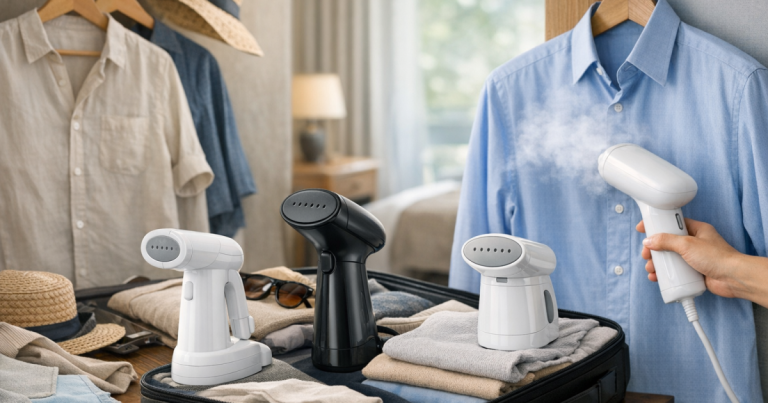
For quick weekday refreshes, a compact steamer can be useful on work shirts and uniforms when the aim is to release light wrinkles rather than create sharp creases. If that sounds closer to your routine, our guide to handheld clothes steamers for work shirts and uniforms explains where steamers help and where an iron still gives a neater finish.
When not to use steam
Steam is not automatically gentle. Avoid or limit it on fabrics labelled dry clean only unless the label specifically allows steaming, on garments with water-sensitive finishes, and on items with glued embellishments or delicate trims. Be cautious with leather, suede, waxed cotton, waterproof coatings and some pleated garments, as moisture and heat can change the finish or set the wrong shape.
Steam can also make stains harder to remove if the heat sets proteins, tannins or oily marks into the fibres. Treat visible stains before ironing wherever possible, and avoid pressing directly over unknown marks.
Things readers ask
Is steam safer than ironing?
Not always. Steam avoids direct soleplate pressure, which helps on some delicate fabrics, but hot moisture can still damage finishes, trims and heat-sensitive fibres. The care label and fabric type matter more than the tool.
Why do clothes crease again after ironing?
They may still be warm or slightly damp when worn, folded or packed away. Let garments cool and dry on a hanger so the fibres set in the smoother shape.
Should I press hard to remove stubborn creases?
Only on fabrics that can take pressure, such as sturdy cotton. For wool, dark fabrics and synthetics, add controlled moisture, use a cloth barrier and reduce pressure rather than forcing the crease flat.
Can steam remove smells from clothes?
Steam can freshen some garments by relaxing fibres and reducing light odours, but it is not a substitute for washing when clothes are soiled, sweaty or stained.
Do I need distilled water in an iron or steamer?
Follow the appliance instructions. In hard-water areas, limescale can affect steam performance, so regular maintenance and the recommended water type are worth checking.
Key takeaways
Smoother clothes come from balance: moisture to relax fibres, heat to make reshaping possible, pressure to flatten where appropriate, and cooling time to hold the finish. Cotton and linen can usually take a firmer approach, wool needs gentler shaping, and synthetics need lower heat with less pressure.
The safest habit is to treat fabric as the guide, not the crease. If a garment is dark, textured, delicate, blended or trimmed, slow down, test first, and use barriers such as a pressing cloth. Good garment care is not about making every item perfectly crisp; it is about getting a cleaner, neater finish without shortening the life of the clothes you rely on.