Delicates rarely fail because they were washed once; they usually suffer from repeated friction, snagging and twisting in the drum. The right mesh laundry bags give lighter fabrics a barrier while still allowing water and detergent to move through. Picking well matters for bras, tights, silk blends, satin pieces, baby socks, lace trims and anything with straps or small fastenings.
In brief
- Choose fine mesh for lace, hosiery, silk blends and small items that catch easily.
- Choose a structured or thicker bag for bras, padded lingerie and garments with hooks.
- Do not overfill the bag; clothes need room to move so detergent can rinse through.
- Look for a covered zip, neat seams and a shape that suits the garment, not just the drawer.
- Use the bag as extra protection, not as permission to ignore the care label.
What a laundry bag can and cannot do
A laundry bag reduces abrasion. It stops a bra hook grabbing a cotton T-shirt, keeps tights from wrapping round sleeves, and prevents thin straps from being pulled through the wash load. It is most useful when the garment is washable but too light, detailed or easily distorted to be loose in the drum.
It does not make a dry-clean-only item machine washable, remove the need for sorting colours, or protect a delicate fabric from a hot wash. It also will not fix unsuitable detergent, an aggressive spin or a crowded machine. Treat it as one layer in the care routine: sort, check the label, fasten closures, choose a gentle cycle where appropriate, then use the bag to reduce mechanical stress.
Step 1: choose the mesh tightness
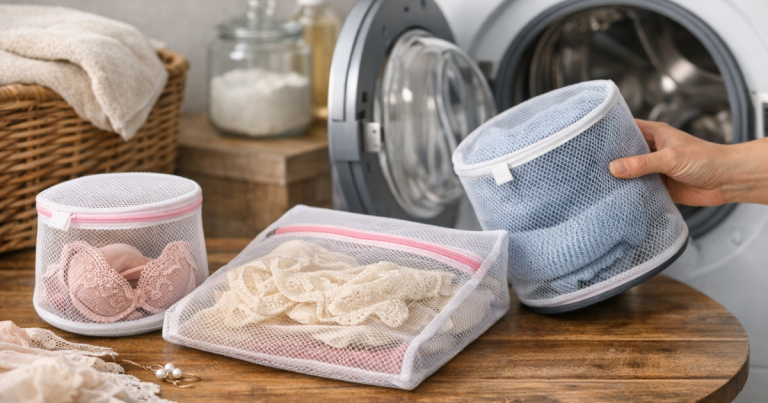
The first choice is the weave. Fine mesh has smaller holes and gives better protection against snagging, which makes it a good fit for lace knickers, tights, thin camisoles, silk-blend scarves and decorative trims. It is also useful when tiny items could escape or become trapped in the drum seal.
Open mesh lets water move through more freely and can suit sturdier washable items that mainly need separating from the rest of the load, such as sports bras, reusable pads, fabric belts or light knit accessories. The trade-off is that open mesh gives less snag protection for sharp hooks, loose threads and delicate embroidery.
Very tightly woven laundry bags and fibre-catching wash bags are a slightly different category. They can be useful for synthetic fleeces and sportswear where fibre shedding is a concern, but they should still be checked for garment capacity, rinsing performance and care instructions. Do not assume every tightly woven bag is suitable for structured lingerie or embellished clothing.
Step 2: pick the right size for the garment
A common mistake is buying a set of bags and using whichever one is nearest. Size matters because an overfilled bag turns into a compressed bundle. That can stop detergent reaching fabric evenly and may leave creases, detergent marks or damp patches after washing.
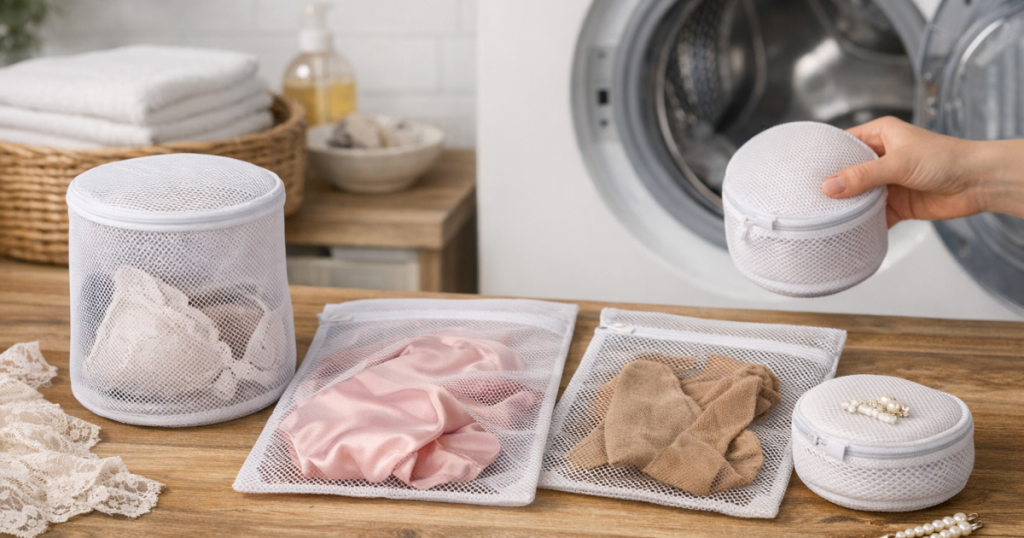
- Small bags: best for tights, socks, lace knickers, detachable collars, washable fabric belts and small baby garments.
- Medium bags: useful for camisoles, slips, lightweight tops, silk-style scarves and one or two delicate items with similar care needs.
- Structured bra bags: better for bras than flat pouches because they reduce crushing and keep hooks contained.
- Large bags: suited to washable jumpers, fine cardigans, satin pyjama tops or delicate blouses, provided the item still has room to move.
As a rough rule, the garment should fill no more than about two thirds of the bag. If it has no space to unfold, rinse and move, the bag is too small or the load is too full.
Step 3: check the closure before anything else
The closure is where many cheap laundry bags fail. A zip is usually easier to secure than a drawstring, but it needs a covered end or small elastic guard so the zip pull does not work loose in the drum. Exposed metal teeth, rough pull tabs and sharp corners can scratch delicate fabrics or catch on lace.
Drawstring bags can be useful for lightweight items, but loose cords can wrap around other garments or tighten into knots. If choosing drawstring, look for a short, soft cord and a stopper that stays closed. Avoid bags with flimsy toggles if you wash mixed loads with towels, jeans or school uniform, as heavier items can pull at the closure.
Step 4: match the bag to the fabric and garment type
Bras and structured lingerie
Use a shaped or padded wash bag if you machine wash washable bras. Fasten the hooks first so they cannot pull thread from the cups or from other items. Wash bras with lighter garments rather than heavy towels, and avoid forcing several wired or padded bras into one small bag.
Hosiery, lace and small delicates
Fine mesh is best here. Tights, stockings and lace trims are vulnerable to snags from zips, hooks and rough seams elsewhere in the machine. Keep them separate from garments with Velcro-style fastenings, exposed zips or heavy embellishment.
Satin, silk blends and glossy fabrics
Choose a smooth, fine mesh bag and a gentle programme if the care label allows machine washing. Satin can mark from rubbing and can crease badly if twisted into a knot, so use a bag large enough for the item to sit loosely. After washing, reshape promptly and dry away from direct heat; if creasing is the bigger problem, follow these tips on how to remove creases from satin without shine marks.
Beaded, sequinned and embroidered pieces
A laundry bag can stop an embellished garment catching on the rest of the load, but it cannot guarantee that beads, sequins or glued decoration will survive a machine wash. Many embellished garments need hand washing or specialist cleaning. For more fragile occasionwear, read the guide to cleaning beaded dresses without loosening embellishments before putting anything in the machine.
Baby socks, reusable pads and small household textiles
Small items often disappear into duvet covers, sleeves or the door seal. A small zipped bag keeps them together and makes sorting easier. Choose a bag with a secure zip rather than a wide drawstring gap, as tiny items can work their way out during the spin.
Step 5: inspect seams, edges and fabric feel
Before buying, look beyond the front of the packet. The best delicates bag is soft but not limp, with stitching that feels smooth on both sides. Raised seams inside the bag can rub satin, lace and fine knitwear. Loose threads can catch hooks or pull into the wash load.
Give the mesh a gentle stretch between your fingers. It should flex without distorting immediately. If the fabric feels scratchy, sharp or brittle when dry, it is unlikely to be kind to delicate fibres once wet and moving in the drum. White or pale bags are easier to spot dye transfer on, while darker bags may hide residue and lint.
Examples worth comparing
If you want a straightforward set for everyday delicates, a multi-size pack such as Brabantia Protective Laundry Wash Bags Set of 3 gives you different bag sizes for small garments, lingerie and lighter tops. Check the closure, seam finish and dimensions against the clothes you actually wash most often.
For synthetic sportswear, fleeces and similar items where fibre shedding is part of your buying decision, compare a purpose-made option such as Guppyfriend Washing Bag. It is not a replacement for sorting, cooler washing or lower-friction cycles, but it is worth considering when you want a tighter barrier than standard open mesh.
For bras, look at shaped lingerie wash bags rather than flat pouches. A cylindrical or domed design can help reduce crushing, but you still need to check that your bra fits without being folded or compressed.
How to use a delicates bag properly
- Sort first: separate lights, darks and strong colours before using the bag. The bag will not stop dye running.
- Fasten everything: close bra hooks, zips, buttons and press studs so they cannot scrape or catch.
- Turn garments inside out: this helps protect outer surfaces, prints and decorative finishes.
- Use the right cycle: pick a gentle, delicate or low-spin programme when the care label calls for it.
- Leave space in the drum: a crowded machine increases rubbing, even inside a protective bag.
- Remove promptly: shake garments out gently after washing to reduce creasing and help them dry evenly.
If a garment is new, dark, bright or handmade, check dye stability before washing it with other items. The safest next step is to test clothes for colourfastness before washing, especially before using a shared bag with pale delicates.
What not to put in one
Avoid using a delicates bag as a shortcut for items that clearly need a different care method. Leather trims, non-washable beading, glued embellishments, structured occasionwear, some wool garments and anything labelled dry clean only may be damaged by water, agitation or detergent regardless of the bag.
Do not put heavily soiled items in with delicate fabrics just because they are contained. Grease, mud, make-up and deodorant residue can transfer through the mesh. Pre-treat stains properly and keep wash loads compatible by colour, soil level and fabric weight.
Care and replacement checks
Wash bags pick up detergent residue, lint and dye just like clothing. Rinse them occasionally and let them dry fully between uses, rather than leaving them damp in the bottom of the laundry basket. A musty bag can transfer odour to clean clothing.
Replace a bag when the zip no longer stays closed, the mesh has holes, seams have roughened, or the fabric has stretched enough for small items to escape. If you can feel a sharp edge with your fingers, it can catch a delicate garment in the wash.
Common questions
Can I put several delicate items in one bag?
Yes, but only if they are similar in colour, fabric weight and care needs. Leave enough space for each item to move; otherwise they will twist together and rinse poorly.
Do laundry bags stop bras losing their shape?
They reduce crushing and snagging, but they do not make every bra suitable for machine washing. Check the care label, fasten hooks and avoid washing structured bras with heavy towels or jeans.
Is fine mesh always better than open mesh?
No. Fine mesh protects better against snags, while open mesh may rinse more freely for sturdier items. Choose based on the garment’s fragility, size and likely snag points.
Can I use a pillowcase instead?
A pillowcase can work in a pinch for some larger items, but it is bulkier, less secure and usually less breathable than a proper zipped delicates bag. It is not ideal for small items or bras.
Should delicates go in the tumble dryer inside the bag?
Usually not. Many delicate fabrics dislike heat and tumbling. Follow the care label, reshape garments after washing and air dry flat or on a suitable hanger where needed.
Main lessons
Good mesh laundry bags are chosen by garment type, not by guesswork. Fine mesh suits lace, hosiery and glossy fabrics; structured bags suit bras; larger soft bags suit washable lightweight garments that need room to move. The details that matter most are mesh smoothness, closure security, seam finish and correct sizing.
Used properly, a laundry bag helps delicates survive normal wash routines with fewer snags, less twisting and better separation from heavier clothing. It will not override a care label, prevent dye transfer or save fragile embellishments, so combine it with sensible sorting, gentle cycles and careful drying.