A quick hidden-seam check can stop one red sock, navy blazer or bright cotton top from tinting the rest of the wash. The safest way to test clothes for colourfastness is to dampen a discreet area, press it with a white cloth, and check whether dye transfers before the garment goes near a full laundry load.
This matters most with dark denim, vivid prints, school uniform trims, hand-dyed fabrics, contrast collars and anything labelled “wash separately”. A two-minute test will not solve every dye problem, but it gives you a much better sense of whether to wash normally, separate the item, or keep it away from water altogether.
The short version
- Choose a hidden area such as an inside seam, hem allowance or underside of a facing.
- Dampen the test spot with cool water first, not hot water.
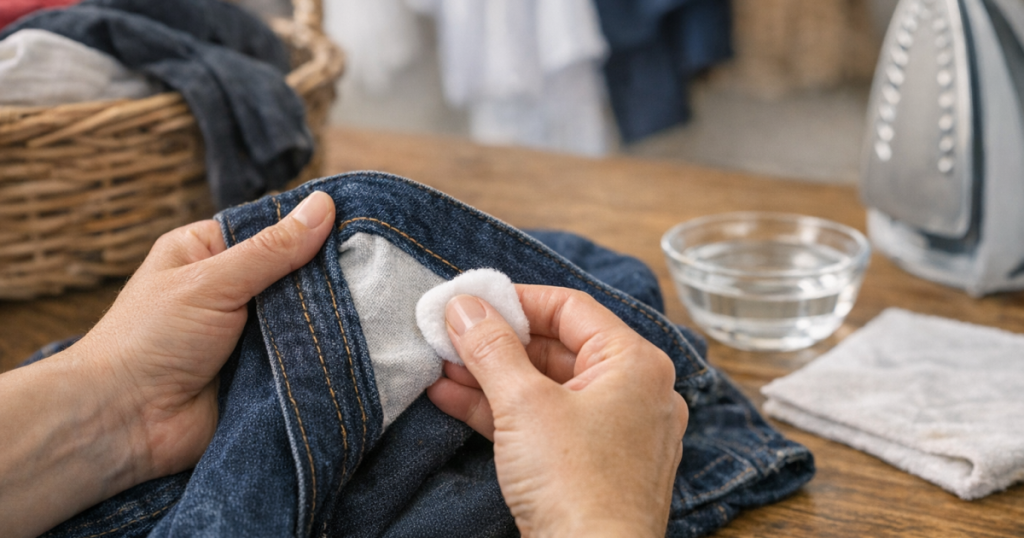
- Press with a clean white cloth or white kitchen towel for 30 seconds.
- Check the cloth for colour transfer and inspect the garment for a lighter patch.
- Repeat with a tiny amount of your usual detergent solution if the care label allows washing.
- If colour transfers, wash the item alone, use a colder gentle cycle, or seek specialist cleaning for delicate or embellished pieces.
When a colourfastness test is worth doing
You do not need to test every plain white cotton T-shirt, but it is sensible whenever dye loss would be costly, awkward or difficult to reverse. New black jeans, red cotton dresses, navy sweatshirts, bright sports kits, school uniform cardigans and garments with dark piping against pale fabric are common candidates.
It is also useful before stain removal. Many stain treatments involve moisture, gentle rubbing or detergent contact, all of which can disturb unstable dye. Testing first helps you avoid turning a small mark into a faded patch or colour bleed halo.
Pay close attention to care labels. Phrases such as “wash separately”, “colour may transfer”, “dry clean only” or “do not soak” are clear warnings that the dye or finish may not behave well in a normal mixed load.
What you need before you start
- A clean white cotton cloth, white flannel or plain white kitchen towel.
- Cool water in a small bowl.
- A small amount of your usual laundry detergent diluted in water, only if the garment is washable.
- A towel to place underneath the test area.
- Good daylight or bright indoor light so you can see faint colour transfer.
A white cloth is important because it shows even slight dye movement. Avoid coloured cloths, printed kitchen towel or dark microfibre cloths because they can hide the result or add confusion if their own dye transfers.
Step-by-step: the hidden-seam test
1. Read the care label first
Check the washing temperature, whether hand washing is allowed, and whether the garment says dry clean only. If the label rules out washing, do not use detergent or soak the fabric for this test. A very cautious damp-cloth check may still show whether surface dye transfers, but it does not make a non-washable garment safe to launder.
2. Pick the least visible test area
Use an inside seam, inner hem, spare belt loop, underside of a cuff, or fabric tucked behind a facing. For lined garments, test the outer fabric and the lining separately if both may get wet. On patterned clothes, test the darkest shade, as deep reds, navies, blacks and strong greens are often the most likely to mark the cloth.
3. Dampen, do not soak
Dip a corner of the white cloth in cool water and squeeze it until damp rather than dripping. Press it onto the hidden area for around 30 seconds. Do not scrub at this stage; rubbing can damage fibres and exaggerate the result, especially on viscose, wool, silk, brushed cotton and garment-dyed denim.
4. Check for transfer
Lift the cloth and look for any tint. A faint grey, pink, blue or brown mark means dye has moved. Then inspect the garment itself. If the tested area looks lighter, duller or water-marked, treat the item as colour-sensitive even if only a little dye appears on the cloth.
5. Repeat with diluted detergent if appropriate
If the garment is machine washable or hand washable, mix a tiny drop of laundry detergent into a small bowl of cool water. Dampen a clean part of the white cloth with this solution and press a fresh hidden area. Detergent can lift loose dye that plain water does not, so this second check is more realistic for an actual wash.
6. Let the test area dry
Some colour changes are only obvious once the fabric dries. Leave the tested area flat and away from direct heat. If the patch dries with a ring, shine, texture change or faded edge, avoid washing the garment with other items and reconsider the cleaning method.
How to interpret the result
- No colour on the cloth: The garment is more likely to tolerate the recommended wash, though you should still follow the label and sort colours sensibly.
- Very faint transfer: Wash separately the first few times, use cool water, avoid soaking and keep it away from pale garments.
- Clear colour transfer: Treat it as unstable dye. Wash alone only if the care label allows, and avoid vigorous rubbing or long wash cycles.
- Fabric patch changes colour or texture: The issue may be water sensitivity, finish damage or fibre swelling rather than simple dye bleed. Do not continue with normal washing.
- Trim transfers but main fabric does not: Be careful with contrast cuffs, collars, appliqué, embroidery threads and binding because they can bleed onto the garment itself.
Even a garment that passes the test can still lose depth over time if washed too hot, overloaded, over-dried or exposed to harsh detergent routines. For longer-term habits, the guide on how to stop dark clothes fading in the wash is a useful next step for black jeans, navy uniforms and dark workwear.
Different fabrics need slightly different caution
Cotton and linen usually tolerate a hidden damp test well, but strong dyes can still run, especially on new garments. Denim often releases loose surface dye for several washes, so keep it separate from pale towels, bedding and school shirts.
Viscose, silk and wool need a lighter touch. They can distort, watermark or lose surface finish if rubbed while damp. Press the cloth gently and avoid repeated testing in the same place. If the fabric is labelled dry clean only, do not treat a successful damp test as permission to machine wash it.
Embellished garments need extra care because the fabric may be colourfast while beads, sequins, threads, glue or metallic finishes are not. If you are dealing with eveningwear or occasion pieces, read the advice on how to clean beaded dresses without loosening embellishments before using water or detergent around trims.
What to do if the garment fails
A failed test does not always mean the item is unusable. It means you need to control the risk rather than treating it like a normal laundry item.
- Wash it alone for the first wash, using the lowest temperature allowed on the care label.
- Avoid soaking, as long contact with water gives loose dye more time to move.
- Turn the garment inside out to reduce surface abrasion.
- Use a gentle cycle or hand wash only if the label permits it.
- Keep it away from pale seams, white collars, light linings and mixed loads.
- Dry it promptly and avoid leaving it crumpled while wet, as dye can transfer where damp fabric touches itself.
For delicate underwear, knitwear, lace panels and small garments, a laundry bag can reduce friction but it cannot stop unstable dye moving through water. Use one for protection, not as a substitute for sorting. If you use bags regularly, make sure you are using the right size and loading them correctly; the guide on mesh laundry bags for delicates explains the common mistakes.
Common mistakes that give misleading results
- Testing only a pale part of a print: Always test the darkest or most saturated colour.
- Using hot water first: Heat can make dye movement worse and may not reflect the recommended wash.
- Scrubbing hard: This tests abrasion as much as colourfastness and can damage the surface.
- Ignoring linings and trims: A black lining inside a pale jacket can be the real source of transfer.
- Assuming one pass is permanent: Dye can still release in later washes, particularly from denim and heavily dyed cotton.
- Testing after stain treatment: Always test before applying stain remover, detergent paste or oxygen-based products.
Common questions
Can I test clothes for colourfastness with a cotton bud?
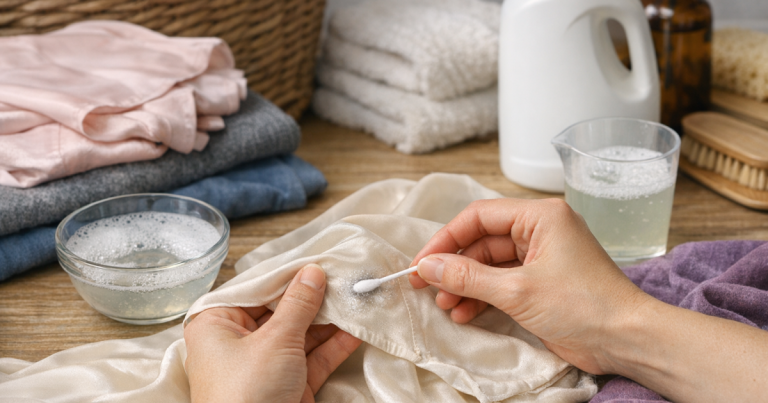
Yes, for very small areas such as embroidery, piping or contrast stitching. A white cloth is better for larger areas because it shows transfer more clearly and spreads pressure more evenly.
Does vinegar set dye in clothes?
Do not rely on vinegar to make a non-colourfast garment safe. Some home methods are unreliable and may affect fabric finish, elastane, trims or odour. Sorting and following the care label are safer.
Should I use a colour run sheet after a failed test?
A colour run sheet may help catch some loose dye in the water, but it cannot guarantee protection. If a garment clearly transfers dye, wash it separately rather than trusting a sheet in a mixed load.
Can dry-clean-only clothes be colour tested?
You can do a very cautious damp press on a hidden area to check for obvious surface transfer, but do not use that result to justify washing the garment. The label still matters.
Why did my garment pass the test but still bleed in the machine?
A machine wash adds movement, longer contact time, detergent and a larger water volume. A hidden test reduces uncertainty, but it cannot perfectly recreate every wash condition.
The big picture
Colourfastness testing is a small habit that prevents big laundry mistakes. Use cool water, a white cloth and a hidden seam, then judge both the cloth and the garment once dry. If dye moves, adjust the wash: separate the item, shorten contact with water, avoid heat and protect nearby pale fabrics.
The aim is not to make every garment machine washable. It is to understand how the fabric behaves before you commit it to a wash load, stain treatment or hand wash. That is especially valuable for dark uniforms, new denim, bright cottons, delicate trims and clothes you would rather not risk replacing.