Beaded dresses look sturdy when they are heavy with embellishment, but the stitching, backing fabric and adhesives can be surprisingly vulnerable. The safest way to clean beaded dresses is to test first, use as little moisture as possible, and support the weight of the garment throughout cleaning and drying. A rushed soak, hot wash or aggressive rub can do more harm than the original mark.
Most home care should focus on airing, spot-cleaning and gentle hand handling rather than a full wash. If the dress is vintage, heavily beaded, silk-based, structured, lined with acetate, or labelled dry clean only, treat home cleaning as freshening rather than restoration.
The short answer
Do not put a beaded dress in the washing machine unless the care label clearly says it is washable and the embellishment is firmly stitched. Even then, hand washing is usually kinder. Start by checking the care label, inspecting the beadwork, testing a hidden area, then cleaning only the soiled sections with cool water and a very small amount of mild detergent.
After cleaning, never wring, twist or hang a wet beaded dress from the shoulders. Water adds weight, and that weight can stretch the fabric or pull embellishments loose. Blot with towels, reshape the dress flat, and dry it away from direct heat and sunlight.
Before you touch the stain: identify what you are dealing with
The right cleaning method depends on the base fabric, the embellishment and the type of mark. A polyester evening dress with machine-stitched sequins is usually more forgiving than a silk chiffon dress covered in hand-sewn glass beads. The care label gives the first clue, but the construction matters just as much.
Check the fabric
- Silk, chiffon, georgette and satin: These can water-mark easily and may lose shape when wet. Keep moisture tightly controlled.
- Velvet: Pressure and rubbing can crush the pile. Blot only, and avoid pressing beads into the fabric.
- Mesh or tulle: The fabric may snag around bead threads, so support it carefully and avoid pulling.
- Polyester or nylon: Often more washable, but heat can still distort sequins, trims or decorative coatings.
Check the embellishment
Look closely at the beads, sequins, pearls, crystals, embroidery and threads. If you can see loose knots, broken thread, lifting glue, missing beads or rust-coloured marks around metal pieces, do not soak the dress. A full wet clean can spread damage across a larger area.
Some beads are dyed, coated or metallic. These finishes can bleed, dull or tarnish if exposed to water, detergent, perfume residue or heat. Plastic sequins can also warp under steam or high temperatures.
Step 1: air and inspect the dress
Start with the least invasive care. Hang the dress briefly on a broad, padded hanger or lay it flat over a clean towel in a well-ventilated room. Airing helps remove light odour from storage, transport or a single wear without stressing the fabric.
Inspect the dress in daylight. Check the underarms, neckline, hem, seat area and any spots where hands have touched the fabric. These areas often hold body oils, deodorant, make-up, food splashes or floor dirt. Turn the garment inside out if possible and check the lining too; cleaning the lining can sometimes solve the freshness problem without wetting the embellished outer layer.
Step 2: test a hidden area
Testing is not optional with beadwork. Choose a hidden seam allowance, inside hem or an area under the lining. Dampen a white cotton cloth with cool water and press it against the test spot for a few seconds. If colour transfers to the cloth, or the bead finish changes, avoid wet cleaning that area.
Repeat the test with a tiny amount of diluted mild detergent if you plan to use one. Wait until the area dries before deciding. Some water marks only appear once the fabric is dry, particularly on silk, satin and viscose blends.
Step 3: remove dry debris first
If there is mud, dust, confetti, dried food or grit, let it dry fully before cleaning. Trying to dissolve or rub debris while wet can grind particles into delicate fibres or scratch bead coatings. Use a very soft clothes brush, a clean make-up brush or your fingertips to lift particles away from the surface.
Work in the direction of the fabric and beadwork rather than across it. If debris is caught between beads, do not pick with pins or sharp tools; they can cut the thread that holds the embellishment in place.
Step 4: spot-clean small marks
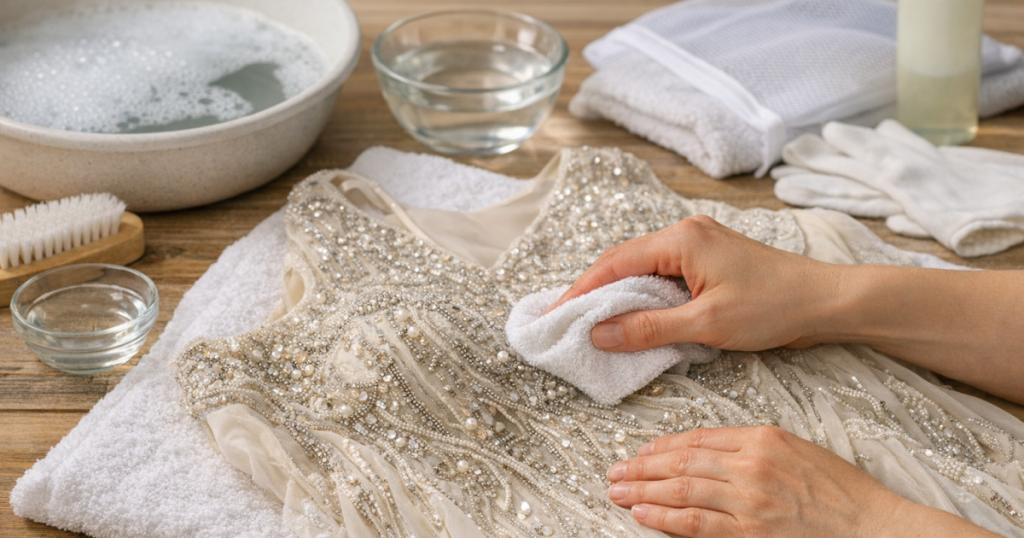
For most beaded dresses, spot-cleaning is safer than immersion. Mix a small bowl of cool water with a drop of gentle liquid detergent. The solution should feel barely soapy. Too much detergent is difficult to rinse from dense beadwork and can leave a dull residue.
- Place a clean white towel beneath the stained area to support the fabric.
- Dip a white cloth or cotton bud into the solution, then blot off excess moisture.
- Press gently on the mark; do not scrub or drag across the beadwork.
- Use a second cloth dampened with plain cool water to remove detergent.
- Blot with a dry towel and let the area dry flat.
For make-up around the neckline, work slowly from the outside of the mark towards the centre. For food or drink spots, remove any residue first, then blot. For oily marks, detergent may help, but avoid soaking the bead threads. If the stain spreads, stop and let the area dry before reassessing.
Step 5: clean the lining separately where possible
Many dresses feel dirty because the lining has absorbed perspiration while the embellished outer layer is still clean. If the lining can be gently pulled away from the outer fabric, place a towel between the layers and clean only the lining at the underarms, neckline or bodice.
Use the same cool, diluted detergent method. Keep the embellished layer dry by replacing the towel as soon as it becomes damp. This is particularly useful for dresses worn once to a wedding, party or formal event where the main issue is freshness rather than visible staining.
When a full hand wash is reasonable
A full hand wash is only suitable when the care label allows washing, the fabric passes the colour test, and the beads are securely stitched rather than glued. Even then, treat the dress as fragile.
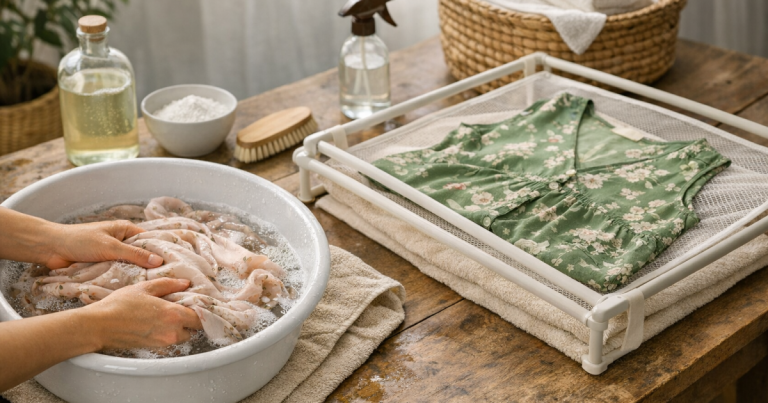
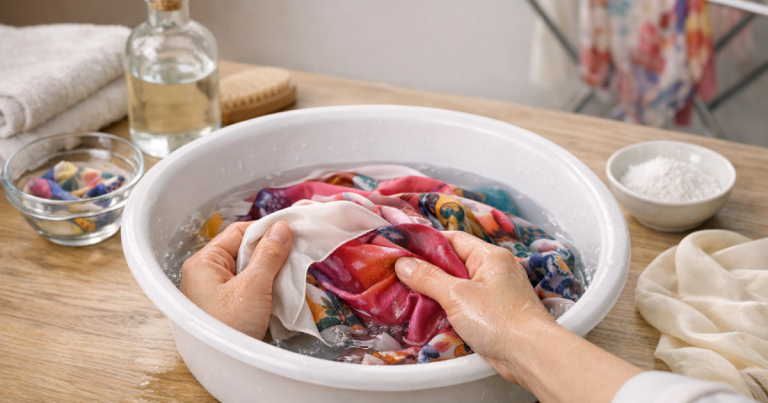
Fill a clean basin or bath with cool water and a very small amount of mild detergent. Lower the dress into the water while supporting its weight with both hands. Gently press the water through the fabric for a few minutes. Do not rub, twist, scrub or leave the dress soaking for a long period.
Drain the water, refill with cool clean water, and press gently to rinse. You may need to repeat this once more to remove detergent. Lift the dress with both hands or gather it into a clean towel so the wet weight is supported. Never lift it by the straps, neckline or shoulders.
If the dress is small and lightly embellished, a protective bag can reduce snagging during careful handling, but it should not be used as an excuse to machine wash a fragile garment. For choosing and using bags properly, see our advice on how to use mesh laundry bags without damaging delicates.
Drying without stretching or loosening beads
Drying is where many embellished dresses are damaged. Wet fabric is heavier, and beads add even more strain. The aim is to remove water without pulling on seams, straps or embellishment threads.
- Lay the dress flat on a thick white towel.
- Roll the towel gently around the dress to absorb water; do not squeeze hard.
- Unroll, move the dress to a dry towel, and reshape it carefully.
- Keep the dress flat until it is no longer heavy with moisture.
- Finish drying away from radiators, direct sunlight and heated airers.
Avoid tumble drying completely. Heat, tumbling and friction can loosen beads, melt decorative trims, distort sequins and shrink linings. If you need air movement, use a cool room with ventilation rather than direct heat.
Removing creases from a beaded dress
Ironing directly over beads is risky. The pressure can crack beads, flatten sequins, leave shiny marks or imprint embellishments into the fabric. If the dress is creased, start with gravity and gentle humidity rather than an iron.
Hang the dry dress on a padded hanger for a short period, making sure the weight is not dragging at delicate straps. For local creases in the lining or plain areas, use a garment steamer cautiously from the reverse side where the care label allows it. Keep the steamer moving, avoid soaking one area, and do not aim steam directly at glued stones, plastic sequins or metallic trims.
If water marks are a concern, our guide to steaming creased clothes without leaving water marks explains how distance, cloth placement and drying time affect delicate fabrics.
What not to do
- Do not use hot water: Heat can weaken adhesives, set stains and distort decorative finishes.
- Do not scrub beadwork: Rubbing can fray threads and dull bead surfaces.
- Do not use bleach: It can damage fibres, tarnish metal elements and discolour trims.
- Do not wring the dress: Twisting puts direct stress on seams and embellishment threads.
- Do not hang it while wet: The weight can stretch shoulders, straps and bias-cut panels.
- Do not spray perfume directly onto it: Alcohol and fragrance oils can stain fabric or affect bead coatings.
Storing the dress after cleaning
Only store the dress when it is completely dry. Trapped moisture can lead to musty smells, mildew marks or weakened threads. If the dress is heavily beaded, flat storage is often safer than hanging. Use acid-free tissue between folds and around embellished areas so beads do not press into the fabric.
If hanging is suitable, use a wide padded hanger and support heavy skirts with hanging loops if the dress has them. Avoid thin wire hangers and cramped wardrobes. A breathable cotton garment bag is better than plastic for longer storage because it allows air movement while protecting the dress from dust.
Keep the dress away from lofts, garages and damp cupboards, where temperature and humidity can fluctuate. The same gentle storage thinking applies to other delicate fibres too; if you care for fine knits, the principles in our guide to washing cashmere jumpers without shrinking them are useful for understanding why water temperature, support and drying method matter.
When to stop and use a specialist cleaner
Some beaded dresses are not good candidates for home cleaning. Stop and use a specialist cleaner if the dress is bridal, vintage, heavily structured, silk-based, labelled dry clean only, or valuable enough that visible damage would be costly. Also stop if colour transfers during testing, the beads are glued, the lining is stained through, or the mark is large and oily.
Take clear photos of the stain, beadwork and care label before handing the garment over. Point out any loose beads or weak areas so they are not mistaken for cleaning damage later. A good cleaner will want to know what caused the stain, when it happened and whether you have already applied water, detergent or stain remover.
Common questions
Can I machine wash a beaded dress on a delicate cycle?
Usually, no. A delicate cycle still involves agitation, spinning and the weight of wet beadwork pulling on the garment. Only consider it if the care label clearly permits machine washing and the embellishment is robust, and even then hand washing is safer.
How do I freshen a beaded dress without washing it?
Air it in a ventilated room, clean the lining where needed, and use a fabric-safe freshening approach only after testing. Avoid heavy sprays, as they can leave marks or affect bead finishes.
Can I use stain remover on sequins or beads?
Be cautious. Many stain removers are too strong for coated beads, metallic trims, silk and delicate linings. Test first, use the smallest amount possible, and keep it away from embellishments unless the product label confirms suitability.
Why has my dress developed water marks after cleaning?
Water marks usually happen when moisture spreads unevenly through fabric and dries with a visible edge. Satin, silk and viscose are particularly prone to this, so blotting and controlled drying are essential.
Should I repair loose beads before or after cleaning?
Secure obviously loose beads before cleaning if possible, because water and handling can loosen them further. Keep any fallen beads in a labelled envelope so they can be stitched back with a close thread match.
In brief
The safest routine is simple: inspect, test, spot-clean, blot and dry flat. Keep moisture cool and minimal, support the dress whenever it is wet, and avoid heat, rubbing and hanging under weight. With beaded garments, patient handling protects both the fabric and the embellishment far better than a more aggressive clean.