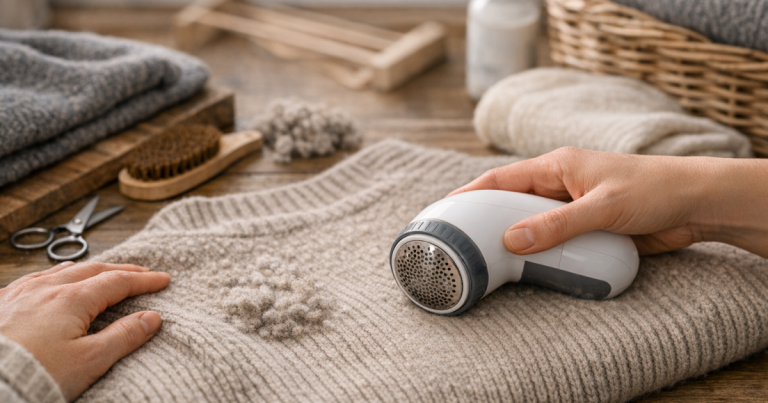
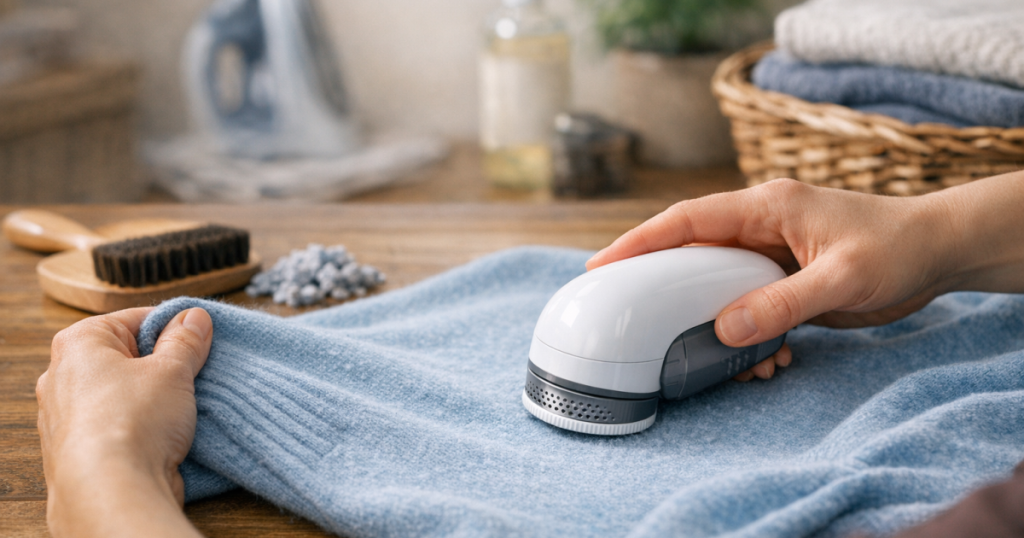
A fabric shaver can make bobbled jumpers, jersey tops and coat sleeves look much neater, but the same spinning blades can catch loose yarns if you rush. The safest approach is to prepare the garment properly, test a hidden area, and remove pills in light passes rather than pressing hard.
Snagging usually happens when the cloth is wrinkled, stretched unevenly, damp, loosely knitted, or already damaged. A careful setup matters as much as the tool itself.
In brief
- Use the tool only on clean, dry fabric so pills lift cleanly instead of dragging.
- Lay the garment flat and hold the section gently taut; never shave over folds or ridges.
- Start on the lowest or most cautious setting available, then increase only if the fabric copes well.
- Use slow, light, overlapping strokes and let the blades do the work.
- Avoid loose loops, embroidery, lace, sequins, suede, velvet pile and weakened areas.
Before the tool touches the garment
Check the care label first. It will not usually mention depilling directly, but it tells you whether the fabric is delicate, hand-wash only, wool-rich, silk, acrylic, cotton jersey or a blended weave. That helps you judge how cautious to be. A tightly knitted acrylic jumper can often tolerate more treatment than an open-weave wool cardigan or a fine merino layer.
Work with a freshly laundered or at least clean garment, but make sure it is completely dry. Damp fibres can stretch and pull, which makes snagging more likely. If you are planning to wash a bright, dark or unfamiliar item before tidying it, it is worth knowing how to test clothes for colourfastness before washing, especially where friction, detergent and warm water could disturb dye.
Look closely for loose threads, pulled loops, thinning elbows, frayed cuffs, missing stitches or split seams. A pilling remover is designed to cut raised bobbles, not repair structural damage. If you shave over an existing loose yarn, the tool can grab it and turn a small imperfection into a visible pull.
Set up the garment so it cannot catch
Most snags are caused by uneven fabric rather than heavy pilling. Choose a firm, flat surface such as an ironing board, table, or clean worktop covered with a smooth towel. Avoid soft beds or sofas because the cloth dips under pressure and creates folds for the shaving head to catch.
Fasten buttons, zip up zips and turn pockets flat so the garment sits evenly. For sleeves, cuffs and curved areas, place one hand inside the garment or lay the sleeve along the board so the fabric stays smooth. Do not pull so hard that the garment stretches out of shape; you want light tension, not distortion.
Good lighting helps. Pills can look like shadows on dark navy, black and charcoal fabrics, so position the garment near a window or under a bright lamp. Brush away hair, lint and loose fibres first, as these can clog the shaving head and make the tool drag.
The safest shaving technique
Once you are ready to use the fabric shaver, treat it as a finishing tool rather than a sander. The aim is to skim raised bobbles from the surface without cutting into the base yarns.
- Step 1: Test a hidden area. Try the inside hem, underarm, inner cuff or another discreet section. Make two or three light strokes, then check for fuzzing, colour change, laddering or pulled threads.
- Step 2: Start with the guard in place. If your model has a spacer or height guard, begin with it fitted. Only remove or lower it if the fabric is sturdy and the pills are not lifting.
- Step 3: Use very light pressure. The head should rest on the fabric rather than squash into it. Pressing harder rarely removes pills better; it mostly increases the chance of cutting good fibres.
- Step 4: Move in short, controlled passes. Work in one small area at a time, using gentle straight strokes or small circles depending on what feels smooth. Do not saw rapidly back and forth.
- Step 5: Check after every few passes. Stop, brush the area with your hand, and inspect the texture. It is better to leave faint fuzz than shave until the fabric looks thin.
For knitwear, follow the direction of the knit where you can. On woven coats or school uniform trousers, use short overlapping passes across the pilled area, keeping the fabric flat. On jersey T-shirts and leggings, be especially gentle because stretchy fabric can bounce into the blades if it is not held steady.
Fabrics that need extra caution
Not every bobbled or textured surface should be shaved. Some fabrics form pills because short fibres work loose; others have a deliberately raised, looped or brushed finish. Knowing the difference prevents accidental damage.
Wool and cashmere
Wool-rich jumpers can respond well to careful depilling, but open knits, cashmere and fine merino need a very light touch. Test first, use the guard, and stop as soon as the surface improves. A knitwear comb or gentle hand removal may be safer for luxury fibres or loose stitches.
Acrylic and polyester knitwear
Synthetic knitwear often pills heavily because the fibres are strong and hold onto bobbles. A fabric shaver can help, but stubborn pills may need several light sessions rather than one aggressive pass. Empty the lint chamber often so the blades keep moving freely.
Jersey, T-shirts and activewear
Stretchy cotton or synthetic jersey can snag if the fabric is loose under the head. Lay it flat, use your hand to stabilise the area, and avoid seams, printed designs and heat-transfer logos. If the fabric has thinning patches, do not shave those areas.
Textured and delicate fabrics
Do not use a pilling remover on lace, chiffon, embroidery, sequins, beading, crochet, bouclé, velvet pile or suede. These surfaces are either too open, too decorative, or too easy to mark. For napped materials, use methods suited to the finish instead; for example, a suede brush and careful steaming are covered in our guide to refreshing a suede jacket without damaging the nap.
What to do if it starts snagging
If the tool catches, stop immediately. Do not pull the garment away while the head is still moving. Switch it off, lift it straight up, and inspect the caught area before touching the thread.
If a loop has been pulled out, gently ease the surrounding fabric back into shape with your fingers. Do not cut a structural yarn unless you are certain it is only loose surface fluff. On knitwear, a tiny crochet hook or blunt needle can sometimes help move a pulled loop to the inside, but avoid tugging because one pulled stitch can travel.
If the same area keeps catching, the fabric is not suitable for further shaving there. Switch to hand removal: pinch off obvious pills, use small scissors only on raised bobbles well away from the base cloth, or leave the texture alone if the risk is too high.
Aftercare once the bobbles are gone
When you finish, brush or shake the garment outdoors or over a laundry basket to remove loose fibres. Empty the lint compartment and clean the blade area with the small brush supplied with the tool, or follow the maker’s cleaning instructions. Avoid rinsing any part that the instructions say must stay dry.
Depilling improves appearance, but it does not stop future friction. Underarms, side seams, seat areas, backpack contact points and cuffs usually bobble again because they rub during wear. To slow this down, wash garments inside out, avoid overcrowding the drum, and separate rough items such as towels or denim from softer knits.
For delicate tops, lingerie and fine knits, a wash bag can reduce abrasion in the machine. The guide on how to pick mesh laundry bags for delicates explains when a finer or more structured bag is worth using.
Common mistakes that cause snags
- Shaving over folds: a crease can rise into the cutting surface and get nicked.
- Pressing hard: heavy pressure pushes good fibres towards the blades.
- Ignoring loose threads: raised loops should be dealt with before depilling starts.
- Using it on damp clothes: moisture makes fibres more flexible and prone to pulling.
- Trying to make old fabric look new: heavy shaving can thin worn areas, even if the first result looks smoother.
- Running over seams and labels: raised stitching, care labels and decorative trims are easy snag points.
Things readers ask
Can a fabric shaver ruin clothes?
Yes, if it is used on unsuitable fabric, pressed too hard, or run over loose threads and textured finishes. Used lightly on a flat, tested area, it is usually much safer.
Should I shave clothes before or after washing?
Usually after washing and drying, because clean dry pills are easier to lift. If the garment is already clean, you can depill it without washing first.
Is a fabric comb safer than an electric pilling remover?
For very delicate wool, cashmere or open knits, a comb can give more control. For sturdier acrylic, cotton and blended fabrics, an electric tool is faster, provided you use light pressure.
How often should I depill a jumper?
Only when bobbles are visible and affecting the look or feel. Frequent shaving removes small amounts of fibre each time, so it should not become part of every wash routine.
Why does my jumper pill again so quickly?
Pilling comes from friction. Seat belts, bags, coats, desk edges, sleeves and washing-machine abrasion all rub fibres loose, so the same high-contact areas often bobble again.
Key takeaways
The safest way to remove bobbles is to slow down: clean and dry the garment, inspect it for weak spots, hold the fabric flat, and shave in light passes. Stop as soon as the surface looks tidier rather than chasing a perfectly smooth finish.
A fabric shaver is useful for many everyday clothes, uniforms and knitwear, but it is not suitable for every texture. When a fabric is loose, napped, embellished or already damaged, gentler hand methods are the better choice.