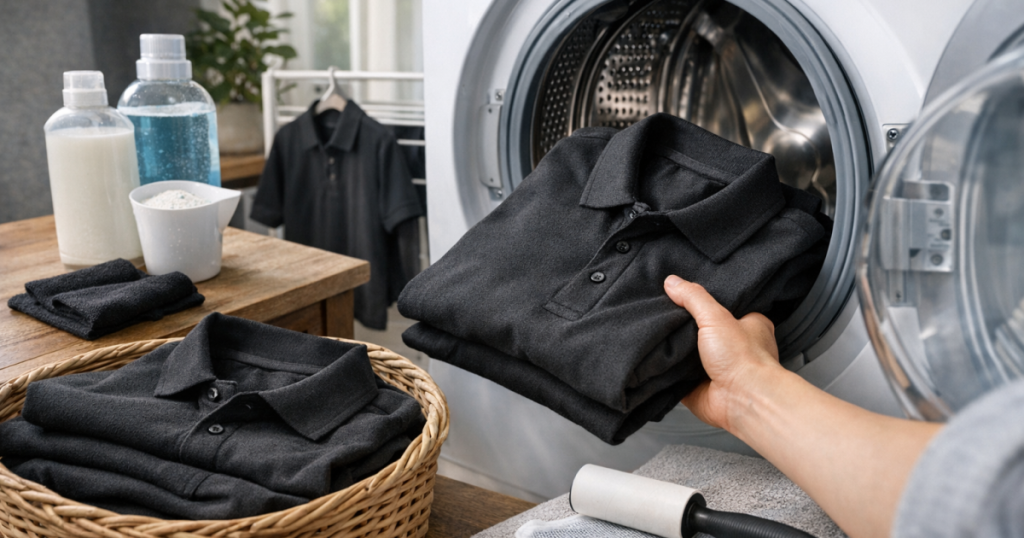
Black polos show fading, lint, deodorant marks and shiny wear faster than many other uniform colours. The safest way to wash black work polo shirts is to turn them inside out, use a cool short cycle, avoid overloading the drum and dry them away from direct heat or sunlight.
That routine protects the dyed surface of the fabric, reduces friction around collars and logos, and helps the shirts keep their workwear finish through repeated weekly laundering.
The short version
- Wash black polos inside out to reduce surface abrasion.
- Use a cool wash, usually 30°C unless the care label says otherwise.
- Sort darks properly and keep towels, fleece and pale lint-shedding items out of the load.
- Use the right amount of detergent; too much can leave grey-looking residue.
- Skip fabric conditioner if the polo has moisture-wicking fibres, performance fabric or a printed logo.
- Air-dry in shade rather than tumble drying on high heat.
Why black work polos fade so easily
Most fading is not caused by one bad wash. It usually comes from repeated friction, heat, detergent residue and sunlight. A work polo is often worn for long shifts, rubbed by seatbelts, tool belts, desks, aprons or jacket collars, then washed frequently. That combination gradually roughens the fabric surface, making black dye look duller.
Cotton-rich polos can fade as the fibre surface wears. Polyester or blended polos may hold colour well, but they can collect deodorant build-up, oily marks and lint, which makes them look grey even when the dye has not dramatically faded. Piqué polos are especially prone to catching pale fluff in the textured knit.
Before changing your wash routine, check the care label. It tells you the maximum wash temperature, drying limits and whether ironing is safe for the fabric and logo. If any symbols are unclear, use this guide to read laundry symbols before washing new clothes so you do not accidentally use a hotter or harsher setting than the shirt can take.
Step 1: Prepare the shirts before they go in the machine
Preparation takes less than a minute and makes a noticeable difference to colour retention. Empty pockets, shake out dust or hair, and close any buttons so the placket does not twist. If the polo has a zip neck, fasten the zip to stop the teeth rubbing against the fabric.
Turn every shirt inside out. The inside of a uniform polo can handle more of the mechanical action, while the outer surface keeps its darker finish for longer. This also helps protect embroidered logos, heat-applied branding and printed name panels from direct drum friction.
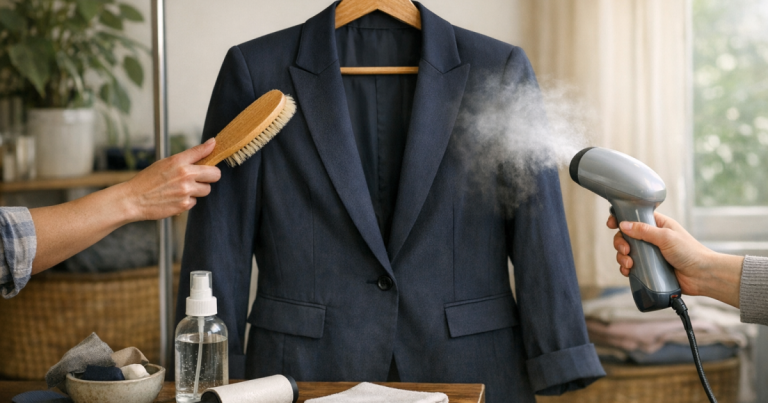
Brush off dried mud, plaster dust, warehouse dust or food crumbs before washing. Putting gritty dirt straight into the machine can turn the load into a mild abrasive wash, especially around collars, underarms and hems.
Step 2: Sort the load by colour, texture and soil level
Do not wash black polos with pale towels, fluffy socks, fleece jackets or cleaning cloths. Those items shed lint that clings to dark fabric and makes it look older after one cycle. A better load is made up of similar dark, smooth fabrics: black polos, dark T-shirts, dark lightweight work trousers and plain dark base layers.
Separate heavily soiled workwear from customer-facing uniform tops. A polo worn in a kitchen, workshop or outdoor job may need a different wash from a lightly worn office or retail uniform shirt. Mixing them can transfer grease, grit and odour through the load.
If you must run a mixed dark wash that includes navy, charcoal or deep green items, check for colour run risk. New dark garments, cheap dye finishes and heavily saturated fabrics can bleed. For mixed loads, it is worth understanding when colour catcher sheets for mixed washes are useful and when proper sorting is still the safer choice.
Step 3: Pick a cool, low-friction cycle
For most black work polos, 30°C is the sensible starting point. It is warm enough for routine sweat and daily wear when paired with a suitable detergent, but gentler on dark dye than hotter washes. Always follow the garment label if it specifies a different maximum temperature.
Choose a standard cotton, synthetics or mixed-fabric cycle based on the care label and fibre content. A shorter everyday cycle is often enough for lightly worn shirts, but avoid ultra-fast programmes if the shirts are genuinely dirty. Very short cycles may not rinse detergent fully, which can leave a dull film on black fabric.
Use a moderate spin rather than the harshest spin speed available. Strong spinning can crease collars, stress logos and make piqué fabric look tired sooner. The aim is not to baby the shirts so much that they stay dirty; it is to clean them without unnecessary abrasion.
Step 4: Use detergent carefully
More detergent does not mean cleaner black polos. Overdosing is one of the most common causes of grey, chalky-looking dark clothing, particularly in hard-water areas of the UK. Residue collects in seams, underarms and textured knit, then attracts lint.
Use the amount recommended for your load size, soil level and water hardness. Liquid detergents often dissolve readily on cool cycles, while powders can work well when dosed correctly and fully rinsed. If you use powder for dark polos, do not overload the drum and avoid cramming garments tightly around the dispenser flow.
Be cautious with optical brighteners or strong whitening claims. These are designed to make whites and lights look brighter, not to preserve a deep black finish. A detergent suitable for colours or darks is usually the better fit for uniform polos, provided it is compatible with the fabric care label.
Fabric conditioner is optional, and not always helpful. On cotton-rich polos it may soften the handle, but on performance workwear it can reduce wicking behaviour and leave a coating. For printed or heat-applied logos, repeated conditioner use can sometimes contribute to build-up around the design.
Step 5: Treat stains without bleaching the whole shirt
Black polos often pick up deodorant, food, pen marks, grease, dust and collar grime. Treat stains locally rather than using a harsh all-over approach. Blot fresh spills, rinse from the back of the fabric where appropriate, and avoid rubbing the face of the polo aggressively.
For underarm marks, work a small amount of liquid detergent into the inside of the shirt, leave it for 10 to 20 minutes, then wash as normal. Do not let stain treatments dry hard on the fabric, as this can leave tidemarks or patchy dullness.
For ink, do not reach straight for bleach. Black cotton-rich polos can be badly marked by bleaching agents, even if the stain lightens. If pen marks are a recurring workwear problem, the same careful principles used to get ink out of cotton shirts without bleaching apply: blot, test, treat locally and avoid spreading the stain.
Step 6: Protect embroidered and printed logos
Uniform polos often fail visually at the logo before the rest of the shirt is worn out. Embroidery can look fuzzy, printed branding can crack, and heat-applied badges can lift if they are washed or dried too harshly.
Always wash logoed polos inside out. Use a mesh laundry bag if the logo is raised, delicate or positioned where it rubs against other garments. Avoid washing them with items that have hook-and-loop fastenings, heavy zips or rough workwear trims.
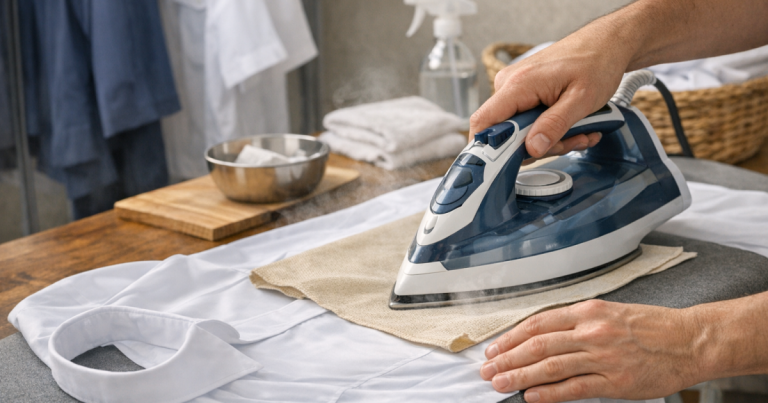
Do not iron directly over printed branding, reflective details or heat-applied logos. If a collar or placket needs tidying, iron around the decoration on a suitable setting for the fabric. For uniforms with stitched branding, the care approach overlaps with washing embroidered workwear without loosening logos, especially if the shirts are part of a staff uniform rotation.
Step 7: Dry black polos without dulling them
Heat and sunlight are major causes of faded black clothing. After washing, reshape the collar, placket and hem while the polo is damp. Hang it on a broad hanger or drying rail in a shaded, ventilated spot. Avoid pegging the shoulders tightly, as peg marks can distort the shape.
Do not dry black polos in strong direct sun, even on a cool day. UV exposure can fade the outer face unevenly, leaving shoulder lines or peg shadows. Indoor air-drying or shaded outdoor drying is usually safer for colour.
If the care label allows tumble drying, use a low heat and remove the shirts while slightly damp to finish on a hanger. High heat can shrink cotton-rich polos, set creases and age logos faster. If your workplace needs shirts turned around quickly, it is better to keep enough polos in rotation than to rely on harsh drying every time.
A weekly routine for uniform polos
For full-time workwear, aim to wash polos after each wear if they are sweaty, visibly marked or worn in food, healthcare, cleaning, warehouse or manual settings. Lightly worn office or reception polos may sometimes be aired and reworn, but only if they are genuinely fresh and meet your workplace standard.
Keep a small darks-only laundry basket if several people in the household wear uniforms. This prevents black polos being dragged into towel washes or mixed with pale school shirts. It also makes it easier to run a proper dark load rather than washing one shirt at a time.
Every few weeks, check collars, underarms and logo areas in daylight. Dullness is not always fading; it may be detergent build-up, deodorant residue or lint. A rinse-only cycle or a correctly dosed wash with less detergent can sometimes restore a cleaner black finish.
Helpful questions
Should black work polos be washed inside out every time?
Yes. Washing inside out reduces friction on the visible surface, helps protect logos and keeps lint less obvious on the outside of the shirt.
Is 40°C too hot for black polo shirts?
Not always, but 30°C is usually better for routine dark uniform washes. Use 40°C only when the care label allows it and the shirt needs a deeper clean because of sweat, food soil or workplace grime.
Why do my black polos look grey after washing?
Common causes include too much detergent, lint from towels or fleece, overloaded washes, hard-water residue and direct sunlight during drying. It is not always true dye fading.
Can I use vinegar to keep black polos dark?
Vinegar is often suggested online, but it is not a guaranteed colour-preserver and can be unsuitable for some machine parts or garment finishes if overused. A cool wash, correct detergent dose and careful drying are more reliable habits.
How many black polos should I keep in rotation for work?
For a five-day work week, at least three to five polos makes laundry gentler because you are not forced to hot-wash or tumble-dry one shirt repeatedly at short notice.
What to remember
To wash black work polo shirts without fading, think in terms of friction, heat, residue and light. Turn them inside out, wash with similar dark smooth fabrics, use a cool cycle, dose detergent accurately and dry away from direct sun.
The best results come from consistency. One careful wash helps, but a repeated routine is what keeps black uniform polos looking professional across a long run of shifts.