A good travel steamer for work trips can rescue a creased shirt, dress, blouse or lightweight jacket when hotel irons are poor or missing. The right choice is not simply the smallest model; it needs to suit your fabrics, luggage space, destination and morning routine. A compact steamer should make clothes look fresher without soaking them, scorching delicate fibres or taking up half your bag.
Before packing any steamer, check the garment care label and test on an inside seam where possible. Steam is gentler than a hot iron on many fabrics, but it is still heat and moisture, so labels matter.
The short version
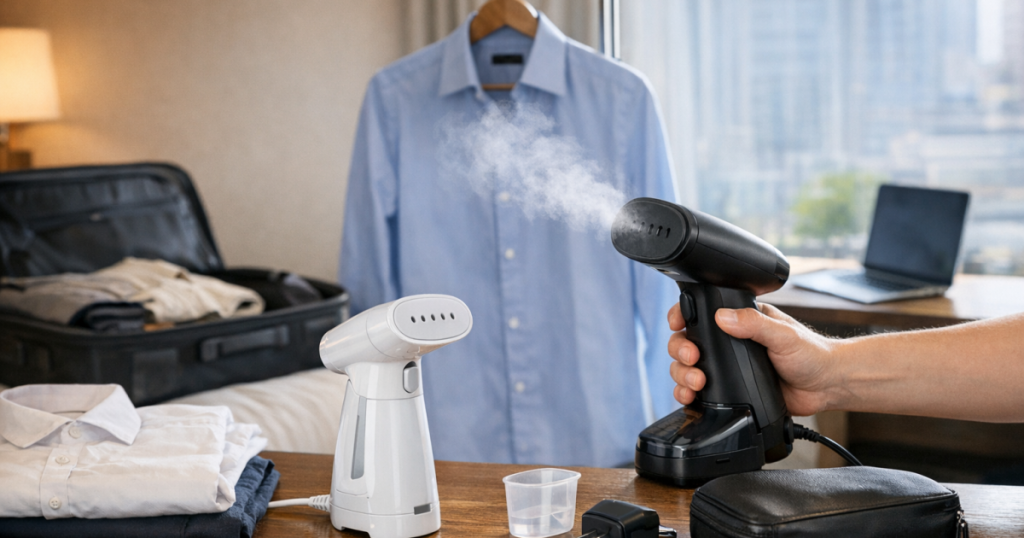
For most UK work travellers, the best choice is a compact handheld garment steamer with a removable water tank, a stable head, a travel pouch and clear controls. It should produce enough steam for one or two outfits at a time, rather than trying to replace a full-size home steamer.
- Choose handheld over full-size: upright steamers are too bulky for ordinary business luggage.
- Prioritise fabric control: a lower or gentler setting is useful for viscose, silk blends and lightweight synthetics.
- Check destination compatibility: voltage, plug type and airline liquid rules affect how easy it is to travel with.
- Look beyond the headline size: cord length, tank shape and whether it leaks in a suitcase matter just as much.
- Do not expect razor-sharp creases: a travel steamer refreshes and relaxes fabric; it will not press formal trouser creases as neatly as an iron.
Step 1: Decide what you need it to fix
Start with the clothing you actually take on work trips. A consultant packing cotton shirts has different needs from someone travelling with viscose dresses, jersey tops, a lightweight blazer or branded uniform. Steamers are best for travel creases, odour refreshes and light reshaping. They are less effective on deep-set wrinkles, heavy cotton, thick seams and crisp collars.
If your work wardrobe is mostly shirts, a steamer can help relax front panels and sleeves, but you may still prefer an iron for cuffs, collars and sharp plackets. If you pack dresses, blouses or soft tailoring, a steamer can be more useful because it works while the garment hangs and avoids pressing shine into delicate surfaces.
Check care labels before you assume steam is safe. Symbols can be confusing, so it is worth knowing how to read laundry symbols before washing new clothes and applying the same label-first habit to steaming. If the label warns against steam, heat or tumble drying, treat the garment cautiously.
Step 2: Pick the right steamer type for luggage
Travel steamers usually fall into three broad groups. The smallest models save space but may need frequent refilling. Mid-sized handheld models are more comfortable for multiple garments but take up more room. Premium hybrid steamers may offer a more polished finish, though they can be heavier and less forgiving in a tightly packed cabin bag.
Ultra-compact handheld steamers
These are aimed at overnight trips and cabin-only travel. They suit one shirt, one dress or a quick refresh before a meeting. Their main advantage is portability; the trade-off is usually a smaller water tank and shorter steaming session. Check whether the water tank empties fully and whether the head can be packed without pressing the steam trigger.
Mid-sized travel steamers
A slightly larger handheld model is often the sweet spot for two- or three-night work trips. It is more likely to feel comfortable in the hand and may cope better with several garments in a row. The downside is bulk: a rounded tank or awkward handle can waste luggage space even if the listed weight looks acceptable.
Iron-steamer hybrids
Some compact appliances combine steaming with a heated plate or pressing surface. They can be useful if you need a smarter finish on cotton shirts, but they need more care on delicate fabrics. If you choose this type, check the soleplate shape, temperature options and whether it can be used safely on a hanging garment as well as a flat surface.
Step 3: Match the steamer to your fabrics
Fabric suitability should drive the purchase more than looks or travel branding. Cotton, linen, polyester blends, viscose, wool blends and silk all respond differently to steam. A steamer that works well on a poly-cotton shirt may be too wet for a soft blouse or too weak for a heavy linen jacket.
- Cotton shirts: steam helps loosen packing creases but may not give a crisp office finish. Use slower passes and pull the hem gently to create tension.
- Linen: expect improvement, not perfection. Linen creases are part of the fabric character, and a small steamer may not remove deep folds.
- Viscose: use gentle steam and avoid stretching while damp. Viscose can distort when wet, so let it cool and dry fully before wearing. For washing care, see how to wash viscose dresses without losing their shape.
- Silk and silk blends: steam from a little distance, test first and avoid spitting water. Water spots can be more obvious than creases.
- Wool and wool blends: steam can refresh and lift light creasing, but do not over-wet the fabric. Brush and air afterwards.
- Coated, waterproof or reflective workwear: avoid direct steam unless the care label allows it. Heat can affect coatings, prints and reflective details.
Step 4: Check the practical travel details
A travel steamer can look ideal online and still be irritating in a hotel room. The best checks are the practical ones: how it fills, how it empties, how it stands, how it cools and how easily it packs after use.
- Water tank: a removable tank is easier to fill in a small hotel sink. A clear tank helps you see when water is low.
- Leak resistance: read user feedback for comments about dripping, spitting or leaking in luggage. Always empty the tank before packing.
- Cord length: hotel sockets are rarely exactly where you want them. A short cord can make steaming awkward or force you to work near the floor.
- Heat-up time: do not rely only on a manufacturer claim. Look for real user comments about morning use and whether the steamer needs pauses.
- Weight in hand: a model can be light in your bag but tiring when full of water. If you steam several garments, handle shape matters.
- Cooling time: you need to pack it safely after use, especially before checkout. A heat-resistant pouch or resting mat is helpful.
- Plug and voltage: for trips outside the UK, check whether the appliance is suitable for the local voltage and plug arrangement. A simple plug adaptor does not change voltage.
Step 5: Compare real models without getting distracted
When comparing a travel steamer for work trips, use real models as reference points rather than assuming one brand is automatically right. For example, the Philips Steam&Go Handheld Garment Steamer is a useful benchmark for a compact handheld design, while the Tefal Access Steam Pocket Garment Steamer is worth comparing if packing shape and portability are high priorities. The Steamery Cirrus 3 Iron Steamer sits in a more premium hybrid-style area for readers who want to compare steaming with light pressing.
Do not buy on brand recognition alone. Before ordering, verify the current specification from the retailer or manufacturer: tank capacity, weight, cord length, voltage suitability, included pouch, warranty terms and whether the model is designed for travel. Product lines change, and small differences between versions can matter when you are packing for a 06:30 train or an early flight.
Step 6: Think about your hotel-room workflow
The appliance is only half the setup. A travel steamer works best when the garment can hang freely and the fabric is under light tension. A bathroom hook, wardrobe rail or over-door hanger can help, but avoid steaming against painted walls, mirrors, lampshades or wooden furniture where heat and moisture could cause damage.
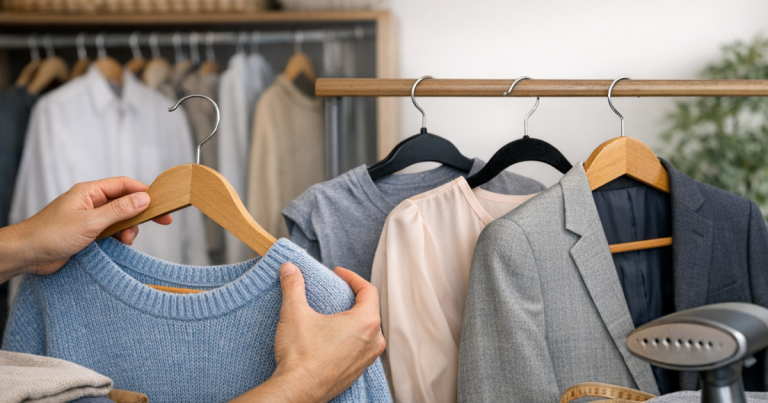
Pack a sturdy hanger if your work clothes need structure. Thin hotel hangers can create shoulder bumps or make a blouse twist while you steam. For knitwear, be especially cautious: hanging a damp jumper can stretch it. If you need to reshape knitted pieces after washing or steaming, the safer habit is to air-dry knitwear without stretching the shoulders.
- Hang the garment with space behind it.
- Fill with clean water only, unless the appliance instructions say otherwise.
- Let the steamer reach a steady output before touching the garment area.
- Hold the fabric gently taut from the hem, keeping fingers away from steam.
- Work from top to bottom in slow passes.
- Let the garment dry and cool before wearing or packing.
Step 7: Set a sensible budget
You do not need the most expensive travel appliance for occasional work trips. For rare overnight travel, a basic compact model may be enough if it has safe controls, decent reviews and a shape that packs well. Frequent travellers should spend more attention on comfort, leak resistance, cord length and cooling time, because those details affect every trip.
As a broad UK buying approach, budget models often appeal for occasional use, mid-range models tend to offer a better balance for regular business travel, and premium models make most sense if you also use the appliance at home. Treat price as one factor, not proof of fabric safety or performance. A costly steamer can still be wrong for delicate viscose or impractical for cabin luggage.
Common mistakes to avoid
- Buying the smallest model without checking the tank: it may run out before you finish one outfit.
- Using tap water without checking instructions: hard-water areas in the UK can contribute to limescale. Follow the appliance guidance on water type and descaling.
- Steaming clothes while wearing them: steam can burn skin. Always steam garments on a hanger or safe surface.
- Over-steaming delicate fabrics: too much moisture can distort seams, linings and bias-cut garments.
- Packing it while warm or wet: empty the tank, let it cool and keep it separate from clothing if there is any moisture left.
- Expecting dry-cleaner results: a travel steamer is a quick refresh tool, not a full pressing service.
Helpful questions
Can I take a garment steamer in cabin luggage?
Many travellers pack small garment steamers, but airline and airport rules can vary. Empty the water tank before travel and check your airline guidance, especially if the appliance has unusual attachments or you are travelling outside the UK.
Is a travel steamer better than a hotel iron?
It depends on the garment. A steamer is usually easier for dresses, blouses, soft jackets and quick refreshes. A hotel iron is usually better for crisp collars, cuffs and formal trouser creases, provided the iron is clean and the temperature can be controlled.
What water should I use in a travel steamer?
Follow the appliance instructions. In hard-water areas, limescale can build up more quickly, so check whether the manufacturer recommends tap water, filtered water, distilled water or regular descaling.
Will steam remove odours from work clothes?
Steam can freshen lightly worn garments, but it does not replace washing. If clothing is sweaty, stained or heavily scented, laundering is the better option before the next trip.
Can I use a travel steamer on a suit jacket?
Use caution. Light steam can relax surface creasing on some wool-blend jackets, but too much moisture can affect structure, linings and lapels. Test discreetly and avoid pressing the steamer hard into tailored areas.
What to remember
The best travel steamer is the one that fits your real work wardrobe and travel routine. Look for a compact, stable handheld design with sensible controls, a usable tank, a comfortable grip and clear fabric guidance. Check voltage and packing practicality before buying, and be realistic about the finish: steam is excellent for refreshing and relaxing creases, but it is not a complete replacement for careful washing, pressing and drying at home.
If you travel often, build a small garment-care kit around the steamer: a good hanger, a lint cloth or brush, a breathable garment bag and a crease-conscious packing method. That combination will do more for your work clothes than relying on steam alone.