A damp jumper can look fine when it leaves the machine, then grow shoulder points, longer sleeves or a wavy hem as it dries. The safest way to air-dry knitwear is to support the whole garment flat, press out water first, and reshape the seams before the fibres set.
This is especially important for wool, cashmere, cotton knits, ribbed jumpers and heavier cardigans. The goal is not to dry them quickly at any cost; it is to remove moisture while keeping the weight of the garment evenly supported.
At a glance
- Do not hang wet knitwear from a hanger, shower rail or washing line by the shoulders.
- Press water out gently with a towel rather than wringing or twisting.
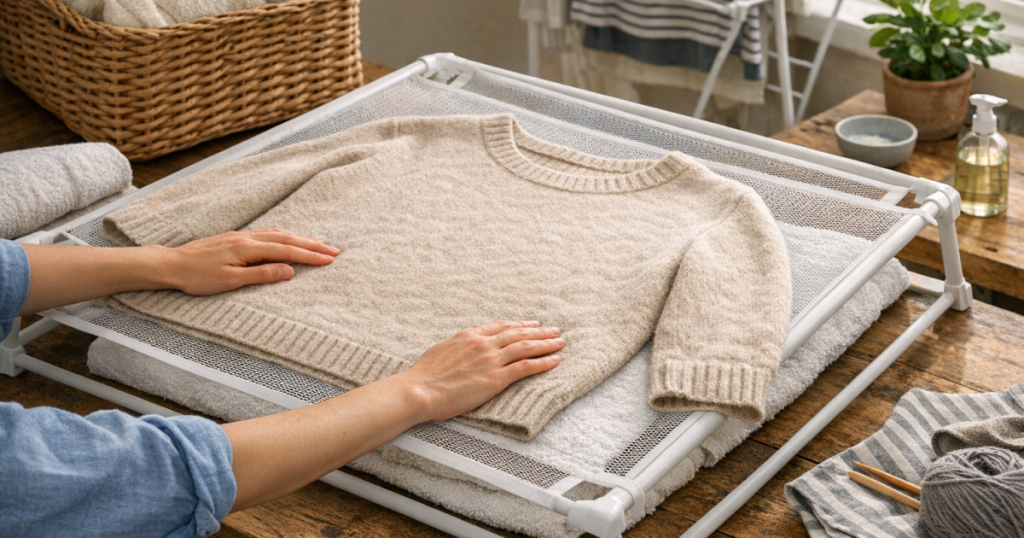
- Dry flat on a towel or mesh rack with the shoulder seams aligned.
- Reshape the body, sleeves, cuffs and neckline while the garment is damp.
- Keep knitwear away from direct radiator heat, strong sunlight and rough surfaces.
Why shoulders stretch when knitwear dries
Knitwear behaves differently from woven shirts or work trousers because the fabric is made from interlocking loops. When those loops are wet, the garment becomes heavier and more vulnerable to distortion. If the jumper is suspended from two narrow points, the weight pulls down through the shoulder area and sleeve head.
This is why hanger bumps appear. The shoulder seam is forced over the end of the hanger, then dries in that raised shape. Pegging a jumper by the shoulders can leave similar points, and hanging a wet cardigan over a rail can pull the body longer than intended.
The same principle applies to many soft fabrics: weight plus moisture plus poor support can change the shape. If you also care for drapey garments, the guidance on washing viscose dresses without losing their shape follows a similar idea: minimise stress while the fabric is wet.
Step-by-step: air-dry knitwear properly
Step 1: Check the care label before you start
Before washing or drying, read the garment label. Some knits are hand-wash only, some allow a machine wool or delicate cycle, and some are dry-clean only. The label also tells you whether tumble drying is allowed, although many fine knits are better treated cautiously even when a low-heat option appears possible.
Look for fibre content as well. Wool and cashmere need gentle handling and cool conditions. Cotton knits can feel sturdier but often become very heavy when wet. Blends vary, so the safest drying method is still a flat, supported setup.
Step 2: Remove excess water without stretching
Lift the garment with both hands so the full weight is supported. Do not grab it by one shoulder, one cuff or the neckline when it is saturated. Lay it flat in the sink, bath or on a clean towel and press down gently to push water out.
If it has been hand-washed, drain the water, refill with clean rinse water if needed, then press again. Avoid twisting the jumper into a rope. Wringing may feel efficient, but it pulls against the knitted loops and can stretch cuffs, hems and sleeves before drying has even begun.
For machine-washed delicates, use the gentlest suitable spin permitted by the label. A short, controlled spin often leaves less water in the garment than hand-squeezing, but the cycle must suit the fabric. If you use a modern washing machine for delicate loads, the tips in using a Bosch Serie 4 for delicates are useful for understanding how to reduce snagging and stretching before the drying stage.
Step 3: Roll the jumper in a towel
Lay a clean, dry towel on a flat surface. Place the knitwear on top, roughly in its natural shape, then roll the towel and garment together from one end. Press along the roll with your hands. This transfers moisture into the towel without pulling the shoulders out of line.
Unroll it carefully and repeat with a second dry towel if the jumper still feels very wet. This extra minute can make flat drying much more practical in a UK home, where damp winter air and limited indoor space often slow drying down.
Step 4: Prepare a flat drying area with airflow
The best surface is a flat mesh drying rack because air can circulate underneath. If you do not have one, use a clean towel on top of a standard airer, table or worktop, but change the towel if it becomes damp. A wet towel trapped under knitwear slows drying and can leave the garment feeling stale.
Choose a spot with gentle airflow rather than direct heat. A ventilated room, open internal doorway or area near a dehumidifier can work well. Avoid placing knitwear directly on a radiator, as concentrated heat can set creases, encourage uneven drying and make some fibres feel harsher.
Step 5: Lay the shoulders flat and square
Place the jumper front-up on the drying surface. Start at the shoulders, because this is where most visible distortion happens. Align the shoulder seams so they sit straight from neckline to sleeve top. Smooth the shoulder cap with your palm until it lies rounded and natural, not pointed.
Do not pull the shoulders wider to make the jumper look neat. Instead, ease the fabric into shape with small patting movements. If you know how the garment fitted before washing, use that as your guide. For a favourite jumper, you can compare it with a similar dry knit laid nearby, but avoid stretching the damp one to match exact measurements.
Step 6: Support the sleeves, cuffs and hem
Lay each sleeve slightly away from the body so it is not bunched underneath. The cuffs should sit flat, not dangling over the edge of the rack. If the sleeves are long or heavy, curve them gently back towards the body so the whole length is supported.
Straighten the side seams and hem. Pat ribbed hems back into their natural width rather than pulling them tight. For cardigans, line up the button band and hem before drying; if the front edges dry unevenly, the garment can look twisted when worn.
Step 7: Turn only when the shape is stable
Leave the garment flat until the top feels noticeably drier and the shoulders hold their shape when touched. Then turn it over with both hands, supporting the body and sleeves as you flip. Smooth the shoulders again on the second side.
If the towel underneath is damp, replace it. If using a rack, check that no bars are pressing deep lines into the knit. A slightly thicker towel over a bar-style airer can reduce ridge marks, but make sure air can still move around the fabric.
Common mistakes that cause shoulder bumps
- Using a hanger: even padded hangers can distort damp knitwear because the weight still hangs from the shoulder line.
- Pegging by the shoulders: pegs concentrate pressure and can leave pointed marks as the garment dries.
- Drying over a door: the top edge can create a crease while the hanging weight stretches the body.
- Rushing with direct heat: radiator drying may dry one area faster than another, leaving the shape uneven.
- Ignoring sleeve weight: unsupported sleeves can lengthen or drag the shoulder seam downwards.
Drying different types of knitwear
Wool jumpers
Wool jumpers need cool, gentle handling. Press water out, dry flat, and avoid rubbing the surface while damp. If the jumper has a textured stitch, such as cable knit, shape it carefully without flattening the pattern too aggressively.
Cashmere and fine merino
Fine knits can show hanger marks quickly, so be extra careful with the shoulder seam. Use a smooth towel, keep jewellery away from the fabric, and avoid dragging the garment across a rough rack. Once fully dry, fold rather than hang.
Cotton knitwear
Cotton knits are often heavier when wet than they appear. Treat them as stretch-prone even if they feel robust. Give sleeves and hems full support, and check halfway through drying to make sure the body has not lengthened.
Chunky cardigans
Chunky cardigans need the most surface area. Fasten a few buttons before shaping if it helps the front sit evenly, but do not force the button band tight. Support pockets as well, because wet pockets can sag and pull the front panels down.
Final checks before wearing or storing
Make sure knitwear is completely dry before folding it into a drawer or storage box. Damp cuffs, underarms and thick seams can hold moisture longer than the main body. Press these areas gently between your fingers; if they feel cool and clammy, give the garment more time.
Once dry, fold along natural lines. Avoid hanging jumpers long-term unless the knit is very light and the hanger is broad enough to support it without marking. For most wool, cashmere and cotton knitwear, folded storage is kinder to the shoulders.
If drying has raised light pilling, deal with it only when the garment is fully dry. A shaver or comb used on damp fibres can snag the surface. For safer finishing, follow the method for using a fabric shaver without snagging clothes.
Things readers ask
Can I hang knitwear once it is only slightly damp?
It is still safer to keep it flat until fully dry. Even slight dampness adds weight, and the shoulders can set into small points if left on a hanger overnight.
What if I do not have enough space to dry a jumper flat?
Use the widest flat area you can create: a towel over an airer, a clean table, or a bath board if it is stable and clean. Keep sleeves supported rather than letting them hang over the edge.
Can I speed drying with a hairdryer?
A hairdryer is not ideal for knitwear because it creates localised heat and airflow. If you need faster drying, improve room ventilation, replace damp towels, or use a dehumidifier nearby without blowing hot air directly at the garment.
Should I reshape knitwear while it is wet or dry?
Shape it while damp, after excess water has been pressed out. Once dry, the fibres are more set, so shoulder bumps and stretched hems are harder to correct.
Can shoulder bumps be fixed after drying?
Minor bumps can sometimes be eased by lightly misting the shoulder area, smoothing it flat, and letting it dry supported. Severe stretching is harder to reverse, so prevention is the better approach.
Key takeaways
To air-dry knitwear without stretching the shoulders, remove as much water as possible first, then dry the garment flat with every heavy area supported. Shape the shoulders, sleeves, cuffs and hem while damp, and avoid hangers until the knit is completely dry.
The small details make the difference: lift wet jumpers with both hands, change damp towels, keep heat gentle, and fold dry knitwear for storage. That routine protects the shoulder line and helps favourite jumpers keep their fit for longer.