Stiff, pale underarm patches can make an otherwise clean shirt feel grimy, and ordinary washing often sets the residue more firmly. The safest way to remove deodorant build-up is to break down the waxy layer first, then wash at the warmest temperature the care label allows. Work slowly on coloured, black, wool, silk and performance fabrics, because aggressive scrubbing can leave a bigger problem than the stain.
Deodorant residue is not quite the same as a fresh sweat mark. It is usually a mix of antiperspirant ingredients, body oils, detergent residue and trapped perspiration, which is why it can feel waxy, chalky or slightly crunchy under the arm.
Main points before you start
- Treat the underarm area before washing, rather than relying on the main wash alone.
- Use cool or lukewarm water for the first treatment; hot water can fix some body-soil marks into fibres.
- Test any stain treatment on an inside seam, especially on dark, bright or delicate fabrics.
- Do not mix bleach with vinegar or other household acids.
- Avoid harsh scrubbing on jersey, wool, silk, viscose and performance fabrics, as the underarm area can distort or pill.
Why deodorant build-up is so stubborn
Antiperspirants are designed to stay in place. Many contain ingredients that help control moisture and cling to skin, so they can also cling to fabric. Over repeated wears, the underarm area collects layers of residue that ordinary detergent may not fully lift, particularly if shirts are washed on a cool, quick cycle.
The build-up can look different depending on the shirt. White cotton may show yellowing or greyish stiffness. Black work polos often develop pale, crusty patches. Synthetic sports or work shirts can hold odour even after washing because oils and residue sit within the fibres. If you are dealing with a new garment, check the care symbols first; our guide to reading laundry symbols before washing new clothes will help you avoid using a temperature or treatment the fabric cannot take.
What you need
- A clean sink, washing-up bowl or small bucket.
- Liquid laundry detergent or a small amount of washing-up liquid for oily residue.
- White vinegar for washable cotton, polyester and polycotton shirts where the dye is stable.
- Bicarbonate of soda for sturdy washable fabrics.
- A soft toothbrush, nail brush or clean cloth.
- An oxygen stain remover for suitable white or colourfast washable fabrics, used according to the product label.
- A towel for blotting and supporting the fabric while you work.
You do not need every item for every shirt. Start with the mildest suitable method, then move up only if the residue remains.
Step-by-step: lifting the underarm residue
Step 1: Turn the shirt inside out
Most of the build-up sits on the inside of the underarm area, where deodorant touches the fabric. Turn the shirt inside out and place a towel beneath the affected section. This supports the fabric and helps you focus the treatment where it is needed.
Step 2: Rinse from the back of the stain
Run cool or lukewarm water through the underarm area from the inside of the shirt. Use your fingers to gently loosen the stiff patch. Do not start with boiling water, and do not rub dry fabric harshly, as that can drive residue deeper into the weave or roughen the surface.
Step 3: Apply detergent directly
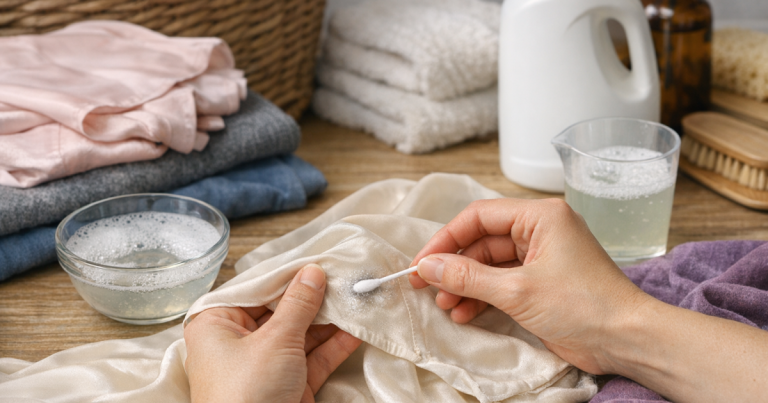
Add a small amount of liquid laundry detergent to the damp underarm area. Massage it in with your fingers or a soft brush using short, gentle strokes. Leave it for 15 to 30 minutes, keeping the fabric damp. This helps loosen body oils and old deodorant film before the main wash.
Step 4: Use a targeted soak if needed
For washable cotton or polycotton shirts with a chalky feel, soak the underarms in a solution of cool water and white vinegar for around 30 minutes. A common home approach is one part white vinegar to four parts water, but always test first and avoid vinegar on silk, wool, acetate or any fabric with unstable dye.
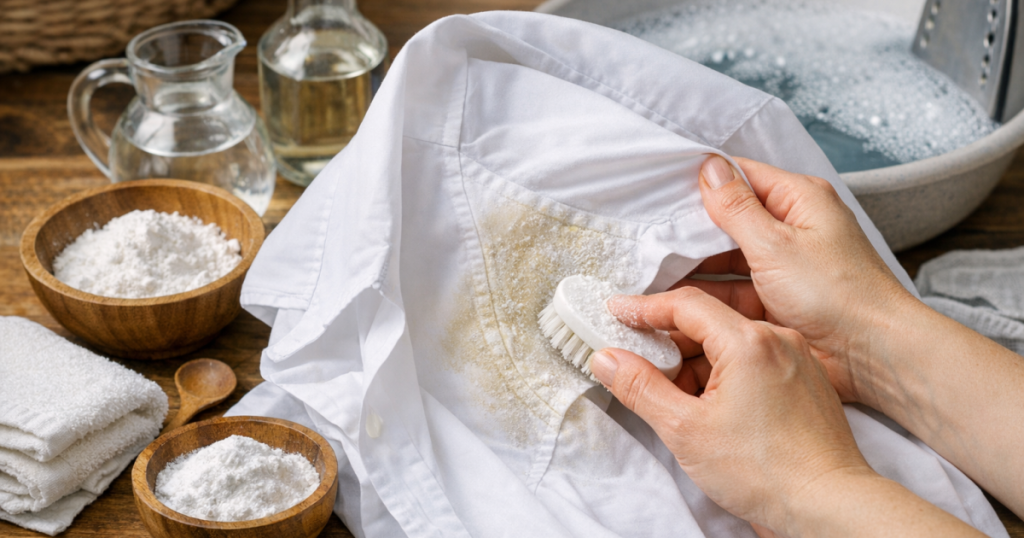
For sturdier white cotton, a paste of bicarbonate of soda and water can help with the residue. Spread it thinly over the damp underarm area, leave it for up to 20 minutes, then rinse thoroughly before washing. Do not let gritty paste dry hard on delicate fabric, as brushing it off can abrade the fibres.
Step 5: Wash on the right programme
Wash the shirt according to the care label, using a full-length cycle rather than a very short refresh wash. The warmest permitted temperature is usually more effective than a cold wash for body oils, but only use what the label allows. Avoid overloading the machine, as shirts need room for water and detergent to move through the underarm seams.
Step 6: Check before drying
Do not tumble dry or iron the underarm area until you have checked it in natural light. Heat can make remaining marks harder to shift. If the fabric still feels waxy or looks pale, repeat the pre-treatment and wash again before drying.
How to handle different shirt fabrics
White cotton shirts
White cotton is usually the most forgiving, but it can still yellow if residue is repeatedly heated by tumble drying or ironing. Start with detergent, then consider an oxygen stain remover if the care label permits. Avoid chlorine bleach unless the garment label specifically allows it, as it can weaken fibres and may worsen some yellow underarm marks over time.
Coloured and black shirts
Dark shirts need a gentler approach because pale residue and dye loss can look similar. Test treatments on an inside seam and avoid heavy scrubbing. If the shirt is part of a uniform, keeping the colour even matters as much as clearing the mark; our advice on how to wash black work polo shirts without fading is a useful next step for dark workwear.
Synthetic sports and work tops
Polyester and performance fabrics often trap odour and oily residue. Use liquid detergent directly on the underarm area and wash promptly after wearing. Avoid fabric conditioner if the garment label advises against it or if the top is designed to wick moisture, as softeners can leave coatings that reduce freshness and make build-up worse.
Silk, wool and delicate blends
Do not use bicarbonate paste, oxygen stain remover or vinegar soaks on delicate animal fibres unless the care label and product instructions clearly allow it. Blot gently with cool water and a suitable delicate detergent, then rinse carefully. If the shirt is expensive, structured or labelled dry clean only, it is safer to point out the underarm residue to a reputable cleaner rather than experimenting at home.
When the mark is more than deodorant
Underarm discolouration can be a mixture of deodorant, sweat, sebum, fragrance, laundry detergent and previous stain treatments. Yellowing on white shirts may need several mild treatments rather than one aggressive attempt. A brown or orange mark can also come from skincare, fake tan or reaction with minerals in water.
If the shirt has several stains, treat them separately. Ink, for example, needs a different process from deodorant residue; rubbing it with the same brush and detergent can spread the mark. For pen leaks and pocket stains, use the separate method in our guide to getting ink out of cotton shirts without bleaching.
Common mistakes that make underarm build-up worse
- Using too much deodorant: thick layers are more likely to transfer to fabric. Let antiperspirant dry fully before dressing.
- Washing only on quick cycles: short washes may not give detergent enough time to break down oils and residue.
- Overusing detergent: excess detergent can remain in seams and combine with body soils, leaving the underarm area stiff.
- Drying too soon: tumble drying a still-marked shirt can set residue and odour.
- Scrubbing across the grain: aggressive brushing can distort jersey, raise lint or create shiny abrasion marks.
How to prevent it coming back
Prevention is easier than repeated rescue treatments. Let deodorant or antiperspirant dry before putting on a shirt, especially fitted cotton shirts and dark polos. Wash heavily worn shirts soon after use rather than leaving them in the laundry basket for days, where body oils can oxidise and become harder to remove.
If you regularly get stiff underarms, add a quick pre-wash habit: dampen the underarm area, rub in a little liquid detergent, leave it while you sort the rest of the laundry, then wash as normal. For work shirts, school shirts and uniforms worn in warm offices, kitchens, warehouses or on public transport, this small step can make a noticeable difference.
It can also help to rotate shirts so the same garment is not worn and washed under pressure every week. Constant quick washing, fast drying and hot ironing on the same underarm seams can shorten the useful life of the fabric.
FAQ
Can I remove deodorant build-up with vinegar alone?
Sometimes, on washable cotton or polycotton, vinegar can help loosen chalky residue. It is usually more effective when followed by detergent and a proper wash. Do not use vinegar on silk, wool or unstable dyes.
Why do black shirts get white patches under the arms?
White patches are often dried antiperspirant salts and waxy residue sitting on the fabric surface. Treat from the inside with liquid detergent first, rinse well, and avoid abrasive brushing that could fade the fabric.
Is bicarbonate of soda safe for all shirts?
No. It is best kept for sturdy washable fabrics, particularly cotton. Avoid it on wool, silk, delicate viscose and anything with a fragile finish, as the gritty texture can damage fibres.
Should I wash the shirt hot to clear the build-up?
Use the warmest temperature allowed by the care label, not the hottest setting on the machine. Heat can help with oils, but it can also shrink, fade or set marks if the fabric is not suitable.
What if the underarm area still smells after washing?
Repeat the detergent pre-treatment and use a full wash cycle. Persistent odour usually means residue remains in the fibres or seams, so drying the shirt before it is fully clean can keep the smell locked in.
Key takeaways
To remove deodorant build-up properly, treat the underarm residue before washing, use cool or lukewarm water first, and choose methods that suit the fabric rather than the severity of the stain alone. Cotton can usually tolerate more treatment than silk, wool or delicate blends, while black shirts need extra care to avoid fading and abrasion.
The most reliable routine is simple: rinse, pre-treat with liquid detergent, soak only where the fabric allows, wash on a suitable full cycle, then check before drying. That gives the shirt the best chance of feeling clean again without sacrificing colour, shape or fibre strength.