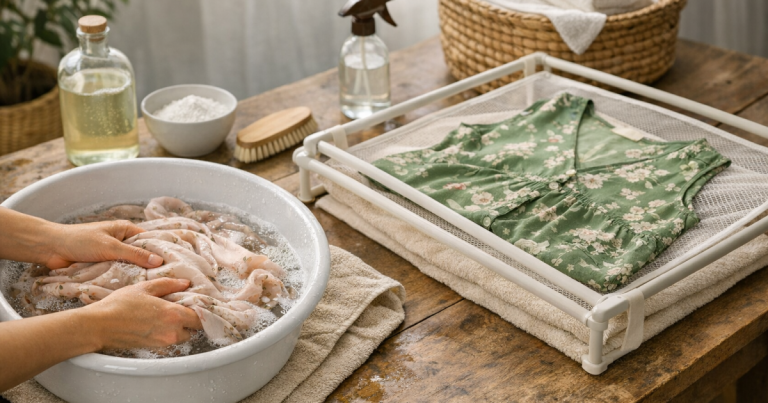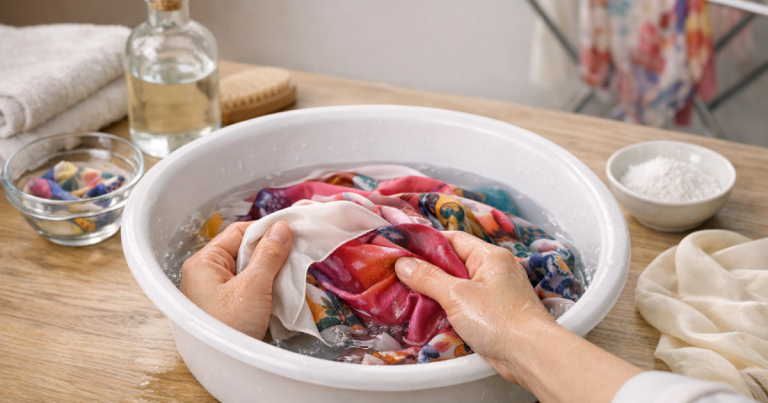
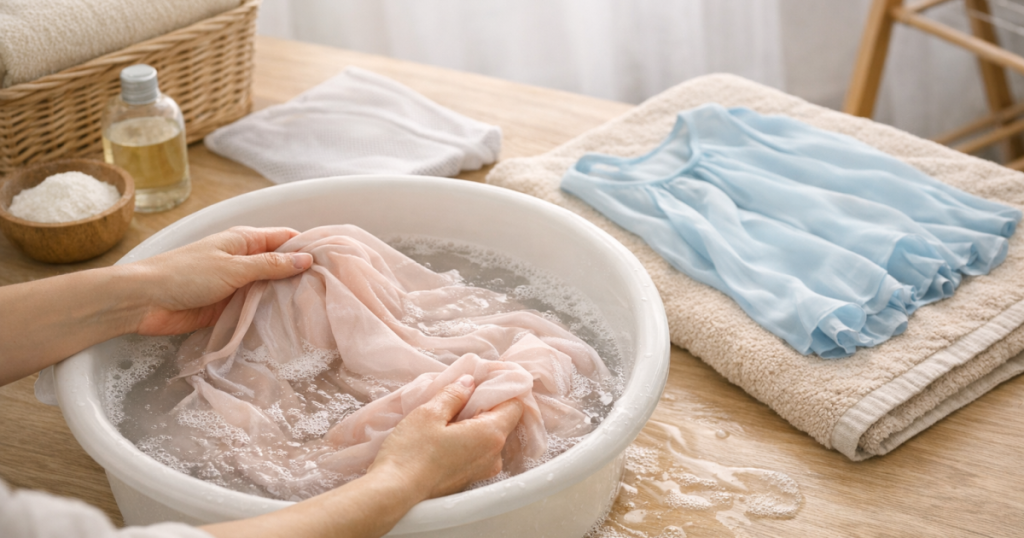
To wash chiffon blouses without pulling threads, reduce movement, avoid friction and support the fabric while it is wet. Chiffon is light, sheer and easily snagged, so the safest approach is gentle hand washing unless the care label says otherwise. The aim is to clean perspiration, deodorant and light marks without twisting, scrubbing or letting the fabric catch on zips, seams or rough surfaces.
Chiffon is not one single fibre. A blouse may be silk chiffon, polyester chiffon, viscose chiffon or a blend, and each can respond differently to water, heat and detergent. Always start with the care label, then test discreetly before washing the whole garment.
The short version
- Check the care label first, especially on silk, embellished or lined chiffon blouses.
- Use cool water, a small amount of mild liquid detergent and a clean basin with no rough edges.
- Wash one blouse at a time to stop hooks, buttons or seams catching the fabric.
- Press water through the blouse instead of rubbing, brushing or wringing.
- Rinse gently, roll in a towel to remove excess water, then dry flat or on a padded hanger away from direct heat.
Step 1: decide whether the blouse should be washed at all
Before adding water, look at the fabric label, trims and construction. Machine-washable polyester chiffon is usually more forgiving than silk chiffon, but even synthetic chiffon can pull if it is trapped against a zip, rough drum edge or abrasive laundry item.
Avoid home washing if the blouse is labelled dry clean only, has heavy beading, glued decoration, metallic thread, structured pleats, fragile vintage seams or a lining that may shrink at a different rate from the outer fabric. In those cases, light airing and careful spot freshening may be more appropriate between professional cleans; see our guide to how to keep dry-clean-only clothes fresh between wears.
If the label allows washing but you are unsure about dye stability, dab an inside seam with a white cloth moistened with cool water. If colour transfers, do not soak the blouse. Treat it as a high-risk garment and keep cleaning as local and brief as possible.
Step 2: prepare a snag-free washing area
Most pulled threads happen because chiffon catches on something, not because the water itself is too harsh. Prepare the space before the blouse gets wet, as wet chiffon is heavier and easier to distort.
- Remove rings, bracelets and watches before handling the blouse.
- Check your nails for rough edges and avoid handling chiffon with chipped nail varnish.
- Use a smooth, clean basin or washing-up bowl rather than a sink with rough plug fittings.
- Fasten the blouse’s own buttons or covered poppers so they do not swing freely.
- Keep zips, bras, jeans, towels and textured laundry away from the washing area.
If the blouse has tie necks, sashes or long cuffs, fold them into the body of the garment before lowering it into water. Letting loose ties trail and tangle can put stress on one narrow section of cloth.
Step 3: use cool water and minimal detergent
Fill the basin with cool water. For most washable chiffon, a temperature around hand-cool is safer than warm water because it reduces dye bleed, shrinkage risk and fibre stress. Add a very small amount of mild liquid detergent and disperse it fully before the blouse goes in. Powder can be harder to dissolve in cool water, and undissolved grains may sit on the cloth.
Do not use biological stain removers, oxygen bleach, chlorine bleach or fabric conditioner unless the care label specifically allows them. Chiffon’s open weave can hold residues, and some finishes or fibres may react poorly to strong treatments. More detergent does not mean cleaner fabric; it simply makes rinsing harder, which increases handling time.
Step 4: wash by pressing, not rubbing
Lower the blouse into the water as a loose bundle rather than stretching it out. Let it soak for a few minutes only, then press the water gently through the fabric with your hands. Lift and lower the whole blouse while supporting its weight, rather than pulling it through the water by the shoulders or hem.
For underarm areas, collars and cuffs, resist the urge to scrub. Instead, hold the affected area flat against your palm and tap or squeeze the soapy water through it. If there is visible deodorant residue, work slowly from the reverse side so the surface yarns are not disturbed.
The same low-friction principle applies to other fragile netted and sheer fabrics. If you care for costume pieces or layered skirts as well as blouses, our guide to washing tulle without tearing the netting follows a similar handling logic.
Step 5: rinse without stretching the seams
Drain the soapy water while keeping the blouse supported in the basin. Refill with fresh cool water and press the fabric gently until the water runs clearer. You may need two or three short rinses, especially if too much detergent was used at the start.
Do not hold the blouse under a fast-running tap by the shoulders. Water weight can drag the fabric down and stress sleeve seams, necklines and button plackets. If you need to use running water, cup the garment in both hands and let water flow through a small supported area at a time.
Step 6: remove water with a towel, never by wringing
Chiffon should not be wrung, twisted or spun aggressively. Lay a clean, smooth towel on a flat surface, place the blouse on top and arrange it roughly into shape. Roll the towel and blouse together, then press down with your hands to transfer water into the towel. Unroll and repeat with a second dry towel if needed.
Be careful with textured towels that have loose loops, as hooks, beads or fine buttons can catch. A smoother towel is better for very fine chiffon. If the blouse has embellishment, place it face up and avoid pressing directly on raised decoration.
Step 7: dry in shape and away from heat
Dry the blouse flat on a clean towel or mesh drying rack, reshaping the shoulders, cuffs and hem while damp. If the care label permits hanging, use a padded hanger and make sure the blouse is not dripping. A thin wire hanger can create shoulder points and may strain damp seams.
Keep chiffon away from radiators, tumble dryers, heated airers set too high and strong direct sunlight. Heat can set creases, affect finishes and increase the chance of distortion. In a typical UK home, airflow matters more than heat: choose a well-ventilated room and turn the blouse once the top side feels almost dry.
Handling small marks without creating pulls
Spot cleaning chiffon needs patience. First, blot liquid marks with a clean white cloth. Do not rub in circles, as this can fuzz the surface and move yarns out of line. For washable chiffon, apply diluted mild detergent with a fingertip or soft cloth from the reverse side, then rinse that area by pressing cool water through it.
Avoid stain brushes on chiffon. Even a brush that feels soft on cotton can be too abrasive for a sheer weave. If a mark remains after one gentle attempt, stop and reassess; repeated local rubbing is one of the quickest ways to create a permanent pulled or shiny patch.
Fixing a pulled thread after washing
If you notice a pulled thread, do not cut it unless it is a loose broken end and you are certain it is not part of the fabric structure. Chiffon is woven from fine yarns, and cutting a loop can leave a visible gap or encourage further unraveling.
Lay the blouse flat and gently ease the fabric around the pull with clean fingers, working along the direction of the weave. Sometimes the displaced yarn will settle back as the tension spreads out. For a stubborn pull near a seam, turn the blouse inside out and see whether the loop can be drawn gently to the reverse with a fine needle. Do not tug hard; if the fabric puckers, stop.
How to reduce creasing without snagging the fabric
Many chiffon blouses look creased after drying even when washed correctly. Steam can help, but direct contact with a hot soleplate is risky, particularly on silk, polyester or unknown blends. Hang the blouse in a steamy bathroom for a short time, keeping it away from splashes, or use a garment steamer at a safe distance if the label allows steaming.
If you iron, use the lowest suitable setting, work from the reverse where possible and place a smooth barrier between the iron and fabric. Our guide to choosing a pressing cloth for delicates explains which cloths suit silk, wool and sheer fabrics.
Common mistakes that pull chiffon threads
- Washing chiffon with jeans, towels, bras or garments with zips.
- Using a stain brush or rubbing underarms between both hands.
- Letting a wet blouse hang by its shoulders while dripping.
- Wringing water out of sleeves, ties or hems.
- Drying over a radiator or using high heat to speed things up.
- Cutting pulled threads instead of easing the weave back into place.
Helpful questions
Can chiffon blouses go in the washing machine?
Only if the care label allows it. Use a mesh laundry bag, a delicate cycle, cool water and no fast spin. For silk chiffon, embellished chiffon or anything expensive to replace, hand washing is usually safer.
Should I use fabric conditioner on chiffon?
Usually no. Fabric conditioner can leave residue on sheer fabrics and may affect drape. A careful rinse is more useful than adding extra products.
Why does my chiffon blouse look puckered after washing?
Puckering usually comes from stretching, uneven drying, seam shrinkage or pulled yarns. Re-wet the affected area lightly, reshape it flat and let it dry supported. Do not pull the seam straight while wet.
Can I remove deodorant marks from chiffon?
Fresh marks often lift with cool water and a tiny amount of mild liquid detergent. Work from the inside of the blouse and press rather than rub. Old yellowing or stiff residue may need professional cleaning.
Is polyester chiffon easier to wash than silk chiffon?
Generally, yes, but it is still prone to snagging and heat damage. Treat polyester chiffon gently, avoid high temperatures and check trims, seams and dye stability before washing.
What to remember
The safest way to clean a chiffon blouse is to keep every stage calm, cool and low-friction. Check the label, wash alone, press water through the fabric, support it while wet and dry it in shape. Most damage comes from rubbing, wringing, catching or heat, so removing those risks matters more than using specialist products.
If the blouse is silk, embellished, vintage or labelled dry clean only, do less rather than more. A careful refresh, targeted spot clean or professional clean is better than turning a small mark into a pulled-thread problem.