The safest way to store winter coats is to clean them properly, let them dry fully, and keep them in a cool, breathable space where moths cannot settle unnoticed. Wool, cashmere, down and padded coats all need slightly different handling, but the same rule applies: never pack away body oils, food traces or damp fibres.
UK homes often add a second challenge: wardrobes on outside walls, loft corners and under-bed spaces can all swing between chilly, humid and stuffy. A little preparation now prevents stale smells, flattened shoulders and moth damage when the first cold week returns.
In brief
- Clean coats before seasonal storage, even if they look clean.
- Make sure every layer is fully dry before covering or boxing.
- Use breathable garment bags rather than dry-cleaning plastic.
- Choose a storage spot away from damp walls, radiators and loft temperature swings.
- Use moth prevention as a system: cleanliness, inspection, airflow and monitoring.
- Check stored coats every few weeks rather than leaving them untouched for months.
Step 1: clean first, because moths like invisible dirt
Clothes moth larvae are attracted to natural fibres such as wool, cashmere, fur, feathers and silk, particularly when those fibres contain sweat, skin oils, food splashes or drink residue. A coat can look fine on the hanger and still carry enough invisible soiling to make it appealing to pests.
Check the care label before choosing a cleaning method. Some wool coats are dry-clean only; some padded coats can be washed at home; some mixed-fibre coats need gentler spot treatment. Empty pockets, remove tissues and receipts, brush lint from seams, and pay attention to collars, cuffs, pocket edges and the front placket where oils and crumbs collect.
If a coat has make-up on the collar, food marks, perfume build-up or a damp dog smell, do not cover it and hope for the best. Treat the mark according to the fabric, then clean the whole garment if the care label allows it. If you are dealing with delicate trims, silk linings or unusual fabrics, the same cautious approach used for delicate stain work applies; for example, make-up near a silk scarf or lining should be handled gently rather than scrubbed.
Step 2: dry thoroughly before anything goes into a bag
Mustiness is usually a moisture problem, not simply an age problem. A coat that feels dry on the surface may still hold moisture in shoulder pads, thick hems, quilting, linings or pocket bags. After cleaning, give coats extra airing time before storage, especially in cooler weather or in homes where laundry dries indoors.
Hang structured coats on a broad hanger in a ventilated room and leave space around them. Avoid packing them straight from a steamy bathroom, damp utility room or freshly cleaned rail. If you often dry clothing indoors, the principles in drying delicates indoors without heat damage are useful here too: use airflow, avoid direct heat, and do not rush thick fabrics into enclosed storage.
For down or synthetic padded coats, check the cuffs, zip guard, hood, seams and lining before putting them away. Any trapped dampness can lead to a stale smell and may affect the loft and feel of the filling. Do not use a vacuum storage bag for long-term coat storage unless the garment label clearly supports compression; padding and structured shoulders often recover poorly after months of being flattened.
Step 3: choose the right cover for the fabric
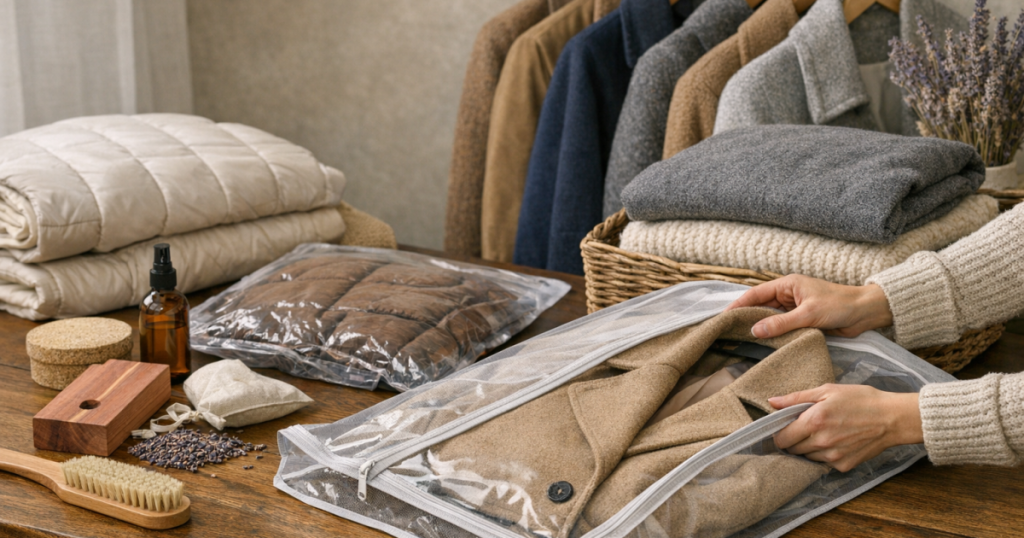
Dry-cleaning plastic is designed for short-term transport, not seasonal storage. It traps moisture, reduces airflow and can leave garments smelling stale. Replace it with a breathable cotton or non-woven garment bag for hanging coats, or use a clean lidded storage box lined with acid-free tissue for folded items.
Wool overcoats, pea coats and tailored coats usually store best on a sturdy, shaped hanger that supports the shoulders. Fasten buttons or zips to help the coat keep its line, but do not cram it tightly between other garments. A little air space is more useful than a perfectly packed rail.
Very heavy knit coats, long cardigans and unstructured wool layers may stretch if left hanging for months. Fold them loosely instead, supporting heavier areas so the garment is not pulled out of shape. If you are storing wool knitwear alongside coats, use the same principles as when you dry wool jumpers flat without stretching them: protect the garment’s weight and shape rather than letting gravity do the work.
Step 4: make the storage space less attractive to moths
When you store winter coats for several months, the surrounding space matters as much as the bag or box. Moths prefer undisturbed, dark areas with natural fibres and dust. Before you put coats away, vacuum the wardrobe floor, skirting edges, shelves and corners. If coats usually hang near wool carpets or old storage boxes, clean those areas too.
Pheromone moth traps can help you monitor adult moth activity, but they do not clean fabrics or remove larvae from garments. Cedar blocks and lavender sachets may make a storage space smell fresher, but they should not be treated as a substitute for cleaning, inspection and regular disturbance. Replace or refresh natural repellents as their scent fades, and keep them from direct contact with delicate fabrics to avoid oil marks.
If you have seen holes, webbing, gritty debris or live larvae, isolate the affected coat before returning it to the main wardrobe. Bag it, clean according to the label, and inspect nearby wool, cashmere, silk and feather-filled garments. A serious household infestation is not solved by one scented sachet in a cupboard.
Step 5: keep mustiness out with airflow and moisture control
A good coat storage area is cool, dry and stable. A spare room wardrobe is usually safer than a garage or shed. Lofts can be convenient, but many UK lofts move between cold damp winters and hot summer peaks, which is not ideal for wool, leather trims, glued details or padded coats.
Avoid storing coats pressed directly against an outside wall, particularly in older properties where condensation forms behind furniture. Leave a small gap between the wardrobe and wall if possible, and avoid stacking boxes on a cold floor. If you use under-bed storage, choose a clean, breathable container and check it regularly, as under-bed areas can collect dust and restrict airflow.
Moisture absorbers can help in damp cupboards, but they need checking and replacing according to their instructions. Keep any liquid-collecting tubs upright and away from fabrics. If a wardrobe regularly smells damp, address the room conditions before using it for your best wool coat; otherwise, the coat will simply absorb the problem.
Examples for common coat types
Wool and cashmere coats
Clean before storage, brush lightly, then hang on a shaped hanger inside a breathable garment bag. Do not squash the shoulders. Add moth monitoring to the wardrobe and inspect seams, collars and pocket flaps during the season.
Down and padded coats
Follow the care label carefully and allow longer drying time than you think you need. Store loosely so the filling is not compressed for months. Avoid plastic covers, damp cupboards and heavy boxes on top.
Leather, suede and coated trims
Keep these away from direct heat, plastic covers and very dry or damp spaces. If the whole coat contains mixed materials, store for the most sensitive part, not the toughest outer layer.
Children’s school coats
Wash or clean them before they go away, even if they are being kept as spares. Check pockets for food wrappers, gloves and tissues. Labelled breathable bags or clear lidded boxes make it easier to find the right size later without rummaging through every garment.
Simple checks before you close the wardrobe
- Smell test: the coat should smell neutral, not perfumed-over, damp or stale.
- Touch test: linings, cuffs, hoods and padded sections should feel fully dry.
- Light test: look closely at collars, seams and pocket areas for marks or moth signs.
- Space test: the coat should hang or sit without being crushed.
- Location test: the storage area should be dry, clean and away from strong heat or condensation.
For larger seasonal wardrobe moves, it helps to think beyond one coat at a time. Rail space, garment weight, fibre type and pest risk all affect what should hang, fold or move into storage; wardrobe storage planning is a useful next step if you are reorganising several months’ worth of clothing.
During storage: do not ignore coats until autumn
Every six to eight weeks, open garment bags, check the shoulders and seams, and let air circulate through the wardrobe. Shake out wool coats gently and inspect the lower hem, underarms, collar and pockets. Moths thrive in untouched spaces, so even a brief inspection helps.
If a coat smells stale when you check it, air it in a dry, shaded place rather than spraying fragrance into the fabric. Fragrance can mask mustiness without removing the cause, and some sprays can mark delicate fibres or linings. If the smell persists, clean the coat again according to the care label and reassess the storage area for damp.
Common questions
Can I store coats in plastic boxes?
Yes, for some coats, provided they are completely clean and dry and the box is kept in a stable, dry room. Add acid-free tissue for delicate fabrics and avoid sealing damp garments into airtight containers.
Do cedar balls stop clothes moths?
Cedar can help make a wardrobe less inviting, but it is not a complete moth solution. Cleaning, vacuuming, breathable storage and regular inspection matter more than scent alone.
Should winter coats be hung or folded?
Structured wool coats usually hang best on broad hangers. Heavy unstructured knits, some faux-fur pieces and garments that stretch under their own weight are often better folded loosely.
Is the loft a bad place for coat storage?
It can be. Many lofts have temperature swings, dust and humidity changes. If you must use a loft, choose breathable protection, keep coats off the floor and check them regularly.
What should I do if I find tiny holes in a wool coat?
Isolate the coat from the wardrobe, inspect nearby natural-fibre garments, and clean according to the care label. Look for larvae, webbing or debris before returning anything to storage.
Final thoughts
Good coat storage is not complicated, but it is unforgiving if you skip the basics. Clean fabric, full drying, breathable covers, sensible spacing and regular checks give moths and mustiness far fewer chances to take hold. Treat storage as part of garment care, not the end of the season, and your winter coats will come back fresher, better shaped and ready to wear.