Those little points at the shoulders usually appear when a jumper’s weight hangs from two narrow spots. Soft, wider supports can reduce that pressure, but padded hangers are not a complete fix for every knit. The right answer depends on fibre, weight, knit structure and how long the garment will be left hanging.
The short version
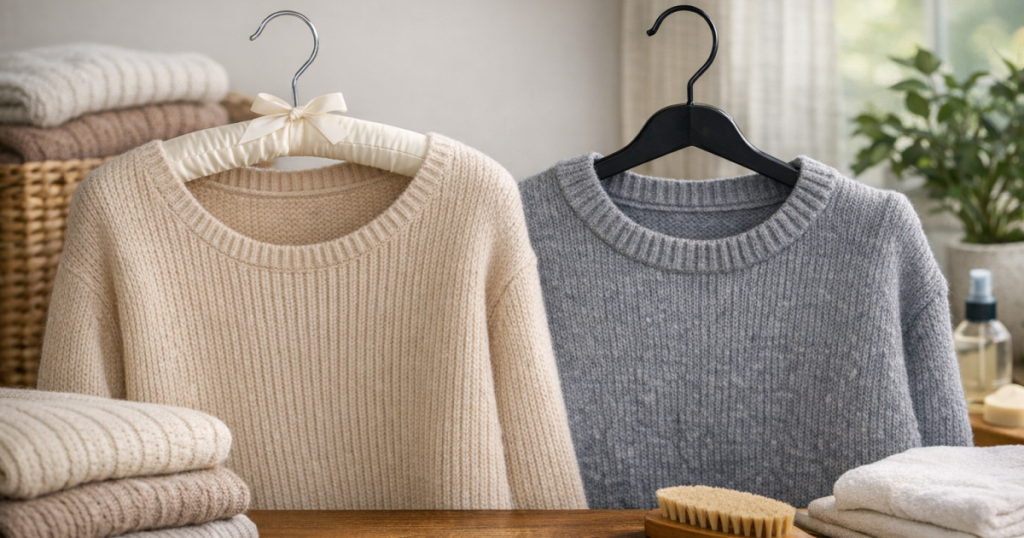
A soft, broad hanger can help with light knitwear, fine cardigans and delicate tops that need to hang briefly. It spreads pressure better than a thin plastic or wire hanger and is less likely to leave hard creases at the shoulder seam.
- Good use: lightweight merino, fine cotton cardigans, thin knitted tops and occasion knits that are worn often.
- Risky use: heavy wool jumpers, chunky cable knits, cotton knitwear with lots of weight, and anything that stretches under its own load.
- Safest long-term method: fold heavier knitwear and store it flat, clean and fully dry.
- Best quick test: hang the garment for an hour, then check whether the shoulder line is smooth or starting to peak.
Why shoulder bumps happen
Shoulder bumps are pressure and distortion marks. A hanger holds a garment at two points, and knitwear is more flexible than woven fabric. If the hanger edge is narrow, sharp or too short, the fabric is pulled down around the shoulder area and the fibres settle into a point.
The problem is more obvious in knitwear because loops can stretch, relax and hold temporary shape. Wool, cashmere, cotton, viscose blends and acrylic knits all behave differently, but the basic issue is the same: too much weight hanging from too small an area.
Moisture makes the problem worse. A jumper that is even slightly damp is heavier and easier to distort. After washing, flat drying is usually safer than putting a knit straight onto a hanger; the drying stage is covered in more detail in our guide to drying delicates indoors without heat damage.
When padded hangers actually help
Padded hangers help most when the garment is light enough not to drag downwards, and the hanger is shaped broadly enough to support the shoulder without creating a hard edge. They are useful for fine cardigans, lightweight knitted shells, delicate evening tops and soft fabrics that would crease on a rigid hanger.
They are less useful when the garment’s own weight is the main problem. A chunky jumper can still stretch, even on a soft hanger, because the sleeves, body and hem are pulling downward. In that case, the padding may reduce the sharp bump but it will not prevent lengthening, shoulder sag or hanger marks over time.
The aim is not simply softness. A very narrow padded hanger can still create bumps if it ends before the natural shoulder point. A slightly broader, rounded shape is usually better than a plush but skinny one.
How to hang knitwear with fewer shoulder marks
Step 1: Check the garment’s weight first
Hold the knitwear by the shoulders for a few seconds. If it visibly lengthens, feels heavy in the hands or pulls strongly from the shoulder seams, do not hang it for regular storage. Fold it instead. This matters more than the hanger material.
Step 2: Match the hanger to the shoulder line
The hanger should support the garment close to the natural shoulder, not stop halfway along the upper sleeve. If the ends sit too far inwards, the fabric will drop over them and form points. If the hanger is too wide, it can push into the sleeve head and distort the shape from the other direction.
Step 3: Use the smoothest side against the fabric
Check for seams, gathers, hard stitching or raised trims on the hanger cover. These can press into fine knitwear, especially cashmere, merino and viscose blends. The contact surface should feel rounded and even, with no exposed corners beneath the padding.
Step 4: Fasten buttons or closures lightly
For cardigans, fasten a few buttons rather than leaving the front hanging open. This helps balance the garment on the hanger and reduces drag on one side. Do not pull the front tight; the aim is gentle support, not tension.
Step 5: Give the garment space in the wardrobe
Crowding can squash one shoulder forward and make hanger marks more visible. Leave enough room for the knit to hang naturally. If the garment is pressed tightly between coats, shirts or bags, even a suitable soft hanger may leave distorted patches.
Which knits should be folded instead?
As a rule, fold anything heavy, loose, chunky or prone to growing. This includes thick wool jumpers, oversized knitwear, cotton cable knits, longline cardigans and relaxed viscose knits. These garments are more likely to stretch from gravity than to benefit from being hung.
Cashmere sits in the middle. A very fine cashmere cardigan may be fine on a rounded soft hanger for short periods, especially if you wear it regularly. A heavier cashmere jumper is better folded. Long-term hanging is rarely worth the risk if the garment is expensive, sentimental or difficult to reshape.
For drawers, use loose folds rather than tight rolls. Avoid overfilling, as compressed knitwear can crease and develop musty patches if it is stored before fully airing. If your delicates drawer is doing too much work, the ideas in our guide to drawer organisers for delicates, tights and underwear can help separate small items so jumpers have more breathing room.
What to do if shoulder bumps have already appeared
Most shoulder bumps are reversible if the fibres have not been stretched for months. Start with gentle moisture and reshaping rather than aggressive ironing. Lightly mist the bump with clean water, then smooth the area with your fingers and lay the garment flat on a towel to dry. Support the shoulder so it dries in the correct shape.
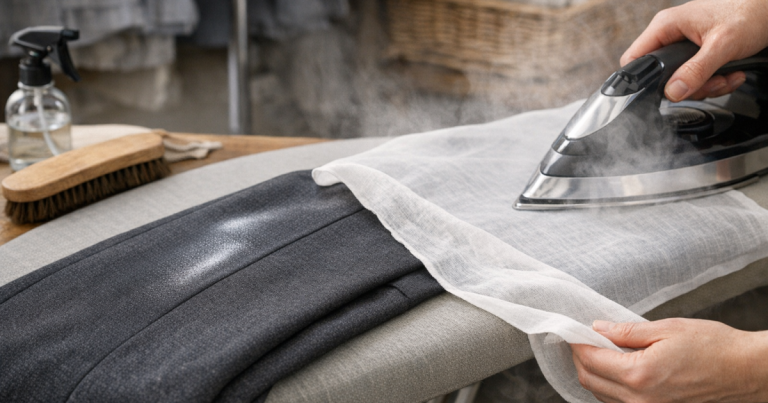
Steam can also help relax fibres, but do not press the iron directly onto the knit. Hold steam just above the fabric, then pat and reshape by hand. Let the garment cool and dry completely before wearing or storing. For delicate wool and cashmere, use minimal moisture and avoid rubbing.
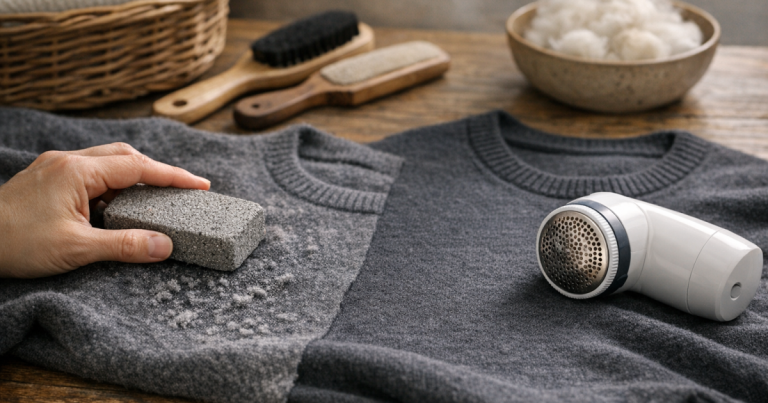
If the area has pilled where the hanger rubbed, deal with the shape first and the pills afterwards. Shaving a distorted patch can make thinning more likely if you press too hard. Use light passes only, and see our guide to using a fabric shaver without thinning knitwear before tackling fine or expensive pieces.
Small checks before you trust a hanger with knitwear
- Width: the hanger should reach close to the shoulder point without pushing into the sleeve.
- Thickness: a rounded profile spreads load better than a narrow edge.
- Surface: the cover should be smooth enough not to catch loops or fluff up the fibres.
- Grip: too much grip can drag fabric as you remove the garment; too little can let it slide and distort.
- Cleanliness: dusty or perfumed fabric covers can transfer marks or scent to stored knitwear.
- Wardrobe space: even good hangers fail when garments are crushed together.
- Storage time: hanging for a day or two is different from hanging all season.
Things readers ask
Are padded hangers better than wooden hangers for jumpers?
For light knitwear, a soft rounded hanger is usually kinder than a hard narrow one. For heavier jumpers, neither is ideal for long-term storage because the garment can stretch under its own weight. Fold heavy knits instead.
Can I hang knitwear inside out to prevent bumps?
Turning a jumper inside out may reduce visible surface rubbing, but it does not solve the pressure problem at the shoulders. The same weight is still pulling against the hanger ends, so bumps can still form.
How long is it safe to hang a jumper?
There is no fixed time because fibre and weight matter. A fine cardigan may be fine between wears, while a heavy jumper can start stretching much sooner. If the shoulder line changes after one day, fold it.
Do hanger loops help?
Ribbon hanger loops can help support some garments, but they are not always placed well for knitwear. If they pull the neckline out of shape or make the garment hang unevenly, do not rely on them.
Final thoughts
Padded hangers can prevent shoulder bumps in the right circumstances, but they are not a universal knitwear storage solution. Use them for lighter pieces that need gentle support, check the shoulder line after hanging, and fold anything heavy, stretchy or valuable enough that distortion would be frustrating.
The most reliable approach is simple: clean and dry knitwear properly, hang only what is light enough to hold its shape, and give folded jumpers enough space so they are not crushed. That combination does more for knitwear than any single hanger style.