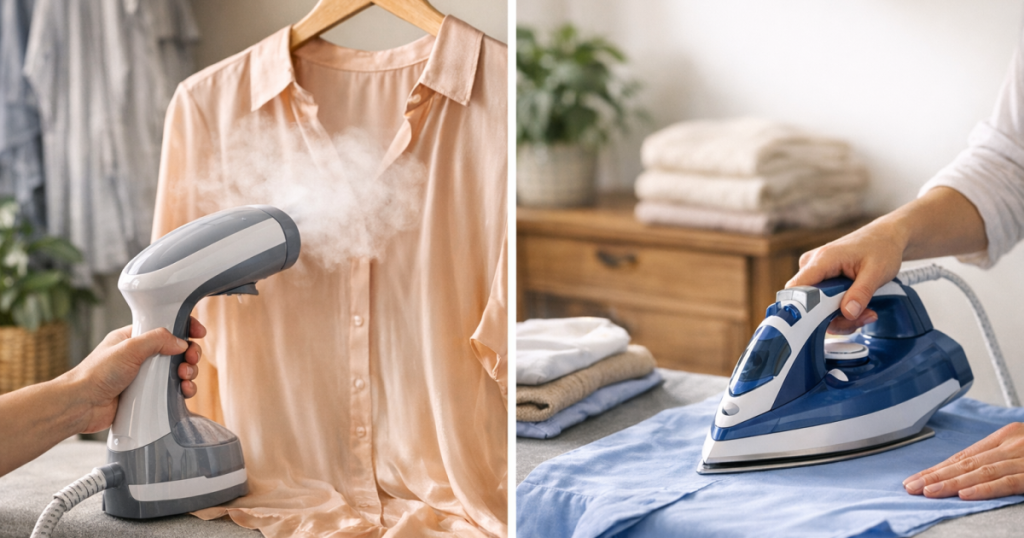
Creases are not all the same, and choosing between steamers and irons is less about which tool is “better” and more about what the garment needs. A crisp cotton shirt, a pleated skirt, a wool blazer and a viscose dress all react differently to heat, pressure and moisture. Pick the wrong method and you may flatten texture, create shine, stretch seams or leave creases behind. Pick the right one and clothes look fresher with less effort.
The short version
- Use an iron when you need pressure: collars, cuffs, hems, flat seams, cotton shirts, linen trousers and sharp pleats.
- Use a steamer when you need gentle relaxation rather than pressing: dresses, lined jackets, wool blends, viscose, polyester, lace trims and many delicate garments.
- Use both for awkward garments: steam first to relax deep creases, then iron key edges and panels for a sharper finish.
- Check the care label before applying heat, especially on silk, acetate, embellished fabrics, coatings and delicate synthetics.
- Do not chase perfection on the wrong fabric. Linen will naturally crease; some textured fabrics are meant to look soft rather than board-flat.
What an iron does that a steamer cannot
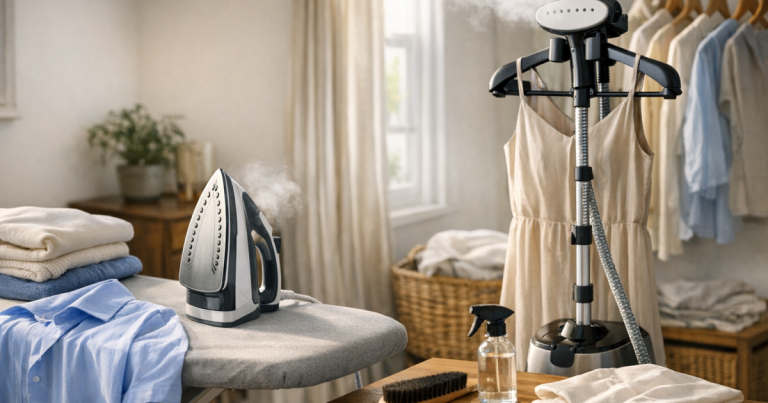
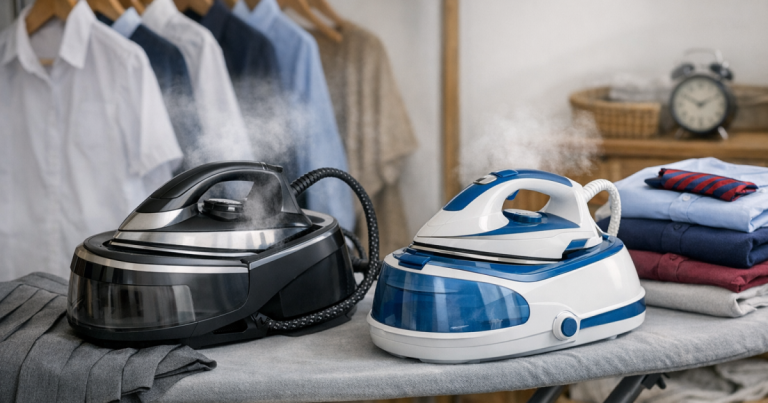
An iron combines heat, moisture and pressure. That pressure is the crucial difference. It flattens fibres into a defined shape, which is why an iron is still the better tool for crisp edges and formal garments. Shirt collars, cuffs, button bands, trouser creases and folded hems usually need a soleplate and a stable board to look properly finished.
A steam iron also lets you work in sections. You can control the grain of the fabric, press seams open, smooth hems and use the tip around buttons. For structured cotton, poplin, denim, linen and many work shirts, this control matters more than speed.
A modern steam iron such as the Philips Azur Elite Steam Iron is a useful reference point for the kind of tool that suits regular household pressing, but the important checks are not the branding. Look at whether your iron glides cleanly, produces consistent steam, has a clean soleplate and lets you work safely at the temperature your garments allow.
What a steamer does best
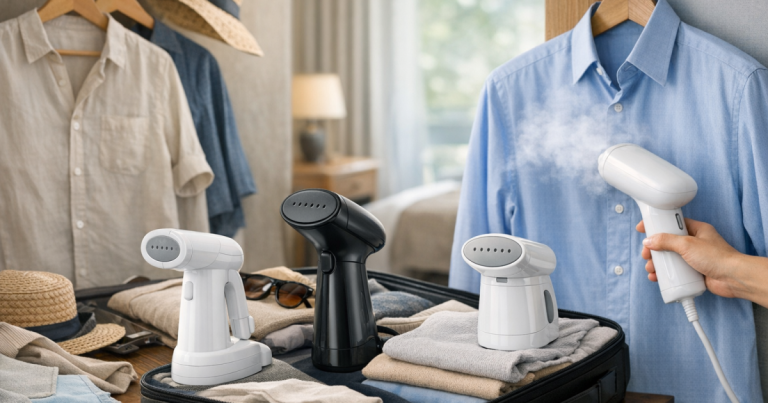
A garment steamer uses hot vapour to relax fibres while the item hangs. It does not press the fabric flat in the same way an iron does, so it is usually better for refreshing and softening creases than for creating sharp lines. That makes it particularly helpful for clothes that are awkward to lay flat, easily marked by pressure, or built with linings, gathers and shaping.
Steamers are useful for dresses, floaty blouses, wide-leg jumpsuits, lightweight cardigans, wool coats, occasionwear and garments with frills or ruching. They can also help reduce the “stored in a wardrobe” look before wearing. If you are weighing up handheld convenience, the Philips Handheld Garment Steamer 3000 Series STH3020/16 review is a useful example of where a compact steamer helps, and where its limits start to show.
For larger households, long dresses or frequent steaming sessions, an upright model can be easier because the garment hangs while you work. The trade-off is space. If you regularly care for dresses, delicates or occasionwear, our guide to upright garment steamers for dresses and delicates explains the practical differences to check before committing cupboard space.
Garment-by-garment decisions
Cotton shirts and school shirts
Iron them when you want a neat finish. Start with the collar, cuffs and button band, then press sleeves and body panels. Steam alone can freshen a shirt, but it rarely gives collars and cuffs the same definition. For everyday shirts, slightly damp fabric often responds better than fabric that is bone dry.
Linen shirts, dresses and trousers
Use an iron if you want a cleaner finish, but accept that linen will crease again with wear. Press on the reverse where possible and avoid grinding the soleplate over raised seams. A steamer can soften storage creases on linen dresses, but it will not make heavy linen look sharply pressed.
Wool jumpers and knitwear
Do not press wool jumpers hard. Steam gently from a short distance and reshape with your hands while the fabric relaxes. Let knitwear dry flat if it becomes damp. Direct pressure can flatten loft, mark ribbing or distort the garment. For bobbling, heat is not the answer; a fabric shaver is more suitable when used carefully.
Blazers, coats and tailored jackets
A steamer is usually safer for refreshing the outside of a jacket, especially around lapels, shoulders and linings. Heavy ironing can create shine on wool blends or flatten shaping. If a tailored jacket needs proper pressing, use a pressing cloth, low pressure and patience; do not force a domestic iron over padded areas.
Silk, satin and delicate synthetics
These need caution. Some silk can water-mark, satin can show shine, and delicate synthetics can react badly to too much heat. A steamer may be gentler, but it is not automatically safe. Test on an inside seam, keep the head moving, and allow the garment to dry fully before wearing. If the care label says not to steam or not to iron, follow it.
Pleated skirts and trousers
An iron is the right tool for setting a pleat, because pressure holds the fold. Use a pressing cloth and work slowly along the original crease line. A steamer can refresh pleats, but it may also soften them if overused, particularly on heat-set synthetic pleats.
T-shirts and jersey tops
Either tool can work. Use an iron for folded cotton T-shirts when you want a flat finish, but avoid stretching the fabric on the board. Use a steamer for quick refreshes or when the top has drape. For black T-shirts, keep heat moderate and avoid pressing deodorant residue into the fabric.
Key checks before applying heat
- Read the care label first. The iron symbol and dot system matter; they tell you the safe heat range.
- Sort by fabric, not just by laundry basket. Cotton and linen tolerate different treatment from acetate, viscose, wool and embellished garments.
- Use a pressing cloth for shine-prone fabrics. A clean cotton cloth between the iron and garment helps reduce direct heat marks.
- Keep the soleplate clean. Residue can transfer onto pale fabrics or drag across delicate fibres.
- Use distilled or demineralised water only if your appliance instructions recommend it. Follow the manufacturer’s water guidance rather than guessing.
- Let steamed clothes dry before putting them away. Warm damp fabric packed into a wardrobe can crease again and may smell musty.
When both tools make sense
The most efficient routine is often not either-or. Steam can loosen stubborn creases before ironing, especially on thick cotton or linen. An iron can then finish the areas that need definition. This approach works well for work shirts, table linen, cotton dresses and trousers with creased hems.
A stable board also matters. An iron can only perform well if the garment sits flat and supported, so a board such as the Minky Homecare Ironing Board is the kind of household setup that can make pressing less frustrating. You still need to check height, stability, cover condition and storage space, but the broader point is simple: the surface is part of the result.
Drying habits also affect how much heat work you need later. Clothes left crumpled in a basket or overloaded in a machine will be harder to rescue. If creasing starts in the drying stage, the advice on loading a tumble dryer without creasing clothes can reduce the amount of ironing or steaming needed afterwards.
Common mistakes that damage the finish
- Using maximum heat for speed. Higher heat can scorch, shine or melt fibres before it removes the crease.
- Pressing over stains or deodorant build-up. Heat can set residue and make marks harder to remove.
- Steaming too close for too long. Delicates can become damp, stretched or marked.
- Ironing textured fabrics flat. Crepe, seersucker, ribbed knits and bouclé can lose character under pressure.
- Putting garments away while warm. Let them cool and dry on a hanger first so the finish lasts longer.
FAQ
Is a steamer better than an iron for delicate clothes?
Often, but not always. A steamer avoids direct pressure, which helps with many delicate garments, but heat and moisture can still mark some fabrics. Always check the care label and test a hidden area.
Can a garment steamer replace an iron completely?
Not if you like crisp collars, cuffs, pleats or sharp trouser creases. Steamers are excellent for refreshing and softening creases, while irons are better for structured pressing.
Why do my clothes still look creased after steaming?
The fabric may need pressure, the garment may be too dry or heavy, or you may be moving too quickly. Cotton, linen and deep-set creases often need an iron after steaming.
Should I steam clothes before or after ironing?
Steam first if creases are stubborn, then iron the areas that need a sharper finish. For light creases, choose one method rather than adding unnecessary heat.
Are steamers and irons safe for black clothes?
They can be, but avoid excessive heat and direct pressure. Turn garments inside out where practical, use a pressing cloth, and do not apply heat over deodorant or detergent residue.
What to remember
Choose the tool by fabric and finish. Use an iron when a garment needs shape, edges and pressure. Use a steamer when it needs gentle relaxation, freshness and movement. For many UK wardrobes, the best routine is a mix: careful drying, occasional steaming, and targeted ironing only where it improves the garment rather than stresses it.