Dresses and delicate garments need more care than a quick blast of steam. The best upright garment steamers give you a stable hanger, a steady steam path and enough control to relax creases without flattening lace, marking satin or pulling a bias-cut hem out of shape.
A full-height steamer is most useful when you regularly refresh dresses, blouses, lightweight tailoring, bridesmaid dresses, dancewear, eveningwear or delicate workwear that is awkward to press on an ironing board. The aim is not to replace every iron. It is to reduce hard contact, avoid over-handling fragile fabrics and make vertical crease removal easier at home.
The short answer
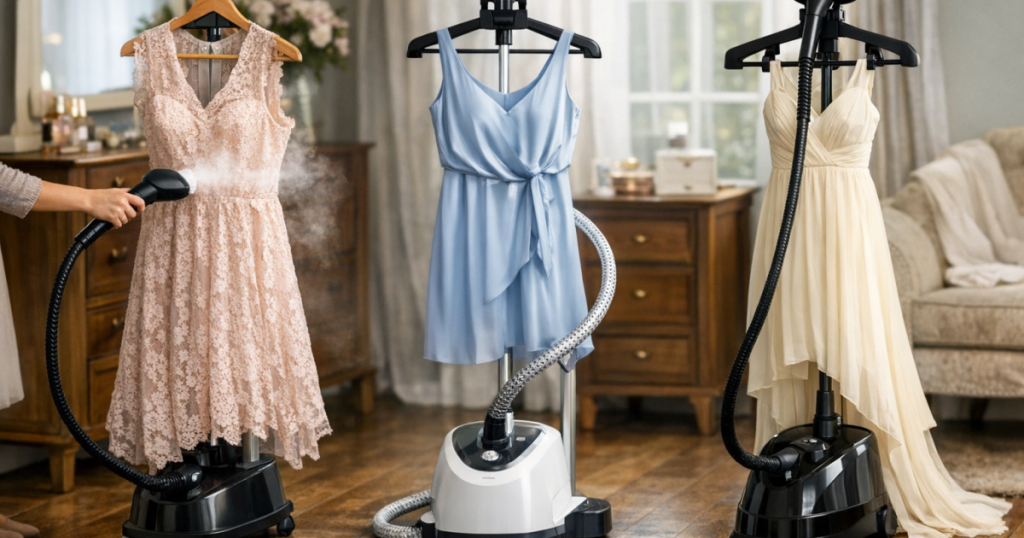
For dresses and delicates, choose a standing steamer with a secure pole, a garment support system, a smooth steam head, easy water filling and clear controls. The most important feature is not maximum power on its own; it is how comfortably the appliance lets you treat fabric gently, keep the garment stable and stop the head dragging over trims, seams and linings.
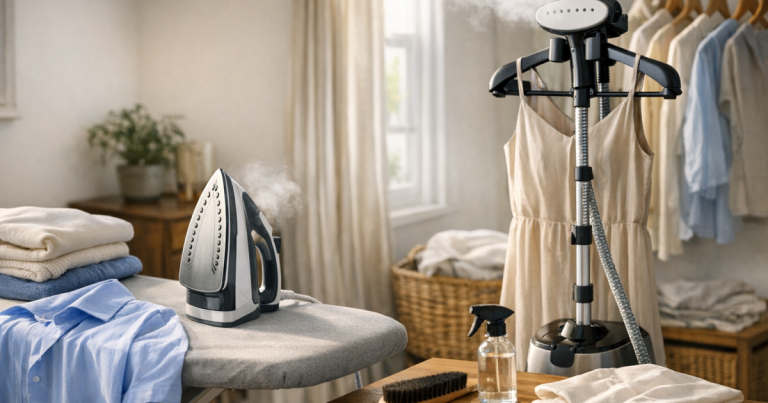
If you mainly wear cotton shirt dresses and linen-blend pieces, you may still want an iron for collars, plackets and crisp edges. If your wardrobe includes viscose, satin, chiffon, lace, silk blends or embellished dresses, a vertical steamer can be kinder because it relaxes fibres without the same pressure as a soleplate.
How to judge a steamer for dresses and delicates
Start with garment support
A dress needs to hang freely, not twist around the pole. Look for a hanger that holds straps, shoulders and sleeves securely, plus a pole that feels steady when you pull the fabric gently downward. A flimsy stand makes it harder to work neatly and increases the chance of brushing the steam head across delicate areas.
For longer dresses, check whether the pole height and base shape give enough clearance for hems. Maxi dresses, formal gowns and long pleated skirts can be frustrating on a short setup because the lower section bunches near the floor.
Check the steam head shape
A smooth, well-finished steam head matters for delicate fabrics. Metal or ceramic-style plates can be useful on sturdier fabrics, but they should not catch on lace, sequins, embroidery or open-weave materials. For very delicate dresses, you will often hold the head just off the fabric rather than pressing directly against it.
Before steaming anything valuable, run your fingers around the steam head when it is cold. If there are rough edges, residue or mineral deposits, clean it according to the manual before using it near fine fabric.
Think about control, not just output
High steam output can help with stubborn creases, but delicate garments benefit from restraint. A useful steamer lets you work in short passes, pause easily and adjust your distance from the fabric. Multiple steam levels can help, but only if they are easy to understand and use in practice.
Always follow the care label first. If the label is unclear, our guide to steam settings, heat levels and fabric labels explains how to interpret the symbols before you introduce heat or moisture.
Standout full-height models worth considering
The right choice depends on how often you steam, the length of your garments and how much floor space you can spare. The models below are useful reference points because they represent the types of upright steamer UK shoppers commonly compare for dresses, blouses and delicate clothing. Always verify the current specification, accessories, guarantee terms and retailer details before buying, as model bundles can change.
- Philips 3000 Series Stand Steamer STE3170/80: a sensible starting point if you want a recognised home garment-care brand and a full-height setup for everyday dresses, blouses and light layers. Check the current hanger design, water tank arrangement and fabric accessory bundle before deciding.
- Tefal Pro Style Care IT8490: worth looking at if you prefer a more structured vertical support style for garments that need tension while steaming. Confirm the support board design and how easily it handles longer dresses rather than relying on product photos alone.
- SteamOne Stilys ST70SB: a more style-led option to compare if the appliance will stay visible in a bedroom, dressing room or utility area. As with any premium-looking steamer, judge it on garment stability, ease of use and care-label suitability rather than appearance alone.
- Fridja f1000 Professional Vertical Garment Steamer: a familiar upright choice for people who steam batches of clothing rather than one item at a time. Check storage, floor footprint and replacement accessory availability if you expect regular use.
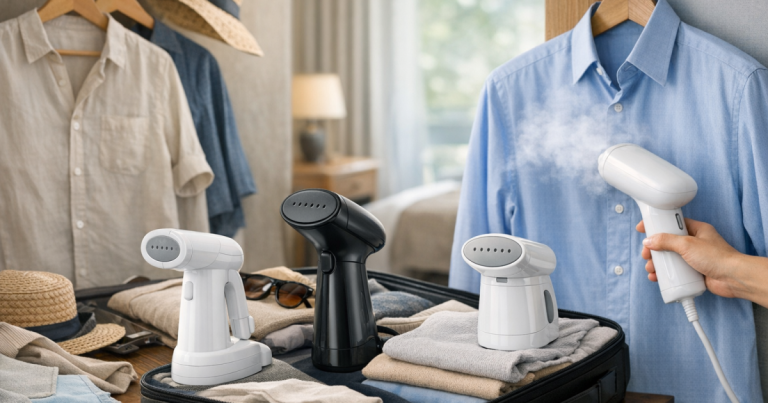
For many households, a compact handheld model is easier to store, but it is less comfortable for a batch of dresses because one hand usually has to hold or tension the garment. If space is tight and you are deciding between formats, the guide on choosing a clothes steamer for linen and shirts is a useful next step because it explains the trade-off between convenience, crease removal and garment type.
How to steam a dress without damaging it
1. Read the label and identify the fabric
Do not treat all dresses the same. Cotton, polyester, viscose, silk, acetate, lace and velvet respond differently to heat and moisture. If the care label says do not iron or do not steam, do not use a steamer. If the garment is vintage, heavily embellished, hand-dyed or sentimental, avoid experimenting on a visible area.
For blended fabrics, treat the dress according to the most delicate fibre in the mix. A viscose-polyester dress, for example, should be handled more cautiously than a basic polyester work dress because viscose can distort when damp and warm.
2. Prepare the garment before adding steam
Fasten buttons, close zips and straighten linings. Hang the dress so the shoulders sit correctly and the seams fall naturally. Empty pockets if the dress has them, as weight can distort the shape while warm.
If the steamer includes a fabric brush or attachment, use it only where suitable. Brushes can help on sturdier woven fabrics, but they can snag lace, loosen embroidery or disturb textured finishes. For delicate surfaces, distance and patience are safer than scrubbing with steam.
3. Test an inconspicuous section
Choose an inside seam allowance, hem facing or hidden lining area. Steam briefly from a small distance, then let the fabric cool and dry. Check for water spotting, colour change, shine, puckering or distortion before continuing.
This step is especially important for silk, satin, acetate, viscose, dark colours and printed fabrics. Steam can reveal dye instability or leave marks that are difficult to reverse.
4. Work from the inside where possible
Steaming from the reverse protects the visible surface and lets steam relax creases without dragging the head over embellishment. Hold the lower hem lightly to create tension, then pass the steam head down the fabric in slow, controlled movements.
Do not pull hard on bias-cut dresses, knitted dresses or stretch fabrics. Gentle tension is enough. Over-pulling while fibres are warm and damp can lengthen the garment unevenly.
5. Use distance for fragile finishes
For chiffon, lace, satin, silk blends and fine mesh, keep the steam head slightly away from the fabric unless the manual and care label support contact steaming. Let the steam do the work. If a crease remains, repeat a short pass rather than pressing harder.
Velvet and pile fabrics need particular caution. Steam from the reverse or hover from a distance so the pile is not crushed. Let the garment hang undisturbed afterwards, then lift the pile gently with clean hands or a suitable clothes brush only if the fabric can tolerate it.
6. Let the dress cool before wearing or storing
A freshly steamed dress may feel dry, but the fibres can still be warm and slightly damp. Give it time to cool on the hanger before putting it on, placing it in a garment bag or returning it to a wardrobe. Storing warm, damp fabric in a crowded space encourages creasing and musty odours.
Fabric-by-fabric guidance for delicate dresses
Silk and silk blends
Silk can mark easily, particularly if water droplets spit from the steamer. Use the lowest suitable steam approach, keep the head away from the surface and test first. If the dress is expensive, structured or lined, professional cleaning may be safer than home steaming.
Lace and mesh
Lace can snag on attachments, jewellery, rough steam heads and even fingernails. Hang it carefully and avoid dragging anything across the pattern. If the garment is lace lingerie rather than a dress, washing and handling matter just as much as steaming; see the advice on washing lace lingerie without snagging the fabric for gentler handling habits.
Viscose and rayon
Viscose often creases badly but can stretch or distort when damp. Steam lightly, avoid heavy pulling and let the garment dry fully on a shaped hanger. If the dress has a waist seam, check that the skirt is hanging evenly before steaming the lower section.
Satin and occasionwear
Satin shows shine, water marks and pressure lines. Steam from the reverse where possible, avoid direct contact on the face fabric and keep passes short. For gowns with boning, structured bodices or glued embellishments, treat only the creased areas rather than steaming the whole garment unnecessarily.
Pleats, ruffles and gathers
Steam can relax intentional shaping as well as unwanted creases. For pleated dresses, steam lightly along the direction of the pleat and avoid flattening the fold. For ruffles, use your fingers to arrange the shape while the fabric is cool, then steam sparingly to soften crushed areas.
Practical checks before you buy or use one
- Storage space: a standing steamer needs a permanent or semi-permanent spot. Check the base footprint, pole height and whether it can be stored neatly in a cupboard or utility area.
- Water handling: hard-water areas in the UK can lead to limescale. Follow the manufacturer’s water and descaling instructions rather than assuming filtered, distilled or tap water is always best.
- Warm-up and workflow: if you only steam one dress before work, convenience matters. If you steam several items at once, tank access, hose movement and hanger stability become more important.
- Attachments: fabric brushes, crease tools and protective mitts can help, but they are not automatically suitable for delicate fabrics. Treat accessories as optional aids, not shortcuts.
- Floor surface: steamers can release moisture. Use them on a stable, suitable surface and keep freshly steamed garments away from wardrobes, curtains and walls until dry.
- Aftercare: empty the tank if the manual recommends it, let the appliance cool fully and check the steam head for residue before the next use.
When an iron is still the better tool
An upright steamer is excellent for softening creases, refreshing lightly worn garments and dealing with awkward shapes. It is less effective when you need sharp creases, crisp collars, pressed seams or perfectly flat hems.
For shirt dresses, cotton poplin, linen collars and tailored details, an iron with a suitable board may still give a cleaner finish. Many households get the best results by using a steamer for the body of a dress and an iron for small structured areas, always following the care label.
Common questions
Can a garment steamer replace dry cleaning for delicate dresses?
No. Steaming can reduce creases and freshen lightly worn fabric, but it does not remove body oils, stains or odours trapped in linings. Follow the care label for cleaning.
Is steaming safe for sequins and beaded dresses?
Use caution. Steam can loosen adhesives, affect threads or mark backing fabrics. Hover from the reverse where possible and avoid direct heat on trims.
Why does my steamer leave wet spots?
Wet spots can come from condensation, overfilling, incorrect angle, limescale or insufficient warm-up time. Stop, check the manual and test again on a hidden area.
Should I steam a dress before packing it for travel?
Only if it can cool and dry fully first. Packing warm or damp fabric can set new creases and create a stale smell inside luggage.
Do delicate dresses need a fabric brush attachment?
Usually not. A brush can snag lace, mesh and embroidery. For fragile garments, controlled steam from a short distance is normally safer.
Main points
For dresses and delicates, the best upright choice is the one that gives you stability, gentle control and enough room to handle the garment properly. Look beyond headline steam claims and focus on how the appliance supports real fabrics: long hems, fragile trims, slippery linings, pleats and crease-prone viscose.
Use the care label as your starting point, test discreetly, steam from the reverse where possible and let each garment cool before wearing or storing. A full-height steamer can make dress care much easier, but the safest results come from matching the tool to the fabric rather than treating every crease the same way.