Wool jumpers shrink or felt when heat, friction and the wrong detergent work against the fibre. The safest way to wash wool jumpers is to keep the water cool, reduce movement and reshape the garment before it dries.
The aim is not to scrub wool clean like a cotton T-shirt. Treat it as a springy protein fibre that needs short soaking, careful rinsing and supported drying.
The short version
- Check the care label before washing, especially for merino, lambswool, cashmere blends and embellished knitwear.
- Use cool water, ideally around 30°C or lower, unless the label says otherwise.
- choose a wool or delicates detergent and avoid biological powder, strong stain removers and fabric conditioner unless the label allows them.
- Do not wring, twist, rub hard or tumble dry unless the care label specifically permits it.
- Dry flat on a towel, reshape while damp and keep the jumper away from direct heat.
Why wool shrinks and felts
Wool fibres have tiny surface scales. When the fibre is exposed to heat, alkaline detergent and vigorous movement, those scales can catch against each other. Once they lock together, the fabric becomes denser, smaller and less flexible. That is felting.
Shrinkage can also happen when a jumper is stretched when wet and then dries in a distorted shape. Wet wool is heavier than dry wool, so hanging it on a hanger or washing line can pull the shoulders, lengthen the body and leave bumps where the hanger supported the fabric.
Not all wool behaves in the same way. Superwash wool has been treated to make it more washable, while traditional lambswool, Shetland wool and many cashmere or wool-rich blends need gentler handling. A jumper labelled dry clean only should not be treated as machine washable just because it is plain wool.
Before you start: check the jumper properly
Lay the jumper flat in good light and look over the whole garment before it goes near water. This gives you a chance to deal with weak spots, stains and surface bobbles without making them worse in the wash.
- Read the care label and note whether it says hand wash, machine wool cycle, dry clean only or do not wash.
- Check the fibre content. Wool blends with silk, alpaca, cashmere or viscose may need extra caution.
- Look for loose seams, pulled threads, thin elbows or weak cuffs that could stretch during washing.
- Fasten any buttons and empty pockets if the jumper has them.
- Turn the jumper inside out to reduce friction on the visible surface.
If the jumper has heavy pilling, remove it before washing rather than after a wet cycle has tightened the fabric. A gentle comb or fabric tool can help, but avoid dragging at the surface. For finer knits, see the guidance on whether cashmere combs remove bobbles without pulling fine fibres.
Hand washing wool jumpers step by step
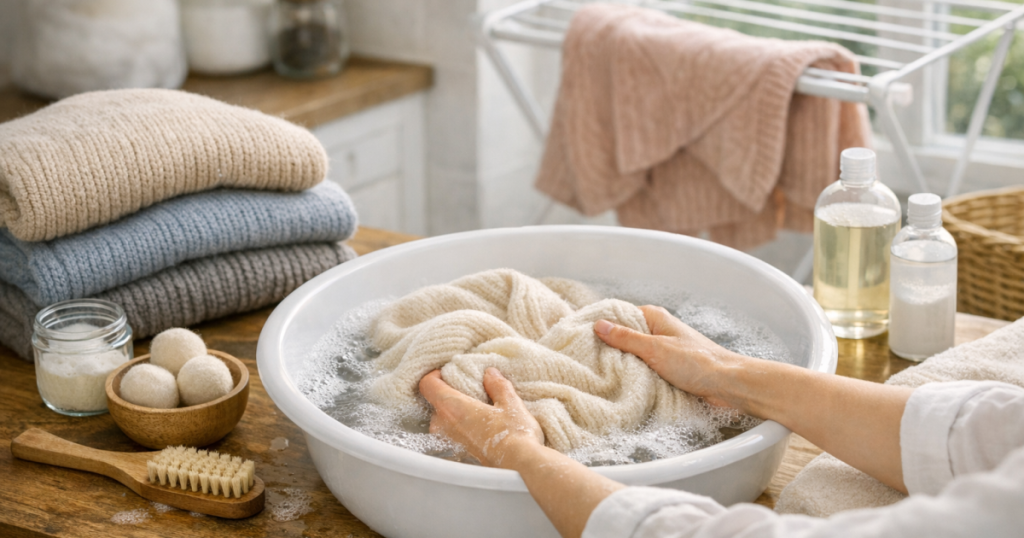
Hand washing gives you the most control, which is useful for older jumpers, soft lambswool and anything you would be upset to lose. Use a clean basin, sink or washing-up bowl with no bleach residue or cleaning product left inside.
1. Fill the basin with cool water
Use cool or lukewarm water, around 30°C or lower. Avoid sudden temperature changes: putting wool into warm water and then rinsing in cold water can shock the fibres and encourage shrinkage.
2. Add a small amount of wool detergent
Use a detergent designed for wool or delicates and follow the dosing instructions on the bottle. More detergent does not mean a cleaner jumper; it simply makes rinsing harder and can leave the fibres feeling coated.
3. Submerge and gently press
Place the jumper in the water and press it down so it becomes evenly wet. Do not rub the fabric against itself. Instead, lift and lower it slowly, pressing the suds through the knit with open hands.
4. Soak briefly
A short soak of about 10 minutes is usually enough for everyday freshness. Do not leave wool soaking for hours, as prolonged wetting can weaken the shape and make dye bleeding more likely on dark or bright colours.
5. Rinse without shocking the fibre
Drain the soapy water and refill with clean water at a similar temperature. Press the jumper gently to move the rinse water through the fibres. Repeat until the water runs clear and the fabric no longer feels slippery.
6. Remove water without wringing
Lift the jumper with both hands so its weight is supported. Press it against the side of the basin, then lay it on a clean towel. Roll the towel and jumper together, pressing along the roll to draw out water. Do not twist the roll tightly.
Using a washing machine safely
A machine can be suitable for some wool jumpers, but only when the care label permits machine washing. Use the wool cycle, cold or 30°C water, and a low spin speed. A mesh laundry bag can reduce rubbing against the drum, seams and other garments, but it does not make a non-washable jumper safe to machine wash.
Wash wool knitwear separately or with similar lightweight wool items. Avoid mixing it with jeans, towels, zips, bras or rougher fabrics. Heavy items increase friction and can crush the jumper during the spin.
Choose liquid wool detergent or another detergent clearly suitable for wool. Avoid biological detergents for wool unless the product label specifically says it is safe for woollens, because enzyme-based formulas can be unsuitable for protein fibres. Do not add fabric conditioner as a default; it can affect handle and breathability, and it will not reverse felting.
Stain handling without rough treatment
Spot cleaning is often safer than washing the entire jumper, especially if the stain is small and fresh. Blot spills straight away with a clean white cloth. Work from the outside of the mark towards the centre so the stain does not spread.
For food, mud or make-up marks, use a small amount of wool-safe detergent diluted in cool water. Dab rather than scrub. If the stain is oily, heavily coloured or set in, repeated rubbing can damage the knit before it removes the mark. In that situation, it is better to stop and consider professional cleaning if the garment is valuable or labelled dry clean only.
Drying and reshaping the right way
After washing, dry the jumper flat on a clean towel or mesh drying rack. Smooth the body, line up the side seams, ease the sleeves back to their natural length and gently square the shoulders. If you know the jumper’s original measurements, you can use them as a guide, but do not stretch the fabric to force it larger.
Keep drying wool away from radiators, heated airers set to high heat, direct sunlight and tumble dryers unless the care label clearly says tumble drying is allowed. Fast heat can shrink wool and may leave the surface harsher than before.
Turn the jumper over once the top feels damp rather than wet, replacing the towel if it has become saturated. Good airflow matters more than heat. In a typical UK home, a dehumidifier can speed indoor drying without blasting the fibres, but keep the jumper flat and supported rather than hanging it in moving air.
Aftercare: keeping the shape between washes
Wool does not need washing after every wear. Airing a jumper flat or over a broad drying rack for a few hours can remove light odours and help moisture evaporate. Brush away surface lint gently once the garment is dry.
Fold wool jumpers rather than hanging them. Hangers can stretch shoulders and create permanent bumps, particularly on heavier knits. For seasonal packing, clean the garment first, let it dry fully, and store it somewhere cool, dry and breathable. The long-term clothes storage guide for coats, jumpers and delicates covers folding, containers and fabric-safe storage habits in more detail.
Moths are another reason to avoid putting worn wool away unwashed. Body oils, food traces and perspiration can attract larvae. If you keep wool in wardrobes or drawers for long periods, review your clothes moth protection for wool wardrobes before the season changes.
Common mistakes that cause damage
- Using hot water because the jumper looks dirty. Heat is one of the main triggers for shrinkage.
- Washing wool with towels or denim. The extra friction can roughen and felt the surface.
- Wringing water out by hand. This distorts stitches and can leave the jumper twisted.
- Hanging a wet jumper to dry. Wet wool is heavy and can stretch from the shoulders down.
- Trying to rescue felting with fabric softener. Once fibres have locked together, softener will not restore the original knit structure.
Questions people ask
Can I wash wool jumpers with normal detergent?
It is better to use a wool or delicates detergent. Normal laundry detergents can be too alkaline or too harsh for wool, and biological formulas are not always suitable for protein fibres.
What temperature should I use for wool?
Use cool water, usually 30°C or below, unless the care label gives a different instruction. Keep wash and rinse water at a similar temperature to avoid shocking the fibres.
Can a shrunken wool jumper be fixed?
Light shape change may sometimes be eased while the jumper is damp, but true felting is usually permanent. Do not pull aggressively, as that can distort seams and thin areas.
How often should wool jumpers be washed?
Wash only when needed. If the jumper is not stained or sweaty, airing between wears is often enough and helps the fibres last longer.
Is dry cleaning safer for all wool?
Not always, but it is the right route when the label says dry clean only, the jumper is structured, heavily embellished or made from a delicate luxury blend.
Key takeaways
Successful wool care is mostly about restraint: cool water, minimal agitation, mild detergent and flat drying. Check the label first, keep the jumper supported while wet, and reshape it before it dries. Those small habits make the difference between soft, wearable knitwear and a jumper that comes out smaller, denser or misshapen.