A coat or blazer usually needs a different approach from a blouse or T-shirt: more structure, thicker cloth, linings, shoulder pads and lapels that can be spoiled by heavy pressure. The right steamer for coats and blazers should relax creases, freshen the surface and protect the garment’s shape, rather than trying to flatten it like an ironed shirt. Start by matching the steamer style to the fabrics you wear most, how often you refresh tailoring, and whether you have space to steam safely at home.
The short version
For occasional jacket refreshes, a capable handheld steamer is usually enough. For heavier wool coats, frequent workwear, uniforms or multiple garments in one session, an upright steamer with a hose and hanger support is usually more comfortable. A steamer-iron hybrid can be useful if you want light steaming plus occasional sharper finishing, but it is not a replacement for careful pressing on structured tailoring.
- Choose handheld if you refresh one blazer, travel occasionally, or have limited storage space.
- Choose upright if you steam coats, suit jackets, school blazers or several garments at once.
- Choose a hybrid if you want a tool that can soften creases and lightly neaten edges, while still keeping a proper iron for crisp shirts and trousers.
- Avoid relying on steam alone for deep-set creases, shiny pressed areas, stained fabric or garments that need reshaping.
If you are unsure whether a steamer or iron is better for a particular garment, our guide to choosing between steamers and irons explains the trade-off between gentle refreshment and sharper pressing.
Step 1: start with the garment, not the appliance
Before looking at steamer styles, check the care label, fibre content and construction of the coat or blazer. Wool, wool blends, polyester tailoring, viscose linings and embellished jackets can all react differently to moisture and heat. A steamer is generally gentler than pressing hard with an iron, but it still uses heat and moisture, so it can disturb pile, flatten texture, loosen weak trims or mark delicate finishes if used carelessly.
Look at how the garment is built. A softly tailored linen blazer has different needs from a heavy wool overcoat. A school blazer may have fused sections, badge stitching and shoulder structure. A winter coat may have interlining, padding, a nap or a textured weave. The more structured the garment, the more you should prioritise controlled steam, a stable hanging setup and a careful finishing method rather than sheer steam output.
Step 2: decide which steamer type fits your wardrobe
Handheld steamers: useful for quick jacket refreshes
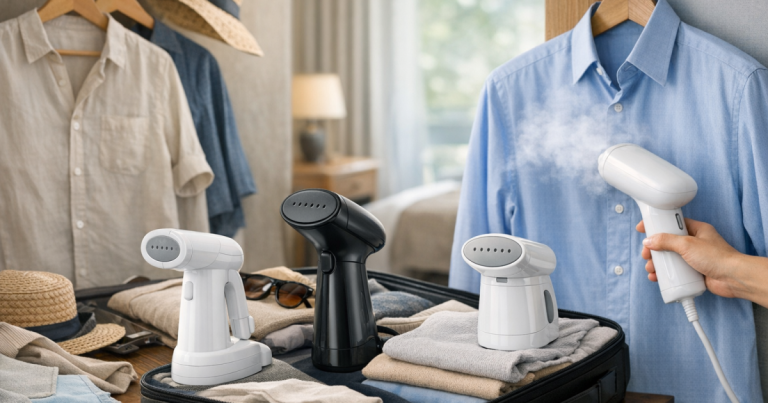
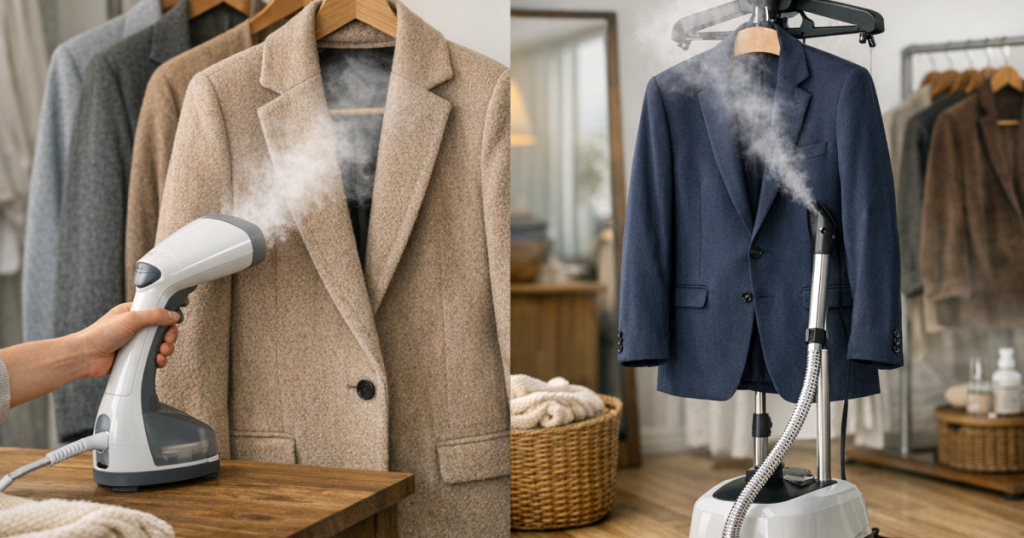
A handheld steamer is the most convenient choice for many homes because it is compact, easy to store and quick to bring out before work, school or an evening event. It suits lightweight blazers, travel creases, polyester-lined jackets and occasional refreshes between proper cleaning.
The compromise is session length and comfort. A small handheld unit can feel fine for one jacket but tiring if you are working through several coats. It may also need more refilling, depending on the model. When looking at a handheld option, check the current product information for water tank size, steam control, included fabric brush or pad, weight when filled, and whether it can be used comfortably at different angles.
Examples in this category include the Philips Steam&Go Plus Handheld Garment Steamer GC362/86 and the Fridja f10 Handheld Clothes Steamer. Treat them as reference points for size, handling and accessory style rather than assuming every handheld steamer performs identically.
Upright steamers: better for coats, uniforms and batch steaming
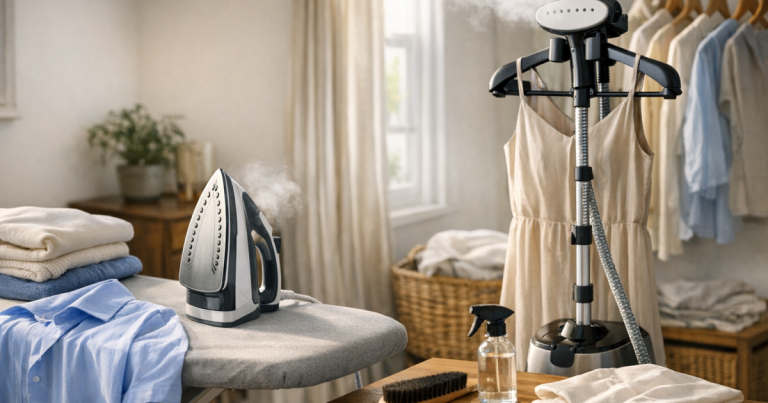
An upright steamer is usually the more sensible steamer for coats and blazers if you deal with heavier outerwear or several garments at once. The separate water base, hose and hanger arrangement can make it easier to steam long panels, sleeves and backs without constantly supporting the full appliance in your hand.
This style is particularly useful for wool-blend coats, long overcoats, work blazers, school uniforms and households where multiple people wear tailored garments. It gives you a more stable setup, but it needs floor space and somewhere safe to stand while the garment cools and dries.
When assessing an upright model, verify the hose reach, hanger stability, steam settings, heat-up time, descaling guidance and whether the pole feels secure enough for heavier jackets. The Tefal Access Steam Care DT9100 is one recognisable upright-style example to compare against for home garment steaming, but always check the current model details before deciding.
Hybrid steamer-irons: handy, but not magic
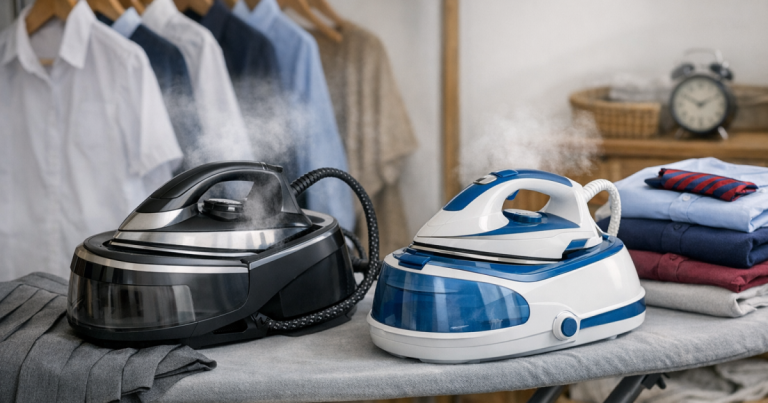
Hybrid tools can suit people who want one compact appliance for softening creases and lightly tidying hems, pockets or lapels. They can be convenient for mixed wardrobes, but they need careful handling on coats and blazers because direct contact can create shine or flatten texture on some fabrics.
The Steamery Cirrus 3 Iron Steamer is a well-known example of this hybrid idea. If you consider a similar tool, check whether it offers enough control for your fabrics and whether you are comfortable using any contact plate near lapels, pockets and seams. For properly sharp creases or formal tailoring, a good iron, pressing cloth and board are still the more controlled route.
Step 3: check the details that matter for tailoring
Coats and blazers expose weaknesses in a steamer more quickly than simple garments. A tool that is fine on a thin dress may feel underpowered, awkward or messy on a dense wool coat. Focus on the practical details that affect fabric care and handling.
- Steam control: Variable or selectable steam can help you reduce moisture on delicate linings and increase it carefully on heavier outer fabric.
- Handling weight: A handheld steamer should still feel manageable when filled. If your wrist tires quickly, you are more likely to rush and oversteam one area.
- Hanging support: Coats need a broad, strong hanger. Thin wire hangers distort shoulders and make steaming harder.
- Accessories: A fabric brush can help lift the surface slightly on robust wool blends, but it should be used gently and tested first.
- Water guidance: Follow the manufacturer’s instructions on water type and descaling. Hard water areas in the UK can make maintenance more important.
- Drip control: Any steamer can spit if used incorrectly or before it is ready, so check reviews for consistency and learn the correct warm-up routine.
- Storage: Upright models take more space. If it is too awkward to store, you may not use it regularly.
Step 4: use the steamer without spoiling the shape
Once you have chosen the right type, technique matters. Hang the coat or blazer on a broad hanger so the shoulders are supported. Fasten one or two buttons if that helps the front hang naturally, but do not stretch the garment tight. Empty pockets first, as weight can drag the cloth while it is warm and slightly damp.
Start with the least visible area, such as inside a hem or lower back panel, and test how the fabric reacts. Hold the steamer a few centimetres from the surface unless the manufacturer’s instructions say otherwise. Let the steam pass through the cloth rather than pressing the nozzle hard into it. Use your free hand to hold the fabric gently from below, keeping fingers away from steam.
Work in sections: back panel, fronts, sleeves, then lapels. On lapels and collars, use very light steam and reshape with your hands rather than forcing them flat. Do not overwork shoulder pads, chest pieces or fused areas. Too much moisture can make structured garments look limp until fully dry, and repeated oversteaming can encourage distortion.
After steaming, leave the garment hanging with good air movement until it is completely dry and cool. Do not put a warm, damp blazer straight into a wardrobe. For seasonal coats, steaming is only one part of care; use breathable storage and make sure garments are fully dry before packing them away. Our long-term clothes storage guide covers coats, jumpers and delicates in more detail.
When a steamer is the wrong tool
A steamer is for refreshing, relaxing and easing light creases. It is not a stain remover, a dry cleaner or a tailoring press. If a coat smells strongly of smoke, has body oil around the collar, shows water marks, or has deep creases from poor storage, steaming may make the problem more noticeable rather than solving it.
Be cautious with velvet, suede, waxed cotton, leather trims, glued embellishments and any fabric with a special finish. Sequins, badges and decorative details can loosen or distort with heat and moisture. School blazers also need care because badges, linings and shoulder structure can be vulnerable to rough treatment; see our advice on washing school blazers without losing their shape before combining washing, drying and steaming.
Which choice makes sense for common UK wardrobes?
If you own one office blazer and a lightweight coat, a good handheld steamer is usually the easiest fit. Keep a proper hanger nearby and use short, controlled sessions rather than soaking the garment. This is the simplest setup for flats, shared homes and occasional event wear.
If your household has several uniforms, work jackets or winter coats, an upright steamer is usually more practical. It gives you a dedicated steaming station and makes it easier to refresh several garments on a Sunday evening without refilling constantly. The main trade-off is storage space.
If you already iron regularly and only want a softer finish on jackets, a hybrid can be useful, but do not expect it to replace careful pressing. For tailored trousers, crisp shirts and formal creases, an iron and pressing cloth remain important. For textured coats and blazers, steam should preserve shape and surface character, not flatten everything into a smooth sheet.
FAQ
Can I steam a wool coat at home?
Usually, yes, if the care label allows steaming or the fabric responds well in a hidden test area. Use gentle passes, avoid soaking the cloth, and let the coat dry fully before wearing or storing it.
Will steaming remove odours from a blazer?
Light freshness issues may improve, especially if the blazer is aired afterwards. Steam will not properly remove heavy odours, collar grime, perspiration build-up or smoke contamination.
Is an upright steamer too much for one blazer?
For one occasional blazer, probably. A handheld steamer is easier to store and quicker to use. An upright model makes more sense for coats, uniforms or several tailored garments.
Can steaming replace dry cleaning?
No. Steaming can refresh and relax creases, but it does not remove embedded dirt, oil, stains or residues. Use it between cleans, not as a complete substitute for cleaning.
Should I press lapels after steaming?
Only with care. Lapels can become shiny or misshapen if pressed too hard. If they need a crisp finish, use a pressing cloth, low pressure and the correct heat setting for the fabric.
Final thoughts
For most people, the best choice is not the most powerful steamer but the one that suits the garments they actually wear. Choose handheld for occasional blazer refreshes, upright for coats and batch steaming, and hybrid only if you understand its limits. With tailored garments, the aim is simple: ease creases, freshen the fabric and preserve the shape that makes the coat or blazer worth looking after.