Satin can look unforgiving after the wrong wash: dull patches, water marks, puckered seams and crushed shine all show quickly on a smooth dress. The safest way to clean satin dresses is to identify the fibre first, treat stains with minimal rubbing, wash only when the care label allows it, and dry the dress flat or supported away from direct heat.
The sheen comes from the satin weave, not from one single fabric type. A polyester satin dress, a silk satin slip and an acetate satin bridesmaid dress can all look similar on the hanger, but they do not tolerate water, detergent and heat in the same way.
In brief
- Check the care label and fibre content before deciding between hand washing, machine washing or dry cleaning.
- Use cool water and a mild liquid detergent only when the label permits washing.
- Blot stains from the reverse side where possible; do not scrub the shiny face of the fabric.
- Never wring satin. Press water out gently with a clean towel.
- Dry away from radiators, strong sun and tumble dryers unless the care label specifically says otherwise.
- Restore smoothness with steam or a cool iron on the reverse, using a pressing cloth.
Step 1: Work out what kind of satin you have
Satin is a weave with a smooth, reflective face and a duller reverse. It can be made from silk, polyester, acetate, viscose, nylon or blends, so the care label matters more than the word satin on a product description.
Silk satin is usually the most delicate. It can lose body, develop water marks or react badly to alkaline detergents. Polyester satin is generally more washable, but it can still snag, crease sharply or become dull if washed with heavy items. Acetate and viscose satins need particular caution because water can distort, shrink or mark some garments, especially if linings, interfacings or bias-cut panels are involved.
Before you do anything, check three details on the label:
- The fibre content, such as silk, polyester, acetate, viscose or a blend.
- The washing symbol, including temperature and whether hand washing is allowed.
- Any warning such as dry clean only, do not wring, do not tumble dry or cool iron only.
If the label says dry clean only, do not try to fully wash the dress at home just because the outer fabric feels robust. Linings, trims, adhesives, boning, pleats and structured bodices can be the parts that fail first.
Step 2: Inspect the dress before adding water
Lay the dress on a clean towel in good daylight and look for stains, pulled threads, loose seams, deodorant marks, make-up at the neckline, soil on the hem and perspiration under the arms. Satin reflects light, so tilt the fabric rather than only looking straight down at it.
Fasten zips, hooks and buttons before washing. Empty pockets if the dress has them, and remove detachable belts, brooches or decorative straps. If the dress has beading, sequins or glued embellishments, treat it as more fragile than plain satin. For heavily decorated pieces, the cleaning decision is closer to embellished eveningwear than an everyday washable dress; our guide to washing sequinned clothes without loosening embellishments explains the extra risks around trims and stitching.
Do a colourfastness test if the care label allows washing. Dampen a white cloth with cool water and a tiny amount of mild detergent, then press it on an inside seam allowance or hidden hem area. If colour transfers, the surface changes, or the fabric develops a tide mark after drying, avoid home washing.
Step 3: Treat stains gently, not aggressively
The main rule with satin stains is to blot, not rub. Rubbing flattens the reflective yarns, raises fuzz, spreads oily marks and can leave a permanent dull patch even after the stain has gone.
Water marks
Water marks often happen when only one small area gets wet and the edge dries as a ring. If the dress is washable, it is usually better to wash or dampen the affected panel evenly rather than keep dabbing the ring. If it is dry clean only, leave water marks to a cleaner because adding more water can enlarge the problem.
Oil and food marks
Blot fresh oil with a clean white cloth or plain paper towel. Do not add hot water, as heat can help some stains set. For washable polyester satin, a small amount of mild liquid detergent worked gently into the reverse of the stain may help. For silk, acetate or unknown fibres, avoid repeated detergent applications and use dry cleaning for obvious oily stains.
Make-up and lipstick
Lift any surface residue carefully with the edge of a spoon or a clean cloth. Dab from the outside of the mark towards the centre. Avoid alcohol, nail varnish remover and strong stain removers on satin dresses, as these can strip colour, damage finishes or leave pale patches.
Deodorant and perspiration
Underarm marks need patience. If washable, use cool water and a small amount of mild detergent on the inside of the fabric, then rinse thoroughly. Do not use chlorine bleach. It can yellow, weaken or discolour delicate fibres and may damage linings.
Step 4: Hand wash when the label allows it
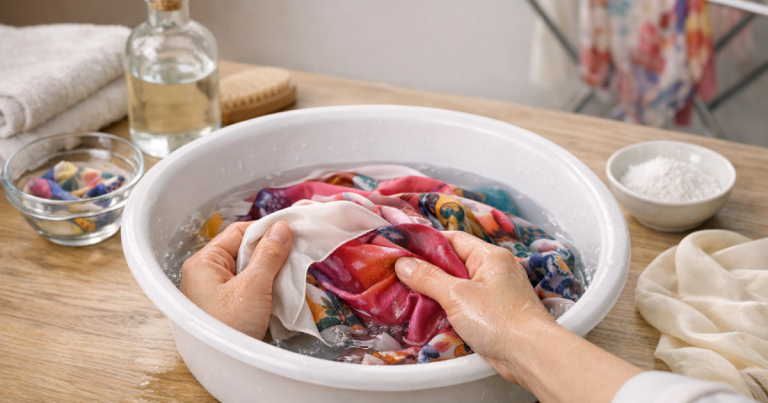
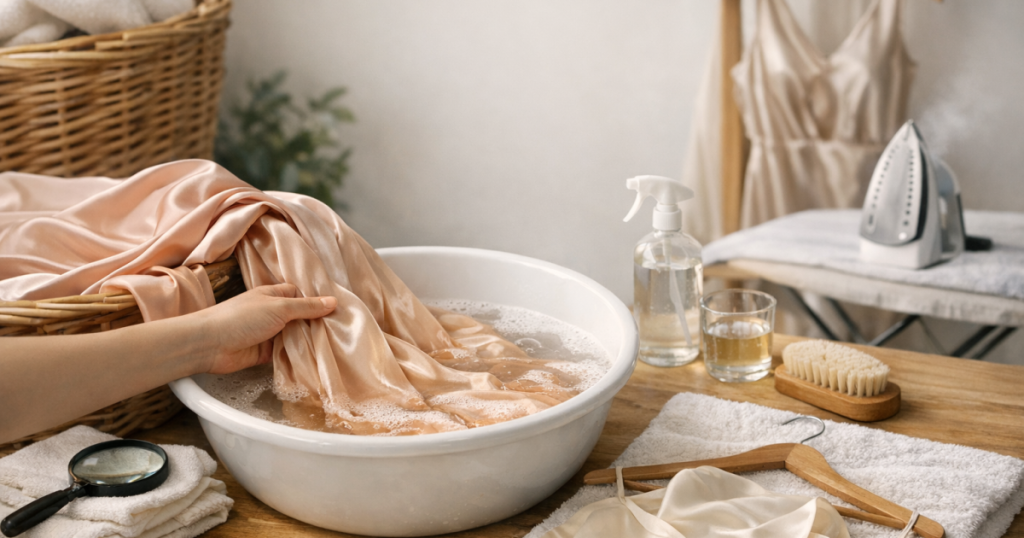
Hand washing gives you more control than a machine, but it still needs restraint. Fill a clean basin or sink with cool water. Add a small amount of mild liquid detergent and mix it fully before the dress goes in, so no concentrated detergent sits on one shiny patch.
Turn the dress inside out. Submerge it and move it slowly through the water with open hands. Avoid twisting, scrubbing or lifting a heavy wet dress by narrow straps. Satin becomes more vulnerable when wet, especially at seams and bias-cut areas.
Keep the wash short. A few minutes of gentle movement is usually enough for light wear and body odour. Drain the water, refill with cool clean water and rinse by supporting the whole dress rather than pulling it through your hands. Repeat until the water is clear and the fabric no longer feels slippery with detergent.
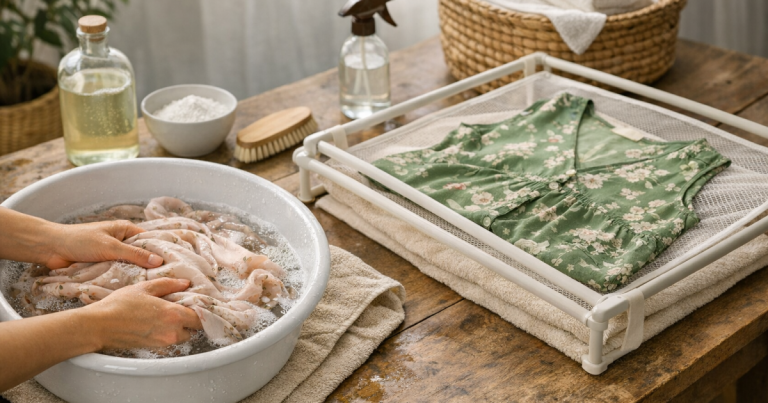
To remove excess water, lay the dress flat on a clean towel, reshape it gently and roll the towel up with the garment inside. Press down along the roll. Unroll, move the dress to a dry towel if needed, and continue drying without wringing.
Step 5: Machine wash only if the garment is suitable
Some polyester satin dresses are labelled for machine washing, but a permitted machine wash is not a licence for a normal mixed load. Use a cool delicate cycle, a low spin and a fine mesh laundry bag. Wash the dress alone or with very light, smooth garments in similar colours.
Avoid washing satin with denim, towels, bras with hooks, garments with Velcro, heavy jumpers or anything with rough seams. These can abrade the surface and create snags. Use liquid detergent rather than powder if granules are likely to remain undissolved in a cool wash.
Fabric conditioner is not essential for satin and can leave a coating that changes the handle or sheen of some fabrics. If static is the issue, better drying and storage habits usually help more than adding extra products to the wash.
Step 6: Dry satin without dulling the surface
Drying is where many satin dresses lose their finish. Heat, pressure and uneven drying can cause shine changes, tide marks or deep creases. Remove the dress from the basin or machine promptly so damp folds do not sit pressed together.
For lightweight dresses, lay the garment on a clean dry towel, reshape the seams and smooth the skirt with your hands. For slightly heavier dresses, dry flat until the weight has reduced, then finish on a wide padded hanger if the construction supports it. Avoid thin wire hangers, which can create shoulder points or strain narrow straps.
Do not dry satin directly on a radiator, in strong sunlight or beside a strong heat source. In UK homes, indoor drying can be slow in cooler months, so air movement matters. If your laundry often develops a stale smell before it dries, the principles in stopping air-dried clothes smelling damp indoors are useful for delicate dresses too: space garments out, ventilate the room and avoid trapping moisture in corners.
Keep the dress away from rough drying racks if the fabric is prone to snagging. If you use an airer, drape a clean smooth towel over the rail first so the satin is not pressed against a narrow metal edge.
Step 7: Restore the sheen after drying
Satin sheen depends on a smooth surface. Once the dress is fully dry or very slightly damp, check whether it needs steaming or pressing. Always work on the reverse first and test a hidden area.
For most washable satin dresses, gentle steam can relax creases without flattening the shine. Keep the steamer head slightly away from the surface unless the appliance instructions and garment label allow direct contact. Support the garment so you are not stretching straps, bias seams or delicate necklines.
If ironing is allowed, use a low setting, turn the dress inside out and place a clean pressing cloth between the iron and the fabric. Press rather than drag. Dragging the iron across satin can create tramlines or polished patches. Let each area cool before moving the dress, as warm satin can crease again if handled too soon.
Do not chase every tiny crease with more heat. Occasion dresses often look smoother after hanging in a ventilated room for a short time, especially if they were dried carefully and not wrung.
Step 8: Store the dress so the shine lasts
A clean satin dress should be completely dry before it goes back into the wardrobe. Even slight dampness can encourage odour, mildew or creasing, particularly in fitted wardrobes on external walls.
Use a smooth, breathable garment bag rather than a plastic dry-cleaning cover for longer storage. Plastic can trap moisture and may press creases into the fabric. Padded hangers help protect shoulders on structured dresses, while very heavy or bias-cut satin may be better stored flat with acid-free tissue supporting folds.
Keep satin away from rough sequins, metal zips, beaded garments and textured hangers. If the dress is for weddings, formal events or seasonal wear, the advice in our long-term clothes storage guide for coats, jumpers and delicates will help you prevent crushing, dust and fabric stress between wears.
Mistakes that make satin look dull
- Scrubbing stains on the shiny side instead of blotting gently.
- Using hot water because the dress looks synthetic.
- Wringing the dress to speed up drying.
- Hanging a soaking wet dress by thin straps.
- Ironing directly on the face of the fabric.
- Using bleach, strong stain removers or solvent-based products without checking fibre suitability.
- Leaving a freshly cleaned dress in a plastic cover for months.
FAQ
Can I wash a satin dress in the washing machine?
Only if the care label allows machine washing. Use a cool delicate cycle, a mesh bag, low spin and a mild liquid detergent. Silk, acetate, structured or embellished satin dresses are usually safer with hand washing or dry cleaning, depending on the label.
Why has my satin dress gone dull after washing?
Dullness usually comes from abrasion, heat, over-spinning, harsh detergent, scrubbing or ironing the shiny face. Sometimes residue from too much detergent or fabric conditioner can also reduce the glow, so rinse thoroughly when washing is permitted.
How do I remove creases from satin without damaging it?
Steam lightly from the reverse or use a cool iron with a pressing cloth if the care label allows ironing. Avoid dragging the iron across the fabric and do not use high heat to force out stubborn creases.
Should satin be dry cleaned?
Dry cleaning is the safest route when the label says dry clean only, when the fibre is silk or acetate, or when the dress has structure, lining, pleats, beading or obvious oily stains. Washable polyester satin is often easier to care for at home, but the label still takes priority.
Can I tumble dry a satin dress?
Do not tumble dry unless the care label specifically allows it. Tumble drying can create heat damage, fixed creases, static, shrinkage or a dulled surface. Air drying with good ventilation is usually the better option.
Final thoughts
Keeping satin glossy is less about doing more and more about avoiding stress: no scrubbing, no wringing, no high heat and no rough surfaces. Identify the fibre, treat stains with restraint, wash only when the label permits it and dry the dress slowly with support. That approach gives the smooth weave the best chance of staying bright, fluid and wearable for the next occasion.