Viscose can look beautifully fluid, but it is unforgiving when moisture lands unevenly. The safest way to steam viscose clothes is to use light, indirect steam, keep the fabric moving, and let the garment dry fully before you wear or store it. Water marks are usually caused by droplets, mineral residue, pressure marks or patches that dry at different speeds.
Before steaming, always read the care label. Some viscose garments are blended, lined, embellished or finished in a way that makes them less tolerant of heat and moisture than a plain woven blouse or dress.
The short version
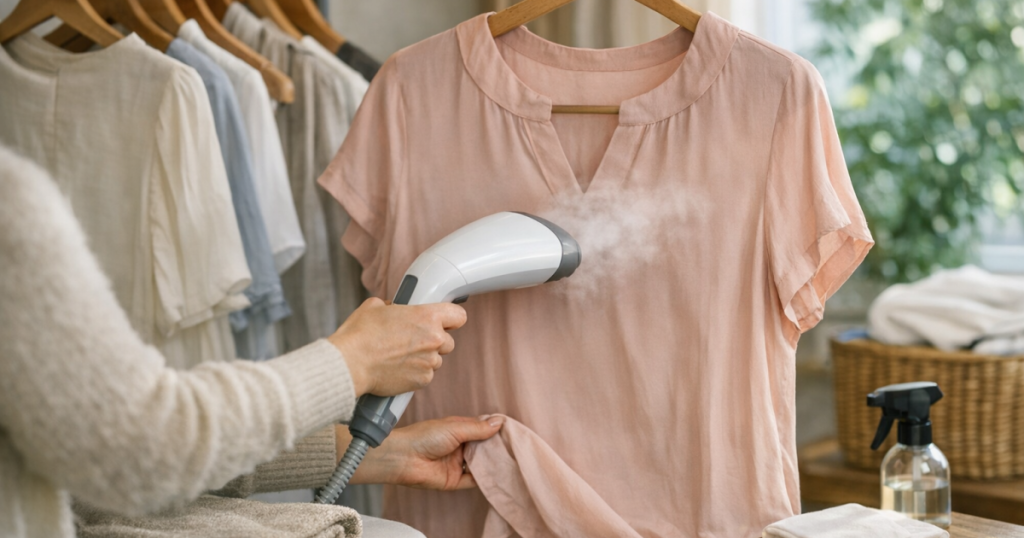
- use a clean steamer or an iron’s vertical steam function without pressing the hot plate onto the fabric.
- Fill the appliance with the water type recommended by the manufacturer; in hard-water areas, deionised water can help reduce mineral spotting if your appliance allows it.
- Steam from the inside or reverse side first, especially on dark colours, prints and satin-finish viscose.
- Keep the steam head moving and slightly away from the cloth rather than soaking one patch.
- Let the garment air dry on a hanger with space around it before putting it on or storing it.
Why viscose gets water marks so easily
Viscose is a regenerated cellulose fibre, valued for its soft handle and fluid drape. The same qualities that make it feel light and elegant can also make it reactive to moisture. When viscose becomes wet in one area, fibres can swell, flatten or dry with a different surface texture from the surrounding cloth.
A water mark is not always a stain in the usual sense. It may be a drying ring, a mineral deposit, a pressure mark from a hot plate, or a patch where the fabric finish has shifted. This is why simply adding more water can make the problem worse unless the whole garment is handled evenly.
Steam is useful because it relaxes creases without fully soaking the fabric. The risk comes when the steamer spits droplets, the head touches the garment for too long, or the item is put away while still damp.
Set up properly before you start
Check the care label and fabric finish
Look for the fibre content, washing instructions and any warnings such as “dry clean only”, “do not steam” or “cool iron on reverse”. A plain viscose shirt may tolerate gentle steaming well, while a lined dress, viscose velvet, viscose satin, beaded garment or structured blazer may need more caution.
If the garment is expensive, sentimental, heavily dyed, vintage or already marked, avoid experimenting on the front. Test an inside seam, hem allowance or hidden area first and allow it to dry before continuing.
Start with a clean appliance
old water, limescale and fabric residue can all contribute to spotting. Empty stale water from the tank, check the steam holes, and wipe the head or soleplate before use. If your appliance has a descaling routine, follow the maker’s instructions rather than using vinegar or improvised cleaners, which can damage some appliances and leave odour behind.
If you are deciding whether a steamer or iron is the better tool for delicate garments, the site’s guide to garment steamers and irons explains the practical differences in care results, handling and running considerations.
Use water that will not leave residue
In many parts of the UK, tap water is hard enough to leave limescale in kettles, irons and steamers. Those minerals can show as pale marks on dark viscose, especially if the appliance spits. Use the water type recommended for your steamer or iron. If the manufacturer permits it, deionised water can reduce mineral spotting; if the manufacturer advises a mix with tap water, follow that guidance.
Filtered jug water may improve taste, but it does not always remove enough minerals to protect delicate clothing. The appliance manual matters here because some steamers and irons are designed around a particular water type.
Step-by-step: steaming viscose without marking it
1. Hang the garment with room around it
Use a smooth, broad hanger if the garment is prone to shoulder bumps. Fasten buttons or zips so the fabric hangs in its intended shape. Do not crowd it against a door, wall or wardrobe, as trapped steam can condense and leave damp patches.
For skirts and wide-leg trousers, clip gently at the waistband if the clips are padded or covered. Avoid gripping delicate viscose tightly with bare metal clips because they can leave pressure marks.
2. Turn the garment inside out if possible
Steaming from the reverse side lowers the risk of visible shine, water spotting and surface disturbance. This is particularly helpful for black viscose, navy viscose, printed dresses, bias-cut skirts and satin-weave fabrics.
If the item cannot be turned inside out easily, lift sections away from the body of the garment and work on the least visible areas first.
3. Let the steamer settle before aiming it at the fabric
Many marks happen in the first few seconds, when the appliance clears condensed water from the head or hose. Hold the steamer away from the garment until the steam flow looks consistent. If it spits, pause and let it stabilise before continuing.
Never shake droplets directly onto viscose. If water lands on the garment, stop and blot lightly from the reverse with a clean white towel rather than rubbing the face of the cloth.
4. Keep the steam head moving
Use slow vertical passes, working from the top of the garment downwards. Hold the fabric gently taut with your free hand, keeping fingers away from the steam. The aim is to relax creases, not wet the cloth.
For most viscose, it is safer to hover the steam head close to the fabric rather than press it hard against the surface. If your appliance has a fabric brush or attachment, test it first; brushes can disturb soft, shiny or loosely woven viscose.
5. Avoid overworking stubborn creases
A deep fold may need two or three light passes with a short pause between them. Do not hold steam on one patch until it looks wet. Over-steaming can create a darker damp area that dries with an edge.
If a crease will not release, hang the garment in a steamy bathroom after a shower for a few minutes, then finish with light handheld steaming once the room is less humid. Avoid placing the garment where it can touch wet tiles, radiators or shower screens.
6. Let it dry before judging the result
Viscose often looks slightly darker while it is warm or damp. Give the garment time to dry in open air before deciding whether a mark has appeared. Do not put it straight into a wardrobe, under a coat or into a storage bag.
If indoor drying is a recurring issue in your home, especially in cooler months, the advice on stopping air-dried clothes smelling damp indoors is also useful after steaming, because trapped moisture can affect freshness as well as appearance.
What to do if a water mark appears
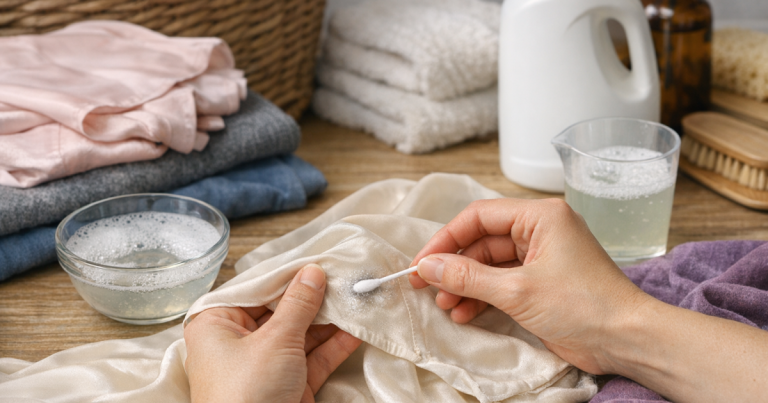
First, let the garment dry completely. A temporary damp patch can look like a stain while the fibres are still swollen. If a ring remains, do not scrub it. Rubbing can roughen viscose, lift dye or create a shiny patch.
Try these checks in order:
- Blot from the reverse: Place a clean white towel behind the marked area and dab lightly with another clean white cloth. Do not use coloured towels, as dye transfer is possible.
- Even out very light marks with steam: From the reverse side, use a few broad passes beyond the edge of the mark so the moisture disperses more evenly. Let it dry naturally.
- Avoid spot soaking: Adding a wet circle of water to the front of viscose often creates a larger drying ring.
- Wash only if the label allows it: If the garment is washable, a full gentle wash is usually safer than treating one small area aggressively. Use a mild detergent and avoid overloading the machine.
- Use a dry cleaner for structured or dry-clean-only garments: Tailored viscose jackets, lined dresses and occasionwear can lose shape if handled too wet at home.
For delicate glossy fabrics, similar principles apply: protect the surface, avoid uneven moisture and dry the garment without pressure. The care routine for cleaning satin dresses and keeping the sheen is a useful next read if your viscose garment has a satin finish.
Common mistakes that cause marks
- Using a spitting steamer: Droplets are more likely than vapour to leave rings.
- Pressing with a hot soleplate: Direct heat can flatten the surface, create shine or set a mark.
- Steaming against a wall or door: Condensation can bounce back onto the garment.
- Using fragrance sprays first: Perfume, fabric mist and deodorant residue can react with moisture and show as patches.
- Putting the garment on too soon: Body heat, straps, belts and coat linings can press damp viscose into creases.
- Ignoring linings and interfacings: A lined garment may dry unevenly because the outer and inner layers hold moisture differently.
Different viscose garments need slightly different handling
Viscose blouses and shirts
Hang them buttoned and work from the inside. Pay attention to plackets, collars and cuffs, where layers can hold moisture. Use short passes rather than trying to make the fabric perfectly crisp. If you need a sharper collar, check the label for ironing instructions and use a pressing cloth on the reverse.
Viscose dresses
Let the dress hang freely so the weight of the fabric helps the creases fall out. For bias-cut or draped dresses, avoid pulling hard while steaming because viscose can distort when damp. Work in sections and allow each area to cool before handling heavily.
Viscose trousers and skirts
Steam from the waistband down and avoid clamping or tugging the hem. If the garment has pleats, follow the original fold line lightly rather than blasting the fabric. Too much steam can soften pleats that are not permanently set.
Viscose blends
Blends with polyester, elastane, nylon, linen or cotton may behave differently from pure viscose. The most delicate component, finish or construction usually sets the care limit. Treat an unknown blend cautiously until you have tested a hidden area.
Key questions answered
Can I use an iron to steam viscose?
Yes, if the care label allows steam or cool ironing, but avoid pressing the soleplate directly onto the front. Use vertical steam or iron on the reverse with a clean pressing cloth and low heat.
Should viscose be steamed wet or dry?
Steam it when it is dry or only very slightly damp. Viscose is weaker and easier to distort when wet, so avoid steaming a garment that is still noticeably damp from washing.
Is distilled water better for viscose?
The key is using water that suits your appliance and does not leave mineral residue. Deionised or distilled water can help reduce spotting in hard-water areas if the appliance manufacturer says it is suitable.
Why did my black viscose dress get pale marks?
Pale marks often come from limescale, detergent residue, deodorant, fabric spray or uneven drying. Let the dress dry fully, then assess whether it needs gentle rewashing or careful steaming from the reverse.
Can steaming shrink viscose?
Light steaming should not usually shrink a stable garment, but too much heat and moisture can encourage distortion or shrinkage, especially on washable viscose that has not been pre-shrunk. Keep steaming brief and indirect.
What to remember
Viscose rewards restraint. Use clean, steady steam, protect the face of the fabric, and avoid soaking any one area. Most water marks are preventable when the garment is tested first, steamed from the reverse, and left to dry fully in open air.
If a mark appears, do not panic and do not scrub. Let the fabric dry, reassess it in natural light, and treat the whole garment evenly only when the care label supports it. With viscose, gentle handling usually gives a better result than force.