A glossy line down the crease or shiny patches at the knees can make good wool trousers look tired long before the fabric is worn out. The good news is that using pressing cloths for wool trousers is one of the simplest ways to reduce that risk, provided the heat, steam and pressure are controlled properly.
A pressing cloth is not a magic shield. It works by creating a buffer between the iron soleplate and the wool fibres, but it cannot undo heavy abrasion, over-pressing or previous heat damage on its own.
At a glance
- Yes, a pressing cloth helps prevent shine on wool trousers by reducing direct heat and friction.
- It works best with a gentle pressing action, not a back-and-forth ironing motion.
- A clean, undyed cotton cloth is usually the safest choice for everyday wool tailoring.
- Existing shine may soften slightly with steam and brushing, but severe gloss can be permanent.
- The biggest mistakes are too much pressure, too high a temperature and pressing the same area repeatedly.
Why wool trousers go shiny
Shine on wool is usually caused by flattened fibres. Wool cloth has a surface texture, even when it looks smooth. When heat, pressure and friction compress that texture, light reflects more evenly from the surface, creating the polished look seen on seat areas, knees, hems and trouser creases.
Worsted wool, often used for smart work trousers and suits, is particularly prone to visible shine because the weave is already smooth. Dark navy, charcoal and black trousers also show shine more clearly than lighter grey or textured tweed-style fabrics.
Shine can come from everyday wear as well as ironing. Sitting at a desk, rubbing against a chair, carrying a bag against the hip, or repeatedly pressing sharp creases can all flatten fibres. A pressing cloth reduces one part of the problem: the direct contact between hot metal and fabric.
How a pressing cloth helps
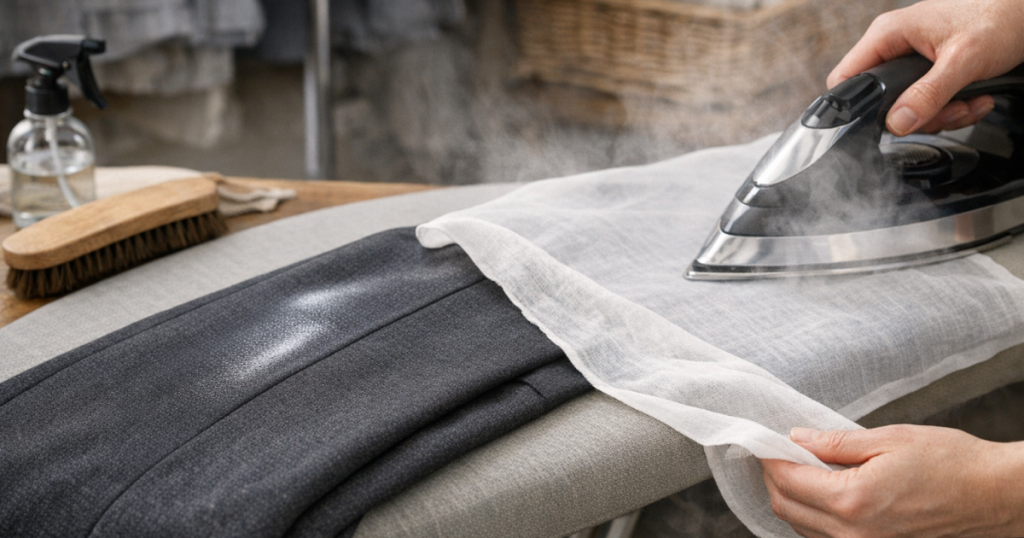
A pressing cloth creates a physical barrier. Instead of the iron soleplate touching the wool directly, heat and steam pass through the cloth more gently. This lowers the chance of scorching, glazing and creating harsh iron marks along seams or pockets.
It also reduces friction. Wool trousers should be pressed rather than ironed in the way you might iron a cotton shirt. Sliding the iron across the fabric can drag and flatten the surface. With a cloth in place, you are more likely to lift, place, press briefly and lift again, which is kinder to the fibre.
Moisture matters too. A slightly damp pressing cloth can help relax wrinkles with steam, but it should not be wet enough to soak the trousers. Too much moisture can leave water marks, distort a crease or make the cloth cling to the wool.
Choose the right cloth before you heat the iron
The safest everyday option is a clean, plain, white or undyed cotton cloth. A smooth cotton tea towel, cotton muslin or a section of clean cotton sheeting can work well, provided it is lint-free and has no printed design. Wash the cloth first so any sizing, dye residue or detergent build-up is removed.
Avoid coloured cloths, fluffy towels and synthetic fabrics that might transfer dye, shed fibres or react badly to heat. Very thick cloths can block steam and make you press harder than necessary, while very thin cloths may not give enough protection if the iron is hot.
If you regularly press tailored clothing, a transparent pressing cloth can make it easier to see seams and creases, but it still needs to be suitable for ironing temperatures. Whatever you use, test it on the inside hem or another hidden area before working on the visible front of the trousers.
Set up the trousers properly
Good pressing starts before the iron touches the fabric. Empty the pockets, brush off lint and dust, and check the care label. If the label says dry clean only, home pressing can still be possible in many cases, but use a conservative temperature and avoid soaking the fabric with steam.
Turn the trousers inside out for general wrinkle removal where possible. For the outer crease, work from the outside only when you need to define the line, and always use the cloth. Align the inseams and outer seams carefully so the crease follows the original trouser shape rather than creating a second line.
A stable ironing board makes a noticeable difference. A wobbly board encourages excess pressure, which is one of the main causes of shine. If you press a lot of shirts, uniforms or tailored garments, the guide to steam generator irons for school uniforms and shirts explains the sort of steam control and board setup that can also make trouser pressing easier.
Step-by-step: pressing wool trousers without shine
1. Start with the lowest effective heat
Set the iron to a wool-appropriate setting if your iron has one. Let it stabilise before you begin. A hotter iron is not automatically better; it can make creases look sharp quickly, but it also raises the risk of glazing the cloth.
2. Mist the pressing cloth, not the trousers
If extra moisture is needed, lightly dampen the pressing cloth. It should feel cool and slightly moist, not wet. Alternatively, use the iron’s steam function in short bursts. Avoid spraying water directly onto dark wool, as droplets can dry unevenly and leave marks.
3. Press, lift, then move
Place the cloth over the area, lower the iron for a few seconds, then lift it straight up. Move to the next section and repeat. Do not scrub, slide or rock the iron over seams. On wool, the movement matters as much as the temperature.
4. Use less pressure on raised areas
Pocket edges, side seams, belt loops and hems are more likely to turn shiny because the raised fabric underneath takes more pressure. Press around them lightly. If you have a sleeve board, seam roll or rolled towel, place it under the area so the edge is supported without being crushed flat.
5. Let the fabric cool before handling
Wool is most vulnerable while warm and damp. Leave the trousers flat on the board for a few minutes after pressing, then hang them from the waistband or hems so the cloth can fully set. Wearing them immediately can reintroduce wrinkles and seat shine.
Common mistakes that still cause shine
- Using a cloth but pressing too hard: the cloth reduces direct heat, but heavy pressure can still flatten wool fibres.
- Chasing a razor-sharp crease: repeated pressing along the same line can glaze the front crease, especially on dark worsted wool.
- Using a printed tea towel: heat and moisture can transfer dye or texture from the cloth onto the trousers.
- Pressing over dirt or body oils: heat can set residues into the fabric, making shiny or darker patches more obvious.
- Letting the iron sit too long: short, controlled pressing is safer than holding the iron in place while waiting for a crease to form.
Can you remove shine that is already there?
Sometimes you can soften mild shine, but it depends on the cause. If the fibres are simply compressed, gentle steaming from the wrong side, light brushing and resting the garment can help lift the nap slightly. If the surface has been heat-glazed or worn smooth through friction, the change may be permanent.
Try brushing the area first with a clean clothes brush, working with the grain of the fabric. Then steam lightly through a pressing cloth without pressing hard. Let the trousers dry and cool fully before judging the result. Do not rub aggressively, as abrasion can make the patch more obvious.
If shine is mixed with bobbling or surface fuzz, treat the issues separately. A fabric shaver can tidy pilling, but it will not reverse flattened wool fibres. Use one cautiously on knitwear and softer fabrics; the technique in using a fabric shaver without snagging knitwear is a useful reminder to keep pressure light and test first.
When steaming is better than pressing
If the trousers are only lightly creased, steaming may be enough. Hang them securely, steam from a short distance, then smooth the fabric with your hands without pulling the cloth out of shape. This is gentler than pressing a crease into the same area again and again.
Be careful with dark wool, linings and blended fabrics. Water marks can appear when moisture lands unevenly or when the steamer spits. The principles are similar to those used when you steam delicate dresses without leaving water marks: use controlled steam, keep the nozzle moving and allow the fabric to dry fully before storing or wearing.
For a formal crease, steaming alone may not give enough definition. In that case, press only the crease line through a cloth, using short contact and minimal pressure.
Key checks before pressing smart wool trousers
- Fabric label: check whether the trousers are pure wool, wool-rich, lined, stretch-blend or dry-clean-only.
- Hidden test area: test heat, steam and cloth choice inside the hem before pressing the front.
- Clean soleplate: residue on the iron can mark the cloth and transfer to the trousers.
- Dry cloth condition: change the pressing cloth if it becomes dirty, scorched or overly damp.
- Lighting: inspect trousers near a window or under a bright lamp so early shine is visible before it worsens.
Things readers ask
Should the pressing cloth be wet or dry?
Use it dry when you only need a light tidy-up. Use it slightly damp when you need steam to relax creases. It should never be dripping wet, and dark wool should not be soaked.
Can baking paper be used as a pressing cloth?
It is not ideal for wool trousers. Baking paper does not behave like cotton, can trap moisture differently and may make it harder to control steam. A clean cotton cloth is a safer everyday choice.
Is it better to press wool trousers inside out?
For general wrinkle removal, yes. Pressing inside out reduces the risk of visible shine. For a front crease, you may need to work from the outside, but only through a suitable cloth and with very light pressure.
Key takeaways
A pressing cloth really can help prevent shine on wool trousers, but it works as part of a careful method rather than as a complete safeguard. Use a clean, plain cotton cloth, keep the iron on a wool-appropriate heat, press briefly instead of sliding, and let the fabric cool before wearing.
If your trousers are already shiny, be realistic. Mild compression may improve with steam, brushing and rest, but heat-glazed or heavily worn areas may not fully recover. For valuable suit trousers, the safest habit is prevention: lighter pressure, fewer repeat passes and a cloth between the wool and the iron every time.