A garment can look tired for several reasons: creases from storage, crushed seams after washing, moisture trapped in dense fabric, or shine caused by too much heat. Good steamer and iron settings make the difference between refreshing clothes neatly and accidentally stretching, scorching or marking them.
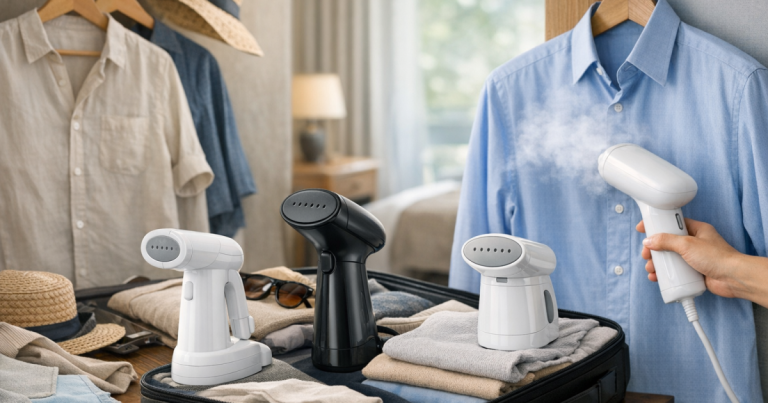
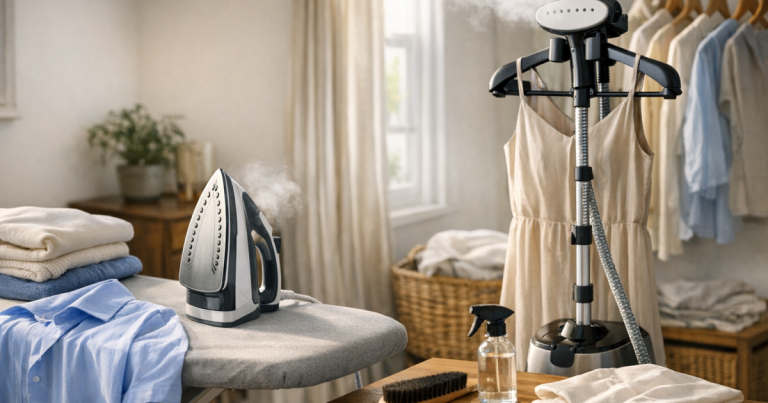
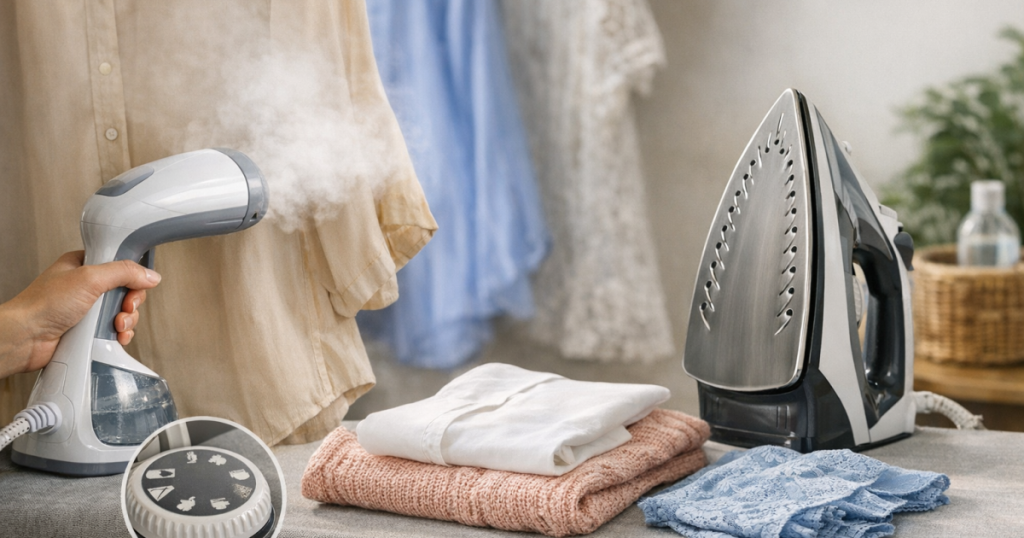
The useful starting point is simple: an iron presses fabric flat with heat, weight and steam, while a handheld or upright steamer relaxes fibres with steam and very little pressure. Neither tool is automatically gentler in every situation. The safest choice depends on fibre content, construction, finish and what you are trying to fix.
The big picture
Use an iron when you need crispness, shape or a flat finish: shirt collars, trouser creases, cotton uniforms, linen table cloths, hems and seams. Use a steamer when you want to relax wrinkles without flattening texture: dresses, lined jackets, pleated garments, curtains, viscose tops and some knitwear.
Clothing care is not only about the appliance. How you wash, dry, hang and store a garment affects how much heat it needs later. If clothes are routinely coming out crushed or misshapen, it is worth reviewing hanging space, airflow and seasonal storage as well as your technique; the wardrobe storage guide covers those everyday prevention steps in more depth.
Reading the care label before applying heat
The care label is the first filter. It will not tell you everything, but it usually gives the safe boundary: whether ironing is allowed, whether steam is restricted, and whether the garment should be handled by a specialist cleaner. If a label shows a crossed-out iron, do not test your luck on a visible area. Some coatings, prints, trims, bonded seams and synthetics can be permanently changed by heat.
Where the label allows ironing, start lower than you think you need, then increase only if the fabric is not responding. Steam helps many natural fibres release creases, but it can also create water marks on some delicate weaves or disturb unstable dyes. For mixed-fibre garments, follow the most delicate fibre, not the strongest one. A cotton-polyester shirt, for example, should not be treated like heavy cotton if the synthetic content is prone to shine.
Fabric-by-fabric handling
Cotton and linen
Cotton and linen generally tolerate firmer pressing than many fibres, but they still deserve care. They respond well to moisture, so ironing while slightly damp or using steam can reduce effort. Press from the inside where possible on dark colours to reduce shine. Linen often looks best with a little natural texture, so aim for smooth rather than unnaturally flat unless you want a formal finish.
Wool and tailored fabrics
Wool prefers steam and recovery time rather than aggressive pressure. Hovering steam over the surface can lift light creases, while a pressing cloth helps protect the face of the fabric if an iron is needed. Avoid dragging the iron back and forth over wool suiting; press, lift, move and press again. Let the garment cool on a hanger before wearing, otherwise creases can return quickly.
Silk, satin and delicate viscose
These fabrics can mark, ripple or develop shine. Test on an inside seam, use low heat, avoid heavy pressure and keep a clean pressing cloth between the soleplate and the garment. Steamers can be useful, but do not hold the head too close if the fabric is prone to water spotting. With viscose, support the garment carefully because steam and moisture can make it temporarily more vulnerable to stretching.
Synthetics and performance fabrics
Polyester, nylon, elastane blends and technical fabrics need restraint. Heat can flatten texture, create shine or affect stretch recovery. Use the label as your limit, work from the reverse side where possible, and keep the tool moving. If a synthetic garment only has light wrinkles, hanging it in a warm room with good airflow may be safer than applying direct heat.
Knitwear
Most knitwear should not be ironed flat in the same way as a woven shirt. Steam can revive shape and soften storage creases, but the garment needs support. Lay heavier knits flat after steaming so they do not stretch on the hanger. For bobbling, heat is not the answer; a dedicated fabric shaver may be more appropriate, and the Philips Fabric Shaver GC026/30 review explains where de-bobbling helps and where it needs care.
What different controls actually do
Heat softens fibres and helps set a smoother surface. Steam adds moisture and helps fibres relax. Pressure forces the cloth into shape. The art is balancing all three. A stubborn cotton crease may need all three; a delicate blouse may need steam only, with the fabric hanging freely.
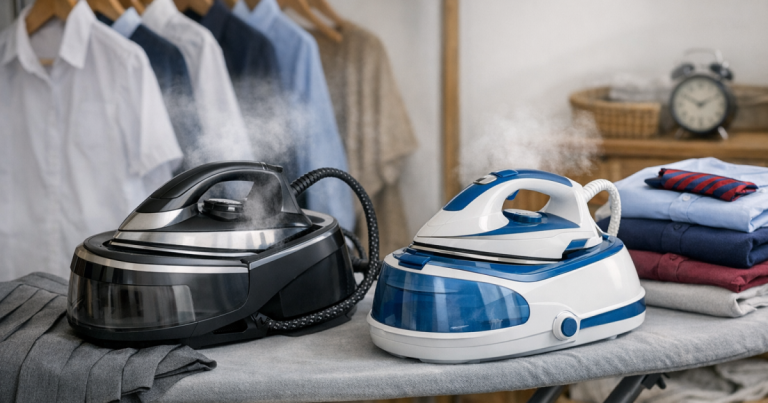
On a steam iron such as the Philips Azur Elite Steam Iron, the fabric still determines the safe approach. Do not assume a more capable iron removes the need to check labels or use a pressing cloth. A stable ironing surface also matters. A full-size board such as the Minky Homecare Ironing Board can make pressing seams, sleeves and larger garments easier because the cloth is supported rather than pulled out of shape.
- Low heat is for heat-sensitive fabrics, delicate finishes and cautious testing.
- Medium heat is often used for many everyday blends, but the label remains the deciding factor.
- Higher heat is usually reserved for more robust fabrics such as cotton and linen when the label allows it.
- Steam is helpful for natural fibres and many creases, but not every fabric wants moisture.
- A pressing cloth reduces direct contact and is especially useful on dark, shiny or textured materials.
Safe technique with an iron
Begin with a clean soleplate. Marks, melted residue and mineral deposits can transfer onto clothes, especially pale shirts and school uniforms. Fill the water tank according to the manufacturer’s instructions, particularly if you live in a hard-water area. Some irons specify tap water, some allow a mix, and some have their own anti-scale guidance; follow the manual rather than general household folklore.
Sort garments from lowest to highest heat so the iron warms up gradually. If you need to reduce the temperature, give it time to cool before touching delicate fabric. Iron garments inside out when shine is a risk. For collars, cuffs and plackets, press small sections rather than sweeping across seams. For trousers, align seams carefully before setting a crease, because a misplaced crease is harder to remove than a normal wrinkle.
Do not leave the iron resting face down, and let garments cool before folding or storing. Warm fabric is still setting; folding too soon can create new lines. If a garment smells damp after pressing, hang it until fully dry before it goes into the wardrobe.
Safe technique with a garment steamer
Steaming works best when the garment can hang freely and the steam can pass through the fibres. Pull the fabric gently taut with one hand, keeping fingers away from the steam path, then move the steamer slowly down the garment. The goal is to relax the fibres, not soak the cloth. If the fabric becomes wet, you are too close, moving too slowly, or working on a fabric that does not suit that method.
Use short passes on delicate fabrics and longer passes on robust woven garments. Let each area dry before judging the result. A steamer will not usually create sharp trouser creases, flatten thick hems or press seams as cleanly as an iron. It is a refresh tool first, a shaping tool second.
Where people go wrong
- Using maximum heat because a crease is stubborn, when moisture, time or better support would solve it more safely.
- Dragging the iron across textured cloth, which can flatten pile, ribs or raised weaves.
- Steaming unstable garments on a hanger until they stretch under their own weight.
- Putting freshly steamed clothes straight into a crowded wardrobe, trapping moisture and odour.
- Ignoring trims, prints, buttons and bonded details that may react differently from the main fabric.
Aftercare matters as much as pressing
Once a garment is smooth, protect the result. Hang shirts with enough space between them. Let steamed garments dry fully before closing wardrobe doors. Fold knitwear rather than hanging it long term. If you use compression storage for seasonal clothing, avoid sealing away anything even slightly damp, and be selective with delicate fibres. The HIBAG Premium Vacuum Storage Bags review looks at the space-saving benefits alongside the fabric-care caveats.
For uniforms and workwear, build a repeatable routine: wash early enough to air properly, remove from the machine promptly, shake seams into place, dry with space around the garment, then press only what needs structure. Reducing deep creases before the iron comes out saves time and lowers heat exposure over the life of the garment.
Things readers ask
Are steamers safer than irons for delicate clothes?
Not always. Steamers avoid direct pressure, which helps many delicate garments, but steam can still leave water marks, disturb dyes or stretch fabric. Test discreetly and support the garment.
Can I use steam on every iron-safe fabric?
No. An iron symbol may allow heat but not necessarily heavy steam. Check the label, consider the finish, and use a pressing cloth if shine or marking is likely.
Why do dark trousers go shiny after ironing?
Shine usually comes from heat and pressure flattening the fibre surface. Press from the reverse, use a cloth, avoid dragging the iron and reduce pressure.
What are the safest steamer and iron settings for mixed fibres?
Use the setting suited to the most heat-sensitive fibre in the blend. If the label is unclear, start low, test an inside seam and increase gradually only if needed.
Should clothes be dry before they go back into the wardrobe?
Yes. Steam and ironing moisture should be allowed to evaporate fully. Storing warm or damp fabric can encourage odour, creasing and mildew in crowded spaces.
What to remember
The safest method is not about choosing one appliance for everything. Irons are best for structure, crispness and precise pressing. Steamers are best for relaxing wrinkles, refreshing hanging garments and protecting texture. Fabric content, garment construction and the care label decide the method.
Work gently first, add heat only when needed, and let clothes cool or dry before storing. That approach keeps everyday clothing, uniforms and delicate pieces looking sharper while reducing avoidable wear from over-pressing.