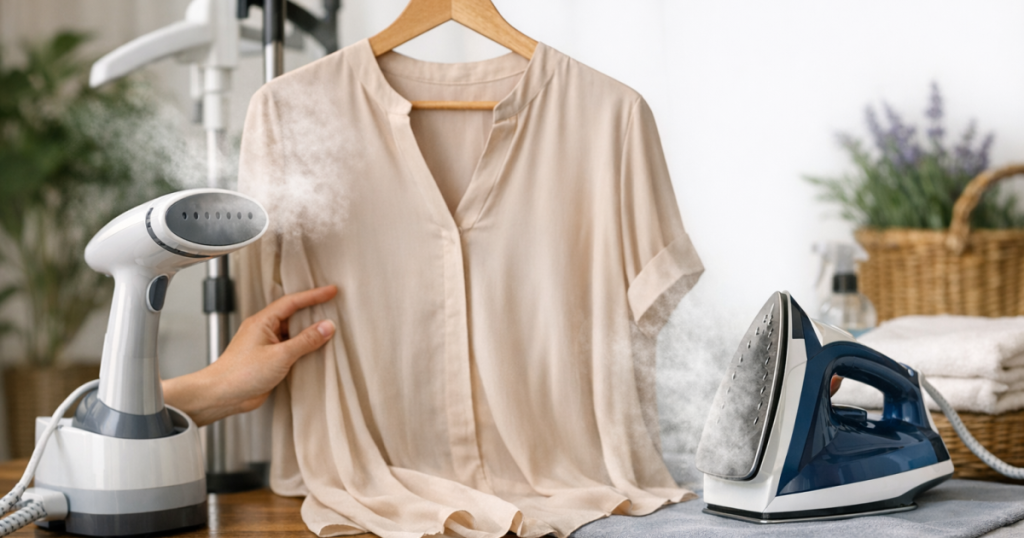
Viscose creases easily because it is smooth, absorbent and prone to losing shape when damp. For most everyday viscose tops, dresses and linings, the garment steamer vs steam iron decision comes down to how much contact, moisture and shape control the fabric can tolerate.
The safest answer is not the same for every viscose garment. A steamer is usually gentler for light crease release because it avoids direct pressure, but it can over-dampen the fabric and encourage stretching. A steam iron gives more control on collars, hems and seams, but it needs a low setting, a pressing cloth and almost no dragging.
The short answer
For loosely creased viscose, a garment steamer is usually the lower-risk option, provided you keep the nozzle moving and do not soak the cloth. For sharp creases, hems, plackets and tailored details, a steam iron can be safer because it supports the fabric on a board and lets you press rather than pull.
The main danger with viscose is not simply heat. It is the combination of heat, moisture, pressure and movement. Too much moisture can make viscose grow or distort. Too much direct heat can leave shine, flatten texture or cause a scorched-looking patch. Too much pressure can imprint seams and hems. Pulling the fabric while it is warm and damp can make the garment hang longer or twist out of shape.
Why viscose needs a gentler approach
Viscose is a regenerated cellulose fibre. It often feels cool, fluid and drapey, which is why it is common in blouses, summer dresses, skirts, linings and soft trousers. That lovely drape is also why it can be awkward to refresh: the fabric may relax dramatically with steam, and it is more vulnerable when wet than many synthetic fibres.
Always start with the care label. Some viscose garments allow a cool iron. Others say do not iron, or recommend professional cleaning, usually because of the dye, finish, pleats, trims, lining or garment construction. A plain viscose shirt behaves differently from a beaded viscose dress, a viscose velvet jacket or a bias-cut skirt.
It also helps to understand what the tool is doing. Steam softens fibres, heat helps them reset, and pressure flattens creases. The balance between those three is explained in more detail in our guide to how steam, heat and pressure smooth clothes safely.
When a garment steamer is safer for viscose
A steamer is often the better first step when the garment is lightly creased, unstructured or difficult to place flat on an ironing board. It is useful for floaty blouses, gathered dresses, sleeves, linings and garments with soft drape where a pressed-flat finish would look wrong.
Use a steamer when:
- The care label allows steaming or says cool iron but the garment only needs a refresh.
- The viscose is thin, fluid or easily marked by pressure.
- The garment has gathers, ruffles or soft pleats that should not be flattened.
- You want to reduce creases without creating sharp lines.
- The fabric has a slightly textured surface that could become shiny under an iron.
The risk is over-steaming. Viscose can absorb moisture quickly, and a damp garment hanging vertically may stretch under its own weight. That is most noticeable on long dresses, wide-leg trousers, bias-cut skirts and knitted viscose blends.
How to steam viscose more safely
- Check the label first and test an inside seam or hem facing before treating the visible fabric.
- Turn the garment inside out where practical, especially with dark colours or printed surfaces.
- Hang it on a smooth hanger that supports the shoulders without bumps.
- Hold the steamer slightly away from the fabric rather than pressing the head hard against it.
- Work in short passes from top to bottom, keeping the fabric relaxed rather than tugged tight.
- Stop before the fabric feels wet. It should be lightly relaxed, not damp through.
- Let the garment hang or lie flat until fully cool and dry before wearing or putting it away.
If a garment becomes limp, heavy or visibly damp while steaming, stop. Lay it flat on a clean towel and let it recover before touching the shape again.
When a steam iron is safer for viscose
A steam iron is safer when you need accuracy. It supports the fabric on a board and lets you control where heat and pressure go. That matters for collars, cuffs, button bands, hems, trouser creases and areas where a steamer would simply relax the fabric without putting the edge back.
Use an iron when:
- The care label permits ironing, usually at a cool or low setting.
- You need a flatter finish on a placket, pocket, hem or seam.
- The garment is stretching while hung for steaming.
- The viscose is blended with fibres that give it a firmer woven structure.
- You can press from the reverse side or use a cloth between the iron and the garment.
The key word is press. Do not scrub the iron back and forth across viscose. Place, press briefly, lift, move and repeat. Dragging can stretch the fabric and distort seams, especially if steam is active.
How to iron viscose with less risk
- Set the iron to the care-label setting, starting at the lowest suitable heat.
- Iron the garment slightly damp only if the label allows it; otherwise rely on light steam from the iron or a pressing cloth.
- Turn the garment inside out to reduce shine on the visible face.
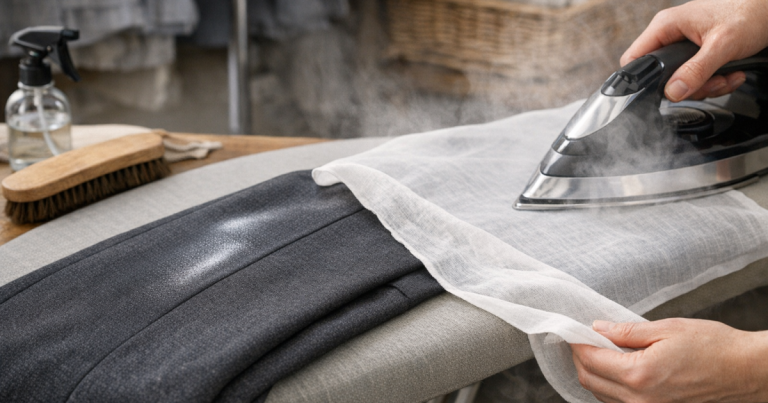
- Use a clean, smooth pressing cloth between the iron and the fabric.
- Press briefly, lift the iron, then move to the next section.
- Avoid heavy pressure over seams, darts, hems and pocket edges, as they can imprint through.
- Leave the garment flat for a few minutes so the fibres cool before hanging.
A pressing cloth is especially useful on dark viscose trousers, skirts and dresses, where shine can appear quickly. If this is a recurring problem in your wardrobe, our article on whether pressing cloths prevent shine on dark trousers explains why the barrier matters and how to use one properly.
Side-by-side fabric safety check
For viscose, think in terms of the result you need rather than which tool feels more modern or convenient.
- Lowest pressure: A garment steamer wins because it does not flatten the fibres against a board.
- Lowest stretching risk: A steam iron can win because the garment is supported flat while you work.
- Lowest shine risk: A steamer usually wins, although careful ironing with a cloth is also safe on many garments.
- Best for sharp edges: A steam iron wins because it can define hems, cuffs and plackets.
- Best for soft drape: A steamer usually wins because it relaxes creases without making the garment look pressed.
- Best for lined garments: It depends. Light steaming may freshen the outer layer, but ironing gives more control if the lining and outer fabric are shifting separately.
If you maintain uniforms, work shirts or delicate office wear at home, the right steamer can be a useful tool, but the technique still matters more than the appliance. Our guide to handheld clothes steamers for work shirts and uniforms covers practical features that affect everyday use.
A safe step-by-step routine for viscose
1. Read the care label before adding heat
Look for fibre content, ironing symbols and any warnings about steam, professional cleaning or drying flat. Treat decorated, pleated, crinkled, velvet, satin-finish and heavily dyed viscose as higher risk.
2. Test where it will not show
Use an inside seam allowance, hem facing or underarm area. Apply a short burst of steam or a brief cool press through a cloth, then wait for the fabric to dry and cool. Check for shine, colour transfer, puckering, water marks or texture change.
3. Choose the tool based on the garment shape
Use a steamer for soft creases in hanging garments. Use an iron for areas that need support, neatness or edge control. For long or bias-cut viscose, avoid letting the garment hang damp for long periods.
4. Work lightly and pause often
Whether steaming or ironing, smaller sections are safer. Viscose responds quickly, so repeated heavy treatment is rarely needed. If creases are stubborn, let the fabric cool and reassess rather than increasing heat straight away.
5. Let the fabric set before wearing
Freshly steamed or pressed viscose can feel smooth but still be warm or slightly humid. Give it time to dry fully. Putting it on too soon can create seat creases, elbow creases or stretched shoulder areas within minutes.
Common mistakes that damage viscose
- Using cotton-level heat: Viscose is not as forgiving as cotton, even though both are cellulose-based.
- Pressing on the right side: This increases the risk of shine, flattened texture and visible marks.
- Pulling the hem while steaming: Gentle tension is fine; stretching the fabric while warm and damp is not.
- Soaking creases with steam: Damp viscose can lose shape, particularly in long garments.
- Hanging too soon after ironing: Warm fabric can crease again if crowded into a wardrobe immediately.
- Ignoring trims and linings: Buttons, adhesives, fusible interfacings and decorative finishes may react differently from the main fabric.
Questions people ask
Can you steam 100% viscose?
Often, yes, but only if the care label does not warn against it. Use light steam, keep the nozzle moving and stop before the fabric feels damp. Test first on an inside area.
Is it better to iron viscose wet or dry?
Slight dampness can help with creases when the label allows ironing, but wet viscose is more vulnerable to stretching. A cool iron, reverse side and pressing cloth are safer than heavy steam on soaked fabric.
Why does viscose go shiny after ironing?
Shine usually comes from direct heat and pressure flattening the surface fibres. Iron from the reverse side, reduce the temperature and use a pressing cloth to lower the risk.
Can steaming shrink viscose?
Steam can contribute to shrinkage or shape change if the garment is not stable, has already been washed incorrectly, or becomes too damp. Let steamed viscose dry naturally without pulling it.
What should I do if viscose gets water marks?
Stop applying heat. Let the garment dry fully, then reassess in daylight. Some marks can soften with careful full-panel steaming from the reverse, but delicate or expensive garments are better handled conservatively.
Main lessons
A garment steamer is usually safer for lightly creased, drapey viscose because it avoids direct pressure and reduces the chance of shine. A steam iron is safer when the garment needs structure, edge control or support on a board. The safest method is the one that uses the least heat, moisture, pressure and movement needed to get the garment wearable.
For everyday viscose, start gently: read the label, test a hidden area, work from the reverse side and let the fabric cool before judging the result. If the garment is expensive, heavily decorated, lined, pleated or labelled for professional cleaning, avoid aggressive home steaming or pressing.