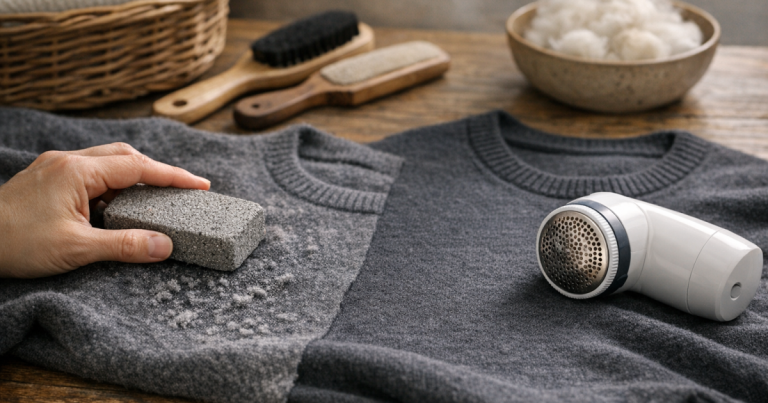
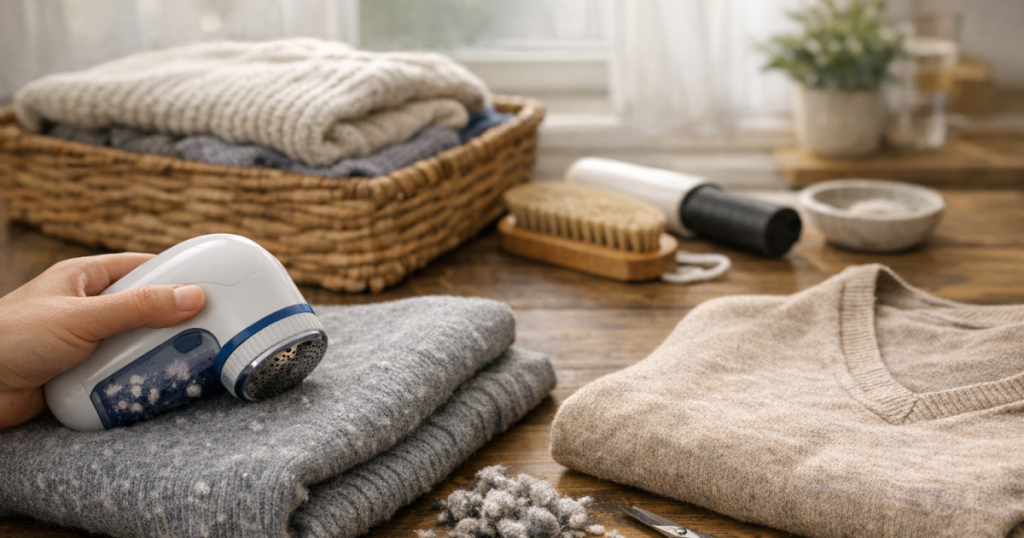
Bobbling can make a jumper, coat or school cardigan look tired long before the garment is actually worn out. The worry that fabric shavers thin clothes is understandable, because the tool uses a blade to remove fibre from the surface. Used carefully, however, a fabric shaver mainly trims loose pills rather than cutting into the main fabric structure.
The risk comes from pressure, repetition and fabric choice. A shaver can make a garment look smoother, but it is not a reset button for badly worn cloth. The aim is to remove raised bobbles while leaving the stable yarns underneath alone.
The short answer
A fabric shaver should not noticeably thin most sturdy garments when it is used lightly and occasionally. It can, however, contribute to surface wear if you press hard, shave the same area repeatedly, use a blunt or damaged blade, or work on a fabric that is already weak, loosely knitted or very fine.
Every bobble is made from fibres that have already worked loose from the yarn or fabric surface. Removing that bobble means removing material, but it is usually material that is no longer lying neatly in the cloth. The problem starts when the shaver goes beyond the raised pills and begins catching the surrounding fibres.
How a fabric shaver actually works
Most fabric shavers have a perforated metal guard with rotating blades behind it. Raised pills poke through the holes in the guard and are sliced away. The guard is there to keep the blade away from the flat surface of the garment, but it cannot compensate for heavy pressure or an uneven surface underneath.
This is why technique matters. If the cloth is bunched, stretched too tightly, folded over a seam or pressed hard against the shaver head, more than just the bobble can enter the cutting area. That is when a tool meant for maintenance can start to roughen, flatten or weaken the fabric face.
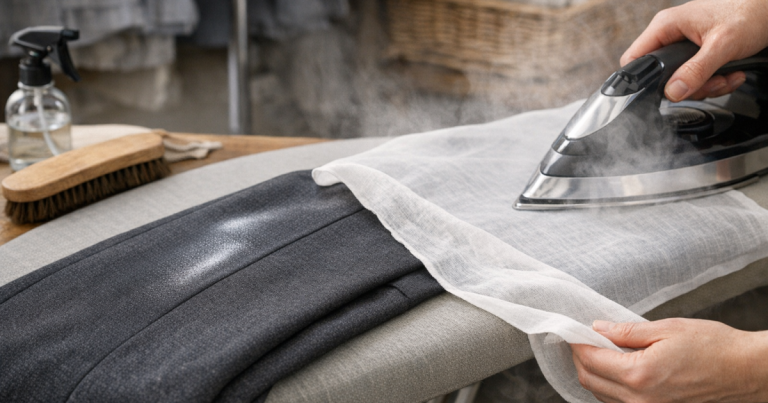
It also helps to understand the difference between shaving and smoothing. Shaving removes loose fibres; steam, heat and pressure temporarily relax and reshape fibres. If creases are the issue rather than bobbles, it is worth reading about how steam, heat and pressure smooth clothes safely before reaching for a depilling tool.
When shaving is usually low risk
Fabric shaving is usually safest on garments with a reasonably firm structure and obvious raised pills. Everyday examples include medium-weight wool jumpers, acrylic knitwear, polyester-blend sweatshirts, school cardigans, coat sleeves, tracksuit tops and some woven wool-mix coats.
These garments often pill in high-friction areas such as underarms, cuffs, elbows, waistbands, bag straps and the front of jumpers where a coat rubs. If the base fabric still looks dense and even once the pills are lifted, light shaving is normally a useful maintenance step.
A good result should look like a cleaner surface, not a noticeably flatter or shinier patch. On knitwear, the loops should still look intact. On brushed fabrics, the nap may look tidier, but it should not look scalped or patchy.
When a shaver can cause thinning or damage
Problems are more likely on delicate, open or already worn fabrics. A shaver is not ideal for lace, embroidery, sequins, beaded areas, loose open knits, very fine cashmere, silk, fragile viscose blends, worn trouser seats, thinning elbows or any area where the fabric is already transparent, laddered or distorted.
Be careful with fleece and brushed fabrics too. A shaver can remove pills, but it can also reduce the fluffy pile that gives the fabric its soft feel. Used too often, it may leave the surface flatter even if it has not created a hole.
Dark tailored clothing needs a different sort of caution. If shine, pressure marks or surface flattening are the main concern, a shaver will not solve the underlying issue. For trousers and suiting, the guidance on whether pressing cloths prevent shine on dark trousers is more relevant than aggressive depilling.
How to use a fabric shaver without thinning the garment
1. Start with a clean, dry garment
Wash or air the garment first if it is dirty. Dirt, body oils and residue can make fibres cling together and encourage dragging. Let the fabric dry fully before shaving, as damp fibres are more likely to stretch, snag or cut unevenly.
2. Test a hidden area
Try the shaver on an inside hem, inner cuff or less visible patch. Use the lightest pressure and check the result in daylight. If the fabric looks lighter, shiny, fuzzy in a new way or uneven, stop and use a gentler method.
3. Work on a flat, firm surface
Lay the garment on an ironing board, table or clean worktop. Smooth the fabric by hand, but do not stretch it hard. Stretching can raise the base yarns into the shaver head and make them easier to cut.
4. Use light pressure only
Let the shaver skim the surface. Short, slow passes are safer than pressing down and scrubbing. On knitwear, move with the natural lie of the fabric where possible, and avoid lingering over one patch once the pills have gone.
5. Avoid seams, edges and raised details
Seams, ribbed cuffs, collars, pockets, embroidery and decorative trims can sit higher than the surrounding fabric. These areas are easier to nick. Work around them carefully or remove pills by hand if the detail is valuable or delicate.
6. Stop before the fabric looks perfect
A garment does not need to look factory-new to look presentable. Chasing every tiny fibre can cause more harm than leaving a faint fuzz. The safest finish is clean and even, not over-shaved.
Signs you are removing too much fibre
Stop immediately if you notice any of these warning signs:
- The fabric looks paler, shinier or flatter in the shaved area.
- The shaver starts to tug instead of gliding.
- You can see individual yarns lifting into the cutting head.
- The surface develops a patchy or striped appearance.
- Fine holes, ladders or broken loops begin to appear.
- The lint compartment fills unusually quickly on a small area.
A small amount of lint is normal because the tool is removing pills. A surprising amount of fluff from an area that did not look very bobbled suggests the shaver may be cutting loose surface fibres rather than only trimming raised pills.
Fabric examples and better approaches
For a medium-weight wool jumper, a fabric shaver can be useful once or twice in a season, especially on the underarms and cuffs. Use light passes and leave any very fine halo of fuzz alone.
For a soft cashmere or merino jumper, a sweater comb or careful hand removal may be kinder, particularly if the knit is fine. If you do use a shaver, test first and use the gentlest setting or spacer if your model has one.
For fleece, use restraint. Shaving can tidy bobbles on sleeves or hems, but repeated use may reduce the soft pile. A clothes brush can sometimes lift lint and surface debris without cutting fibres.
For school cardigans, sweatshirts and uniforms, a shaver can be practical because these garments see frequent friction and washing. The key is not to shave after every wash. Treat the worst bobbled areas only when they affect appearance.
For tailored trousers, delicate blouses, lace panels or loose open knits, avoid routine shaving. These fabrics are less forgiving, and small cuts or pulled threads are more visible.
Why bobbles come back after shaving
Shaving removes existing pills but does not stop friction. If a jumper rubs against a coat lining, cross-body bag, desk edge or seat belt, new fibres can loosen and form fresh bobbles. Washing can also contribute if garments are overloaded, spun aggressively or washed with rougher items.
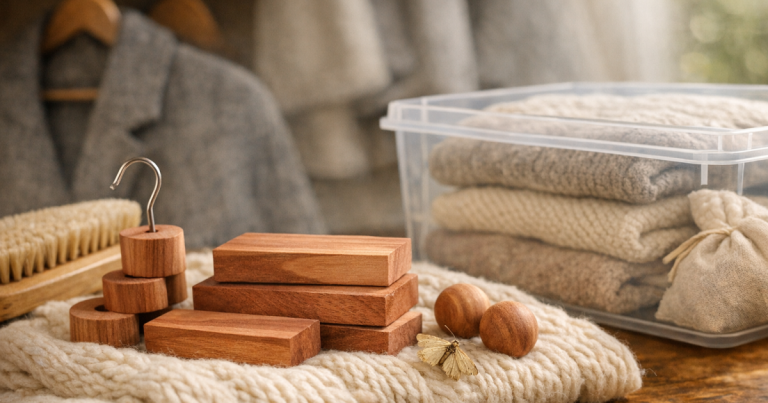
Good storage and drying habits reduce the need for repeated shaving. Fold heavier knitwear rather than hanging it from narrow hangers, keep rough fastenings away from soft fabrics, and avoid compressing delicate items under heavy piles. For longer-term storage choices, the clothes storage materials guide explains how different containers affect fabric protection.
Gentler alternatives to try first
A fabric shaver is not the only way to refresh a garment. Depending on the fabric, these methods may be kinder:
- Clothes brush: Useful for coats, tailoring and sturdy wool where lint and dust are the main issue.
- Lint roller: Good for pet hair, fluff and surface debris, but not effective for true pills.
- Sweater comb: Helpful on some knitwear, though it can still snag if used roughly.
- Hand removal: Slow but controlled for occasional large pills on delicate garments.
- Resting between wears: Lets fibres recover and reduces repeated friction in the same areas.
The gentlest useful method is usually the right one. If a lint roller solves the problem, there is no reason to cut fibres. If the bobbles are raised and obvious, careful shaving may be the cleaner option.
Common questions
Do fabric shavers thin clothes in normal use?
Not significantly on suitable fabrics when used with light pressure and only when needed. They remove loose, raised fibres rather than the whole fabric surface. The risk increases when the same area is shaved repeatedly or when the fabric is already thin, open or fragile.
Is it bad to shave a jumper often?
Frequent shaving is not ideal. If a jumper needs depilling every few wears, look at the cause: friction from bags, coat linings, washing with rougher garments, or storage that crushes and rubs the fabric. Reducing friction is better than constantly removing more surface fibre.
Can a fabric shaver fix old, worn-out fabric?
It can improve the appearance of bobbles, but it cannot rebuild weakened yarns or restore lost thickness. If elbows, cuffs or seats are thinning, a shaver may make the area look neater briefly but could expose the wear more clearly.
The big picture
A fabric shaver is best treated as a finishing tool, not a heavy-duty repair tool. It can make knitwear, uniforms and everyday garments look fresher when pilling is the main problem. It can also shorten the life of a garment if used aggressively, too often or on the wrong fabric.
The safest routine is simple: test first, keep the garment flat, use very light pressure, avoid delicate details, and stop as soon as the surface looks tidy. If the fabric is fragile, valuable or already thinning, choose a brush, comb or hand removal instead.