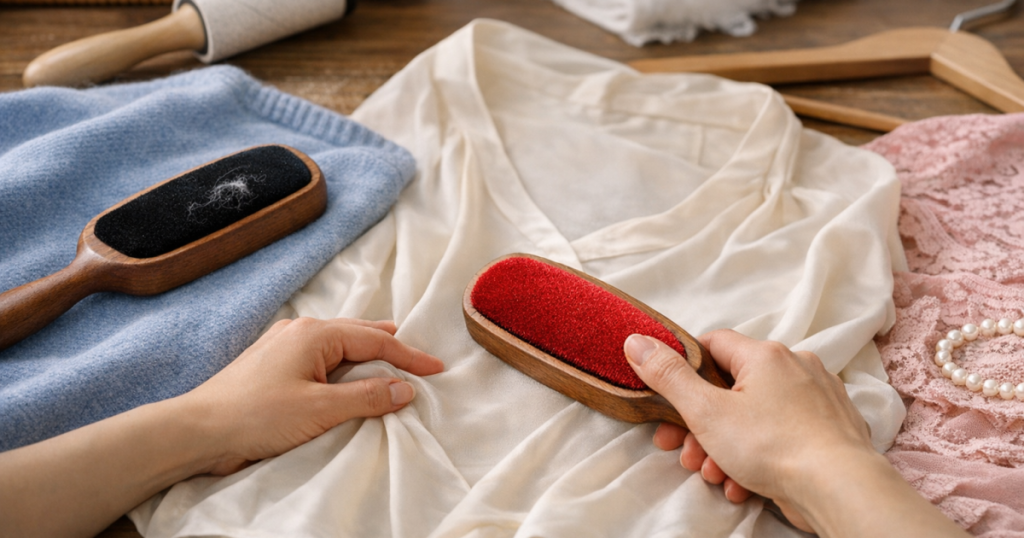
A velvet brush can be a gentle way to lift surface fluff from smarter clothing, but it is not automatically safe for every delicate fabric. The important question is whether velvet clothes brushes suit the fibre, weave and surface finish you are dealing with, because a tool that freshens a wool coat can still flatten pile, disturb embroidery or pull at loose yarns on a more fragile piece.
The safest approach is to treat the brush as a light surface-care tool, not a scrubber. Used with the grain of the fabric and tested on a hidden area first, it can be useful; used with pressure or against a delicate nap, it can do more harm than good.
At a glance
- Generally suitable for: wool coats, tailored jackets, sturdy suiting, school blazers and some synthetic occasionwear with a smooth surface.
- Use caution on: silk, satin, velvet garments, fine cashmere, loosely knitted wool, beading, sequins, embroidery and brushed or raised finishes.
- Best technique: short, light strokes in one direction, following the nap or weave rather than rubbing back and forth.
- Avoid when: the fabric snags easily, sheds fibres, has a crushed pile, or shows a mark after a small hidden-area test.
- Good for: removing loose lint, hair, dust and light surface debris before storage or wearing.
- Not designed for: removing bobbles, stains, deep grit, grease marks or fabric pulls.
How a velvet clothes brush actually works
Velvet clothes brushes use a soft, directional fabric pad rather than stiff bristles. The pile on the pad grips loose lint, pet hair and surface dust as you move it across the garment. Many have an arrow or a noticeable “smooth” direction, because the brush lifts debris best when used one way and releases it when wiped the other way.
This makes velvet clothes brushes gentler than many hard-bristled garment brushes, but “gentler” does not mean risk-free. Delicate fabrics are often vulnerable because of surface texture, yarn looseness or decorative details. A brush can still catch a thread, polish a shiny patch into a matte fabric, or disturb the direction of a pile.
Compared with sticky lint rollers, a velvet brush avoids adhesive residue and disposable sheets. Compared with firm clothes brushes, it is less abrasive. For coats and heavier outerwear, the choice often comes down to surface finish and debris type; the differences are explained in more detail in this guide to lint rollers and clothes brushes for coats.
Step 1: identify the fabric surface before brushing
Before using any fabric care tool, look closely at the garment under natural light. Delicate care is less about the price of the item and more about the way the fabric is built.
Smooth woven fabrics
Fine wool suiting, structured blazers and some polyester occasionwear usually tolerate a velvet brush well when the pressure is light. The brush is only lifting loose particles from the surface, so there is little need to press hard. For workwear, uniforms and formal jackets, this can be a quick way to refresh a garment between washes or dry-cleaning visits.
Raised-pile fabrics
Actual velvet, velour, corduroy and some brushed fabrics need much more care. These materials have a visible nap, which means the fibres lie in a particular direction. Brushing the wrong way can leave streaks, flatten the pile or create shaded patches. If you use a velvet brush on these fabrics, follow the direction that looks smooth and even, and avoid repeated passes over the same area.
Fine knits and luxury fibres
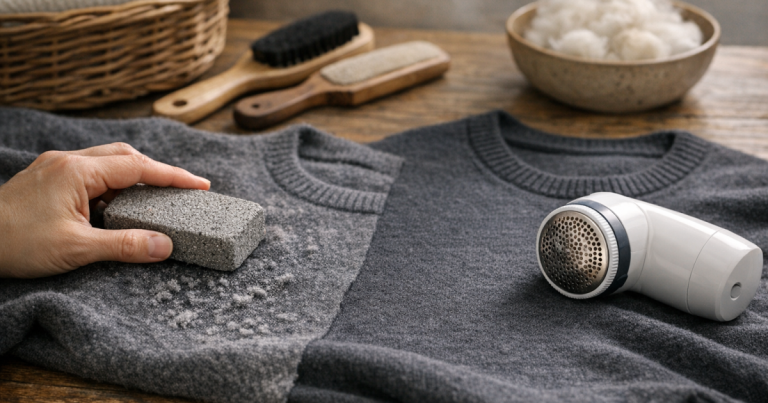
Cashmere, merino and lambswool can be delicate in different ways. A velvet brush may remove hair or dust from a smooth cashmere scarf, but it will not treat pilling properly. Bobbles need a different approach because they are tangled fibre balls, not loose lint. For that job, the distinction between combing and shaving matters; see the comparison of cashmere combs and fabric shavers for knitwear before tackling a favourite jumper.
Decorated or textured garments
Beading, sequins, lace overlays, embroidery, appliqué and loosely woven trims are poor candidates for brushing. Even a soft velvet pad can catch a raised detail or tug at threads around stitching. On these garments, it is usually safer to pick off lint by hand, use a very soft clean cloth, or place the item in a breathable garment cover after wearing to reduce dust exposure.
Step 2: test in a hidden area
A hidden-area test is the simplest way to avoid obvious damage. Choose an inside hem, inner cuff, underside of a lapel or another area that will not be visible when worn. Brush lightly in one direction for two or three short strokes, then stop and inspect the area.
Look for changes rather than dramatic damage. Warning signs include a shiny patch, flattened pile, pulled yarns, colour transfer onto the brush, increased fuzziness, or a line where the brush has changed the nap. If any of these appear, do not continue on the visible parts of the garment.
For vintage pieces, delicate eveningwear or garments with unknown fibre content, be more conservative. Older fibres and trims can weaken with age, even when the fabric looks sound. A care label helps, but it will not always tell you whether the surface finish can tolerate brushing.
Step 3: use the right brushing technique
The safest technique is slow, light and directional. Hold the garment flat or hang it on a broad hanger so the fabric is supported. Start at the top and work downwards, using short strokes that follow the grain of the weave or nap. Do not scrub in circles, saw back and forth, or press the brush into the cloth.
- Support the fabric with your free hand so it does not stretch under the brush.
- Brush seams, pocket edges and lapels carefully, as lint often collects there.
- Lift the brush at the end of each stroke rather than dragging it repeatedly over the same strip.
- Clean the brush pad regularly so trapped grit is not rubbed back into the garment.
- Stop as soon as the visible lint is removed; extra brushing rarely improves the result.
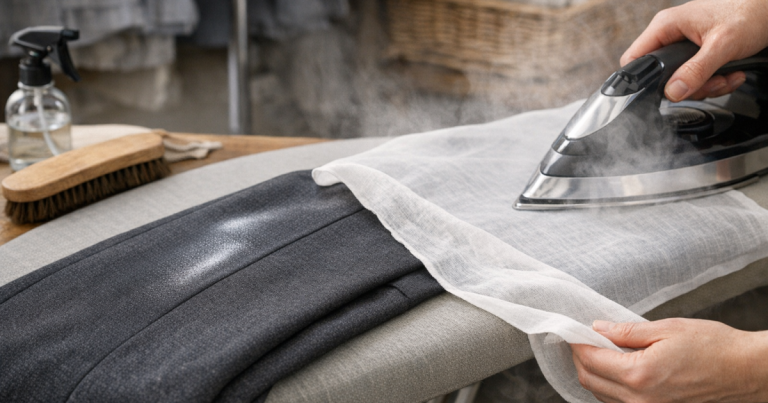
If the garment is creased as well as dusty, deal with the lint first and then decide whether steaming or ironing is appropriate. Heat and moisture can set some marks or change a delicate surface if used carelessly, so match the method to the fabric. The site’s guide to steamer and iron settings explains how to approach fabrics, settings and safe technique.
Where a velvet brush is helpful
A velvet brush is most useful for garments that need frequent light refreshing rather than frequent washing. Think wool-blend coats worn on public transport, black school blazers that show fluff easily, tailored trousers, suit jackets, uniforms, office dresses and occasion coats that pick up dust while stored.
It is also a good wardrobe tool for reducing unnecessary laundering. If a garment is clean but has surface fluff, brushing it carefully can make it wearable again without adding wash wear. This matters for wool, tailored garments and lined pieces, where repeated washing can affect shape, finish and internal structure.
For pet hair, results vary. A velvet brush can lift fine surface hair from smooth fabrics, but deeply embedded hair on textured wool may need patient repeated light strokes. If hair is stuck into a loose weave, avoid forcing it out with pressure, as that can distort the fabric.
Where it is not the safest option
There are times when a velvet brush should stay in the drawer. Do not use it as a stain-removal tool. Brushing a damp food mark, make-up smudge or oily patch can spread the stain, drive residue deeper into fibres or roughen the surrounding fabric. Blot first according to the stain type and care label, then reassess once dry.
It is also not the right answer for pilling. If a jumper has bobbles, a velvet brush may remove a few loose fibres around them, but it will not cut or lift the bobbles cleanly. Repeated brushing can make the surrounding area fuzzier, which leaves the garment looking older rather than neater.
Avoid using it on wet fabrics. Wet fibres are often more vulnerable to stretching, abrasion and surface change. Let the garment dry fully, reshape it if needed, and brush only when the fabric has returned to its normal handle.
Quick fabric-safety checks
- Does the fabric have a clear nap? Brush only with the nap, and stop if the colour looks uneven.
- Does the fabric snag on jewellery or rough skin? Avoid brushing, as the pad may catch loose yarns.
- Is the garment embellished? Keep the brush away from beads, sequins, embroidery and lace.
- Is there visible grit or dried mud? Shake or tap it off first; dragging grit across fabric can abrade the surface.
- Is the item labelled dry clean only? Surface brushing can still be acceptable, but avoid moisture and pressure.
- Does the brush feel rough or contaminated? Clean or replace it before using it on pale, fine or delicate fabrics.
Common questions
Can I use a velvet brush on silk?
Only with caution. Smooth, tightly woven silk may tolerate a very light hidden-area test, but silk satin, chiffon, crepe and delicate printed silks can mark, snag or change sheen. For valuable or sentimental silk pieces, hand-removing visible lint is usually safer.
Is a velvet brush safe for actual velvet clothing?
It can be risky. Velvet has its own pile, and brushing the wrong way can leave visible shading or flattened areas. If you try it, use the lightest pressure, follow the nap exactly, and test where any mark will not show.
Can it replace a clothes brush with bristles?
Not completely. A velvet brush is better for loose lint and hair on smooth surfaces. A soft natural-bristle clothes brush may be better for heavier wool coats where dust sits deeper in the surface, provided the fabric can tolerate it.
How should I clean the brush?
Remove lint from the pad in the release direction, usually the opposite way to brushing. Keep the pad dry, free from oils and away from dusty storage. If the pad becomes sticky, gritty or worn, it is no longer suitable for delicate fabrics.
Key takeaways
Velvet clothes brushes are safe for some delicate fabrics, but only when the fabric surface is stable and the brushing is light, dry and directional. They are best treated as maintenance tools for loose lint and dust, not as solutions for stains, pilling or embedded dirt.
If a garment has a raised pile, loose knit, embellishment or fragile finish, slow down and test first. The safest fabric care habit is not using the gentlest-looking tool automatically; it is matching the tool to the fibre, surface and condition of the garment in front of you.