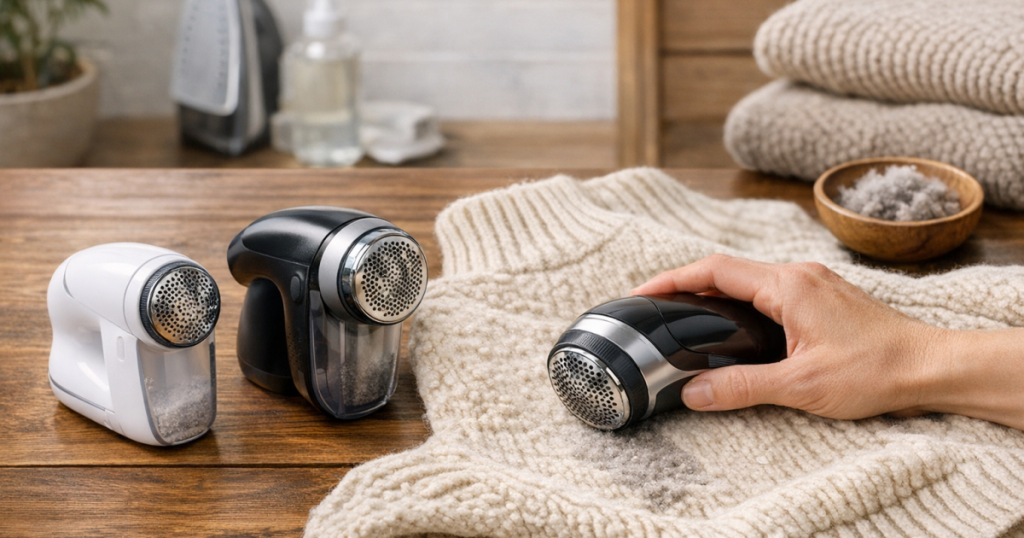
Choosing a fabric shaver for bobbly knitwear is less about buying the fiercest little gadget and more about matching the tool to the fibres, stitch texture and level of bobbling. A good depiller can make a tired jumper look fresher, but the wrong one can shave too deeply, catch loops or leave delicate knits looking thin.
For most UK wardrobes, the best choice is a controlled fabric shaver with a smooth guard, easy-to-hold body and a collection chamber that is simple to empty. The finer or looser the knit, the more you should prioritise gentle handling over speed.
The short version
- Use an electric fabric shaver for tightly knitted jumpers, sweatshirts, jersey and sturdy acrylic or cotton blends.
- Use a manual depilling comb or fabric stone only on suitable fabrics where you can control the pressure carefully.
- Avoid aggressive shaving on loose, fluffy, brushed, bouclé, lace-trimmed or open-knit garments.
- Look for a smooth metal shaving foil, a stable guard and a head that glides rather than digs.
- Always test on a hidden area first, pull the fabric flat and use light, short passes.
Why knitwear bobbles in the first place
Bobbles form when loose fibres work their way to the surface and tangle together through friction. Underarms, cuffs, sides, seat areas and bag-contact points tend to pill first because they rub against skin, coats, straps or furniture. Some bobbling is normal, even on good-quality knitwear.
The fibre matters. Wool can pill because shorter fibres escape from the yarn. Acrylic can form firm, stubborn bobbles that stay attached. Cotton knitwear often pills more softly, while mixed fibres can behave differently depending on which yarn is dominant. A fabric shaver does not stop pilling permanently; it removes the visible bobbles so the surface looks neater.
The aim is not to make a jumper look new at any cost. It is to remove loose pills without cutting sound yarns, flattening texture or weakening areas that already get a lot of wear.
Step 1: Match the tool to the fabric
Start by checking the care label and the knit structure before you buy or use anything. A close-knit merino jumper, a cotton sweatshirt and a chunky hand-knit cardigan should not be treated in the same way.
Close-knit wool, cotton and synthetics
These are usually the easiest candidates for an electric fabric shaver, provided the surface is reasonably smooth. The guard can sit evenly against the fabric and lift pills into the cutting area. Fine-gauge jumpers, school cardigans, knitted dresses and jersey tops often respond well to careful, light passes.
Chunky, loose or textured knits
Large stitches, openwork patterns and looped textures need more caution. A shaver can catch raised loops or remove texture that is part of the garment’s design. For these, a manual comb may give better control, but only if used gently and in the direction of the knit.
Cashmere, angora and very soft brushed fibres
Soft luxury fibres can pill quickly, but they can also be easy to damage. Choose the gentlest setting or a very controlled manual tool, and avoid repeated passes over the same area. For coats and structured wool outerwear, brushing may be more appropriate than shaving; the comparison in natural bristle clothes brushes for wool coats is useful if you are deciding between lifting lint, refreshing nap and actually removing pills.
Step 2: Choose the right type of bobble remover
There are three main approaches, and each suits a different wardrobe. Do not assume the fastest-looking tool is automatically the best one for knitwear.
Electric fabric shaver
An electric shaver uses rotating blades behind a perforated foil or guard. The guard helps keep the blades away from the main fabric while allowing bobbles to enter the cutting area. This is the most convenient option for everyday knitwear, school jumpers, jersey basics and synthetic blends.
When comparing electric models, check how smooth the shaving head feels, whether the collection chamber is easy to remove, and whether the body is comfortable to hold at a shallow angle. A model such as the Steamery Pilo 2 Fabric Shaver is worth comparing if you want a more design-led electric option, while a simpler model such as the Beautural Fabric Shaver gives you a typical mainstream style to judge against. Verify current power method, accessories and suitability before buying, as details can vary by retailer and version.
Manual depilling comb
A depilling comb gives more control because you decide the pressure and direction. It can be useful for woollens where you want to remove surface pills without running a motorised head over the garment. The trade-off is that it takes longer and can still snag if used across loose stitches.
The Gleener Ultimate Fuzz Remover is a recognisable manual option to compare if you prefer a non-electric approach. As with any comb-style tool, the important test is not the name on the handle but how gently it works on your actual garment.
Fabric brush or lint remover
A brush will not cut off firm bobbles in the way a shaver does, but it can remove lint, surface fluff and pet hair before you start. This matters because loose debris can make knitwear look worse than it is. Brushing first also helps you see which marks are true pills and which are just surface lint.
Step 3: Check the guard, head and blade access
The shaving guard is the part that protects your clothing, so treat it as more than a minor detail. A poor guard can drag, scratch or press too hard into soft knits.
- Smooth foil: The metal surface should feel even, without rough edges or sharp burrs.
- Appropriate hole size: Very large openings can feel too aggressive on fine knits, while tiny openings may struggle with larger pills.
- Stable head: A head that sits flat is easier to control than one that wobbles or needs heavy pressure.
- Removable parts: You should be able to empty lint and clear trapped fibres without forcing the mechanism.
- Spare or replaceable blades: Check whether replacements are available, because dull blades can tug rather than cut cleanly.
A shaver that works well should sound and feel consistent. If it starts rasping, dragging or catching, stop and empty the chamber, clean the head or reassess whether the fabric is suitable.
Step 4: Think about power and handling
Power choice affects convenience, but handling affects garment safety. A compact shaver that sits comfortably in your hand is often safer than a bulky one that feels awkward on sleeves, cuffs and curved seams.
Battery-powered and rechargeable models are useful if you want to work on the sofa, by a wardrobe rail or at an ironing board without trailing a cable. Mains-powered options can be practical for longer sessions, provided the cable does not pull the fabric or restrict your movement. Check the current product information carefully rather than assuming all versions use the same power arrangement.
Weight is also worth considering. A very light tool can skip across textured fabric, while a heavy one may encourage too much pressure. The best feel is steady, controlled and easy to lift away the moment the shaver starts to catch.
Step 5: Use the shaver safely on a jumper
Even a well-chosen tool can cause damage if used carelessly. Work slowly, especially the first time you treat a garment.
- Wash and dry the garment first if it is dirty, following the care label, because body oils and detergent residue can make fibres clump.
- Lay the garment flat on a firm surface such as an ironing board or table.
- Test on an inside hem, seam allowance or less visible area.
- Pull the fabric gently taut with one hand; do not stretch it out of shape.
- Use short, light strokes rather than pressing hard in circles.
- Empty the lint chamber before it becomes packed, as trapped fluff can reduce cutting efficiency.
- Stop once the surface looks neater. Repeated shaving removes more fibre each time.
Be careful around seams, ribbed cuffs, embroidery, button bands, pockets and decorative stitching. These areas are raised, so the guard may not sit evenly. It is usually better to tidy them by hand than to run the shaver right up to the edge.
Step 6: Build it into a sensible knitwear routine
Depilling works best as occasional maintenance, not as something you do after every wear. If a jumper pills heavily after each wash, look at washing, drying and storage habits as well as the tool.
Turn knitwear inside out before washing, use a suitable cycle and avoid overloading the machine so garments rub less aggressively. Dark knitted tops also need colour care; the advice on how to prevent black clothes fading in the wash is a useful next step if you are refreshing black jumpers, cardigans or jersey layers.
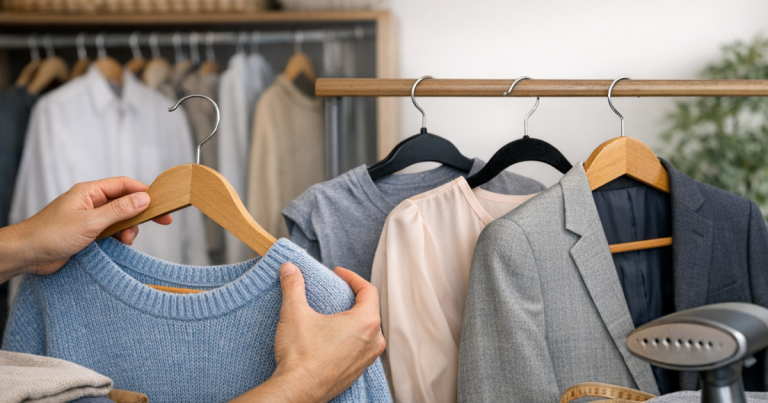
Storage matters too. Hanging heavy knitwear can stretch shoulders, while stuffing jumpers into a drawer can create extra friction and creasing. If you are reorganising seasonal clothing after depilling, use the guide to which clothes should be hung, folded or boxed to decide what belongs on a hanger and what should be folded.
Buying checks before you commit
Before choosing a fabric shaver for bobbly knitwear, run through a few practical checks rather than relying only on product photos.
- Your main fabrics: Buy for the garments you actually own, not just the worst jumper in the pile.
- Control: Prioritise a shaver that lets you use light pressure and steady movement.
- Cleaning: The lint container should be easy to remove and refit without spilling fibres everywhere.
- Noise and comfort: A tool that feels irritating to use is less likely to become part of your care routine.
- Blade maintenance: Check whether the head can be cleaned properly and whether replacement parts are realistic to source.
- Fabric exclusions: Read the manufacturer’s warnings, especially for delicate, raised, embroidered or loosely woven materials.
Do not choose solely by motor strength or the size of the cutting head. Larger heads can be quicker on flat areas, but smaller heads may be easier around children’s jumpers, sleeves, cuffs and shaped knitwear.
Common questions
Can a fabric shaver ruin knitwear?
Yes, if it is pressed too hard, used repeatedly in one place or run over loose loops and decorative textures. Test first, keep the fabric flat and stop as soon as the bobbles are removed.
Is an electric shaver better than a manual comb?
For smooth, close-knit garments, electric shavers are usually quicker. For delicate woollens or awkward textured areas, a manual comb can give more control, though it still needs a light hand.
How often should I de-bobble a jumper?
Only when the bobbles are visible enough to bother you. Frequent shaving gradually removes surface fibre, so it should be an occasional tidy-up rather than a routine after every wash.
Should knitwear be wet or dry before shaving?
Use a fabric shaver on dry knitwear unless the tool’s instructions say otherwise. Wet fibres can stretch, clump and cut less cleanly.
What should I do if the shaver starts catching?
Stop immediately. Empty the lint chamber, check for trapped fibres, clean the head and reassess the fabric. If it still catches, use a gentler manual method or leave that garment unshaved.
Final thoughts
The right depiller should make knitwear look cleaner without making the fabric feel thinner or overworked. Choose by garment type, guard quality, handling and ease of cleaning, then use the tool sparingly and patiently.
A fabric shaver is most useful when it sits alongside good washing, drying and storage habits. Treat bobble removal as one part of fabric maintenance, and your jumpers, cardigans and knitted basics will have a much better chance of staying wearable for longer.