Shirts show every shortcut: softened cuffs, puckered plackets and collars that refuse to sit flat. Choosing between a clothes steamer or steam iron matters because the right tool changes not only speed, but also the crispness, shine risk and how much handling the fabric can tolerate.
For most cotton office shirts, an iron gives the sharper finish. For delicate, floaty, embellished or lightly creased shirts, a steamer is often gentler and quicker. The best choice depends less on the appliance label and more on the shirts you actually wear, how crisp you want them, and whether you have space for a proper ironing setup.
The short version for shirts
Pick a steam iron if your main goal is structure: pressed collars, flat button plackets, neat cuffs and a crisp line down the sleeve. The pressure of the soleplate is what makes the difference. Steam relaxes the fibres, but contact and heat set the finish.
Pick a clothes steamer if your main goal is refresh and wrinkle release with less contact. It is useful for shirts that are already clean but have wardrobe creases, travel folds or light rumpling after drying. It also reduces the need to drag delicate fabric across an ironing board.
If your wardrobe includes both structured cotton shirts and softer occasion shirts, the practical answer may be both: an iron for the weekly shirt batch and a steamer for last-minute touch-ups.
How the two tools work differently
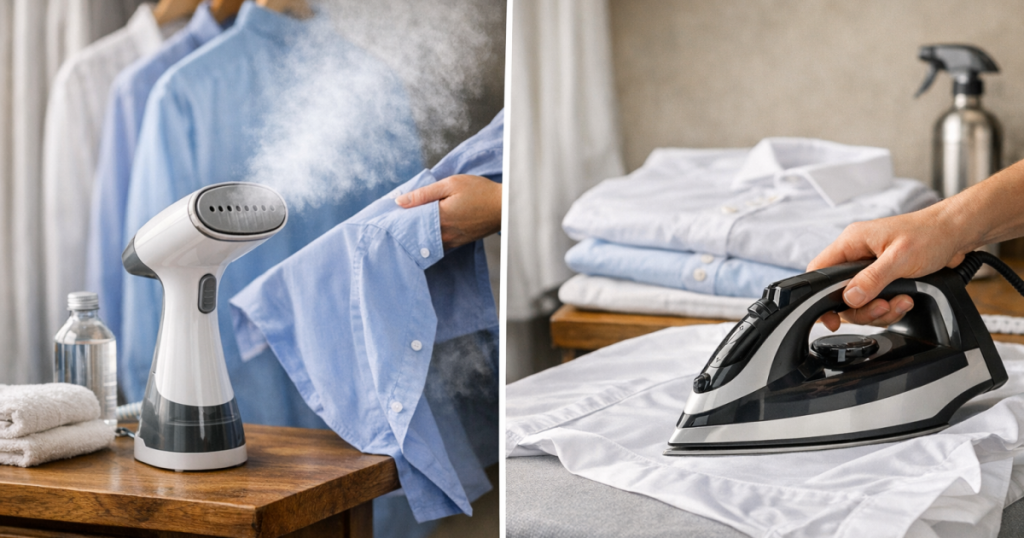
A steam iron combines heat, moisture and pressure. On shirts, that pressure is the key advantage. It can flatten seams, tame curled collars and make cuffs look intentional rather than merely less creased. It is also easier to work around the yoke, sleeve seams and button placket when the shirt is laid flat on a board.
A clothes steamer uses hot vapour while the shirt hangs. The fabric relaxes under its own weight, so creases drop out rather than being pressed flat. This is useful when you want a natural finish, but it will not usually create the same crisp edge on a collar or cuff. It can also struggle with deep creases in tightly woven cotton unless you spend longer on each area.
The trade-off is handling. An iron asks for more setup and more contact with the fabric. A steamer asks for a safe hanging position, a steady hand and patience around thicker sections. Neither is automatically safer for every shirt; the care label, fabric type and desired finish still come first.
Step 1: match the tool to your shirt fabric
Cotton poplin and Oxford shirts
These are the shirts most people mean when they want a crisp workwear finish. A steam iron is normally the stronger choice because it can press the collar, cuffs and front panels cleanly. Use the care label setting, test any dark or glossy fabric inside the hem, and consider pressing darker shirts inside out to reduce shine.
Linen and linen blends
Linen creases by nature, so decide whether you want crisp or relaxed. An iron gives a smarter finish, particularly for collars and button bands. A steamer can soften storage creases without making the shirt look overworked, which suits casual linen shirts. Slight dampness can help linen respond, but avoid over-wetting areas that may dry unevenly.
Viscose, modal and soft drapey shirts
A steamer is often convenient here because these fabrics can mark, distort or shine if pressed too firmly. Keep the steamer head moving and avoid soaking one area. If you do iron, use a lower care-label setting and a pressing cloth, especially on darker colours.
Silk shirts and very delicate fabrics
Steaming can be useful, but water marks are a real concern on silk. Use clean water as directed by the appliance maker, avoid spitting from the steamer head, and test on a hidden area first. If you are dealing with silk bedding or want more detail on avoiding moisture marks, the same principle is covered in this guide to washing silk pillowcases without water marks.
Polyester and easy-care shirts
Many synthetic or blended shirts respond well to quick steaming because they do not need a hard press. However, heat can still damage or glaze some finishes. Follow the label and keep either appliance moving rather than holding heat in one spot.
Step 2: decide how crisp the shirt needs to look
The quickest way to choose is to picture the finished collar. If you want it flat, firm and office-sharp, use an iron. If you only need the shirt to look fresh under a jumper, jacket or overshirt, a steamer may be enough.
For interviews, formal meetings, uniforms and shirts worn open without a jacket, an iron usually gives the most reliable result. For weekend shirts, travel creases and delicate blouses, a steamer can save time and reduce unnecessary pressing.
Pay particular attention to cuffs and plackets. These areas are layered and often hold creases after washing. A steamer can improve them, but an iron is better when the fabric needs to be flattened rather than simply relaxed.
Step 3: check your weekly routine
If you iron five shirts every Sunday evening, setup matters. A stable board, enough space to move sleeves around, and a steam iron with controls you understand will usually be faster than steaming each shirt on a hanger. Batch work favours the iron.
If you mainly deal with one shirt at a time before leaving the house, a handheld steamer can be more realistic. It avoids unfolding the board and can refresh a shirt that has been crushed in the wardrobe. Compare options such as the Russell Hobbs Steam Genie 2-in-1 Garment Steamer with care: look at grip comfort, water filling, heat settings, storage and whether the shape suits collars and plackets. Do not assume every handheld steamer will suit heavy cotton shirts equally well.
For ironing, compare the feel and controls of models such as the Tefal Ultraglide Anti-Scale Steam Iron, but verify the details that matter to your home: soleplate glide, steam control, weight when filled, cleaning requirements and compatibility with your local water hardness. If your shirts still look poor after ironing, the weak point may be the board cover or technique rather than the iron itself; this comparison of an ironing board upgrade versus a steam iron upgrade can help you diagnose the bottleneck.
Step 4: run the shirt-care checks before buying
Before spending money on either appliance, check the shirts in your laundry basket rather than the marketing claims on the box.
- Look at fabric labels: if most shirts are cotton or cotton-rich, an iron is likely to earn its space. If they are viscose, silk, polyester blends or embellished tops, a steamer may get more use.
- Check the collar construction: stiff, fused or structured collars respond better to pressing. Soft camp collars and drapey blouse collars often only need gentle steaming.
- Think about colour: dark shirts can develop shine if pressed too hot or too hard. A steamer reduces contact, but it can still leave moisture marks on sensitive fabric.
- Assess storage: if shirts come out of a packed wardrobe creased, a steamer is handy for daily recovery. If creases are set in after washing and drying, an iron is more effective.
- Check maintenance: hard-water areas in the UK can make appliance care more important. Follow the manufacturer’s descaling or cleaning instructions rather than adding anything unsuitable to the tank.
Step 5: use the right technique for shirts
For a steam iron
Start with the collar, pressing from the points towards the centre to avoid pushing fabric into wrinkles. Move to cuffs, sleeves, yoke, back panels and then the front. Work around buttons rather than pressing directly over them. Use the lowest effective heat for the fabric and let the shirt cool on a hanger before wearing, so the finish has time to set.
If collars and cuffs have body oil or deodorant residue, remove it before heat is applied. Heat can set marks and make yellowing harder to deal with. For building a small pre-treatment setup, see how to choose a stain remover kit for everyday clothes.
For a clothes steamer
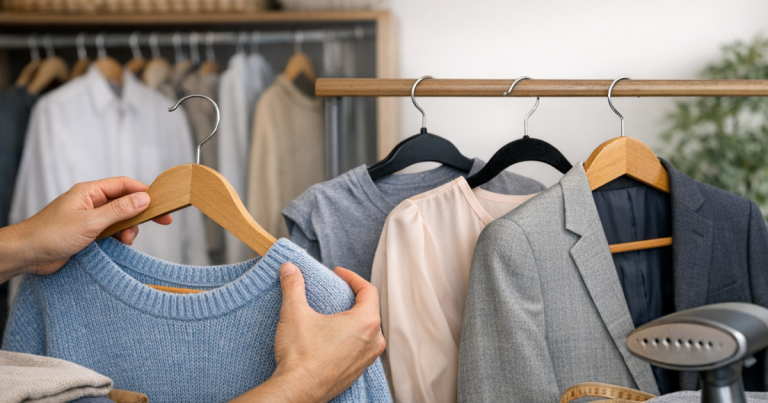
Hang the shirt where you can pull the fabric lightly taut without stretching seams. Steam from the inside or just above the fabric surface, depending on the appliance instructions and fabric sensitivity. Work slowly down each panel and give extra attention to the button band, collar stand and sleeves.
Let the shirt dry fully before putting on a jacket or packing it away. A shirt that feels slightly damp may crease again quickly, and moisture trapped in a wardrobe is never helpful for fabric freshness.
When one tool is clearly better
Choose the iron for white business shirts, cotton school shirts, uniform shirts, formal dress shirts and any shirt where the collar needs to sit sharply. It is also better for restoring shape after washing, especially if the shirt has dried with twisted seams or compressed cuffs.
Choose the steamer for packed holiday shirts, soft blouses, delicate occasion tops, shirts with ruffles or covered buttons, and garments that need refreshing rather than full laundering. It is also useful when you want to reduce contact on fabrics that are prone to shine.
For mixed households, start with the tool that solves the most common problem. If the complaint is “my shirts never look crisp”, buy or improve the iron setup. If the complaint is “my clean shirts get creased in the wardrobe”, a steamer may be the smarter addition.
Common buying mistakes to avoid
- Buying a steamer for crisp collars: it may refresh the shirt, but it cannot replace firm pressing for a formal finish.
- Blaming the iron for every crease: a thin, unstable board cover can make pressing harder, especially on sleeves and plackets.
- Ignoring water marks: delicate shirts can mark from spluttering steam or over-wetting, so always test first.
- Using too much heat: higher heat is not better if the fabric scorches, shines or puckers.
- Skipping stain checks: collar grime and underarm residue should be treated before ironing or steaming.
FAQ
Can a clothes steamer replace an iron for shirts?
It can replace an iron for casual shirts and light creases, but not for a sharp business-shirt finish. Collars, cuffs and plackets usually need pressure as well as steam.
Is steaming better for dark shirts?
It can reduce the risk of shine because there is less direct contact. However, dark delicate fabrics can still show moisture marks, so test a hidden area and avoid over-steaming.
Should shirts be steamed or ironed while damp?
Slight dampness can help cotton and linen press more easily, but shirts should not be wet. Delicate fabrics are more likely to mark if they are made too damp.
What is better for school shirts?
A steam iron is usually more practical for school shirts because they are often cotton-rich or easy-care blends that need collars, cuffs and plackets flattened quickly in batches.
Do I need a large clothes steamer for shirts?
Not necessarily. A handheld model can work for one or two shirts, but a larger steamer may be more convenient if you refresh several garments at once. Check storage, filling and handling before buying.
In brief
Choosing a clothes steamer or steam iron for shirts comes down to finish, fabric and routine. Use an iron when the shirt needs structure and a polished collar. Use a steamer when the shirt needs gentle refreshing, travel-crease removal or lower-contact care.
For many UK wardrobes, the most dependable setup is a good iron and board for weekly shirts, plus a steamer only if delicate fabrics or last-minute creases are common. Buy for the shirts you wear most, not for the appliance that sounds most convenient.