Silk pillowcases can come out blotchy when water dries unevenly, detergent lingers in the weave or heat sets faint rings. The safest way to wash silk pillowcases is to keep the whole fabric evenly wet, use minimal gentle detergent, rinse thoroughly and dry without direct heat.
Water marks are rarely caused by water alone. They are usually a combination of mineral residue, skincare oils, sweat, detergent concentration and drying technique, so the whole wash process matters.
The short version
Use cool to lukewarm water, a small amount of silk-safe detergent and a clean basin large enough for the pillowcase to move freely. Submerge the whole pillowcase at once, avoid scrubbing, rinse until the water runs clear, press out moisture in a towel and dry flat or over a wide rail away from radiators and sunlight.
Do not dab only one damp patch unless you are prepared to wash the whole pillowcase afterwards. Partial wetting is one of the easiest ways to create a visible tide mark on silk, especially on darker colours, ivory shades and smooth charmeuse finishes.
Why silk gets water marks
Silk is a protein fibre with a smooth surface, but it is not immune to residue. When a wet patch dries faster at the edge than in the centre, anything dissolved in that water can settle into a faint ring. On a pillowcase, this can include minerals from hard water, traces of detergent, face creams, hair products, perspiration or old fabric conditioner.
The finish of the fabric also makes a difference. Satin silk can show dull patches because light reflects differently across the surface. Crepe silk may hide slight unevenness better, but it can still mark if detergent is left in the weave. Printed silk needs extra caution because some dyes are less tolerant of soaking and rubbing.
Heat makes the problem worse. A radiator, hot airing cupboard, tumble dryer or overheated iron can dry the edges of damp areas too quickly and set residue into the fabric. The aim is slow, even drying after a gentle, full rinse.
Before you put silk in water
Start with the care label. If it says dry clean only, the safest route is to follow that instruction, particularly for expensive, vintage, heavily dyed or embellished pillowcases. If the label allows hand washing, prepare everything before the fabric gets wet so you are not leaving silk sitting in a basin while you search for towels.
- Use a clean basin or sink with no traces of bleach, bathroom cleaner or washing-up liquid.
- Choose a detergent marked as suitable for silk, wool or delicates, and avoid heavy-duty biological detergents unless the care label specifically allows them.
- Fill the basin before adding the pillowcase, so detergent disperses evenly in the water.
- Use cool to lukewarm water, around 30°C or below, rather than hot water.
- Have two clean, light-coloured towels ready for pressing out moisture.
If you regularly care for delicate pieces, the same patient handling used for hand washing lace lingerie without snagging applies here: support the fabric, avoid twisting, and let water do most of the work.
Step-by-step: clean the pillowcase evenly
1. Test the colour first
Dampen a clean white cloth with cool water and press it against an inside seam or hidden corner for a few seconds. If colour transfers clearly, do not soak the pillowcase at home. If there is no transfer, continue gently, but still keep the wash short.
2. Pre-dissolve the detergent
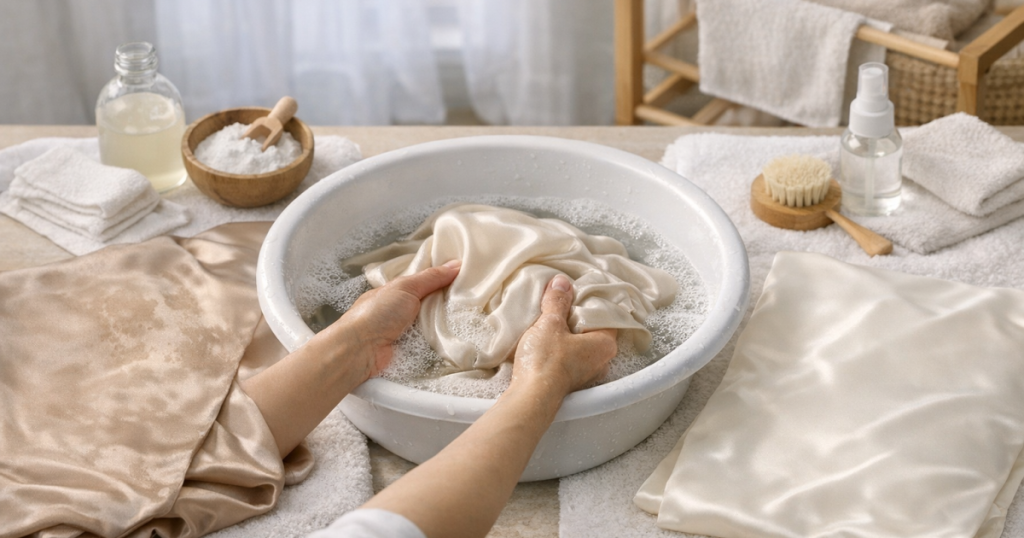
Add a very small amount of silk-safe detergent to the basin and swirl the water before the pillowcase goes in. Too much detergent is a common reason for dull patches and rings because it is harder to rinse out fully. The water should feel lightly soapy, not slippery or foamy.
3. Submerge the whole pillowcase
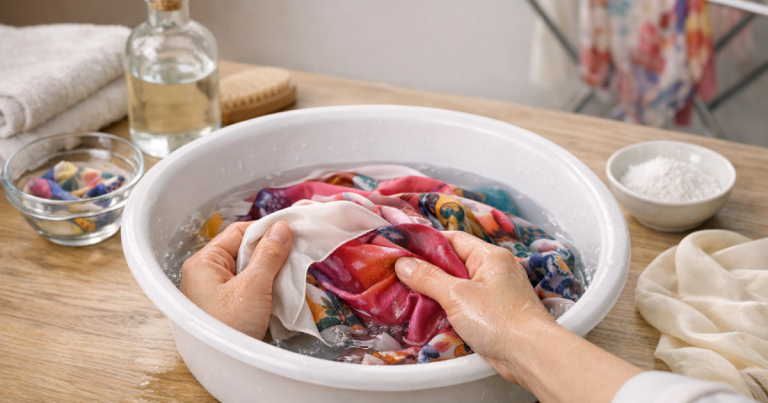
Place the entire pillowcase into the water at once and gently press it under the surface. Do not wet one side first and leave the other side dry. Even wetting reduces the risk of tide lines, particularly around the edges and envelope flap.
4. Move it gently, do not scrub
Swish the pillowcase through the water with open hands. Press lightly through areas that touch the face or hair, such as the centre panel and top edge, but do not rub the silk against itself. For ordinary freshness, a few minutes is usually enough. Longer soaking is not automatically better and can increase dye risk.
5. Rinse more than you think you need to
Drain the soapy water and refill the basin with clean cool water. Lift and press the pillowcase gently through the rinse water, then repeat until the water looks clear and the silk no longer feels soapy. In hard-water areas, a final rinse using filtered water can help reduce mineral spotting, but it is still the rinsing and drying method that matters most.
6. Press moisture out with towels
Lift the pillowcase with both hands so the wet fabric is supported. Do not wring it. Lay it flat on a clean towel, smooth it into shape, roll the towel up and press along the roll with your hands. If it is still very wet, repeat with a second dry towel.
Drying without creating new marks
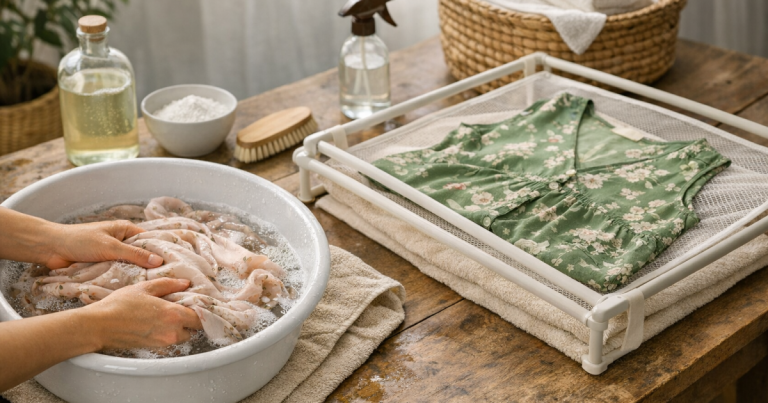
Dry silk slowly and evenly. Lay the pillowcase flat on a dry towel, or drape it over a wide, smooth rail so there are no peg marks or sharp creases. Keep it away from direct sunlight, radiators, heated towel rails and dehumidifier exhausts blowing directly at one corner.
A heated airer can be too warm for silk if the fabric rests directly on the bars or is left until crisp. If you use indoor drying equipment for other laundry, it is worth reading how to use a heated airer without overdrying clothes, then treat silk as the item that needs the gentlest, shortest exposure or no heat at all.
Check the pillowcase while it is still faintly damp. If one edge is drying much faster than the rest, move it to a flatter position. Do not iron a visibly water-marked area while it is still unevenly rinsed, as heat can make the mark harder to shift.
What to do if a water mark is already there
If the pillowcase has a faint ring from a splash, do not keep dabbing the edge of the mark. That usually expands the tide line. Instead, re-wet and rinse the whole pillowcase evenly, then dry it properly from the beginning.
For a fresh mark, fill a basin with cool water only, submerge the entire pillowcase, move it gently and rinse. If the mark may include skincare oil, hair oil or detergent residue, use a tiny amount of silk-safe detergent and rinse thoroughly. The goal is to remove the residue across the whole panel, not attack the ring in isolation.
For an old mark, the result depends on what caused it. Mineral rings and detergent residue often improve after a careful full wash. Oil-based marks may need more than one gentle clean. Dye bleed, sun fading or heat-set damage may not wash out because the appearance of the silk itself has changed.
Common mistakes that cause blotches
- Using too much detergent: Silk does not need a heavy dose. Residue left in the fibre can dry as dull patches.
- Spot-cleaning without a full rinse: Wetting only one patch often leaves a ring around the treated area.
- Rubbing makeup or oil stains: Friction can dull the surface and create a different kind of visible patch.
- Drying over direct heat: Fast drying at the edges encourages tide marks and can make silk feel harsher.
- Using fabric conditioner: It can coat silk unevenly and reduce the clean, smooth feel people want from silk bedding.
- Washing with rough items: Zips, hooks, towels and heavy cottons can abrade the surface, even inside a machine.
Can you machine wash a silk pillowcase?
Only machine wash if the care label allows it. Use a mesh laundry bag, a delicate or wool cycle, cool water and a low spin. Wash silk with similar lightweight items, not towels, denim, bras with hooks or anything with Velcro. Remove the pillowcase as soon as the cycle finishes so creases and damp pressure marks do not set in.
Hand washing gives you more control and is often the better choice for preventing water marks, because you can make sure the pillowcase is evenly submerged, fully rinsed and handled without abrasion. Machine washing can work for some modern washable silk, but it is less forgiving if the detergent dose, spin speed or load mix is wrong.
Ironing and finishing
If the pillowcase looks slightly creased, iron it on the reverse while it is still just damp, using the silk or low setting. Place a clean pressing cloth between the iron and the silk if the surface is glossy or dark. Keep the iron moving and avoid bursts of steam that may spit droplets onto one spot.
If your iron has a tendency to leak or leave mineral flecks, do not use steam on silk. A clean, dry iron and light moisture already in the fabric are safer than unpredictable steam marks. Always test on a hidden corner before pressing the main panel.
Storing silk pillowcases so marks do not return
Make sure the pillowcase is completely dry before folding it. Even slight dampness trapped in a drawer can lead to stale odours, crease shadows and mildew risk. Fold loosely rather than compressing it under heavy bedding, and keep it away from scented drawer liners that may transfer oils.
If stored bedding has started to smell stale, deal with that before wearing or sleeping on it. The approach used to remove musty smells from stored clothes safely is useful for judging when airing is enough and when a full wash is needed.
Quick answers
Can I use white vinegar to stop water marks on silk?
A very weak vinegar rinse is sometimes used to help remove detergent residue, but it is not a fix for every silk pillowcase. Test first, avoid it on unstable dyes or embellished trims, and rinse again with clean cool water afterwards.
Why did my silk pillowcase look worse after washing?
The most likely causes are detergent residue, uneven drying, dye movement, hard-water minerals or heat. Re-rinsing the whole pillowcase and drying it flat often improves residue marks, but heat damage and dye loss may be permanent.
Should silk pillowcases be washed inside out?
Yes, turning them inside out helps protect the smoother outer face from friction. It also makes it easier to focus gently on seams and the envelope closure where skincare and hair products can build up.
How often should I clean a silk pillowcase?
For regular use, weekly washing is sensible, especially if you use night creams, hair oils or leave-in products. If the silk is delicate or rarely used, wash when it is genuinely soiled rather than out of habit.
Can I remove a small water splash without washing the whole pillowcase?
Sometimes, but it is risky on smooth silk. If a splash leaves a visible edge, a full, even rinse of the pillowcase is usually safer than repeated spot-dabbing.
The big picture
Water marks are easiest to prevent when the pillowcase is treated as one whole piece of fabric, not a collection of spots. Even wetting, gentle detergent, thorough rinsing and slow drying do most of the work. Keep heat, friction and concentrated products away from silk, and your pillowcases are far more likely to dry smooth, soft and evenly coloured.