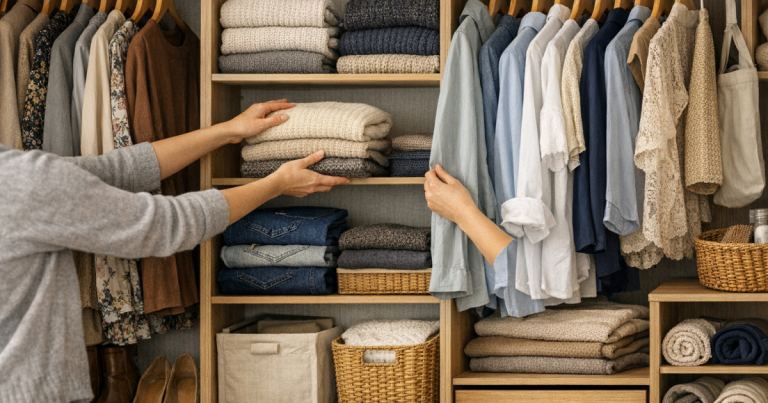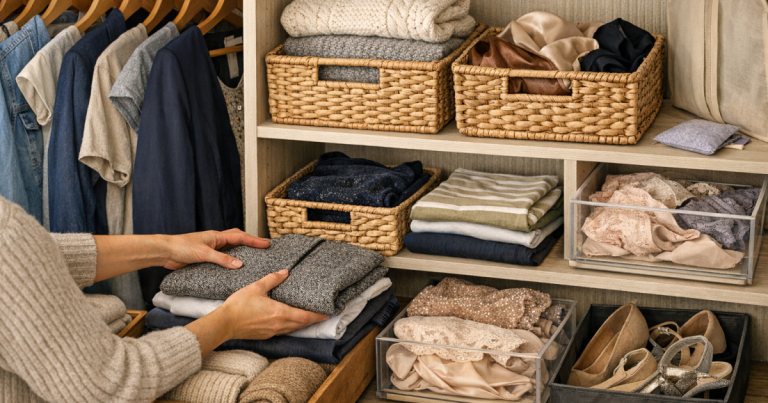
Open wardrobe shelves make jumpers easy to see, but they also let soft knitwear slump sideways. The best shelf dividers for this job are stable, smooth-edged and matched to the shelf depth, so each stack has enough support without crushing the fibres. For most UK wardrobes, that means using a few well-placed dividers rather than filling every gap with rigid compartments.
The short answer
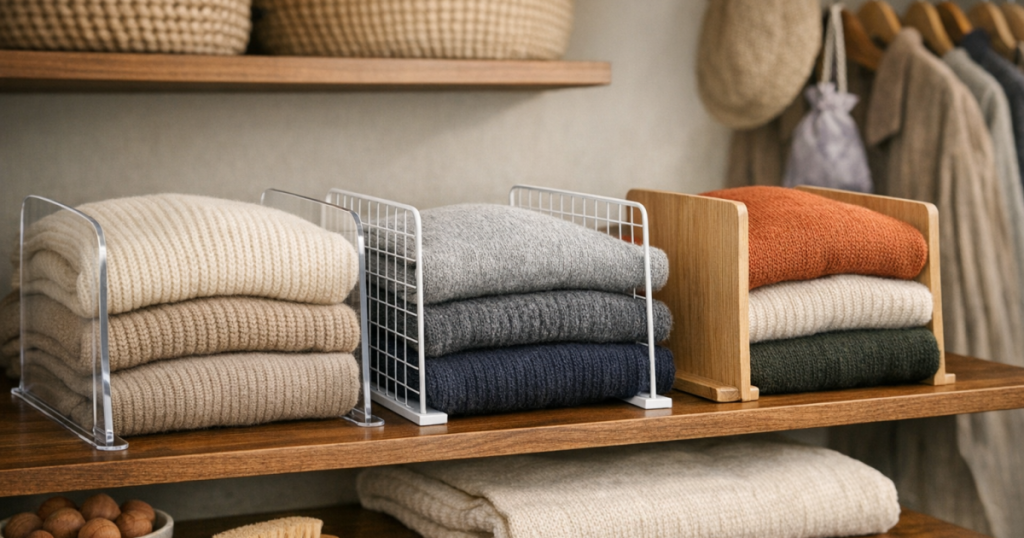
For everyday jumper stacks, wire clip-on dividers usually work well on sturdy wooden or laminate shelves, while clear acrylic dividers suit neater wardrobes where you want a cleaner look and fewer visual interruptions. Soft fabric cubbies are kinder for very delicate knitwear, but they take up more space and can hide what is inside.
The right choice depends less on the divider’s appearance and more on three checks: whether it grips your shelf securely, whether its edges are smooth enough for knitwear, and whether it lets you lift one jumper without dragging the whole pile forward.
Why jumper stacks collapse in the first place
Jumpers are bulkier and more flexible than shirts or jeans. A cotton sweatshirt may hold a rectangular fold quite well, but lambswool, merino, cashmere blends and fine ribbed knits tend to settle and spread. Once the lower layers widen, the whole stack leans into the next pile.
Over-high stacks make the problem worse. A pile that looks tidy on laundry day can become unstable after a few wears because the remaining jumpers lose side support. Shelf dividers add structure, but they should not be used to force too many garments into one space. If you need to press the pile down to make it fit, the storage system is working against the fabric.
The shelf material matters too. Smooth laminate, painted MDF and veneer can suit clip-on designs, provided the divider is compatible with the shelf edge. Open wire shelving, deep cupboard shelves and older airing-cupboard-style spaces may need a different approach. For a broader view of how materials affect garment storage, see this guide to wardrobe storage materials.
Divider types that work for knitwear
Wire shelf dividers
Wire dividers are common because they are slim, ventilated and easy to reposition. They are useful when you want to create lanes for folded jumpers without losing much shelf width. They can also work well for casual knitwear, school sweatshirts and bulky winter layers.
The main fabric-care check is the finish. Avoid any divider with rough welds, chipped coating or sharp exposed ends, as these can catch on wool loops, bouclé textures or loose seams. Also check that the clamp or base suits your shelf. A divider that wobbles every time you pull out a jumper will quickly undo the point of organising the shelf.
Clear acrylic dividers
Acrylic dividers can give a cleaner look and make stacks feel more contained. They are often easier to wipe than fabric organisers and can help you see where one category ends and another begins. They suit wardrobes where appearance matters, such as open dressing areas or shared bedroom storage.
They still need checking carefully. Edges should feel smooth, the divider should sit upright without flexing excessively, and the base should not mark a painted or delicate shelf surface. Acrylic can also show dust and fingerprints more readily than wire, so it suits people who are happy to give shelves a regular wipe.
Soft-sided shelf boxes and cubbies
Soft fabric cubbies are not dividers in the strictest sense, but they can solve the same problem for delicate jumpers. They help keep fine knits separate from heavier garments and reduce rubbing against hard surfaces. They are useful for cashmere, fine merino, embellished knitwear or pieces with looser yarns.
The trade-off is access. Deep fabric boxes can encourage stacking too many jumpers together, and it is easy to forget what is at the back. Choose open-front or shallow formats where possible, and avoid storing knitwear while it is even slightly damp.
Freestanding bookend-style dividers
Heavy bookend-style dividers can be a temporary fix on shelves where clip-on designs do not fit. They are useful for testing whether dividers will improve your wardrobe before committing to a full setup. However, they can slide on smooth shelves and may not be tall enough for bulky stacks unless the pile is kept low.
Real examples to use as reference points
When checking UK listings, use specific options as reference points for style and fit rather than assuming one model will suit every wardrobe. Always verify shelf thickness, divider height, edge finish and return policies before ordering.
- SONGMICS Shelf Dividers are a familiar example of clip-on dividers for separating folded clothing on open shelves. Check the shelf compatibility and finish before using them with delicate wool.
- mDesign Metal Wire Shelf Dividers are worth comparing if you prefer a slim wire look and want to keep jumper piles visible from the front.
- iDesign Linus Closet Shelf Divider is a clear-divider example to consider when you want a neater visual line between stacks, especially on shelves where a transparent finish suits the wardrobe.
None of these examples removes the need to measure. Wardrobe shelves vary widely, especially between fitted wardrobes, freestanding units and older built-in cupboards.
How to set up shelf dividers for jumper stacks
1. Empty the shelf and sort by fabric weight
Start with the whole shelf empty, not just the section that looks messy. Group jumpers by weight and use: heavy winter knits, lighter everyday jumpers, sweatshirts, cardigans and delicate wool pieces. Mixing heavy cotton sweatshirts with fine wool jumpers in the same stack often causes distortion because the heavier items settle into the softer ones.
2. Keep stacks low enough to lift cleanly
A stable jumper stack is usually one you can lift from the middle without pulling neighbouring items with it. As a practical guide, keep fine knits in lower piles than sweatshirts or chunkier cotton layers. If a stack starts bowing out before it reaches the divider height, reduce the number of garments rather than tightening the gap.
3. Place dividers around categories, not every garment
Dividers work best when they create generous lanes. One divider between “work jumpers” and “weekend knits” is usually more useful than narrow compartments for every colour. Too many dividers can make shelves awkward and may encourage you to tug clothing out at an angle, which is not ideal for knitwear.
4. Fold to match the shelf depth
Fold jumpers so the front edge of each stack sits just behind the shelf front. If the fold is too deep, the back of the jumper bunches against the wall or wardrobe panel. If it is too shallow, stacks tip forward. A consistent fold also makes it easier to return clean laundry to the right place.
5. Give delicate knits a smoother boundary
For cashmere, soft lambswool, fine merino and textured yarns, prioritise smooth contact points. A fabric cubby or smooth acrylic side can be preferable to a rougher wire divider. If you use wire, run your hand over every edge first and check again after cleaning or repositioning.
Fit checks before you rely on a divider
- Shelf thickness: Clip-on dividers must match the shelf edge. Too loose and they wobble; too tight and they may mark the shelf or fail to sit squarely.
- Shelf depth: A shallow divider on a deep shelf may only hold the front of the stack, leaving the rear to slump sideways.
- Edge finish: Smooth edges matter more for knitwear than for denim or bedding. Avoid rough coating, burrs, cracks or sharp corners.
- Ventilation: Do not pack jumpers so tightly that air cannot move around them, particularly in wardrobes on cooler outside walls.
- Access: You should be able to remove a jumper with one hand without dragging the pile into the next section.
- Cleaning: Dust settles on shelves and dividers. Choose a setup you will actually wipe down during routine wardrobe resets.
Fabric-aware storage habits that make dividers work better
Dividers are only one part of a tidy shelf. Jumpers should be fully dry before they go back into storage, especially after air drying in a cool room. Even slightly damp knitwear can smell stale and may encourage creasing or distortion when stacked.
Let recently ironed or steamed garments cool before folding them into a pile. Warm, softened fibres can take on pressure marks more easily if they are compressed straight away. If you regularly refresh knitwear with steam, keep the storage gap generous enough that the folded jumper is not immediately squashed.
Use shelves for garments that dislike hanging. Many jumpers stretch at the shoulders if left on hangers for long periods. For shirts, blouses and structured pieces, it is better to choose hangers that prevent shoulder bumps rather than forcing everything onto shelves.
For bobbly knitwear, tidy storage helps reduce friction but will not remove pilling that has already formed. If you are tempted to refresh older jumpers before reorganising, it is worth understanding whether fabric shavers thin clothes over time so you can use them carefully on suitable fabrics.
What works best for different jumper piles
- Everyday cotton sweatshirts: Wire dividers are usually practical because the fabric is stable and the stacks are easy to handle.
- Chunky winter knits: Use wider lanes and fewer garments per stack. A divider can stop sideways slump, but it should not compress the knit.
- Fine merino and lightweight wool: Smooth acrylic or soft-sided compartments are often kinder than rougher metal contact points.
- Cashmere and delicate blends: Keep stacks low, avoid overcrowding and consider a breathable fabric cubby for extra protection.
- Uniform jumpers and school sweatshirts: Labelled lanes can help keep clean items separate by wearer or day of the week.
Main points
The best shelf dividers are the ones that keep jumper piles upright without snagging fibres, marking shelves or making garments hard to remove. Wire dividers are practical for many everyday wardrobes, acrylic dividers look neat and give smoother side support, and soft cubbies can be gentler for delicate knitwear.
Measure first, keep stacks lower than you think, and treat dividers as boundaries rather than compression tools. If a jumper pile only stays tidy when it is squeezed tightly between two sides, the shelf needs fewer garments, not stronger dividers.
Things readers ask
Should jumpers be stored on shelves or hangers?
Most jumpers are better folded on shelves because hanging can stretch the shoulders and body over time. Very structured knitted jackets may be different, but soft wool and cotton knits usually store better folded.
Can shelf dividers damage wool jumpers?
They can if the edges are rough, chipped or too tight against the stack. Choose smooth contact points, keep delicate knits in lower piles and avoid pulling garments across metal edges.
How many jumpers should go in one stack?
Use the lift test: you should be able to remove one jumper without the whole pile leaning or dragging. Fine knits need smaller stacks than sweatshirts or firm cotton layers.
Are clear dividers better than wire dividers?
Clear dividers look neater and can feel smoother, but wire dividers are often slimmer and more ventilated. The better option depends on shelf fit, fabric delicacy and how often you access the stack.
Do shelf dividers help in deep wardrobes?
Yes, but only if the divider supports enough of the shelf depth. In very deep wardrobes, keep seasonal or rarely worn jumpers behind everyday stacks so you are not constantly disturbing the whole shelf.