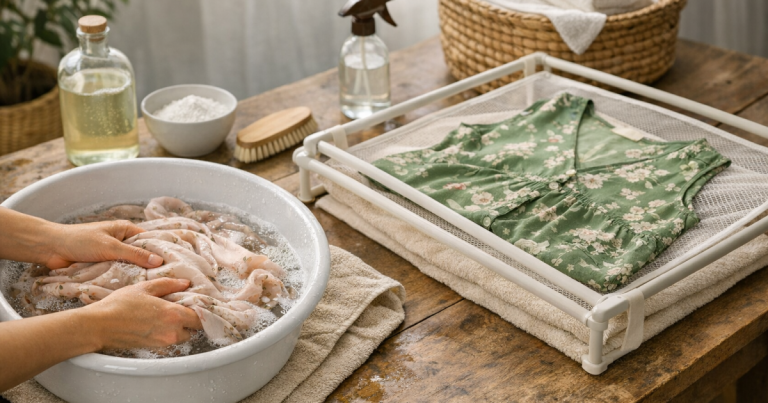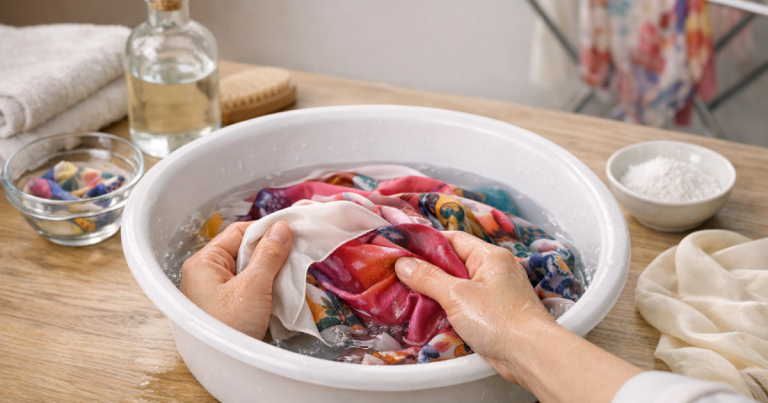
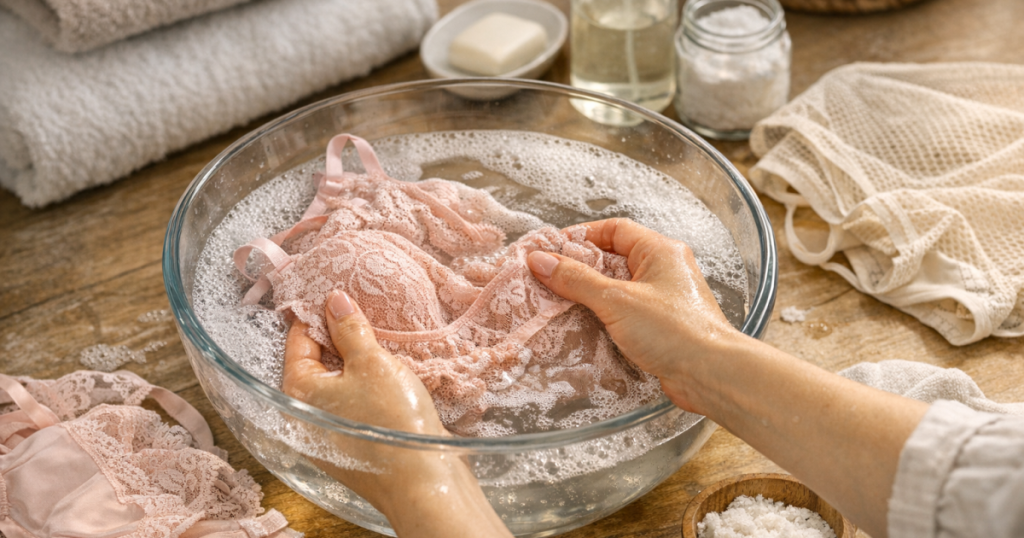
Lace catches easily on rings, rough nails, zips and even textured towels, so the safest wash is slow, cool and low-friction. If you want to hand wash lace lingerie without snagging, the key is to support the fabric fully, press water through it rather than rubbing, and dry it flat away from harsh heat. The same method works for most lace bras, briefs, bodies and slips, provided the care label allows washing.
Before starting, check whether the garment includes silk, wool, leather-look trims, adhesive details, boning, padding or decorative stones. Those extras can change what is safe, even when the lace itself looks robust.
At a glance
- Use cool to lukewarm water, ideally around 30°C or below unless the care label says otherwise.
- Fasten hooks and close any adjustable sliders before washing.
- Wash one or two items at a time so lace does not catch on other garments.
- Press and swish gently; never scrub, twist or wring lace.
- Dry flat on a smooth towel, reshaping cups, straps and lace edges while damp.
What causes lace lingerie to snag?
Snagging usually comes from friction rather than washing itself. Fine lace has raised threads, scalloped edges, mesh panels and embroidered details that can catch on rough skin, jewellery, bra hooks, laundry labels, zip teeth and even the seams of other lingerie.
Stretch lace adds another concern: elastane. It helps lingerie recover its shape, but repeated hot washing, wringing and tumble drying can weaken the stretch. Foam cups, underwires and bonded trims also dislike twisting, because pressure can crease padding or distort the garment’s frame.
Hand washing reduces the mechanical stress, but only if you keep the process calm. Treat lace as something to support, not something to scrub clean.
Set up a snag-safe washing area
A clean basin, bowl or sink is better than a crowded laundry basket or machine drum for delicate lace. Wipe the surface first so there are no grit particles, loose hair grips or rough residue that could pull at threads.
- Remove rings, bracelets and watches before handling the garment.
- Check your nails for sharp edges or peeling polish.
- Fasten bra hooks so they cannot catch on lace panels.
- Turn heavily embellished pieces inside out only if doing so does not strain cups or trims.
- Separate light, dark and bright colours, especially for new red, black or navy lingerie.
Use a small amount of mild liquid detergent suitable for delicate laundry. Too much detergent is harder to rinse out and can leave lace feeling stiff. If the care label mentions silk, use a detergent suitable for silk rather than a general laundry product.
Step-by-step: the low-friction method
1. Fill the basin before adding the garment
Run cool to lukewarm water first, then add detergent and mix it through with your hand. Do not squirt detergent directly onto lace, mesh or satin trims, as concentrated detergent can sit in one area and be harder to rinse evenly.
2. Submerge the lingerie fully
Lower the item into the water and support it with both hands. For bras, keep the cups rounded rather than folding them flat. For bodies and slips, gather the fabric loosely so the lace is not stretched under its own wet weight.
3. Press the water through the fabric
Gently press the garment under the water, release, then press again. This moves detergent through the fibres without abrading the lace. A light swish is fine, but avoid rapid agitation, scrubbing lace against itself, or rubbing the gusset and underarm areas aggressively.
4. Give marks a separate, gentle treatment
For body oil, deodorant or light make-up marks, dab the area with diluted detergent using your fingertip. Work from the reverse side where possible and support the lace underneath with your other hand. Do not use a brush on open lace or embroidered mesh.
If you regularly deal with marks on delicate everyday laundry, it helps to understand which formulas are milder and how to test them first. Our Ecover Zero stain remover review covers where a gentle stain remover may fit into a cautious laundry routine.
5. Soak briefly, not for hours
Five to ten minutes is usually enough for lightly worn lingerie. Longer soaking can encourage colour transfer, soften adhesives or leave metal components sitting in water unnecessarily. If the item still looks or smells unclean after a short soak, refresh the water and repeat the pressing motion rather than extending the soak indefinitely.
Rinse without pulling lace out of shape
Drain the soapy water while supporting the garment. Refill with clean cool water, then press the water through again. Repeat until the water looks clear and the fabric no longer feels slippery.
Avoid holding a wet lace bra by one strap under a running tap. Wet lingerie is heavier than it looks, and that weight can stretch straps, lace shoulders or centre panels. If rinsing under running water, cradle the whole garment in both hands and keep the water pressure gentle.
Remove water without wringing
Wringing is one of the quickest ways to distort lace lingerie. Instead, lift the item with both hands and press it lightly against the side of the basin to release excess water. For bras, press the cups gently between your palms without flattening moulded padding.
Lay a smooth, clean towel on a flat surface, place the lingerie on top, then fold the towel over and press. Do not drag the lace across the towel. If the towel is rough or looped, place the garment between two smoother cloths or use an old, soft cotton towel reserved for delicates.
Drying lace lingerie safely
Flat drying is safest for lace, padded bras and anything with stretch. Reshape the garment while damp: smooth scalloped edges, straighten straps, align seams and round out cups with your hands. Keep it away from radiators, direct strong sunlight and tumble dryers.
A heated airer can be useful in damp UK homes, but lace lingerie should not sit directly on a hot bar. Use a smooth towel as a buffer, keep items flat where possible, and check them frequently. For more general drying control, see our guide to using a heated airer without overdrying clothes.
Do not peg delicate lace by its edges unless the garment is very light and the pegs are smooth. Peg pressure can leave marks or pinch fine threads. If you must hang a lightweight item, place it over a smooth rail or padded hanger so the weight is spread evenly.
Extra care for bras, bodies and embellished pieces
Lace bras need support through the band and cups, not just the straps. When wet, hold the bra from underneath and avoid folding one cup into the other unless the bra is specifically designed that way.
Bodies and basques can twist easily because they combine lace, elastane, hooks, gussets and sometimes boning. Wash them alone, straighten them before drying, and avoid hanging them from the shoulders while wet.
Embellished lace, such as pieces with beads, crystals, bows or metallic threads, needs even slower handling. Press around decorations rather than over them, and dry flat so the weight of embellishments does not pull at the mesh.
What not to do with snagged or bobbled lace
If you spot a loose thread, resist the urge to pull it. Pulling can open the lace pattern further. Use small, sharp embroidery scissors to trim only the excess loose end, staying close to the surface without cutting the surrounding lace.
Fabric shavers are not suitable for open lace, embroidered mesh or lingerie with raised trims. They can catch thread loops and remove more than just surface fuzz. If you are tempted to tidy worn fabric with a shaver, read why fabric shavers can thin clothes over time before using one on delicate garments.
How to store clean lace lingerie
Once fully dry, store lace lingerie with fasteners closed and cups supported. Avoid cramming delicate pieces into a drawer with zips, buckles, hook-and-eye closures or heavily textured garments.
- Use drawer dividers or soft fabric pouches to stop hooks catching on lace.
- Stack moulded bras upright rather than folding cups inside out.
- Keep embellished pieces separate from plain lace.
- Make sure everything is completely dry before storing to avoid musty smells.
- Place sachets or scented liners away from direct contact with lace, as oils can mark delicate fabrics.
Questions people ask
Can I hand wash lace lingerie after every wear?
Briefs and bodysuits should be washed after each wear. Bras can often be worn more than once between washes unless they are sweaty, marked or worn close to deodorant-heavy areas. Rotate bras so elastane has time to recover.
Is baby shampoo safe for lace lingerie?
It can be gentle on some fabrics, but it is not designed as a laundry detergent and may leave residue. A small amount of delicate-wash liquid is usually a better choice, especially for items containing elastane.
Can I machine wash lace lingerie in a mesh bag?
A mesh bag reduces tangling but does not remove all risk. If the care label allows machine washing, use a delicate cycle, cool water and low spin. For fine lace, hand washing is still the lower-friction option.
How do I remove deodorant marks from lace bras?
Dab the area with diluted mild detergent, leave it for a few minutes, then press and rinse. Avoid scrubbing the underarm lace, as deodorant residue plus friction can cause greying, thread damage and distortion.
How long should lace lingerie take to dry?
Light briefs may dry within a few hours in a well-ventilated room. Padded bras and bodies take longer. Do not speed things up with direct radiator heat; reshape and leave them flat until completely dry.
Key takeaways
The safest way to hand wash lace lingerie is to reduce every source of friction: fasten hooks, wash items separately, press water through the fabric, rinse gently and dry flat. Most damage happens when lace is rubbed, wrung, dragged over towels or left to hang while heavy with water.
With a calm routine and a little preparation, delicate lingerie stays cleaner, smoother and better shaped without needing harsh treatment.