Hi-vis clothing needs more care than an ordinary work top because its job depends on both colour and reflectivity. The aim is simple: keep hi-vis workwear bright without using harsh laundry habits that weaken fluorescent fabric, cloud reflective tape or set in worksite stains.
For most households and workwear users, the safest routine is a cool or warm wash, mild detergent, no bleach, no fabric conditioner, gentle stain treatment and air drying away from strong heat. The important detail is to clean dirt promptly while respecting the garment’s care label and any workplace PPE rules.
Workplace decisions about whether hi-vis garments remain suitable as PPE, including inspection after contamination, fading, torn seams or damaged reflective tape, should be handled by the employer’s competent person or safety lead to support compliance with UK workplace safety requirements and relevant garment standards.
The short version
- Brush off dry mud and rinse heavy dirt before washing so grit does not abrade the reflective strips.
- Wash hi-vis separately from dark, linty or heavily dyed clothing.
- Use the temperature and cycle on the care label; many items are best kept to a gentle 30°C or 40°C wash unless the label says otherwise.
- Avoid chlorine bleach, strong oxidising stain treatments, fabric conditioner and very hot drying.
- Close zips, fasten hook-and-loop tabs and turn the garment inside out if the label allows it.
- Dry naturally on a hanger or airer, away from radiators, direct sun and tumble-dryer heat unless the label permits it.
- Replace the garment if the fluorescent colour is dull, reflective tape is cracked or peeling, or the item no longer looks clearly visible in low light.
Why hi-vis fabric loses brightness
Hi-vis garments rely on two different visibility features. The fluorescent yellow, orange or red fabric helps the wearer stand out in daylight, while reflective tape returns light from vehicle headlamps or torches in darker conditions. Washing can affect both if the method is too aggressive.
Common causes of dull hi-vis include ingrained dust, road film, oils, sweat, detergent build-up, repeated high-temperature washing and rough contact with zips, tools or abrasive work trousers. Strong sunlight can also fade fluorescent fabric over time, which is why storage matters as much as laundering.
Reflective tape can lose performance if it becomes cracked, coated in residue, distorted by heat or damaged by repeated abrasion. A garment may look reasonably clean in daylight but still perform poorly at night if the tape is worn or dulled. That is why a quick visual check after washing is worth making part of the routine.
Step 1: Check the label before you treat stains
Start with the care label, not the laundry cupboard. Hi-vis waistcoats, jackets, polo shirts, trousers and waterproof outer layers can all have different instructions. Some labels also state a maximum number of wash cycles for certified performance, which is particularly relevant for workplace-issued PPE.
Look for the permitted wash temperature, whether tumble drying is allowed, whether the garment can be ironed, and whether the label warns against bleach or dry cleaning. If the garment is a waterproof hi-vis coat, the outer finish needs extra care; the wrong detergent or conditioner can reduce water repellency. For waterproof outerwear, it is worth following the same cautious approach used for washing waterproof coats without damaging the finish.
If the care label is missing, treat the garment conservatively: cool wash, gentle cycle, no bleach, no fabric conditioner, no tumble-dryer heat and no ironing over reflective strips.
Step 2: Remove loose dirt first
Do not put a mud-caked hi-vis jacket straight into the machine. Dry mud, cement dust, grit and warehouse debris can behave like sandpaper during the wash, especially against reflective tape.
- Shake the garment outdoors to remove loose dust and grit.
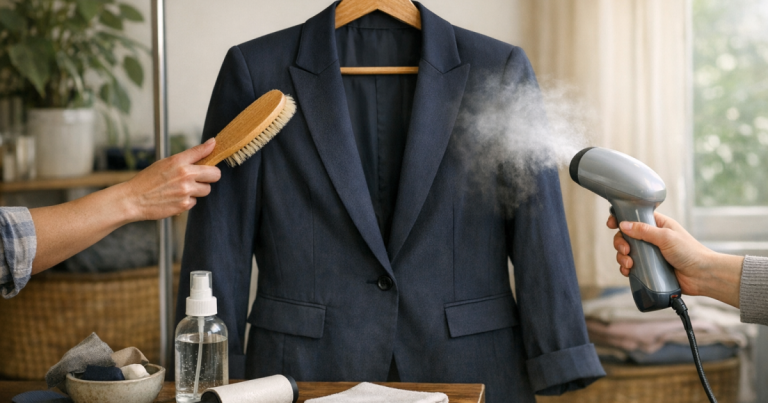
- Use a soft clothes brush on dried mud, working away from reflective strips rather than scrubbing across them.
- Rinse heavy dirt under cool running water before washing.
- Empty pockets so screws, coins or work debris do not scrape the fabric.
- Fasten zips, press studs and hook-and-loop closures to reduce snagging.
If several garments are extremely dirty, wash them in smaller loads. Overfilling the drum stops detergent and water moving through the fabric properly, which can leave dull patches and residue.
Step 3: Pre-treat stains gently
Hi-vis workwear often picks up grease, food stains, oil, soil, sweat marks and dark cuff grime. The safest stain routine is targeted and patient: treat the stain, give it a short dwell time, then wash promptly.
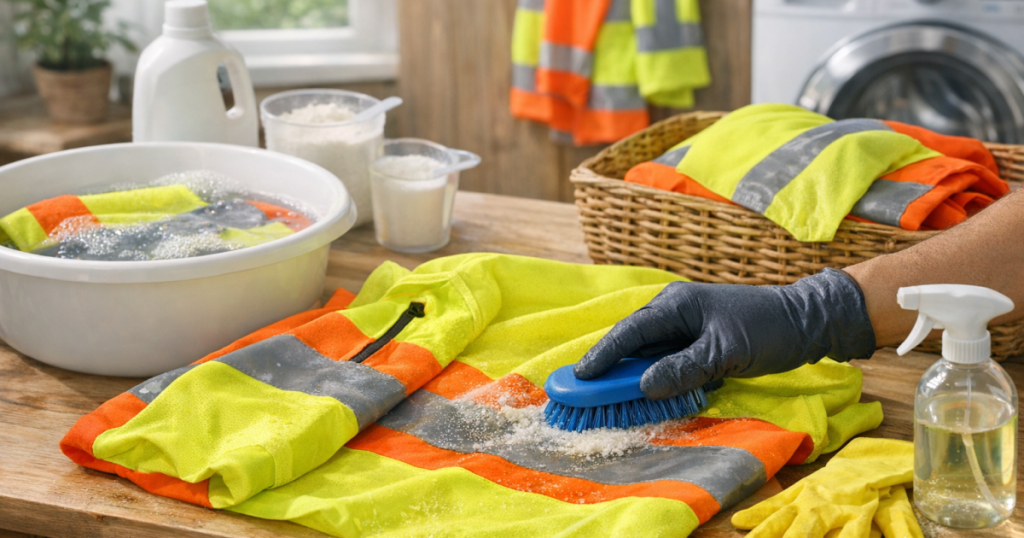
Use a mild laundry stain remover that is suitable for coloured fabrics, and test it on an inconspicuous area if the garment is expensive, work-issued or already faded. Avoid chlorine bleach and do not soak hi-vis overnight in strong stain solutions unless the label specifically allows it. Prolonged soaking can dull fluorescent colour and weaken trims.
For greasy marks, blot first with kitchen paper or a clean cloth rather than rubbing the oil wider. A small amount of liquid detergent worked into the stained area with your fingers can help loosen grease before washing. For heavier work trouser contamination, the principles are similar to removing grease stains from work trousers: lift excess residue first, treat locally, then wash at the safest temperature for the fabric.
If you regularly deal with mixed stains from commuting, construction, catering, delivery work or workshop tasks, a basic stain kit can be useful, provided it is used carefully on high-visibility fabrics. Choose products by fabric suitability and label instructions rather than strength alone; our guide to choosing a stain remover kit for everyday clothes explains the checks that matter for routine laundry.
Step 4: Wash separately and keep the cycle controlled
Wash hi-vis garments with similar colours and similar fabrics. Dark cotton hoodies, denim, linty towels and heavily dyed workwear can leave fibres or colour transfer on fluorescent cloth, making it look grey and tired.
A gentle synthetic or easy-care cycle is usually a good starting point, but the care label takes priority. Use a measured dose of detergent rather than guessing. Too little detergent leaves soil behind; too much can leave residue that dulls fabric and reflective tape.
Detergent habits that protect brightness
- Use a mild detergent suitable for coloured synthetic workwear unless the label says otherwise.
- Avoid chlorine bleach, even on yellow hi-vis garments, because it can damage colour and fibres.
- Skip fabric conditioner; it can leave a coating that affects breathability, water repellency and reflective surfaces.
- Do not add vinegar, disinfectant or laundry boosters unless the garment label and workplace policy allow them.
- Run an extra rinse if the garment feels slippery, smells heavily fragranced or shows detergent streaks after washing.
Workwear that is contaminated with substances such as fuel, chemicals, paint or biological material may need to be handled under workplace procedures rather than normal home laundry. Do not mix heavily contaminated items with family laundry.
Step 5: Dry without baking the tape
Heat is one of the easiest ways to shorten the life of hi-vis clothing. High tumble-dryer settings, direct contact with radiators and ironing over reflective tape can distort trims and make fabric look tired.
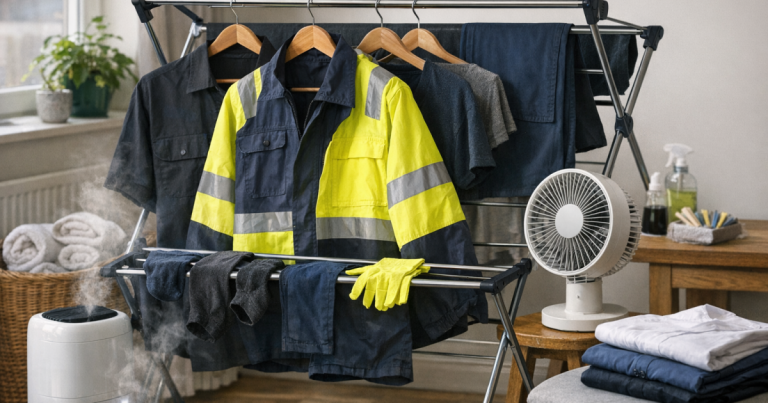
After washing, reshape the garment and hang it on a sturdy hanger or place it flat over an airer. Dry it in a ventilated room, out of harsh direct sunlight. Sunlight may seem helpful, but repeated UV exposure can fade fluorescent fabric, especially if garments are left on a line all day after they are already dry.
If the care label allows tumble drying, use the lowest suitable setting and remove the garment promptly. Never iron directly over reflective tape. If a uniform shirt or polo needs tidying, use the label’s permitted setting and iron on the reverse, keeping away from strips, logos and heat-applied markings.
Step 6: Check visibility after every few washes
Clean does not always mean safe or smart-looking. Build a quick inspection into your laundry routine, especially for workwear used near vehicles, on building sites, in warehouses, for highways work or during early-morning and evening shifts.
- Look at the fluorescent panels in daylight. If they appear grey, brown, sun-bleached or patchy after washing, brightness is declining.
- Check reflective tape for cracks, peeling, bubbling, missing sections or heavy scuffing.
- Hold the garment near a light source in a dim room and view it from a distance. Reflective areas should appear clear and consistent.
- Inspect seams, hems and fastenings. Torn or flapping fabric can reduce coverage and look unprofessional.
- Smell the garment once dry. Persistent odour can mean detergent residue, trapped sweat or incomplete drying.
For employer-issued PPE, do not try to “make do” with a visibly faded or damaged garment. Report it through the workplace process so it can be assessed and replaced where required.
Common workwear examples and the safest approach
Hi-vis waistcoats
Waistcoats are often lightweight and easily damaged by heat. Wash them separately from heavy trousers or jackets, fasten closures and avoid overloading the drum. Because many waistcoats are inexpensive compared with jackets, people are tempted to keep using them when faded; if the colour or tape has clearly deteriorated, replacement is usually the sensible route.
Hi-vis polo shirts and sweatshirts
These collect sweat, deodorant and neck grime, so frequent gentle washing is better than occasional harsh washing. Treat collars and underarms with a small amount of detergent before the wash. Avoid high heat, which can set sweat odours and age synthetic fibres.
Hi-vis trousers
Trousers pick up mud, oil, kneeling dirt and metal dust. Brush them before washing and do not wash them with delicate hi-vis tops. Pay attention to reflective bands around the lower leg, where abrasion from boots and site debris is common.
Hi-vis waterproof jackets
These need two kinds of protection: the fluorescent and reflective safety elements, plus the water-repellent finish. Avoid fabric conditioner and strong detergents, close all fastenings, and follow the label carefully if reproofing is needed. Do not assume a normal hot wash will “reset” waterproofing; it can do the opposite.
How to store hi-vis so it stays bright
Storage is often overlooked. A freshly washed hi-vis jacket left on a van dashboard, damp cloakroom hook or dusty workshop shelf can fade, smell or become dirty before the next shift.
- Store garments fully dry to prevent musty odours and mildew.
- Keep them away from direct sunlight, heaters and damp walls.
- Hang jackets and waistcoats rather than crushing reflective tape under heavy items.
- Keep clean hi-vis separate from oily tools, boots and unwashed work trousers.
- Use a breathable garment bag or dedicated shelf for spare uniform items.
For workers who rotate several uniform pieces, keeping one clean spare ready can prevent last-minute high-heat drying or over-strong stain treatment. Those emergency shortcuts are often what cause the most visible wear.
Mistakes that make hi-vis dull faster
- Using bleach: it can strip or alter fluorescent colour and damage fibres.
- Adding fabric conditioner: it may coat fibres, reduce wicking or affect reflective surfaces.
- Washing with dark loads: lint and dye transfer can grey the fabric.
- Scrubbing reflective tape: abrasion can scratch or lift the surface.
- Drying on a radiator: direct heat can distort tape and set creases.
- Ignoring maximum wash guidance: some PPE labels give a wash limit linked to certified performance.
- Storing damp: trapped moisture causes odour and can encourage mildew.
Main points
To keep hi-vis workwear bright after repeated use, clean it little and often, treat stains gently, avoid bleach and conditioner, dry it without harsh heat, and inspect the garment as well as washing it. The fabric needs to look bright in daylight, and the reflective tape needs to remain intact, clean and consistent.
Home laundering can keep everyday uniforms presentable, but it should not override workplace PPE rules. If a garment is badly contaminated, heavily faded, torn or has failing reflective tape, the safest next step is assessment and replacement rather than stronger cleaning.
Helpful questions
Can I wash hi-vis clothing with normal work clothes?
Only if the other garments are similar in colour, fabric weight and soil level. Avoid dark cotton, denim, towels and oily workwear because lint, dye and grease can dull fluorescent fabric.
Does bleach make yellow hi-vis brighter?
No. Bleach can damage fluorescent colour, fibres and trims. If a hi-vis garment looks dull after proper washing, it may be stained, faded or worn rather than simply in need of a stronger cleaner.
Can hi-vis go in the tumble dryer?
Only if the care label allows it. Use the lowest suitable heat and remove the garment promptly. Air drying is usually kinder to reflective tape and synthetic fabric.
How often should I wash hi-vis workwear?
Wash it whenever dirt, sweat, road film or stains reduce visibility or comfort. Frequent gentle washing is usually safer than letting grime build up and then using harsh treatment.
When should hi-vis workwear be replaced?
Replace or report it when the fluorescent colour stays dull after washing, reflective tape is cracked or peeling, seams are torn, or the garment no longer appears clearly visible in low light.