Grease, stock splashes and tomato marks make white jackets look tired long before the fabric is worn out, but you can keep chef whites clean without reaching for harsh chlorine bleach. The safest routine is less about one miracle product and more about fast stain handling, the right wash temperature for the care label, thorough rinsing and drying that does not bake in odour.
Chef whites are usually made to handle harder use than delicate clothing, yet repeated strong bleaching can weaken fibres, dull trims, damage embroidery and leave whites looking yellow rather than bright. A better approach is to treat the soil you actually have: fat, protein, starch, tannin, colour stains and kitchen odour all need slightly different handling.
What to know first
- Deal with stains before washing, because heat and tumble drying can set food marks into the fabric.
- Use chlorine bleach only if the care label and workplace policy specifically allow it, and never mix it with other cleaning chemicals.
- For most home laundering, oxygen-based stain treatment is the gentler whitening route for washable white cotton or polycotton garments.
- Wash chef whites separately from colours, dark aprons and fluffy towels to reduce greying and lint transfer.
- Dry promptly and fully, because damp storage is one of the quickest ways to create musty smells in workwear.
Why harsh bleach is not the best everyday answer
Chlorine bleach can make a dramatic difference in some laundry situations, but chef whites are exposed to constant wear, friction and repeated laundering. If a jacket is bleached heavily week after week, the fabric can become weaker, seams can look strained, and cotton-rich areas may feel thinner or more papery. Elasticated trouser sections, coloured logos, buttons and woven labels may also suffer.
Bleach also does not remove every stain equally. It can lighten colour marks, but it will not properly dissolve cooking fat, built-up deodorant, starch residue or detergent film. If the underlying soil is still in the fabric, the garment may look cleaner for a short time and then grey or yellow again after a few wears.
The aim is to clean in layers: loosen the greasy soil, break down food residues, lift staining, rinse well, then dry so the fabric smells fresh. That routine is kinder to chef jackets, trousers and aprons, and it gives more consistent results than trying to rescue everything with one aggressive wash.
Step 1: Sort chef whites before stains spread
Separate whites from dark aprons, tea towels, coloured neckerchiefs and anything with heavy lint. Kitchen towels can carry oil, sauce and dye residues, so mixing them with jackets can make whites look dull even after a full wash. If a garment is heavily soiled, keep it apart from lightly worn whites so grease is not redistributed through the load.
Empty pockets before washing. Pens, order pads, food wrappers and metal items can cause avoidable marks or snagging. Shake out crumbs and dry food debris, then close any fastenings that could catch on other garments. Do not overload the drum: chef jackets need room to move so water and detergent can flush soil away from seams, cuffs and underarms.
Step 2: Treat stains by type, not by panic
Pre-treatment is where most of the improvement happens. A general stain spray can help, but you will get better results if you match the method to the mark. Always test any new treatment on a hidden seam or inside hem, particularly if the whites have coloured embroidery or printed branding.
Grease, oil and butter
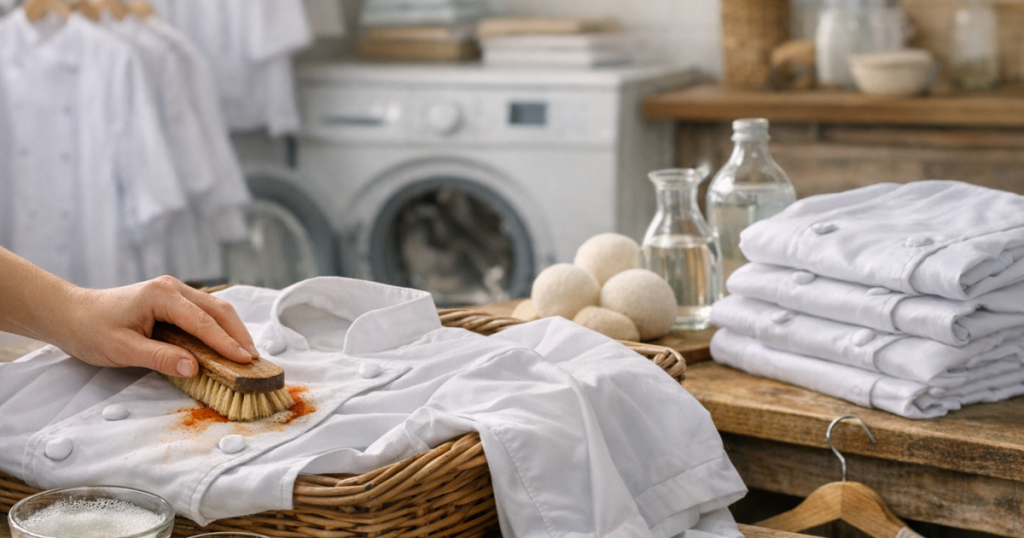
Blot fresh grease with kitchen paper rather than rubbing it deeper into the weave. Work a small amount of liquid laundry detergent into the mark and leave it for 10 to 15 minutes before washing. A tiny dab of washing-up liquid can help with oily kitchen stains, but rinse it well before the garment goes into the machine because it can foam too much in a washer.
Tomato, curry and coloured sauces
Scrape off excess sauce, rinse from the back of the stain with cool water, then use an oxygen-based stain remover if the care label allows it. Avoid hot water at the first stage for mixed food stains, especially if they may contain protein, dairy or egg. Heat can make some residues grip harder before the detergent has had time to work.
Blood, meat juices and egg
Use cool water first. Hot water can set protein stains and make them harder to remove. Rinse thoroughly, pre-treat with detergent, then wash according to the care label and workplace hygiene requirements. If a uniform is used in a professional kitchen, follow the employer’s laundering guidance where it is stricter than a general home-care routine.
Tea, coffee and wine
Rinse quickly, blot, and pre-treat before the stain dries. Tannin stains often respond better to a proper wash with detergent and oxygen treatment than to repeated scrubbing. Heavy scrubbing on cuffs and fronts can roughen the surface and make the fabric hold dirt more easily next time.
If you are deciding which stain tools are worth keeping at home, this fabric-care stain kit comparison explains the difference between surface cleaning help and laundry stain treatment.
Step 3: Choose the right wash temperature and cycle
Check the care label first. Many chef whites can tolerate a warmer wash than ordinary shirts, but not every jacket, trouser or apron is identical. Cotton, polycotton, stretch panels, coloured piping and embroidered logos can all change what is safe. A 40°C wash may be enough for lightly soiled garments, while more heavily used whites may need a warmer programme if the label permits it.
Use enough detergent for the load size and soil level, but do not assume more is better. Too much detergent can leave residue that attracts dirt and makes whites feel stiff. If your area has hard water, whites can grey more easily because minerals interfere with washing performance. In that case, correct dosing matters, and an occasional maintenance wash for the machine can help prevent residues transferring back onto uniforms.
Choose a cycle with good agitation and rinsing rather than a very short programme for greasy chef whites. Quick washes are useful for lightly worn items, but they often do not give stained workwear enough time in the wash liquor. For jackets with heavy cuffs, fronts and underarms, a longer cotton or mixed-fabric cycle is usually more effective if the care label allows it.
Uniforms in other high-use roles face similar problems: repeated washing, body odour, staining and fading. The principles overlap with washing healthcare scrubs without fading or shrinking, especially around sorting, detergent residue and drying promptly.
Step 4: Brighten whites without chlorine bleach
Oxygen-based laundry boosters are often the most useful alternative for washable white workwear. They are not the same as chlorine bleach and are generally used to lift stains and brighten whites through soaking or in-wash treatment. Read the packaging and the garment care label before use, and avoid using them on trims or finishes that warn against bleaching of any kind.
For dull whites, a soak can be more effective than repeatedly washing at higher temperatures. Fill a clean basin or bucket with water at the temperature recommended by the stain product, dissolve the product fully, and soak only garments that are safe for that treatment. Rinse well afterwards, then wash normally. Do not soak metal fastenings for longer than advised, as prolonged wet contact can mark fabric around hardware.
Bicarbonate of soda can help with mild odour in some laundry routines, but it is not a full stain remover. White vinegar is sometimes used in laundry rinsing, yet it should never be combined with bleach products and it is not suitable for every machine or fabric situation. If you use any laundry additive, keep it simple: one treatment at a time, clear rinsing, and no chemical mixing.
Step 5: Avoid the habits that make whites go grey
- Washing with dark items: Even colourfast garments can shed tiny dye particles that dull white jackets over time.
- Leaving stains overnight without rinsing: Fat and sauce marks become harder to lift once they dry into the fibres.
- Using too much fabric conditioner: It can coat fibres, reduce absorbency and trap odour on some workwear fabrics.
- Overloading the washing machine: Soil needs space to move away from the garment, not rub back into it.
- Drying stained items on high heat: Heat can set marks, especially grease and protein stains.
Inspect whites when they come out of the machine and before they go into the tumble dryer. If a stain remains, repeat the pre-treatment and wash again rather than drying it hard. This is especially important for apron fronts, jacket cuffs and trouser thighs, where kitchen stains are usually heaviest.
Step 6: Dry, iron and store so the clean finish lasts
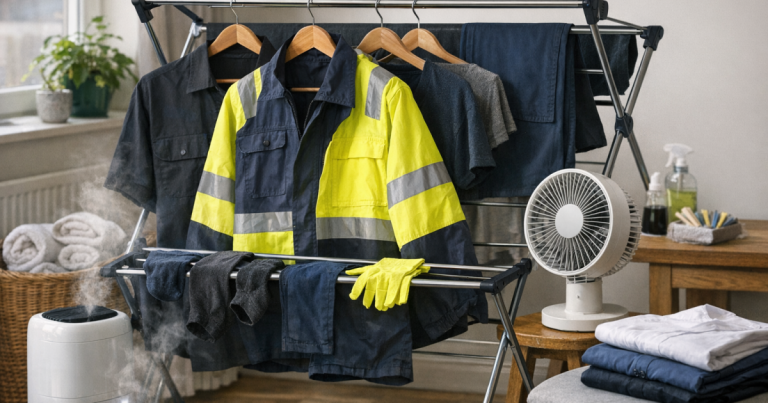
Dry chef whites as soon as the wash finishes. Leaving damp workwear in the machine encourages stale smells and can crease jackets badly. Line drying is useful when the weather allows, but prolonged strong sun can be harsh on some trims and logos. If you tumble dry, use a setting that suits the care label and remove garments promptly to reduce deep creasing.
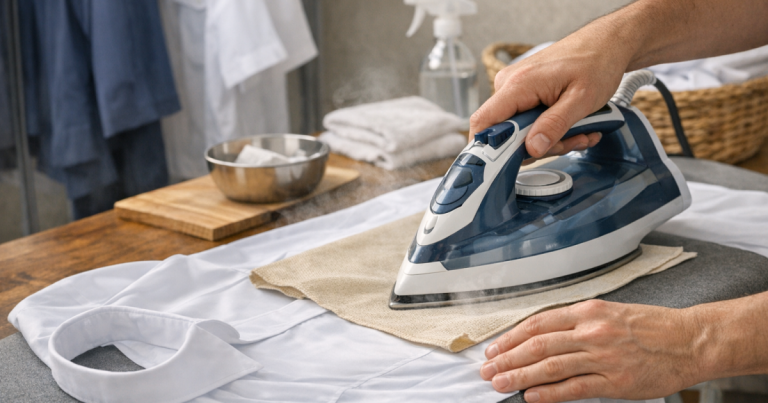
Ironing helps chef whites look sharper, but it should come after stains are removed. A hot iron can set faint marks and make yellowing more obvious. Make sure the soleplate is clean, use the right temperature for the fabric, and iron around logos or embroidery rather than pressing them aggressively from the front.
Store completely dry whites in a ventilated cupboard or drawer. Avoid sealing slightly damp jackets in plastic bags or stacking them tightly straight after drying. If workwear has been stored between jobs, seasons or shifts and smells stale rather than dirty, use the method in our guide to removing musty smells from stored clothes safely before resorting to stronger products.
A workable routine for busy kitchen weeks
At the end of a shift, rinse obvious food marks with cool water if you can do so without leaving the garment damp in a bag for hours. At home, pre-treat grease and coloured stains before they dry fully. Wash whites together with an appropriate detergent, choose a cycle with enough time and rinsing, then inspect before drying.
Once a week, give the most-used jackets a closer check at the cuffs, collar, underarms and front placket. These areas collect body oils, steam, food vapour and repeated splash marks. A short pre-soak for safe white cotton or polycotton pieces can prevent dullness building up, while badly worn or thinning garments should be retired rather than aggressively treated until they fail.
To keep chef whites clean over the long term, think in terms of prevention rather than rescue. Quick rinsing, targeted stain treatment and patient drying are less dramatic than bleach, but they preserve the fabric and keep the uniform looking professional for more washes.
Things readers ask
Can I use bleach on chef whites at all?
Only use chlorine bleach if the garment care label and workplace laundry policy allow it. Even then, it should not be the default treatment for every wash because repeated use can weaken fabric and affect trims.
What is the best way to remove grease from chef jackets?
Blot the grease, pre-treat with liquid laundry detergent, leave it for 10 to 15 minutes, then wash on the warmest care-label-safe programme. Check the mark before drying.
Why do my chef whites still smell after washing?
Common causes include overloading the machine, using too much detergent, washing too cool for the soil level, leaving garments damp after washing, or storing them before they are fully dry.
Should chef whites be washed with tea towels?
It is better to wash them separately. Tea towels often carry grease, food colour and lint, which can transfer back onto white jackets and make them look grey.
Can oxygen stain remover damage chef whites?
It can if the garment label warns against bleaching or if trims, embroidery or finishes are not compatible. Test first, follow the product instructions, and do not soak for longer than directed.
Final thoughts
Clean chef whites depend on a steady routine: sort well, pre-treat stains early, wash with enough time and water movement, brighten with oxygen-based methods where suitable, and dry fully before storage. That approach avoids the fabric damage that comes from heavy bleach use while still dealing with the real problems kitchen uniforms face: grease, colour stains, odour and greying.