Pressed work trousers can look smart one week and develop glossy knee, thigh or seam marks the next. To stop work trousers going shiny, you need less direct heat, less pressure and a barrier between the iron and the fabric. The aim is to relax creases without flattening the fibres into a reflective surface.
Shine is especially common on dark uniform trousers, polyester-rich workwear, wool-blend office trousers and areas that already get friction from sitting, driving or kneeling. Once synthetic fibres are heat-polished, the mark can be difficult to reverse, so prevention matters more than correction.
At a glance
- Turn trousers inside out before pressing whenever the fabric allows.
- Use a clean cotton pressing cloth between the iron and the outer fabric.
- Set the iron lower than you think you need, then increase cautiously only if creases remain.
- Press by lifting and lowering the iron rather than dragging it along the fabric.
- Avoid ironing over dirty, greasy or worn areas, as heat can set residue and exaggerate shine.
- Let trousers cool fully on a hanger before wearing or folding them.
Why work trousers go glossy under an iron
Iron shine is not the same as a clean, crisp finish. It is a reflective patch caused by fibres being compressed, overheated or slightly melted at the surface. The smoother and flatter the fibres become, the more light they reflect.
Work trousers are vulnerable because they often contain durable synthetic fibres. Polyester, poly-viscose and stretch blends are useful for uniforms because they resist heavy creasing and dry quickly, but they dislike high heat and heavy pressure. Wool-blend trousers can also shine when the nap is flattened, even if the fibre itself has not melted.
The most common shiny areas are front creases, pocket edges, hems, seat seams, knees and inner thighs. These zones already have pressure from movement, desks, vehicle seats or kneeling at work. Ironing directly over them with a hot soleplate makes the polished effect worse.
Check the trousers before you switch the iron on
Start with the care label. It tells you the fibre mix and the permitted ironing temperature. A one-dot iron symbol means low heat, two dots means medium heat and three dots means higher heat. If the iron symbol is crossed out, do not iron the garment. Use steam from a distance or hang the trousers in a warm, steamy room instead.
For protective uniforms, take the label seriously. Flame-resistant, high-visibility or chemically treated workwear can have performance finishes that should not be damaged by heat, fabric softener or aggressive stain treatment. If your trousers are part of a protective uniform, follow the manufacturer’s instructions and read more on washing flame-resistant workwear without damaging protection before changing your routine.
Also check whether the trousers are completely clean. Body oils, workshop dust, food grease and detergent residue can turn glossy when heated. If the fabric smells stale or feels waxy around the waistband, knees or pockets, wash and rinse properly before ironing. Heat is not a substitute for cleaning.
Set up the trousers so the iron does less work
The less force you need, the lower the risk of shine. Shake the trousers out after washing, smooth the legs by hand and hang them to dry from the waistband or over a broad rail. If they come out of the washing machine tightly twisted, reshape the seams before drying rather than trying to iron every crease out later.
Use a stable ironing board with enough padding. A hard, thin board cover increases pressure and can imprint seams into the fabric. If your board cover is worn flat, add a clean towel underneath the cover or replace it. The surface should feel firm but not harsh.
Have a pressing cloth ready. A clean white cotton tea towel, cotton handkerchief or purpose-made ironing cloth works well. Avoid coloured cloths that might transfer dye, and avoid textured towels for final pressing because they can leave an uneven finish. The cloth should be slightly damp for stubborn creases, not dripping wet.
The safer ironing method, step by step
1. Turn the trousers inside out
Pressing from the reverse side protects the visible surface. It is the easiest way to reduce shine on dark work trousers and polyester-rich uniforms. Line up the seams carefully so you do not press a new crease into the wrong place.
2. Start with a lower temperature
Set the iron below the maximum shown on the care label, especially for synthetic blends. Let it heat fully before touching the fabric; an iron that is still warming up can release water unevenly and create marks. Test inside the hem or waistband first.
3. Use steam before pressure
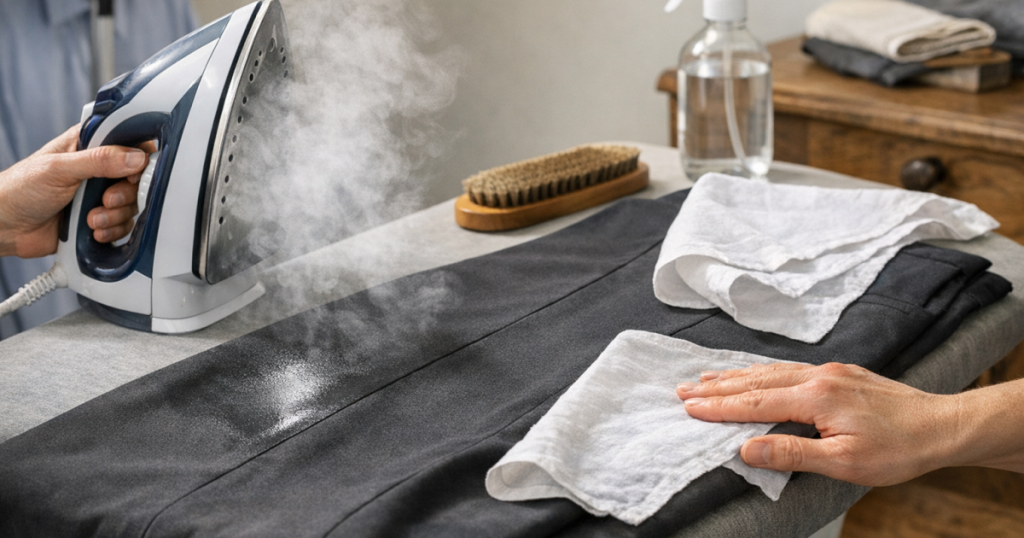
Steam relaxes fibres, while pressure flattens them. Hold the iron just above the trouser leg and use a short burst of steam, then smooth the fabric with your hand once it is safe to touch. This often reduces the need for hard pressing.
4. Place the pressing cloth over the area
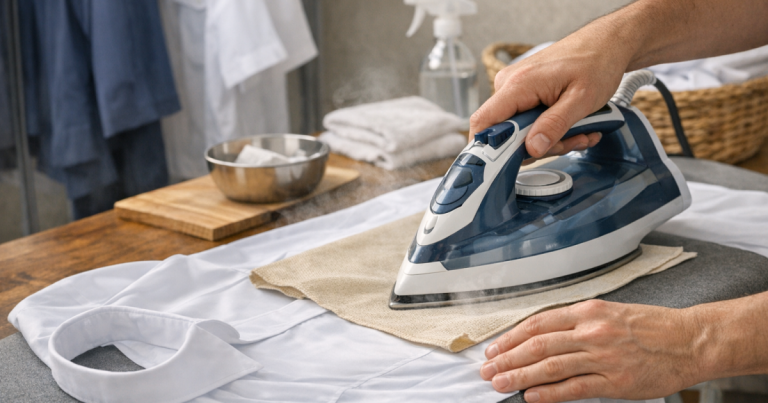
Lay the cloth flat with no wrinkles. Press through the cloth, lift the iron, move to the next section and press again. Do not scrub the iron back and forth across the leg. Dragging creates friction and pushes the fibres into a shine-prone direction.
5. Avoid crushing seams and pocket edges
Raised areas concentrate pressure. Press around pockets, belt loops and thick seams rather than directly over them. For side seams, place a rolled towel inside the trouser leg so the seam edge does not imprint through to the front.
6. Hang the trousers until fully cool
Fabric sets as it cools. Hang trousers by the waistband or from trouser clips, keeping the legs aligned. Wearing them while warm can create seat and knee creases almost immediately, undoing the work you have just done.
Adjust the method for common work trouser fabrics
Not all work trousers respond in the same way. The label is still the authority, but these fabric-aware adjustments help you avoid overdoing it.
- Polyester and poly-viscose uniforms: use low to medium heat, a pressing cloth and very light pressure. If creases remain, add moisture rather than more heat.
- Wool-blend office trousers: use steam and a pressing cloth, then brush the surface lightly once cool to lift the nap. Do not press until the cloth is bone dry, as that can flatten the wool.
- Cotton work trousers: they tolerate more heat than polyester, but dark cotton can still shine if pressed too firmly. Iron slightly damp from the reverse for best results.
- Stretch trousers: avoid high heat. Elastane can be weakened by aggressive ironing, so use short contact, low heat and careful steam.
- Heavy-duty cargo trousers: open pockets and flaps before pressing, then iron around bulky details rather than over them.
The same principle applies to delicate fabrics that mark easily: control the heat, protect the surface and do not polish the fibres. For a related fabric problem, see these tips on how to remove creases from satin without shine marks.
What to do if the shine is already there
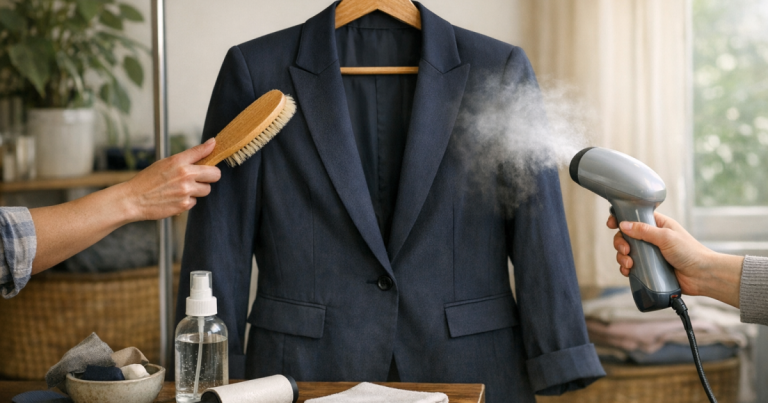
If the shiny patch is mild, you may be able to reduce it. Turn the trousers inside out, hold steam over the affected area and gently brush the fabric surface once cool. A clothes brush is safer than rubbing with a rough sponge. The goal is to lift compressed fibres, not abrade the cloth.
For wool-blend trousers, a damp pressing cloth and steam can help revive the nap. Press lightly from the reverse, then brush in the direction of the fabric. Let the trousers rest before judging the result, as damp wool can look darker until fully dry.
For polyester, results are more limited. If heat has glazed or melted the surface, the change may be permanent. Do not try to scrub the shine away, as this can create a pale worn patch that is more noticeable than the original mark.
If the shine sits on top of residue rather than damaged fibre, washing may help. Use the correct amount of detergent, avoid overloading the machine and allow a proper rinse. Too much detergent or fabric conditioner can leave a coating that becomes more visible under heat.
Uniform habits that prevent shine between washes
Ironing is only part of the problem. Daily wear creates the conditions that make shine show up faster, particularly for people who sit for long periods, drive between sites or kneel at work.
- Hang trousers after wearing instead of leaving them folded over a chair.
- Brush off dust and lint before it becomes embedded in worn areas.
- Rotate between two or more pairs if your uniform allowance allows it, so one pair is not pressed every day.
- Let damp trousers dry fully before ironing; trapped moisture can cause uneven pressing and water marks.
- Use a trouser hanger that supports the fabric without sharp clamp marks.
- Do not iron over deodorant, oil, food or workshop residue.
If the rest of your uniform is clean but still smells tired after laundering, the issue may be wash temperature, detergent dose, drying time or trapped residue. These steps for stopping work shirts smelling after washing are also useful for trouser waistbands and synthetic uniform fabrics.
Mistakes that make shiny marks worse
- Using the linen setting on blended trousers: many work trousers look sturdy but contain heat-sensitive synthetics.
- Pressing hard to chase one crease: stubborn creases need moisture, time and cooling, not force.
- Ironing the front crease directly: always use a pressing cloth, and press gently along the crease rather than grinding it flat.
- Skipping the test patch: the inside hem tells you how the fabric reacts before the visible leg is at risk.
- Using a dirty iron soleplate: residue on the iron can transfer onto dark trousers and create a shiny or sticky patch.
- Folding trousers while warm: warm fabric takes impressions easily, including hanger lines and sharp fold marks.
Things readers ask
Can shiny iron marks be removed completely?
Sometimes, but not always. Shine from flattened wool or residue may improve with steam and gentle brushing. Shine from overheated polyester is often permanent because the surface fibres have been heat-polished.
Should I iron work trousers inside out every time?
Yes, for most dark, synthetic or uniform trousers. If you need to sharpen the front crease from the outside, use a clean pressing cloth and light pressure only.
Is steam safer than dry ironing?
Steam is usually safer for releasing creases because it reduces the need for pressure. It can still mark unsuitable fabrics, so check the care label and test on an inside area first.
Why are my trouser seams shiny but not the rest of the leg?
Seams are raised, so they receive more pressure from the iron. Press around them, use a cloth and place a rolled towel inside the leg to stop seam edges imprinting through.
Can fabric conditioner cause shine?
It can contribute if it leaves a coating on synthetic workwear. Use the correct dose, avoid overloading the machine and check whether your workwear label advises against conditioner.
What stands out
Shiny work trousers are usually caused by a combination of heat, pressure and friction. The safest routine is simple: clean fabric, reverse-side pressing, a cotton cloth, lower heat, gentle steam and time to cool on a hanger. Once you stop treating creases as something to flatten by force, trousers keep a smarter, more professional finish for longer.