Dark clothes can look tired quickly when dye loss, lint, heat and detergent residue all work against them. The easiest way to stop dark clothes fading is to wash them less aggressively: cooler water, shorter cycles, lower spin where practical, and drying away from direct heat or strong sunlight.
This matters most for black jeans, navy uniforms, dark cotton T-shirts, schoolwear, work trousers and deep-coloured knitwear. A few small changes to your washing routine usually make more difference than any single specialist product.
The short version
- Wash dark clothes inside out to reduce surface abrasion.
- Use 20°C or 30°C for everyday lightly soiled darks, unless the care label says otherwise.
- Separate true darks from towels, fleece and pale lint-shedding items.
- Choose a shorter or gentler cycle when clothes are not heavily soiled.
- Use the correct detergent dose so residue does not dull the fabric.
- Air dry away from radiators, tumble dryer heat and direct sun where possible.
Why dark clothes fade in the wash
Fading is not always dye washing out in one dramatic event. More often, it is gradual wear on the fabric surface. Cotton fibres lift and break, black dye looks greyer, seams become shiny, and lint clings to the garment. Heat, long wash cycles and rough spinning all speed this up.
Detergent residue can also make dark fabric look dusty or flat. This is common when too much detergent is used, the drum is overloaded, or a quick cycle does not rinse properly. The garment may not have lost much colour at all; it may simply be coated with residue or pale fibres from other laundry.
Some fabrics fade more visibly than others. Black denim, garment-dyed cotton, dark viscose, brushed jersey and navy uniforms tend to show surface wear quickly. Synthetic sportswear may keep colour better but can hold smells, so it still needs the right cycle and enough space to rinse properly.
Step 1: Sort darks more carefully than lights
A single mixed wash can undo good habits if a black top is washed with fluffy towels or pale sweatshirts. Separate dark clothes into sensible groups rather than relying on one dark basket.
- Dark everyday cottons: black T-shirts, navy tops, dark joggers and dark underwear can usually wash together.
- Dark denim: jeans and jackets are better washed separately or with robust dark items because zips, rivets and heavy seams create friction.
- Dark delicates: fine knits, viscose, lace trims and soft jersey need gentler handling and should not be washed with heavy garments.
- Lint risks: avoid mixing darks with towels, fleece blankets, fluffy socks or anything that sheds pale fibres.
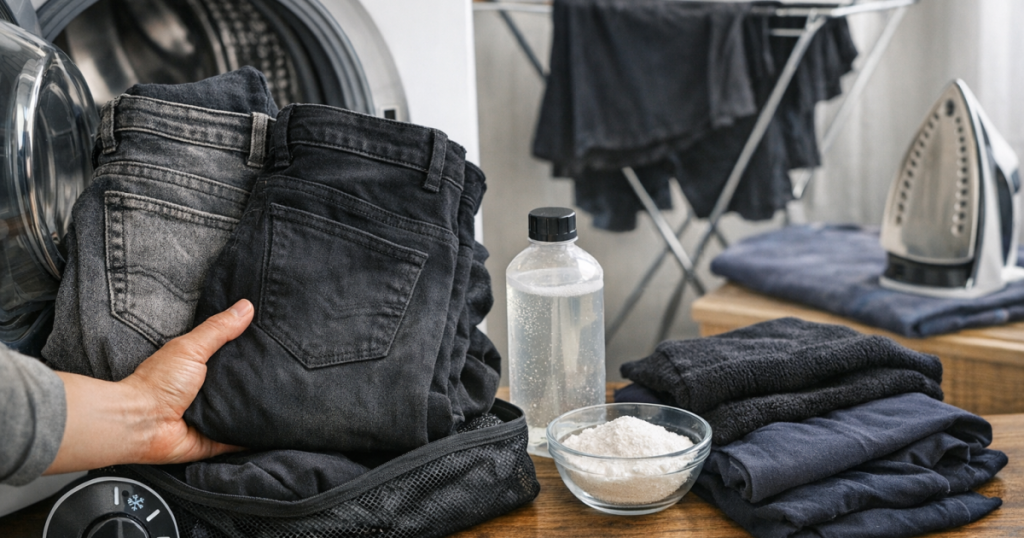
For smaller delicate items, a mesh bag can reduce snagging and twisting, but it should not be used as an excuse to overload the machine. If you use one, follow these tips on using mesh laundry bags without damaging delicates.
Step 2: Turn garments inside out
Turning dark clothes inside out is one of the simplest ways to protect the visible surface. It helps reduce rubbing against the drum, other garments and fastenings. It is particularly useful for black jeans, printed dark T-shirts, dark school sweatshirts and uniform trousers.
Fasten zips, close hooks and secure Velcro-style fastenings before washing. Open buttons on shirts so the placket is not pulled out of shape, but keep harsher fastenings closed so they do not scrape other items.
Step 3: Use cooler water for routine washes
For lightly worn dark clothes, 20°C or 30°C is usually enough when used with a suitable detergent and a normal amount of mechanical action. Always check the care label, especially for uniforms, technical fabrics, wool blends and embellished clothing.
Use warmer settings only when the garment genuinely needs it, such as heavily soiled workwear or items requiring a more thorough hygiene wash. Heat can encourage dye loss and fibre wear, so it should be a deliberate choice rather than the default for every dark load.
Step 4: Pick the right cycle, not just the right temperature
Temperature gets most of the attention, but cycle length and agitation matter too. A long cotton cycle may be useful for robust, dirty laundry, but it can be unnecessarily harsh on lightly worn dark clothing.
- Use a shorter everyday cycle for lightly soiled darks, provided the machine still rinses properly.
- Use a delicates or wool cycle for garments with fine fibres, soft drape or decorative trims.
- Avoid cramming the drum; clothes need room to move and rinse.
- Reduce spin speed for items that crease badly, stretch easily or show surface wear.
If clothes come out soapy, stiff or with pale streaks, the issue may be poor rinsing rather than fading. Try a smaller load, a better-matched cycle or a lower detergent dose next time.
Step 5: Dose detergent carefully
More detergent does not mean cleaner dark clothes. Too much can leave a greyish film, especially in hard water areas or on quick washes. Too little, however, can leave body oils and soil in the fabric, which also dulls colour over time.
Follow the dosing guidance for your detergent, load size, soil level and water hardness. In many UK homes, hard water means detergent can behave differently from one household to another, so it is worth adjusting rather than using the same amount for every wash.
For dark colours, many people prefer liquid detergent because it dissolves easily at lower temperatures and is less likely to leave visible powdery marks. If you use washing powder, make sure the drum is not overloaded and the chosen cycle gives it enough time to dissolve and rinse away.
Step 6: Treat marks before washing
Stains make people reach for hotter washes, but targeted pre-treatment is usually kinder to dark fabric. Deal with marks before the item goes into the machine, using the mildest method that works for the stain type.
- Deodorant marks: brush off dry residue first, then treat gently before washing.
- Grease or food: blot, avoid rubbing hard, and use a small amount of suitable detergent on the mark before washing.
- Mud: let it dry, brush off loose dirt, then wash rather than grinding it into the fibres.
- Sweat areas: focus on collars, underarms and waistbands rather than increasing heat for the whole load.
White marks on black tops are often product residue rather than permanent fading. For underarm streaks and chalky patches, use this guide to removing white deodorant marks from black clothes before assuming the garment has lost colour.
Step 7: Dry dark clothes away from harsh heat
Drying can fade dark clothes as much as washing. Strong sunlight can bleach colour, while high tumble dryer heat can roughen fibres and make dark cotton look older. Radiators can also create stiff patches and shiny areas on some fabrics.
Air drying indoors or in the shade is usually gentler. Shake garments out, reshape seams and hang or lay them so air can circulate. For dark knitwear, dry flat where possible so the garment does not stretch under its own weight.
If you do use a tumble dryer, choose a lower heat setting if the care label allows tumble drying at all. Remove items as soon as they are dry rather than leaving them to over-dry in residual heat.
Fabric-by-fabric checks
Black jeans and dark denim
Wash denim inside out, with similar dark and sturdy items, and avoid washing after every wear unless it is dirty or smells. Use a cool cycle and reshape while damp. Dark denim can release dye in early washes, so keep it away from pale stitching-heavy items and light clothing.
Dark uniforms and workwear
Uniforms often need frequent washing, so the aim is to balance cleanliness with colour protection. Pre-treat collars, cuffs and underarms, avoid overloading, and dry away from direct sun. Having enough uniform pieces to rotate can reduce the need for harsh daily washing.
Dark wool and cashmere
Fine animal fibres need gentle washing, low agitation and careful drying. Do not treat a black cashmere jumper like a cotton sweatshirt. For specialist steps, read the guidance on washing cashmere jumpers without shrinking them.
Dark sportswear
Sportswear can hold odour, but high heat and fabric softener are not always helpful. Wash promptly after wearing, avoid leaving damp kit in a bag, and allow space in the drum for a proper rinse. Check the care label for any restrictions on softeners or heat.
Habits that make fading worse
- Washing dark clothes after every brief wear, even when airing would be enough.
- Using long, hot cycles for lightly worn items.
- Overfilling the machine so clothes rub hard and rinse poorly.
- Drying black clothes in strong direct sunlight.
- Using too much detergent, then mistaking residue for colour loss.
- Washing darks with towels or fleece that leave pale lint behind.
Main points
Dark clothes stay sharper when you reduce the main causes of visible wear: heat, friction, residue, lint and harsh drying. Sort loads more carefully, turn garments inside out, wash cooler where the care label allows, and avoid using more detergent than the load needs.
The most reliable routine is simple: wash darks with similar fabrics, keep the drum comfortably filled rather than packed, treat stains before washing, and dry away from strong heat. That combination protects colour without making laundry more complicated.
Helpful questions
Should I wash black clothes in cold water every time?
Not always. For lightly worn black clothes, 20°C or 30°C is usually suitable if the detergent works at that temperature. Heavily soiled items may need a warmer or longer wash, depending on the care label.
Does vinegar stop dark clothes fading?
Vinegar is often suggested, but it is not a guaranteed fix for dye loss and may not suit every machine or fabric. Better results usually come from cooler washing, reduced friction and correct detergent dosing.
Can I use fabric conditioner on dark clothes?
You can use it where the care label allows, but do not overuse it. Build-up can dull dark fabrics, reduce absorbency on some items and affect certain sportswear finishes.
Why do my black clothes come out with white streaks?
White streaks are often caused by detergent residue, deodorant, limescale deposits or lint. Try a smaller load, accurate dosing and better sorting before assuming the fabric has faded.
How often should I wash black jeans?
Wash them when they are dirty, stained or starting to smell, rather than automatically after each wear. Airing between wears and spot-cleaning small marks can help preserve the colour and surface finish.