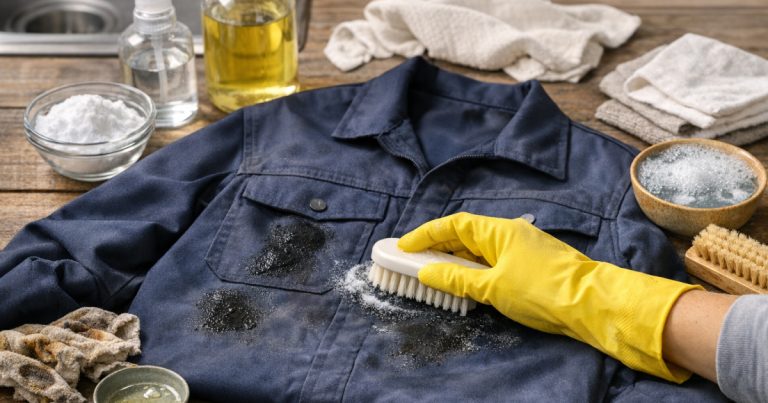
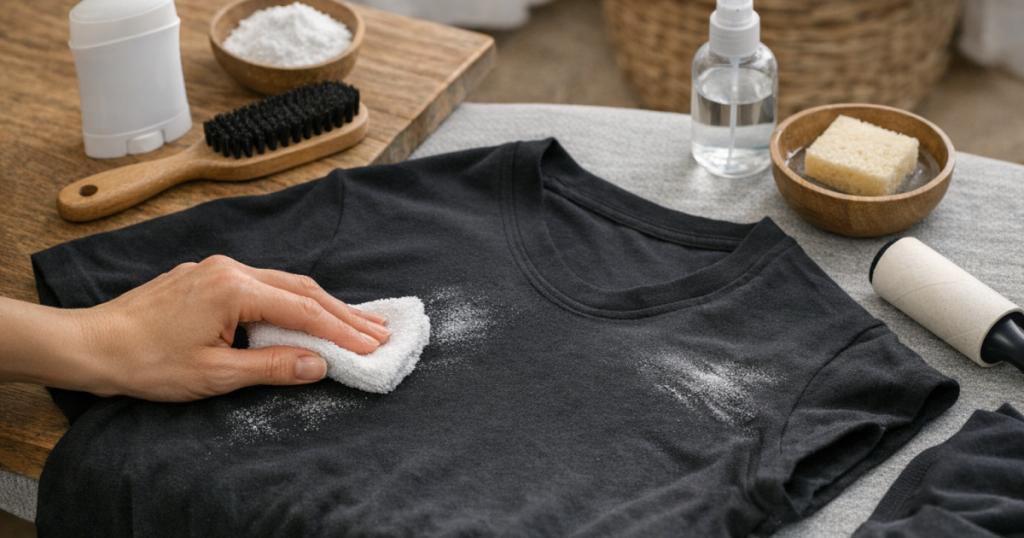
Black tops make deodorant transfer obvious: one quick pull over the head and there are pale streaks across the side seam, underarm or chest. You can usually remove white deodorant marks without washing the whole garment, provided you work gently and keep the fabric dry or only lightly damp at first.
The right method depends on whether the mark is fresh surface transfer or a set-in underarm build-up. Start with the least wet, least aggressive option, then move to a light wash only if the residue remains.
What to know first
- Fresh white streaks are often deodorant rubbed onto the fabric surface, so dry removal works surprisingly well.
- Chalky patches in the underarm area are more likely to be product build-up mixed with sweat and need a pre-wash treatment.
- Black cotton and polyester can usually tolerate a little water; wool, cashmere, silk and viscose need much lighter handling.
- Do not use chlorine bleach on black clothing. It can strip dye and leave orange, brown or grey damage.
- Avoid hot tumble drying until the mark has gone, as heat can help residue bond to fibres.
Why deodorant leaves white marks on black fabric
Most visible white smears come from waxy, powdery or mineral ingredients in deodorant and antiperspirant transferring onto the cloth. Roll-ons, sticks and cream formulas can all do it, especially if the product has not dried before dressing.
Antiperspirants can be more stubborn than simple deodorants because they are designed to stay put on skin. Once the residue mixes with body oils and perspiration, it can settle into the underarm area and become a dull, pale patch rather than a loose streak.
That distinction matters. A fresh streak on the outside of a black T-shirt should not be treated like a deep stain. Over-wetting or scrubbing can spread the residue, raise fibres, fade dye or leave a shiny patch on delicate dark fabrics.
Step-by-step: remove white deodorant marks from black clothes
1. Let the mark dry if it is damp
If the smear is still wet from a roll-on or cream product, give it a few minutes to dry before touching it. Rubbing damp deodorant can push it deeper into the weave and create a larger grey area.
Hang the garment somewhere airy, away from direct heat. Do not put it on a radiator, as concentrated heat can set oily residue and may affect elastane, wool or viscose blends.
2. Brush away loose residue
Use a clean, dry microfibre cloth, a soft clothes brush or the inside of another clean section of the same garment. Rub lightly in short strokes, working with the fabric grain rather than grinding across it.
For a black jersey top, turn the cloth over frequently so you are lifting the white residue rather than moving it around. On a structured black shirt or dress, support the fabric from behind with your hand to avoid stretching the area.
3. Try the fabric-on-fabric trick for fresh streaks
If you are getting ready and need a quick fix, fold the garment so a clean black section touches the mark, then rub the two fabric surfaces together gently. The texture of the same material often lifts deodorant transfer without adding water.
This is useful on cotton T-shirts, jersey dresses, school polo shirts and casual black work tops. Avoid firm rubbing on fine knitwear, silk, satin, velvet or anything with a delicate nap.
4. Use a barely damp cloth for residue that clings
If dry brushing leaves a pale shadow, dampen a white or colourfast cloth with cool water, then wring it out well. Dab the mark from the outside towards the centre. The cloth should be damp, not dripping.
After dabbing, blot with a dry towel and let the area air dry. On black clothing, wet patches can look worse while damp, so judge the result only once the fabric has dried fully.
5. Add a small amount of liquid detergent for stubborn patches
For a more stubborn underarm patch, mix a pea-sized amount of mild liquid laundry detergent with about 250 ml of cool water. Dip in a cloth, squeeze it nearly dry, then dab the affected area. Leave it for 5 to 10 minutes before rinsing by dabbing with a separate cloth dampened with plain cool water.
This method is better for washable cotton, polyester and many cotton-rich blends than for dry-clean-only garments. Always check the care label first. If the garment says dry clean only, avoid home soaking or spot-cleaning with detergent, as it can leave rings or disturb the finish.
6. Wash only if the mark is part of a build-up
If the underarm area feels stiff, waxy or powdery after spot treatment, wash the garment according to its care label. Use a detergent suitable for dark clothes if you have one, choose a cool cycle where appropriate, and turn the garment inside out to reduce surface wear.
Do not overload the washing machine. Black garments need room for detergent and rinse water to move through the fabric; otherwise loosened deodorant can redeposit and leave a cloudy finish.
Fabric checks before you clean
Black cotton and jersey
Black cotton is usually straightforward, but it can fade if scrubbed hard or washed too hot. Start dry, move to cool water, then use diluted detergent only if needed. If the mark is on a printed black T-shirt, avoid rubbing across the print.
Polyester, gym tops and uniform fabrics
Synthetic fibres can hold onto oily residue, especially around underarms. A light detergent solution followed by a proper rinse is often more effective than repeated dry rubbing. Wash performance tops promptly after wear, but avoid fabric conditioner if the care label advises against it, as it can affect moisture-wicking finishes.
Wool and cashmere
Fine knitwear needs minimal friction. Dab rather than rub, keep water cool, and never twist the area to rinse it. For black cashmere, it is safer to treat the mark as a delicate fibre problem rather than a standard stain; the same gentle handling principles used when washing cashmere jumpers without shrinking them apply here too.
Silk, viscose and satin finishes
These fabrics can develop water marks, shine or texture changes if spot-cleaned unevenly. Test any damp method on an inconspicuous seam allowance first. If water leaves a ring, stop and consider whether the whole garment needs a careful hand wash or professional cleaning instead. The approach is similar to avoiding marks when you wash silk pillowcases without water marks: even moisture and gentle blotting matter more than force.
What not to do on black clothing
- Do not scrub with a nail brush. It can raise fibres and leave a fuzzy, grey-looking patch.
- Do not use neat vinegar on dark fabric. If you use vinegar at all, dilute it heavily and test first, as acidity can affect dyes and finishes.
- Do not reach for bleach, whitening powders or brightening stain removers intended for whites.
- Do not iron over the residue. Heat can make waxy ingredients more difficult to lift.
- Do not use coloured wipes or perfumed wipes without testing, as they can leave their own residue.
How to prevent the marks coming back
The easiest prevention is to let deodorant dry before dressing. If you use a roll-on, give it a few extra minutes before pulling on a black top. If you use a stick, apply a thinner layer and wipe away excess from the edge of the underarm before it reaches the fabric.
Dress carefully, especially with fitted black tops. Roll the hem slightly, put your arms through first, and avoid dragging the underarm area across freshly applied product. For shirts, button from the lower half first, then settle the shoulders last.
Regular washing also helps. Deodorant build-up becomes harder to remove when it has been worn, dried, reworn and warmed repeatedly. If you notice a faint pale cast under the arms, treat it before it turns into a stiff patch.
When finishing smart black shirts, avoid pressing directly onto any remaining residue. A light steam can relax creases once the fabric is clean, but a hot iron can set residue if used too soon. If you are deciding how to finish shirts safely, the difference between a clothes steamer or steam iron for shirts is worth understanding.
Helpful questions
Can I remove deodorant marks without washing the garment?
Yes, if the mark is fresh surface transfer. Try a dry microfibre cloth, soft clothes brush or gentle fabric-on-fabric rubbing before using water.
Why do marks reappear after the fabric dries?
That usually means residue is still in the fibres. Repeat with a lightly damp cloth or use a small amount of diluted liquid detergent, then rinse by blotting with cool water.
Is vinegar safe on black clothes?
Diluted white vinegar can help with some residue, but it is not risk-free on dark dyes or delicate finishes. Test first and avoid using it neat.
Can deodorant marks permanently damage black fabric?
Fresh marks are rarely permanent. Long-term build-up, heavy rubbing, hot ironing or harsh chemicals can cause lasting fading, shine or texture damage.
Should I wash black clothes inside out after treating the mark?
Yes. Washing inside out helps protect the outer surface from friction and can reduce visible fading, especially on cotton jersey and dark uniform fabrics.
Main lessons
Start dry, work gently and only add moisture if the residue will not lift. Fresh streaks on black clothing are usually quick to fix, while set-in underarm patches need a little detergent, a proper rinse and a careful wash.
The main risk is over-treating the fabric. Black garments show abrasion, water rings and fading quickly, so choose the mildest method that works and check the care label before moving from a quick surface clean to a full wash.