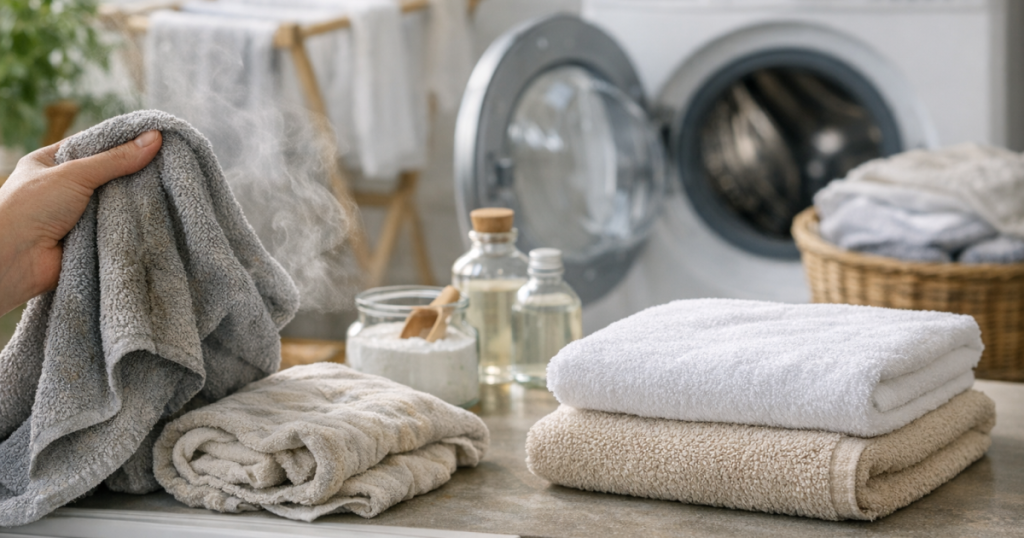
A towel can come out warm, fluffy and apparently clean, then smell stale the moment you dry your hands. The usual cause of musty towels after washing is trapped moisture, leftover detergent, body oils or poor drying rather than a single “bad” wash.
The fix is usually a reset wash, better drying and smaller changes to your everyday laundry routine. Start with the smell, then work backwards: wash temperature, detergent dose, machine cleanliness and where the towel sits before and after washing.
What to know first
- Do not keep adding fabric softener. It can coat towel fibres, reduce absorbency and trap odour.
- Wash towels separately from heavy clothes when they are already smelly, so the drum can rinse properly.
- Use the warmest temperature allowed on the care label; many cotton towels tolerate 60°C, but not all trims and colours do.
- Dry towels quickly and completely. A slow, damp airer in an unventilated room can undo a good wash.
- Clean the washing machine if the smell affects several loads, not just towels.
Step 1: Check where the smell is really coming from
Before rewashing everything, separate three likely causes: the towel, the washing machine and the drying environment. Smell the towel when it is dry, then again when it is damp. If it only smells when wet, residues inside the fibres are likely being reactivated by moisture.
Next, smell inside the washing machine drum and around the rubber door seal. A sour or drain-like smell in the machine suggests detergent build-up, trapped lint or stagnant water. Finally, look at where towels dry. In many UK homes, towels are left on bathroom hooks, radiators or indoor airers where airflow is poor, especially in winter or in flats with limited ventilation.
If towels smell clean after washing but develop a stale odour in storage, the problem may be a damp cupboard rather than the wash itself. For wardrobe and linen storage issues, the same principles used to remove musty smells from stored clothes safely can help you stop the odour returning.
Step 2: Do a reset wash without softener
For towels that already smell sour, a normal wash with extra detergent often makes the problem worse. Too much detergent can cling to the loops of the terry fabric, leaving a sticky residue that holds body oils and damp smells.
How to reset a load of towels
- Wash only towels, leaving enough space for them to move freely in the drum.
- Choose the warmest wash permitted by the care label. For many plain cotton towels, 60°C is suitable, but check coloured, embroidered or bamboo-blend towels first.
- Use a normal, measured dose of detergent for your water hardness and load size. Do not guess or overfill the cap.
- Skip fabric softener completely for this wash.
- If the towels are badly sour, add white vinegar to the rinse compartment or run a separate rinse cycle afterwards. Do not mix vinegar with bleach or chlorine-based products.
- Run an extra rinse if the towels still feel slippery, overly foamy or heavy with residue.
After the reset wash, dry the towels straight away. Leaving clean towels sitting wet in the machine for even a few hours can restart the musty smell, particularly in a warm kitchen or utility room.
Step 3: Use enough detergent, not the maximum amount
Towels are thick, absorbent and good at holding onto whatever goes into the wash. That includes detergent, conditioner, bath oils, hair products and hard-water minerals. The aim is not to strip the fabric harshly, but to rinse it clean.
Use the detergent dosing instructions as a starting point, then adjust for your household. A large load in a hard-water area may need more detergent than a small load in a soft-water area, but “more” should still mean a measured dose, not a heavy pour. If towels feel stiff, waxy or less absorbent than they used to, residue is likely part of the odour problem.
Powder detergent can be useful for robust white cotton towels because it often performs well on body oils and general grime, but it must dissolve and rinse properly. Liquid detergent can be convenient for cooler washes and coloured towels. Whichever format you use, avoid using detergent, softener and scent boosters together on towels that already smell stale.
Step 4: Stop damp towels building up before wash day
One of the easiest ways to prevent stale smells is to change what happens before the towel enters the machine. A towel that sits damp in a laundry basket for two days is much harder to freshen than one that has been allowed to air first.
- Hang used bath towels fully spread out, not bunched on a hook.
- Avoid throwing wet towels straight into a closed basket or plastic laundry bag.
- Wash gym towels, swimming towels and hair towels promptly because they often hold sweat, chlorine, oils or product residue.
- Give each towel enough space between uses. A towel that never dries properly between showers will smell faster.
- Do not overload the machine. Tightly packed towels cannot agitate, rinse or spin effectively.
For households with uniforms, sports kit or workwear in the same laundry routine, keep towels separate when odour is an issue. The logic is similar to careful uniform washing: you want enough cleaning power without unnecessary fading, shrinking or fabric wear. The same balance is covered in more detail in the guide to washing healthcare scrubs without fading or shrinking.
Step 5: Dry towels faster and with more airflow
A good wash cannot compensate for slow drying. Towels are dense, so they need either outdoor airflow, a well-ventilated indoor space, a tumble dryer where the care label allows it, or a combination of drying methods.
Shake each towel before hanging it. This opens the pile and helps air reach the loops. If drying indoors, leave gaps between towels rather than folding them over narrow bars. Open a window when practical, use an extractor fan in damp rooms, or place the airer somewhere with better air movement. A dehumidifier can also help in homes where condensation is a regular problem.
Radiator drying can work in a pinch, but towels wrapped tightly around a radiator may dry unevenly and keep moisture trapped in the folded sections. If you use a heated airer, avoid overloading it and rotate thick towels so the inner layers dry fully.
Step 6: Clean the washing machine, not just the towels
If several laundry loads smell musty, the washing machine needs attention. Low-temperature washes, liquid detergent, fabric conditioner and damp seals can all contribute to residue inside the appliance.
- Wipe the rubber door seal, including the folds where lint and water collect.
- Remove and rinse the detergent drawer, then clean the slot it slides into.
- Leave the door and drawer slightly open between washes so moisture can escape.
- Run a maintenance wash according to the washing machine manual, usually empty and hot.
- Check the filter if your machine manual explains how to do this safely and accessibly.
Do not mask a dirty machine with fragrance-heavy laundry products. A fresh scent can fade quickly, while the underlying damp or residue smell remains in the towel fibres.
What not to do when towels smell stale
- Do not use fabric softener as a cure. It may make towels feel smooth briefly, but it can reduce absorbency and trap odour.
- Do not overload the drum to “get them all done”. Towels need space for water and detergent to circulate.
- Do not leave washed towels in the machine overnight.
- Do not store towels before they are completely dry, even if they only feel slightly cool or damp at the edges.
- Do not rely on harsh bleaching for routine odour control. It can weaken fibres and affect colours if used carelessly.
If you are dealing with white towels and are tempted to reach for bleach, use restraint. Many odour problems respond better to correct washing, rinsing and drying than stronger chemicals. For white workwear and pale laundry, the same gentle-first approach is explained in keeping chef whites clean without harsh bleach.
How to keep towels fresh between washes
Once the odour has gone, maintenance is much easier than repeated rescue washes. Rotate towels so each one has time to dry properly. In a busy bathroom, a towel rail with space between towels is better than several damp towels sharing one hook.
Wash bath towels after several uses rather than waiting until they smell. Hand towels often need washing more frequently because they are used by several people and may stay damp for longer. Kitchen towels should be treated separately from bathroom towels, particularly if they are used around food, spills or greasy hands.
When putting towels away, choose a dry cupboard with airflow. Do not pack shelves so tightly that warm laundry is trapped in a dense stack. Let towels cool fully after tumble drying before folding them into a cupboard, as retained warmth can make any remaining moisture harder to notice.
FAQ
Why do my towels smell musty even after a hot wash?
They may still contain detergent residue, body oils or trapped moisture, or the washing machine may need cleaning. A hot wash helps, but rinsing, load size and drying speed matter just as much.
Can vinegar fix musty towels after washing?
White vinegar can help reduce residue and stale odours when used carefully, usually in the rinse stage or as part of a reset wash. Do not combine it with bleach or chlorine-based products.
Should I wash towels at 40°C or 60°C?
Check the care label first. Many cotton towels can be washed at 60°C when they need a deeper clean, while coloured, decorative or blended towels may be better at 40°C to protect the fabric.
Why do towels smell worse when they get wet again?
Moisture can reactivate odours held in detergent residue, oils or mildew inside the fibres. That is why a towel can smell fine in the cupboard but stale after a shower.
How do I stop towels going stiff while removing smells?
Use the right detergent dose, avoid fabric softener, rinse thoroughly and shake towels before drying. Stiffness is often caused by residue, hard water or slow drying rather than lack of conditioner.
What to remember
Fresh towels come from a clean cycle from start to finish: an aired towel before wash day, a correctly dosed wash, enough rinsing, a clean machine and fast drying. If one part of that chain stays damp or overloaded, the musty smell is likely to return.
For most households, the biggest improvements are simple: stop using fabric softener on towels, give them more room in the drum, dry them immediately and clean the washing machine regularly. Once the towel fibres are free of residue and moisture, they should smell clean without needing heavy fragrance.