Delicates usually come out of the wash damaged for one of three reasons: friction, stretching or catching on other garments. Used well, mesh laundry bags reduce those risks by keeping vulnerable items contained while still letting water and detergent move through the fabric. The key is choosing the right pouch, loading it lightly and matching it with a gentle wash routine.
The short version
- Use one small pouch per delicate item, or group only very similar lightweight pieces together.
- Fasten hooks, close zips and turn garments inside out before bagging them.
- Fill each pouch loosely, not tightly, so water can circulate.
- Wash on a cool, gentle cycle with a mild detergent and a reduced spin where possible.
- Remove items promptly after washing and dry them according to the care label, not according to convenience.
Why a laundry pouch helps, but does not do everything
A protective wash pouch is a barrier, not a magic shield. It helps stop bra hooks catching lace, tights wrapping around heavier clothes, and fine straps stretching around the drum. It also reduces abrasion against denim, towels and zips, which is one reason delicate fabrics can look tired after only a few washes.
What it cannot do is make the wrong wash safe. Silk, cashmere, wool blends, embellished garments and structured lingerie still need the right temperature, spin speed and detergent. If the care label says hand wash, dry clean or do not tumble dry, the bag does not override that instruction. Think of it as one part of a fabric-safe routine.
Step 1: Match the mesh laundry bags to the garment
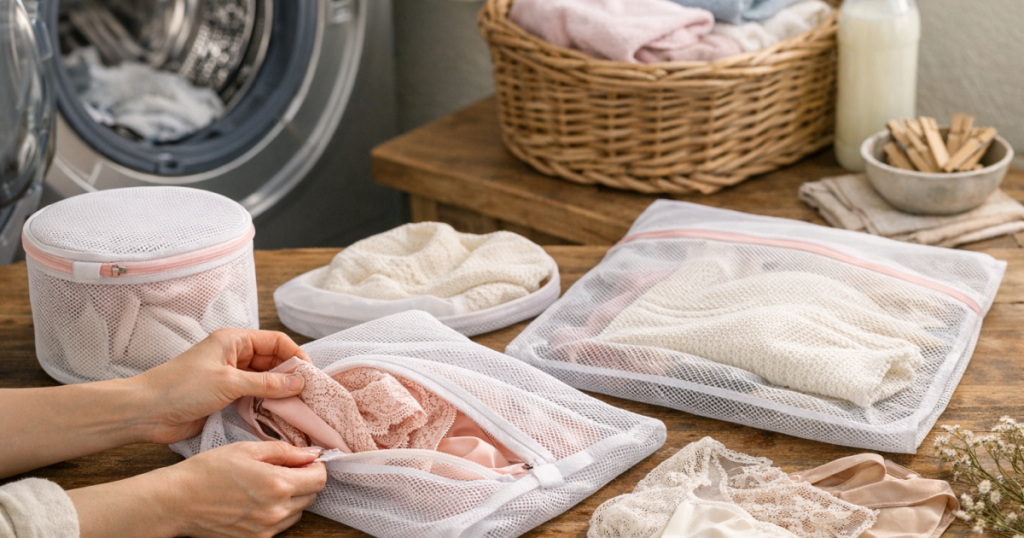
Size matters. A pouch that is too small compresses the fabric and encourages creasing, while one that is far too large lets the garment twist and knot inside. The item should sit loosely with room for water to move, but not so much room that it balls up at one end.
Use small bags for single delicate pieces
Small pouches are useful for bras, knickers, lace camisoles, thin socks, tights, removable belts and baby clothes with fastenings. For underwired bras, a structured lingerie bag is usually better than a very soft flat pouch because it gives the cups more space and helps reduce crushing.
Use medium bags for light tops and fine knitwear
A medium bag suits one lightweight blouse, one fine vest, one thin cardigan or one scarf. Fold the garment loosely rather than stuffing it in. Fine knitwear should not be packed tightly, because compression and agitation can encourage felting, distortion or deep creases.
Use large bags only when the fabric can move freely
Large bags are useful for washable scarves, sleepwear, delicate exercise tops or a few light garments of similar colour and fabric weight. They are not ideal for mixing fragile lace with heavier cotton items. If you are using a large pouch, keep it no more than about two-thirds full.
Step 2: Prepare delicates before they go in
Most damage happens because a garment enters the machine unprepared. A minute of checking prevents many of the problems people blame on the wash itself.
- Fasten bra hooks so they cannot snag lace, lining or other straps.
- Close zips fully, especially on skirts, dresses and fine trousers.
- Tie loose ties or sashes in a gentle knot so they do not wrap around the drum.
- Turn printed, dark or embellished garments inside out to reduce surface rubbing.
- Empty pockets, as tissues and grit can cause linting or abrasion.
- Check for loose stitching, beads or sequins before washing; a pouch may catch loose trims, but it will not repair weak attachment points.
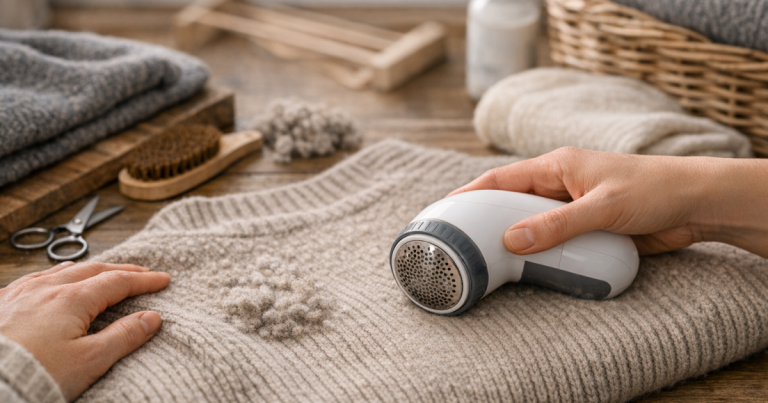
Cashmere and wool need extra care because heat, friction and agitation can change the feel and fit of the fibres. For a deeper routine, see our guide to washing cashmere jumpers without shrinking them.
Step 3: Sort by fabric, colour and weight
Do not use a pouch as an excuse to wash everything together. A delicate cream blouse still should not sit in the same load as dark denim, and a silk camisole should not be washed with towels just because it is zipped into a bag.
Sort by three things. First, colour: keep whites, lights, brights and darks separate where dye transfer is a risk. Second, fabric weight: wash delicate items with other light garments, not bulky hoodies, towels or jeans. Third, care needs: avoid mixing washable silk with cottons that need a stronger cycle.
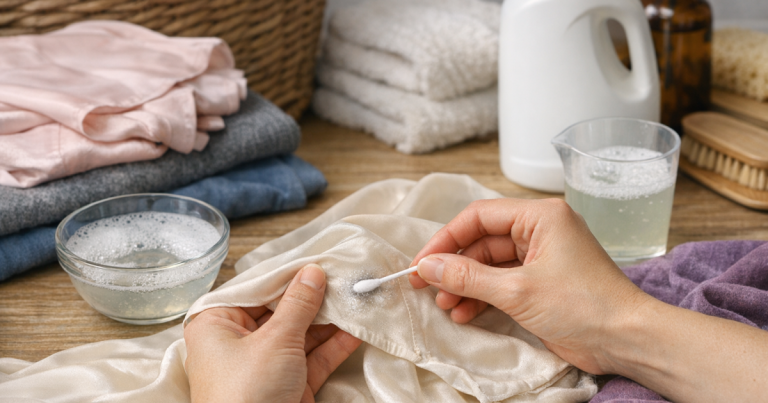
If a garment has deodorant, make-up or food marks, treat the stain before bagging it. The pouch can slightly reduce direct mechanical action on the stained area, so pre-treatment matters. For dark tops, the technique is different from scrubbing at pale residue; our guide to removing white deodorant marks from black clothes explains how to lift marks without roughening the fabric.
Step 4: Load the washing machine properly
A delicate item inside a bag still needs space in the drum. Overloading the machine increases friction, reduces rinsing and can leave detergent trapped in folds. For delicate loads, aim for a comfortably loose drum rather than a full one. You should be able to place a hand at the top of the load without forcing it.
Put heavier washable items, such as cotton T-shirts or pyjamas, loose in the drum if they are compatible with the same cycle. Place the bagged delicates among them rather than all at one side. This helps the load balance during spinning and avoids one overloaded pouch being dragged around the drum.
Avoid putting several filled bags into a very small load, as they may thump around and rinse poorly. If the only items you need to wash are delicate, use the machine’s delicates, wool or hand-wash-style programme where suitable, or wash by hand if the label calls for it.
Step 5: Choose the right cycle, temperature and detergent
Most delicates are happier with cool water, gentle agitation and a shorter spin. In many UK households, 20°C or 30°C is enough for lightly worn delicate clothing, provided the care label allows machine washing. Heavily soiled uniforms and towels are a different matter, but lace, silk, viscose and fine knits usually need restraint rather than power.
- Temperature: Follow the care label. When in doubt between two permitted settings, choose the cooler one for delicate fibres.
- Spin speed: Use a lower spin for silk, lace, bras and fine knits. High spin can stretch straps, crease silk and distort knitted shapes.
- Detergent dose: Use the amount needed for your load size and water hardness. Too much detergent can leave residue, especially inside folded fabric.
- Fabric conditioner: Use cautiously. It can leave coating on some fibres and may not suit sports fabrics, silk or towels.
- Stain products: Test carefully on hidden areas and avoid harsh bleaching products on delicate colours or protein fibres such as silk and wool.
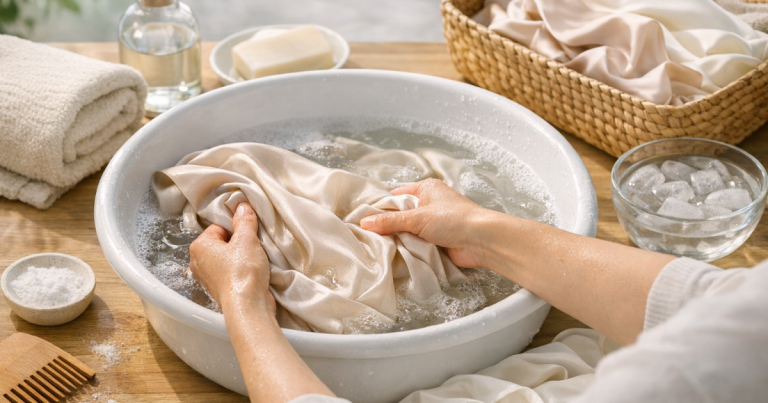
Silk is particularly prone to water marks if it is washed unevenly, left crumpled or dried in a patchy way. If you wash silk bedding or pillowcases at home, use the more detailed advice in our guide to washing silk pillowcases without water marks.
Step 6: Take items out of the bag straight away
Do not leave delicates sitting damp inside a closed pouch. Creases set quickly, colours can transfer in a wet bundle, and trapped moisture can create a stale smell. As soon as the cycle ends, unzip or open the bag, reshape each garment gently and move it to the right drying setup.
Bras should usually be reshaped by hand and air dried away from direct heat. Fine knits are often best dried flat on a towel, supported across the whole garment so the shoulders do not stretch. Silk and viscose should be eased into shape rather than wrung. Tights and lace can be hung lightly, but avoid sharp pegs that leave marks.
Only tumble dry if the care label allows it. A wash pouch may reduce tangling in the dryer, but it does not protect against heat shrinkage, elastic damage or set-in creasing.
Common mistakes that damage delicates
- Stuffing the bag too full: A packed pouch stops proper washing and rinsing. It can also leave deep creases in silk, viscose and satin.
- Using one large bag for everything: Bras, lace, tights and knitwear have different weak points. Separate them by garment type where possible.
- Washing with rough items: A bag reduces contact, but heavy denim, towels and zip-heavy clothing can still create strong agitation.
- Ignoring Velcro-style fastenings: Hook-and-loop strips can damage fine fabrics even through movement in the drum. Keep them away from delicates.
- Leaving zips half open: A partly open pouch can release the garment mid-cycle, leaving it exposed to snagging and twisting.
- Using a damaged bag: Broken zip teeth, rough seams or torn mesh can catch threads. Replace the pouch when it becomes rough or unreliable.
How to care for the bags themselves
Rinse or wash pouches regularly, especially after sweaty sportswear, hosiery or heavily fragranced detergent. Let them dry fully before storing, as damp mesh can hold odour. Check the zip cover, seams and corners; these are the places that usually become rough first.
If lint collects in the mesh, remove it by hand or rinse the bag under cool running water. Avoid pulling hard at trapped threads, as this can distort the weave and create sharper edges. Store bags flat or loosely folded rather than crushed under heavy laundry products.
Things readers ask
Can I put more than one bra in the same laundry bag?
You can, but it is better to use one structured pouch per bra if they are padded, underwired or delicate. Fasten the hooks first and avoid compressing the cups.
Do laundry bags stop clothes shrinking?
No. Shrinkage is usually caused by heat, agitation, fibre type and drying method. A pouch reduces snagging and friction, but it will not make a hot wash safe.
Can I use them for wool jumpers?
Yes, if the jumper is machine washable and the bag is large enough for it to sit loosely. Use a wool or delicate cycle, cool water and dry flat afterwards.
Should the zip be plastic or metal?
Either can work, but the zip should close smoothly and have a covered end or zip guard. Exposed, rough or broken zip parts can catch delicate fabrics.
Are laundry bags useful for socks?
Yes, especially for thin socks, trainer liners and children’s socks. They help keep pairs together, but the bag should still be loose enough for proper rinsing.
Main points
Mesh laundry bags work best when they are part of a careful washing routine: sort properly, prepare fastenings, load lightly, choose a gentle programme and dry items correctly. They are especially useful for lace, lingerie, hosiery, silk, fine knits and garments with straps, but they cannot compensate for heat, overloading or the wrong detergent. Treat the pouch as a protective layer, not permission to wash delicate fabrics harshly.