Mohair is warm, airy and beautifully fuzzy, but that same halo can turn compact if the garment is soaked, rubbed or spun too aggressively. The safest way to wash mohair knitwear is to keep the fibres supported, use cool water and handle the piece as little as possible.
Most damage happens through friction, sudden temperature changes and poor drying rather than the water itself. A short, careful hand wash is usually kinder than repeated wear with sweat, perfume, deodorant or food marks left to settle into the yarn.
The short version
- Check the care label first, especially if the garment is a mohair blend with wool, silk, nylon or acrylic.
- Use cool water, ideally around 20°C, and avoid hot water throughout washing and rinsing.
- Choose a small amount of wool-safe, pH-neutral detergent rather than a standard laundry dose.
- Press the garment gently in the water; never rub, scrub, wring or twist it.
- Remove moisture with towels, then dry flat in its natural shape away from direct heat.
- Do not hang wet mohair, as the weight of the water can stretch shoulders, cuffs and hems.
Why mohair mats so easily
Mohair comes from the Angora goat and is prized for its smoothness, sheen and raised halo. That soft surface is made up of fine fibres that sit proud of the knitted structure. When those fibres are agitated in warm water, squeezed hard or rubbed against themselves, they can interlock and compact. The result is matting: a flatter, denser surface that looks less airy and may feel harsher.
Not every mohair garment behaves in the same way. A loose, fluffy kid mohair jumper needs gentler handling than a tighter mohair blend cardigan. Dark colours, brushed finishes and open-stitch knits can also show distortion more quickly. The label should be your starting point, but the safest home routine is to treat the piece as fragile even when it looks fairly robust.
Before you put it in water
Only wash mohair knitwear when it genuinely needs it. If the garment simply smells a little stale after wear, air it flat over a clean towel for a few hours. Mohair often refreshes well without a full wash, which reduces friction and helps preserve the surface.
Look over the garment in good light before washing. Check underarms, cuffs, neckline and the front where food or drink marks tend to appear. Deal with small marks locally rather than scrubbing the whole jumper. Dab with cool water and a tiny amount of wool-safe detergent, working from the outside of the mark inwards. Avoid stain removers unless the packaging clearly says they are suitable for wool or animal fibres.
Remove jewellery, watches and rough nail edges before handling the garment. Mohair loops can catch easily, and a snag that looks small before washing can pull longer when wet.
Step-by-step: a gentle hand wash
1. Prepare the water first
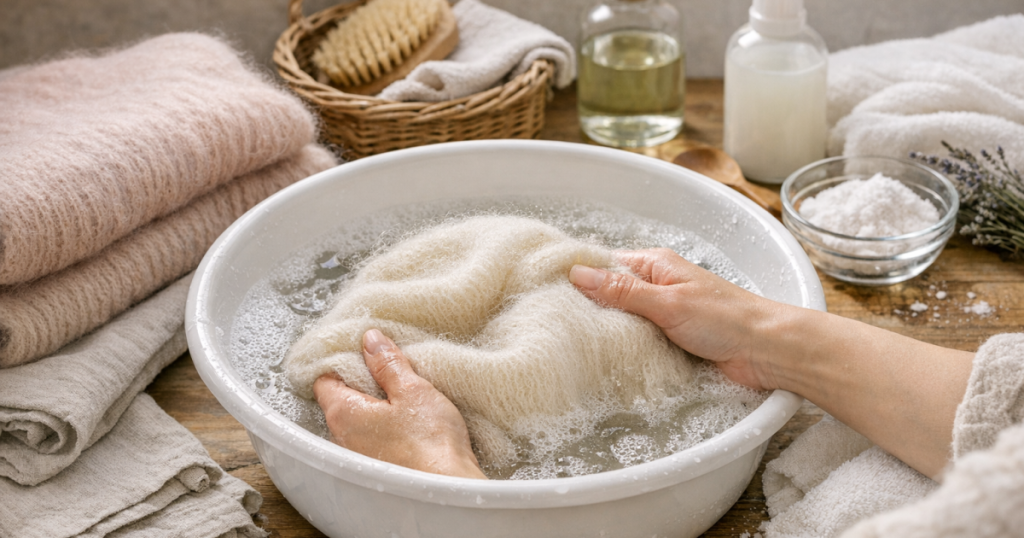
Fill a clean basin or washing-up bowl with cool water. Around 20°C is a useful guide: it should feel cool to the touch, not warm. Add a small amount of wool-safe detergent and mix it through the water before the garment goes in. This matters because concentrated detergent sitting on one area can be harder to rinse away.
Do not use a standard laundry dose. Too much detergent means more rinsing, and extra rinsing means extra handling. Avoid biological detergents unless the product label clearly states that they are suitable for wool and similar protein fibres. Non-bio does not automatically mean wool-safe, so check the bottle rather than relying on the front label alone.
2. Lower the garment in fully supported
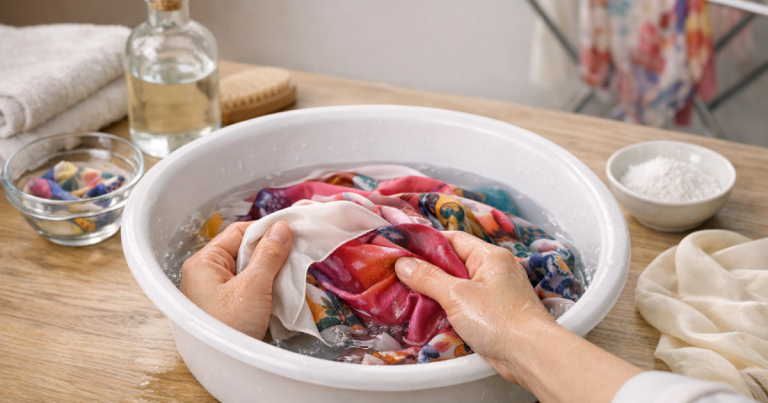
Gather the jumper or cardigan loosely in both hands and lower it into the water. Press it down gently so the fibres become evenly wet. Do not drop one heavy section into the basin and let the rest drag behind it; wet knitwear stretches under its own weight.
Leave it for a few minutes, or follow the detergent label if it gives a shorter time. Long soaking is not helpful for delicate mohair, particularly if the dye is not perfectly stable or the garment includes other fibres.
3. Press, do not rub
Move the water through the garment by pressing down with your palms and releasing. Repeat this slowly across the body, sleeves and cuffs. The aim is to let the detergent lift soil without creating the friction that causes matting.
Do not scrub underarms, twist sleeves together or rub stained areas between your fingers. Those actions can felt the halo and leave a visibly rough patch. If a mark has not lifted after gentle dabbing, stop and let the garment dry before deciding whether to repeat a local treatment.
4. Rinse at the same temperature
Drain the soapy water while supporting the garment in the basin. Refill with clean cool water at a similar temperature, then press gently to release detergent. Sudden changes from warm to cold, or cold to warm, can shock animal fibres and encourage shrinking or matting.
Repeat once if needed, but do not chase absolute slipperiness by rinsing again and again. A wool-safe detergent used sparingly should not require heavy rinsing.
Can you use a washing machine?
Hand washing gives you the most control, especially with open, fluffy or expensive mohair pieces. A machine wool or hand-wash programme may be suitable only if the care label allows it and the garment is stable enough to tolerate controlled movement.
If you do use a machine, place the item in a fine mesh laundry bag, select a wool or hand-wash cycle, keep the temperature cool and reduce spin as much as the machine allows. Avoid mixing it with towels, denim, zips or anything that creates abrasion. For machine settings on fragile garments, the same principles in using a Bosch Serie 4 for delicates apply: low agitation, suitable load size and careful spin control matter more than convenience.
Do not tumble dry mohair. Heat and tumbling friction are exactly the combination that can turn a soft halo into a compact, matted surface.
How to remove water without stretching the knit
Once rinsed, do not lift the garment by the shoulders or sleeves. Scoop it up in a supported bundle and press it gently against the side of the basin to remove the heaviest water. Never wring it.
Lay a clean, dry towel flat and place the mohair item on top in roughly its natural shape. Roll the towel with the garment inside, then press down along the roll. Use body weight through your hands rather than twisting. If the towel becomes very wet, repeat with a second dry towel.
This stage is worth doing patiently. The drier the garment is before flat drying, the less time it spends heavy and vulnerable to stretching.
Dry it flat and reshape early
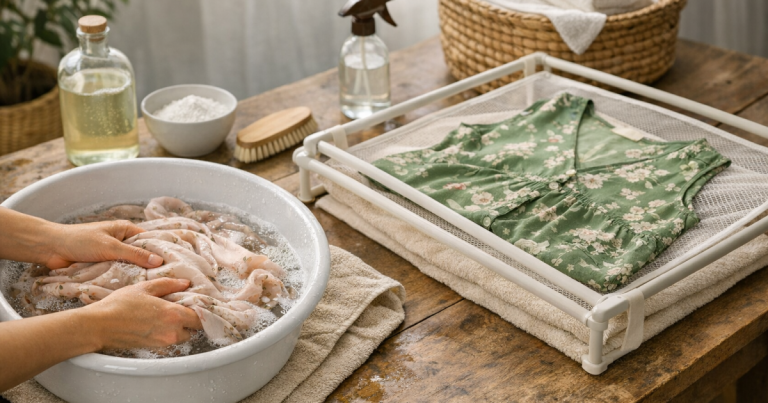
Move the damp garment onto a fresh towel or a flat mesh drying rack. Reshape it while it is still damp: straighten side seams, align the neckline, smooth cuffs and set the hem to its usual width. Do not pull hard to force the size; guide it back into shape with light patting and smoothing.
Keep it away from radiators, heated airers on high settings, strong sunlight and direct fan heat. Quick drying can make the surface feel harsher, while uneven heat can distort the garment. A well-ventilated room is better than a hot spot.
For more detail on shoulder shape, towel positioning and flat drying space, use the same method described in air-drying knitwear without stretching the shoulders. Mohair is particularly unforgiving when hung wet, so avoid coat hangers until the garment is completely dry.
Aftercare once it is dry
When fully dry, shake the garment lightly to revive the halo. If the fibres look flattened, use clean hands to lift the surface gently. A very soft garment brush can help on sturdier mohair blends, but test on an inside seam first and brush in the natural direction of the fibres. Avoid sticky lint rollers on fluffy mohair because they can pull at the halo and leave the surface uneven.
Store mohair folded rather than hung. Hanging can create shoulder points and lengthen the body over time. If you are storing it between seasons, make sure it is completely clean and dry, then fold it into a breathable cotton bag or a drawer with enough space that the fibres are not crushed.
Common mistakes that cause matting
- Using hot water: heat makes animal fibres more vulnerable to shrinkage and felting.
- Rubbing stains: friction compacts the raised surface and can create a permanent dull patch.
- Overloading the machine: garments rub against one another, even on a delicate programme.
- Using too much detergent: extra rinsing increases handling and can leave residue if not removed properly.
- Wringing after rinsing: twisting distorts the knit and encourages fibres to lock together.
- Drying on a hanger: wet mohair stretches at the shoulders and can grow in length.
What to do if the fibres have already matted
If the matting is mild, let the garment dry fully before trying to improve it. Working on damp mohair can make the problem worse. Once dry, gently tease the surface with your fingertips, lifting rather than pulling. A soft brush may help if used very lightly, but stop if you see fibres breaking or pilling heavily.
Severe matting is difficult to reverse at home because the fibres have interlocked. Re-wetting, soaking in conditioner or aggressive brushing can make the garment larger, flatter or fuzzier in the wrong way. For a valuable piece, a specialist cleaner with experience of animal-fibre knitwear is the safer route.
Mohair blends need the same calm handling
Many high-street and designer mohair pieces are blends rather than pure mohair. You might see wool, alpaca, polyamide, acrylic, silk or elastane on the label. The added fibre can change the weight, stretch and recovery of the garment, but it does not remove the need for gentle washing.
The same thinking applies to other delicate fabrics that lose shape when wet: support the item, minimise friction and dry it in the form you want it to keep. If you also care for soft drapey pieces, the shape-preserving approach in washing viscose dresses without losing their shape is a useful companion read.
Questions people ask
How often should I wash a mohair jumper?
Wash it only when it is genuinely soiled or holding odour after airing. For light wear, airing flat between wears is usually enough and helps preserve the halo.
Can I use fabric conditioner on mohair?
It is usually better to avoid fabric conditioner. It can coat fibres, reduce natural loft and make rinsing harder. Use a small amount of wool-safe detergent instead.
Is dry cleaning safer than hand washing?
It depends on the care label and the garment construction. If the label says dry clean only, follow it. For washable mohair, careful hand washing at home can be safe if you avoid heat, rubbing and wringing.
Can I iron mohair after washing?
Do not press a hot iron directly onto mohair. If a seam needs tidying, use steam from a short distance and avoid flattening the surface with pressure.
Why does my mohair feel rough after washing?
Roughness usually comes from heat, friction, detergent residue or over-handling. Let it dry fully, shake it gently and check whether any detergent remains before deciding on another rinse.
Key takeaways
Mohair rewards slow, low-friction care. Keep the water cool, use a wool-safe detergent sparingly, press rather than rub, and dry the garment flat from the start. The less you disturb the halo while it is wet, the better chance you have of keeping the knit soft, light and wearable for many seasons.