Waterproof jackets fail gradually: cuffs stop beading, shoulders darken in rain, and the fabric starts feeling clammy rather than protective. You can wash waterproof jackets at home, but the finish needs gentler handling than ordinary outerwear. The aim is to remove sweat, mud and detergent build-up without clogging the membrane or stripping the durable water-repellent coating.
Most damage comes from the wrong laundry products, too much heat, overloaded drums and missed care-label warnings. A careful clean can actually improve performance, because dirt and body oils make water sit on the face fabric instead of rolling off it.
Main points
- Read the care label before doing anything, especially on laminated, insulated or taped-seam jackets.
- Use a technical cleaner or a detergent approved by the garment label; avoid fabric conditioner.
- Close zips, release drawcords and remove loose mud before the jacket goes in the machine.
- Choose a gentle programme, usually cool to warm rather than hot, and do not overcrowd the drum.
- Dry according to the label, then test whether water beads before deciding whether to reproof.
What the finish is actually doing
A waterproof jacket usually relies on more than one layer of protection. The inner membrane or coating helps block rain, while the outer face fabric is treated so water beads on the surface. That outer treatment is commonly described as a DWR finish, meaning durable water repellent.
When the finish is working, rain forms droplets and rolls away. When it is dirty, worn or coated in detergent residue, the face fabric can “wet out”. The jacket may still have a waterproof membrane, but the soaked outer layer feels heavy, cold and less breathable. Washing is therefore not the enemy; poor washing is.
Step 1: read the label and check the construction
Start with the garment care label, not the laundry basket habit. Waterproof shells, softshell jackets, insulated waterproofs and coated rain jackets can all need different treatment. If the symbols are unclear, use our guide to reading laundry symbols before washing new clothes before choosing a programme.
Look for three things: the maximum wash temperature, whether tumble drying is allowed, and whether specialist cleaning products are mentioned. Some labels allow a low-temperature machine wash; others warn against dry cleaning, bleach or ironing. Do not assume a jacket can take the same treatment as jeans or cotton workwear.
Step 2: prepare the jacket properly
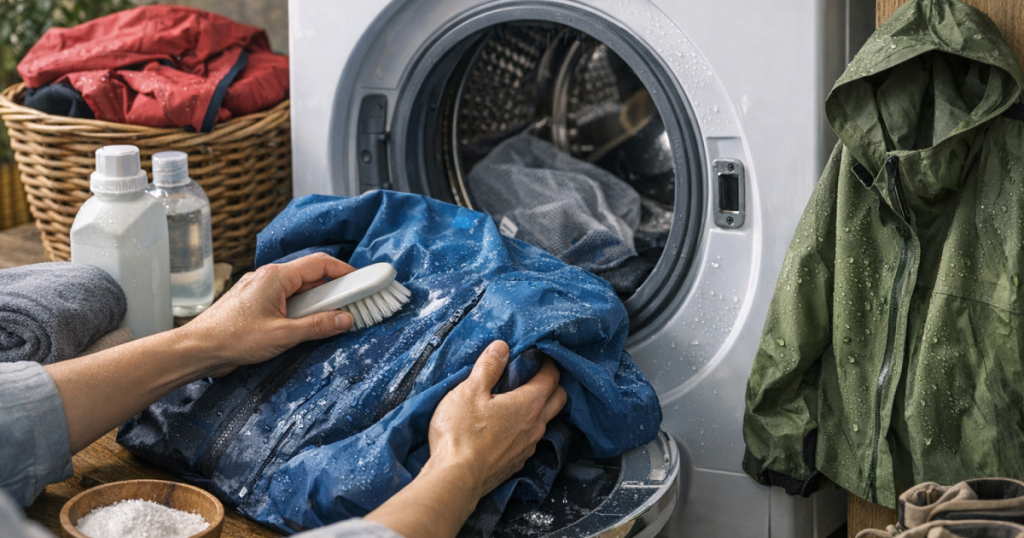
Preparation reduces abrasion and stops dirt being ground into the fabric. Empty every pocket, including small chest and sleeve pockets. Close the main zip, pocket zips and hook-and-loop fastenings so they cannot scrape the face fabric. Loosen drawcords and cuffs so water can circulate through creases and hems.
Brush off dried mud with a soft clothing brush or a clean damp cloth. Avoid stiff scrubbing brushes on coated fabrics, printed logos or taped seams. If the cuffs, collar or pocket edges are greasy, dab them gently with the same cleaner you plan to use in the wash, then allow a few minutes of contact time before loading the machine.
Step 3: clean the washing machine drawer first
Residue from normal laundry can be enough to spoil the finish temporarily. Fabric conditioner, fragrance boosters and heavy detergent build-up can leave films that make water cling to the surface. Before washing a technical jacket, rinse the detergent drawer and wipe away softener residue. If your machine has recently run very soiled loads, a short empty rinse cycle can help clear the system.
Wash one or two jackets at a time, depending on size. A packed drum gives poor rinsing and can crease waterproof fabric sharply. The jacket needs room to move so cleaner can reach sweat zones and rinse away fully.
Step 4: choose the right cleaner
A technical cleaner is the safest default for waterproof outerwear because it is designed to clean without leaving softening residues. Examples UK readers commonly come across include Nikwax Tech Wash and Grangers Performance Wash. Follow the garment label and the cleaner’s dosing instructions rather than guessing.
Avoid fabric conditioner completely. It can coat fibres and reduce the beading effect. Also avoid bleach, stain removers containing bleach, and heavy biological powder unless the care label specifically permits that type of product. Powder can be harder to rinse from technical fabrics, particularly in short or crowded cycles.
If you only have ordinary laundry detergent available, pause and check the jacket label. For an expensive shell, a uniform waterproof or a coat with taped seams, waiting until you have the right cleaner is usually better than risking residue that then needs several rinses to remove.
Step 5: set the wash programme
Use the temperature shown on the label. Many waterproof jackets are washed cool or warm, often around 30°C, but the label takes priority. Pick a gentle or synthetic programme with a moderate spin. Very aggressive spinning is not usually needed and can crease laminate fabrics hard against the drum.
An extra rinse is useful if your machine offers it, especially in hard-water areas or after a detergent-heavy household wash. Do not add softener in the rinse compartment. Do not add colour catcher sheets, scent beads or laundry disinfectant unless the jacket manufacturer says they are suitable for that garment.
Step 6: dry it without flattening the finish
Remove the jacket promptly when the cycle ends. Shake it gently to open the sleeves and hood, then hang it on a broad hanger or drying rack in a ventilated room. Keep it away from direct radiator heat, which can stress coatings, tapes and trims.
Some waterproof jackets allow tumble drying on a low setting because gentle heat can help reactivate the water-repellent finish. Others do not. Follow the label exactly. If tumble drying is allowed, use a low heat and take the jacket out as soon as it is dry rather than baking it for longer “just to be sure”.
Do not iron the jacket unless the care label specifically permits it and gives a safe method. Many waterproof fabrics include coatings, prints, reflective details or seam tape that can be damaged by direct heat.
Step 7: test the beading before reproofing
Once the jacket is fully dry, sprinkle clean water over the shoulders, sleeves and chest. If droplets bead and roll off, the finish is still working. If water spreads, darkens the outer fabric or soaks into high-wear areas, the DWR finish may need refreshing.
Reproofing is not the same as washing. It adds or refreshes the water-repellent treatment on the face fabric. Products such as Nikwax TX.Direct Wash-In are made for this stage, but you still need to check whether a wash-in or spray-on treatment suits your jacket type. For a more detailed step-by-step process, see our guide to reproofing a waterproof work jacket after washing.
Careful handling for specialist jackets
Insulated waterproof jackets
Insulated waterproofs need extra care because the outer shell and filling both matter. Do not crush them into an overloaded drum. If the label allows tumble drying, the drying stage may take longer than a shell jacket because trapped moisture can sit inside the insulation. Make sure the jacket is completely dry before storing it, or it can smell musty and lose loft.
Coated rain jackets
Some lightweight rain jackets use a coating rather than a more robust laminate. These can be more sensitive to abrasion, heat and harsh cleaning products. Turn them inside out only if the label allows it, and avoid rubbing at flaking or sticky areas. If a coating is already peeling, washing will not restore it; clean gently and consider whether the garment is reaching the end of its useful life.
Workwear and reflective trims
Waterproof workwear often combines water repellency with high-wear panels, logos or reflective strips. These details can be damaged by bleach, high heat and rough scrubbing. If your jacket has reflective tape, the care approach overlaps with washing hi-vis workwear without damaging reflective strips, particularly around drying temperature and avoiding harsh stain treatment.
Common mistakes that ruin the finish
- Using fabric conditioner: it can leave a coating that interferes with water beading and breathability.
- Overdosing detergent: more cleaner does not mean a cleaner jacket; it often means more residue to rinse away.
- Skipping the label: waterproof jackets vary widely, even when they look similar.
- Drying on a hot radiator: concentrated heat can harm trims, coatings and seam tape.
- Scrubbing stains too hard: abrasion can roughen the face fabric and damage printed or bonded details.
- Reproofing before cleaning: applying a treatment over dirt and body oil gives patchy results.
Things readers ask
How often should I wash waterproof jackets?
Wash them when they are visibly dirty, smell of sweat, feel clammy, or stop beading despite being dry. Frequent light use may need only occasional cleaning; muddy commuting, dog walking or outdoor work needs more regular care.
Can I use normal laundry detergent on a waterproof coat?
Only if the care label permits it. Many standard detergents leave residues that reduce beading, so a technical cleaner is usually the safer choice for waterproof shells and coated fabrics.
Why is my jacket no longer waterproof after washing?
It may not be fully rinsed, the DWR finish may be worn, or the face fabric may be wetting out. Rinse again first, dry properly, then test beading before deciding whether to reproof.
Can waterproof jackets go in the tumble dryer?
Some can, on low heat, and some should not. The care label decides. If tumble drying is allowed, use gentle heat and stop once the jacket is dry.
Should I wash a waterproof jacket inside out?
Not automatically. Closing zips and fastenings is more important. Turn it inside out only if the care label recommends it or the outer surface has delicate trims that need extra protection.
What to remember
The safest routine is simple: check the label, remove loose dirt, use the right cleaner, rinse well, dry gently and test the beading. A waterproof jacket is a specialist fabric item, but it does not need complicated care every time it gets muddy.
If the jacket still wets out after a careful clean and correct drying, the finish probably needs refreshing rather than another heavy wash. Treat cleaning and reproofing as separate jobs, and the jacket is far more likely to keep shedding British rain without feeling stiff, greasy or worn before its time.